Where the water goes before the first stone is set
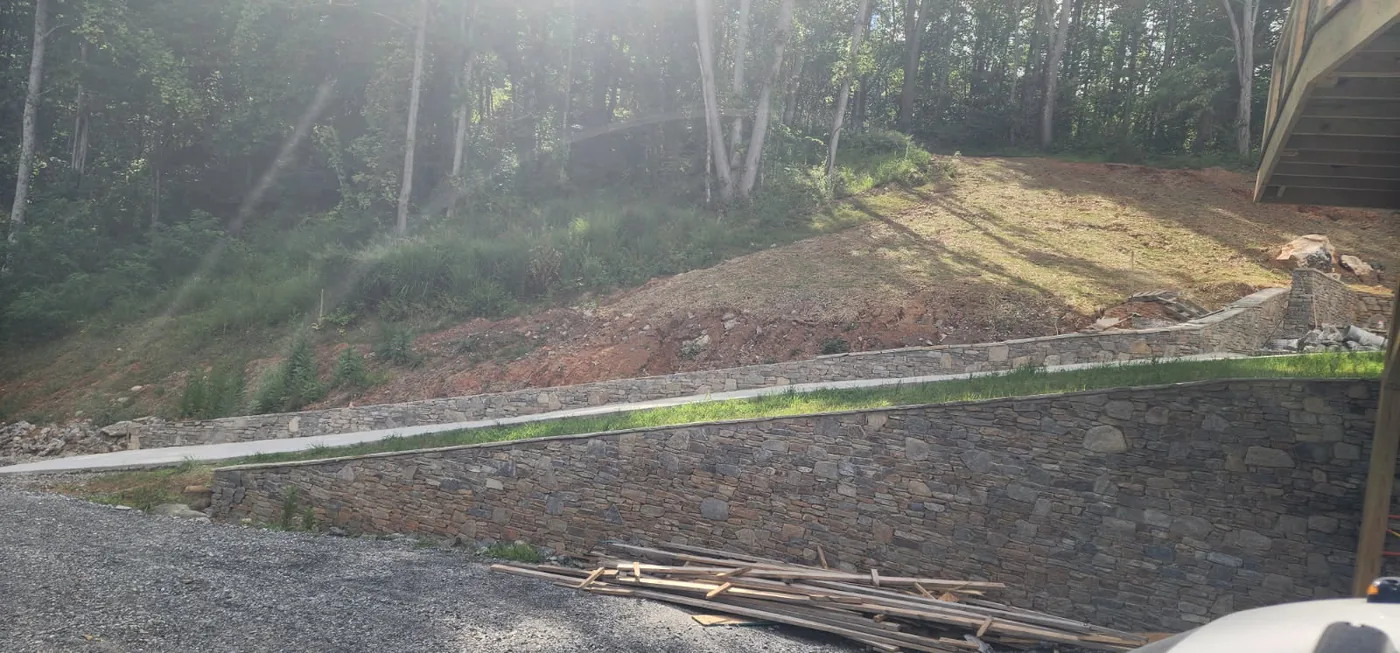
Biltmore Forest lots have a habit of looking flatter than they are until a hard rain. The village sits on rolling, heavily treed ground south of Asheville, and a usable patio pad usually means cutting a shelf into a slope or building one up. Either move changes where stormwater travels. A pit set into the uphill grade becomes a catch basin for sheet flow off the trees and the neighbor's grade above; a pit on a built-up pad has to shed water away from the footing rather than pooling around the ring. The National Weather Service's rainfall maps for this part of Buncombe County show repeated high-intensity events, and that is the design load the drainage has to take, not a dry week in October.
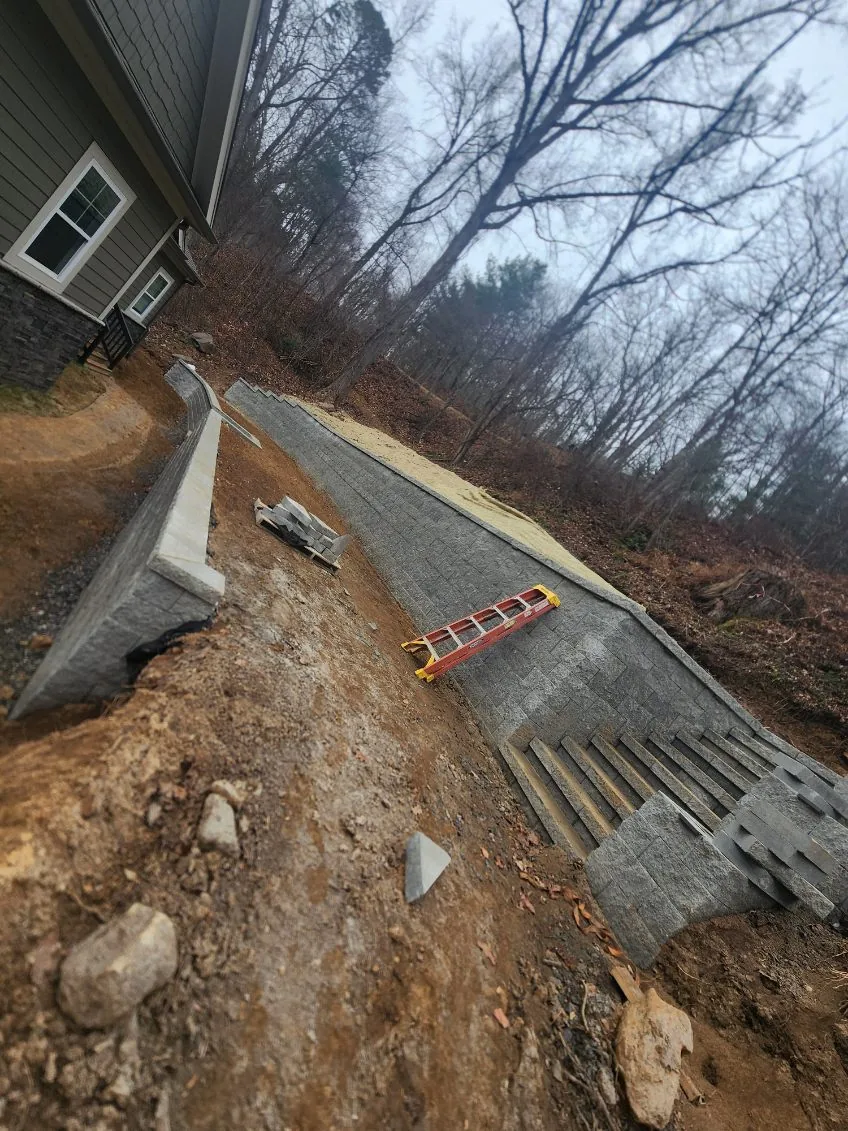
The practical sequence: decide the pad, decide where the water exits, then build the pit. A pit that cannot drain the 25 feet around it will heave, crack, and tilt within a few seasons, no matter how good the stonework is. If the fix is a low retaining wall to hold a pad or redirect flow, that is a separate line item, and this county's wall pricing is broken out in the Buncombe County retaining wall cost guide.
What actually gets built here, and what it costs
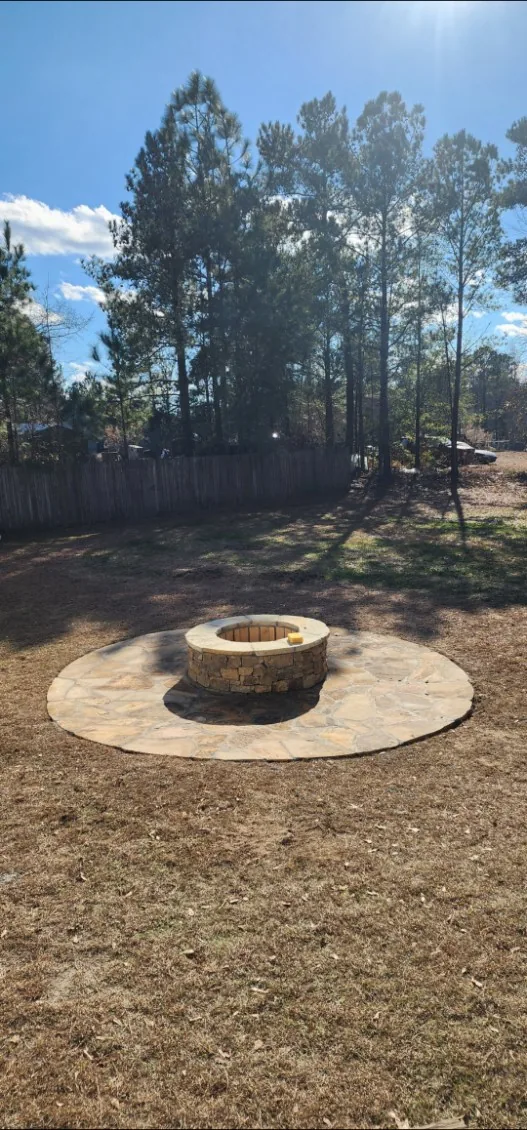
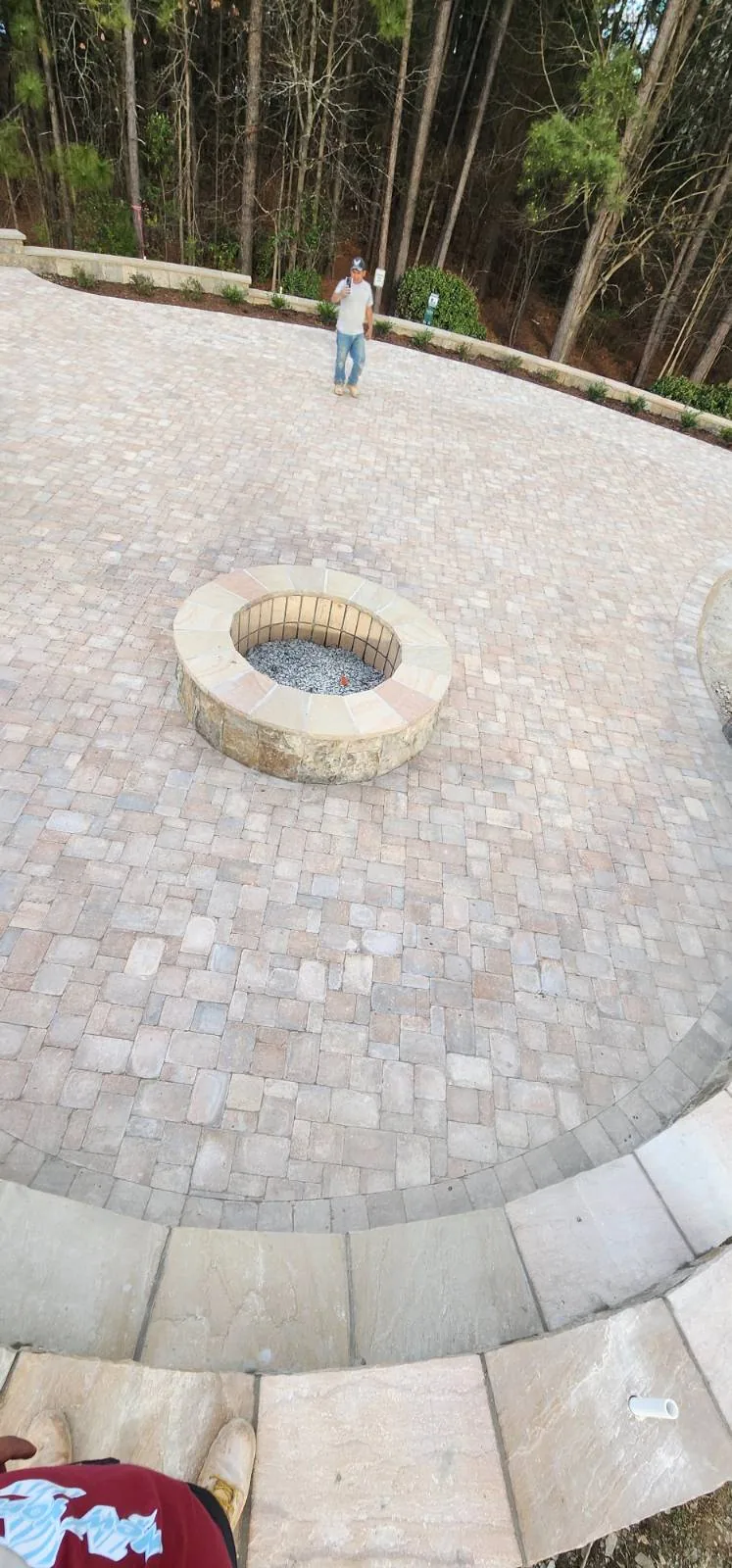
Biltmore Forest leans toward permanent, high-end hardscape: full-veneer stone, bluestone or flagstone caps, wood-burning or gas, often paired with a seat wall or a covered outdoor room. Kit pits and steel inserts exist in this market but are the minority, because the lots and the homes usually justify a masonry build. Ranges below are honest regional bands, not quotes; the site visit sets the real number.
| Scope | Typical price range |
|---|---|
| Prefab or steel-insert pit set on existing flat pad (materials + install) | $800–$2,000 |
| Basic masonry pit, 36–48 inch, wood-burning, on existing flat pad | $2,400–$4,500 |
| Custom masonry pit with seat wall, flagstone cap, 48–60 inch | $5,000–$9,000 |
| Gas pit with burner, key valve, gas line run, and stone veneer | $4,000–$8,500 |
| Full outdoor fireplace with chimney and stone veneer | $9,000–$25,000+ |
| Slope pad preparation, drainage, and low retaining wall (when needed) | $2,500–$12,000 |
The drainage and pad line is the one that surprises people. On flat lots it may not apply. On a hillside lot with a 5–7 foot grade change, it can exceed the price of the pit itself, and skipping it is the most common reason a $6,000 build fails in year three.
Permits, burn rules, and what the county checks
Biltmore Forest is its own incorporated village with its own zoning and building review, so permits do not always move the same way as in the rest of Buncombe County. Permanent masonry and gas fire features typically require a permit; portable kits usually do not. Gas pit installations add a plumbing and gas-permit layer that the Town will want to see. On the project-cost side, the North Carolina Licensing Board for General Contractors sets the threshold where a general contractor's license is required, and combined pit-plus-wall jobs in this price band often cross it. Ask before signing whether the project requires a licensed GC or falls under a specialty classification.
Burn rules matter too. Buncombe County and the Town of Biltmore Forest both restrict open burning at times, and a wood-burning pit is subject to those restrictions on any given day. Gas pits sidestep most of it. If smoke exposure and air-quality days are part of your decision, the EPA's guidance on residential wood smoke at epa.gov is worth reading before you commit to a fuel.
Why the stone choice matters more here than in town
Biltmore Forest burns wood. The village is heavily forested, most lots carry mature hardwoods and pines, and fire pits under a canopy get ember exposure the pit itself never asked for. That drives two design decisions: a spark-arresting cap on the flue if the pit is chimneyed, and a stone that handles freeze-thaw without spalling. Local fieldstone and Tennessee flagstone are both common in this market and both perform well when set with the right mortar and a proper footing. Veneer over a concrete block core reads like stone and costs less; full-bed stone costs more and lasts a generation or two longer. See the fire pit project guide for how the tradeoff is usually framed.
The safety clearances are not negotiable either. The International Code Council's model language at iccsafe.org anchors most of what a local inspector will apply: minimum distance from combustibles, overhead clearance under a roof or canopy, and screen or spark-arrest requirements. A builder who has not mentioned any of that by the second conversation has not built many pits under trees.
Matching the crew to the lot
The crews that do well in this village are the ones that treat the pit as a drainage-and-grade project with a stone feature on top, not the other way around. Three questions worth asking: Has the builder done work on a lot with your grade? Do they pull the permit themselves or hand it off? And do they show you where the water goes, on site, with a level, before the first stone is ordered? If you also need a wall, compare against the specialized Biltmore Forest retaining wall contractors page, since wall work is its own certification path and not every pit builder carries it. A pit in this village is a long-lived improvement if it is built for the water first and the look second.