Why the 4-foot wall line decides most Asheville driveway budgets
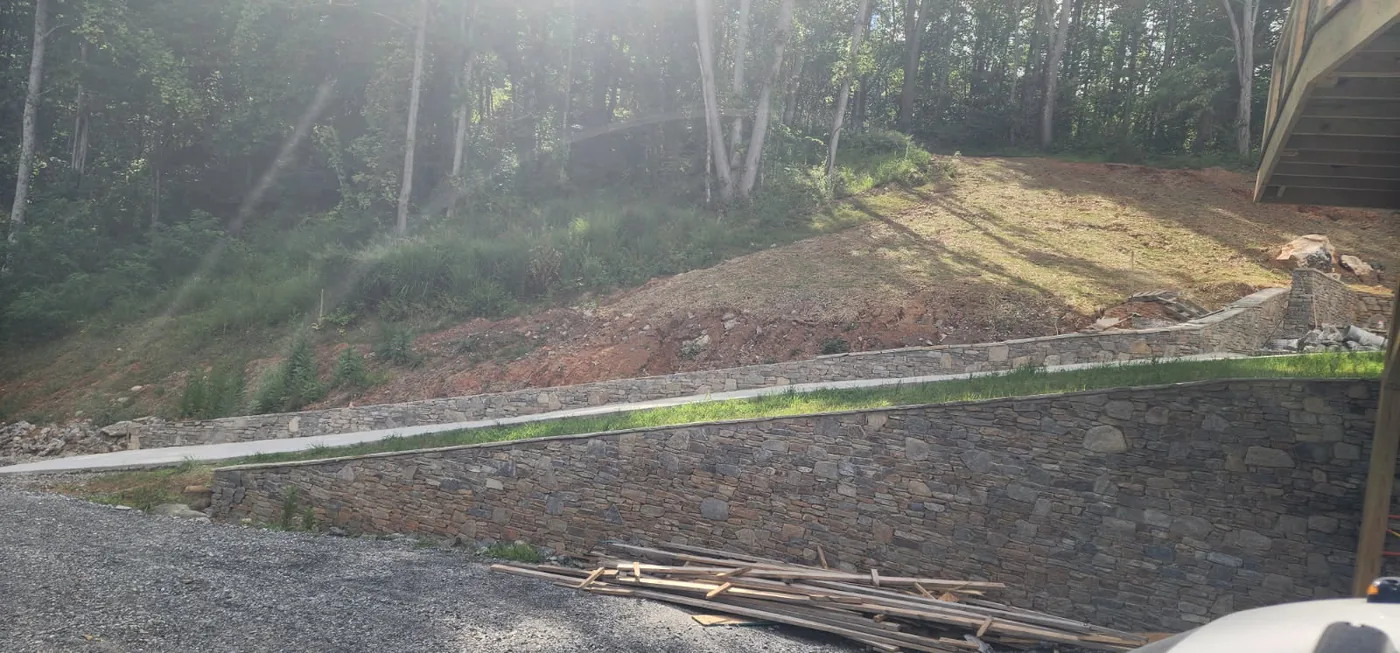
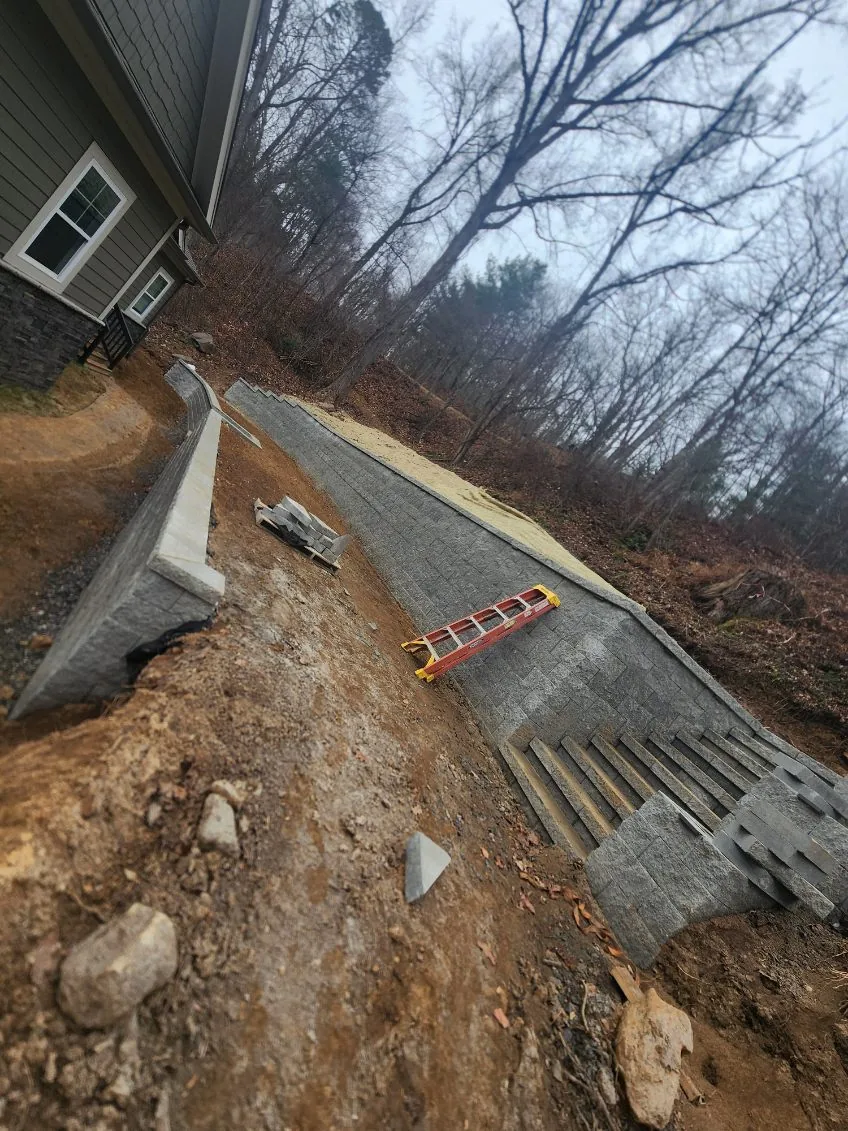
Drive a half mile off Merrimon or Haywood and the terrain tells the story: Asheville's best lots are cut into hillsides, and a paver driveway almost always means a retaining wall somewhere. Here's the line that catches homeowners off guard — walls under 4 feet of retained height usually fall outside engineered-design triggers under the NC Residential Code, while walls 4 feet and taller generally require stamped engineering, a building permit, and sometimes a licensed general contractor. The NC Licensing Board for General Contractors sets the dollar threshold ($30,000) above which a GC license is required for the project as a whole. That means a driveway with a 6-foot retaining wall is a different project, different permit, different price than the same driveway on flat ground. The paver driveway asheville nc conversation starts here, not at the paver color.
We see it on Town Mountain, in Kenilworth, out in Haw Creek — same paver pattern, wildly different installs because one yard slopes 15 percent and the next is nearly flat. Ask any contractor to identify the tallest retained wall on your plan before they quote pavers.
What actually drives cost in this county
Buncombe pricing sits higher than flatland NC because excavation is slow on rock and clay, and drainage design is not optional — the mountains average 40-plus inches of rain. Saturated soil seasons, tracked through the county's federal disaster record (19 declared events here, 1973-2026), regularly expose sub-base failures on older driveways. None of that is scary if the bid reflects it; all of it is expensive if the bid pretends grading is easy. For scope-vs-price context:
| Scope | Typical installed range | What moves the number |
|---|---|---|
| Walkway (3–4 ft wide, straight) | $15–$30 / sq ft | Base depth, edge restraint, step count |
| Driveway, flat lot, simple layout | $10–$16 / sq ft | Excavation volume, geotextile vs. gravel-only base |
| Driveway, sloped lot, drainage plan | $14–$22 / sq ft | Retaining wall, swales, rip-rap or French drain |
| Wall under 4 ft (block or stone) | $45–$90 / face sq ft | Material, footing, drainage gravel behind wall |
| Wall 4 ft+ (engineered) | $75–$150+ / face sq ft | Engineering, permit, soil report, reinforcement |
Walks and steps price separately and often ride along with a driveway project; if steps are part of the plan, see the work we group under stone steps and walkways because the base prep logic is the same and bundling usually saves mobilization. Full patio or hardscape pricing bands live on the paver patio cost page. The number to watch is not the paver; it's what's under it. A driveway quoted at $8/sq ft in a mountain county is a driveway with a thin base, and it will settle within two winters.
The base is the job — pavers are the finish
Pavers are 2-3/8-inch concrete units; the load they carry is transferred through 6–12 inches of compacted crushed stone, a geotextile separator, and edge restraint. On Buncombe's clay, a deeper base and better drainage always beat a fancier paver. The International Code Council publishes the underlying residential code standards that most NC hardscape details trace back to, and the state's Office of State Fire Marshal — Code Services administers those codes locally. Read the permit section below before you sign anything, because some driveways don't need permits and some do, and the difference is usually the wall height or the right-of-way.
A quick field test for any bid: ask what happens to the water at the bottom of the slope. If the answer is "it drains away," walk. If the answer includes a swale, a catch basin, or daylighting a pipe to a legal discharge point, they've actually thought about your lot.
Permits, right-of-way, and the 4-foot trigger
Two things commonly turn a paver project into a permitted one in Asheville and Buncombe County: (1) a retaining wall of 4 feet or more of retained height, and (2) any work inside the street right-of-way, which is a NCDOT or city encroachment question, not a private one. Driveway aprons that tie into a public road almost always need an encroachment agreement. Stormwater and grading rules can also apply if you're importing significant fill or altering drainage that crosses a property line. Confirm requirements before mobilizing; local rules change and the plan reviewer's read is the one that counts. For the wall side of the work, we lean on engineered drawings and the NCLBGC licensing framework — if your project crosses the $30,000 unlicensed threshold, a licensed general contractor must hold the contract.
How to compare two paver driveway quotes without getting burned
Put the bids side by side and ask three questions. "What's the compacted base depth, in inches, and what's the stone spec?" Anything under 6 inches on a residential driveway should be justified in writing. "Is the retaining wall engineered, and who's pulling the permit?" If the wall is 4 feet or taller and the answer is "we don't need one," get it in writing and call the county before you pour a footing. "What's under the edge restraint?" Edge failure is the most common paver driveway failure and the easiest to prevent. Sites that look alike can price 40 percent apart because one contractor plans a base that will still be there in 20 years and one does not. If you want a patio built with the same discipline, that work lives on the paver patios page.