The build order, and how long it actually takes
An outdoor fireplace is not a weekend kit job on most Buncombe County lots, and the schedule tells you why. The honest sequence for a masonry build here runs like this: layout and string lines first, then excavation and a poured concrete footing below frost depth, then a curing wait before any block goes down, then the firebox and smoke chamber, then the chimney to code height, then the stone veneer and hearth, and finally the cap and a curing fire. That is typically three to six working days for a straightforward build and one to three weeks on a terraced or steep-access property where materials move by hand or conveyor instead of truck.
Homeowners consistently underestimate two steps. The footing cure is not optional, because a fireplace is a heavy, top-loaded structure that will crack if it settles differentially. And the first fire has to be small and slow, which cures the refractory mortar rather than shocking it. A crew that wants to lay stone the same day they pour concrete is scheduling around their calendar, not your fireplace.
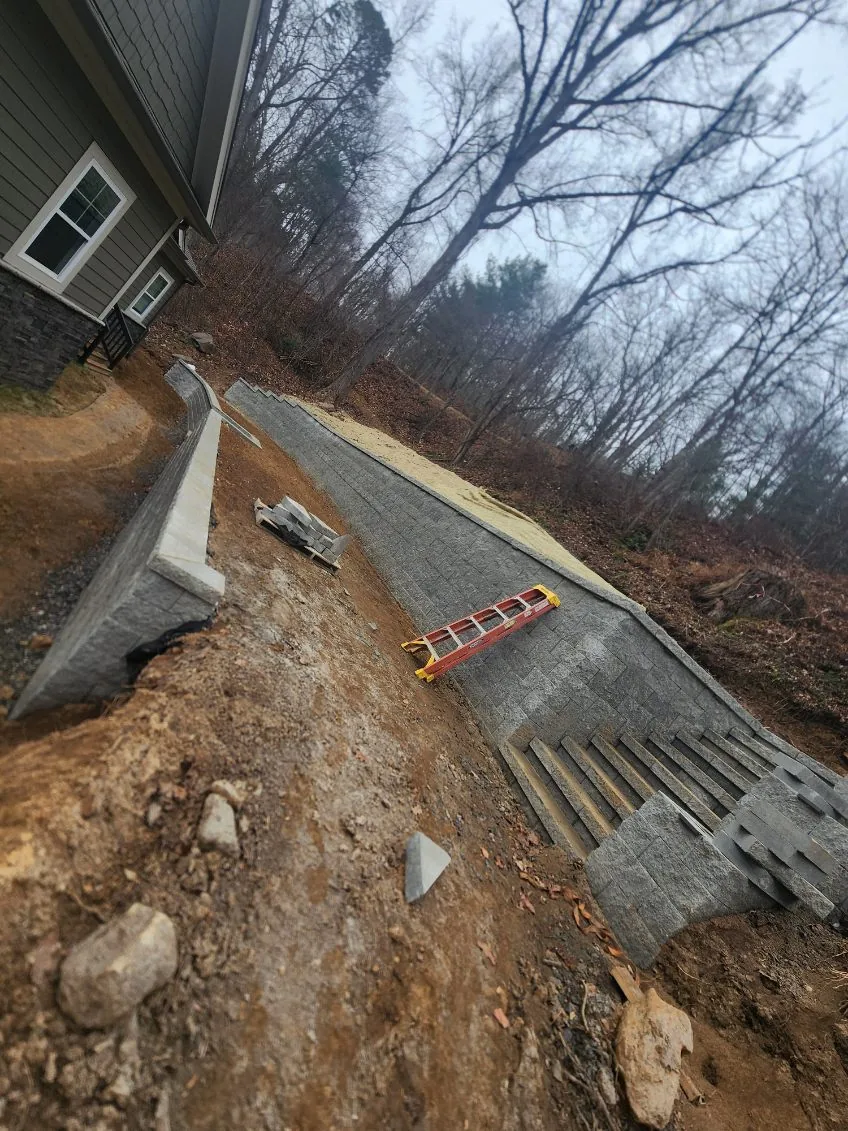
What does a day actually look like on a West Asheville job? The crew typically arrives to a driveway that ends in a grade change, so the first hour is often staging: plywood down over the lawn, a wheelbarrow line established, and the pallets of block and stone dropped as close to the work as the truck can legally get. On a walk-out basement lot in Oakley, that can mean carrying every block down a set of exterior stairs the whole project. On a ridge lot above Haw Creek, it can mean a conveyor belt and two extra laborers. Neither of those costs shows up as a line item called "access," but both are baked into the labor hours and that is why two bids on the same drawing can be thousands apart.
The footing pour itself is a half-day of forming and a short pour, but the cure means the soonest a mason should lay the first course is the next day at minimum, and longer in cold weather. In a mountain January, when overnight lows around Asheville dip well below freezing, that cure window stretches and a crew either heats the pour or waits. The same logic applies to mortar: masonry mortar does not like to set up in the cold, and a good crew will tarp and heat rather than rush a chimney that has to be straight and true for decades. That is calendar time, not laziness.
The chimney is where the timeline gets technical. Draft depends on height above the roofline and surrounding tree canopy, so the mason working in a heavily wooded Weaverville or Black Mountain backyard has to calculate the effective stack, not just eyeball it. Building to code minimum when a sixty-foot oak sits thirty feet away is how you end up with a fireplace that smokes into the room. The last step, the curing fire, is a small kindling fire burned slowly over the first day or two so the refractory mortar cures instead of cracking. Crews who skip it hand you a fireplace that will need repointing sooner than it should.
What the numbers look like across scope tiers
Ranges below are working installed figures for the Asheville area, not quotes. They assume a normal backyard approach; add for crane access, retaining work, or a gas line run more than about fifty feet.
| Scope of work | Typical range | What drives it |
|---|---|---|
| Prefab or kit firebox with veneer face | $3,500 – $6,500 | unit size, veneer choice, footing complexity |
| Full masonry fireplace, wood-burning | $9,000 – $18,000 | firebox size, chimney height, stone selection |
| Gas-fired insert or log set with line | $1,800 – $5,500 | line distance, permit, venting configuration |
| Pizza oven or bake-oven addition | $4,000 – $12,000 | dome mass, insulation, finish level |
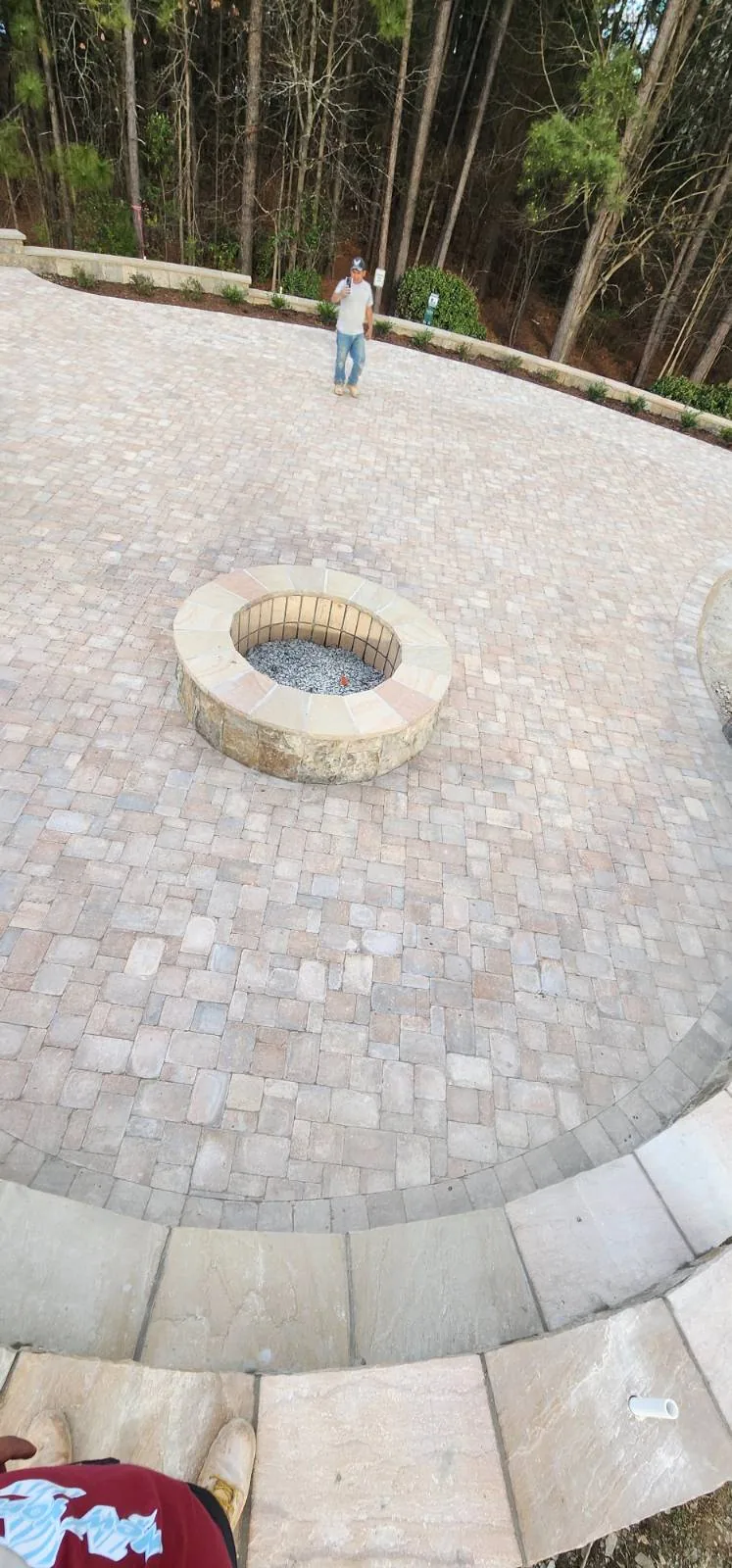
| Paver or flagstone hearth and patio tie-in | $2,500 – $9,000 | square footage, base prep, drainage |
The line item homeowners most often miss is the hearth and patio around the fireplace. It is not decoration; it is the finished floor of the whole project, and it prices separately. Our outdoor fireplaces and kitchens overview covers how the pieces sequence when you build more than one.
It helps to think in terms of what each tier physically is. A kit firebox with a veneer face is a manufactured steel or refractory unit set on a footing, wrapped in a wood or metal stud frame, and faced with thin stone. It is a real fireplace and it heats a patio, but it is not a masonry mass, and it will not hold heat the way a full block-and-brick firebox does. Full masonry means the firebox itself is laid up in brick or block with a refractory lining, the smoke chamber is parged, and the chimney is a true masonry flue. That mass is why a masonry fireplace still radiates warmth an hour after the fire dies, and why it costs what it costs. A pizza oven sits in its own category because the dome needs insulation and thermal mass that a fireplace does not; the oven wants to hold and store heat, the fireplace wants to draft and release it.
The gas piece deserves its own note in a mountain market. A gas insert or log set is faster, cleaner, and often permitted as a simpler scope, but it needs a gas line run from the meter or a propane tank, and on a lot where the tank is at the far edge of the property that run alone can surprise a homeowner. If the plan is a fireplace plus an outdoor kitchen plus a fire pit, the gas line, the footing sequencing, and the patio sub-base all want to be designed together, not three separate weekend projects.
Why Asheville lots price differently than flatland lots
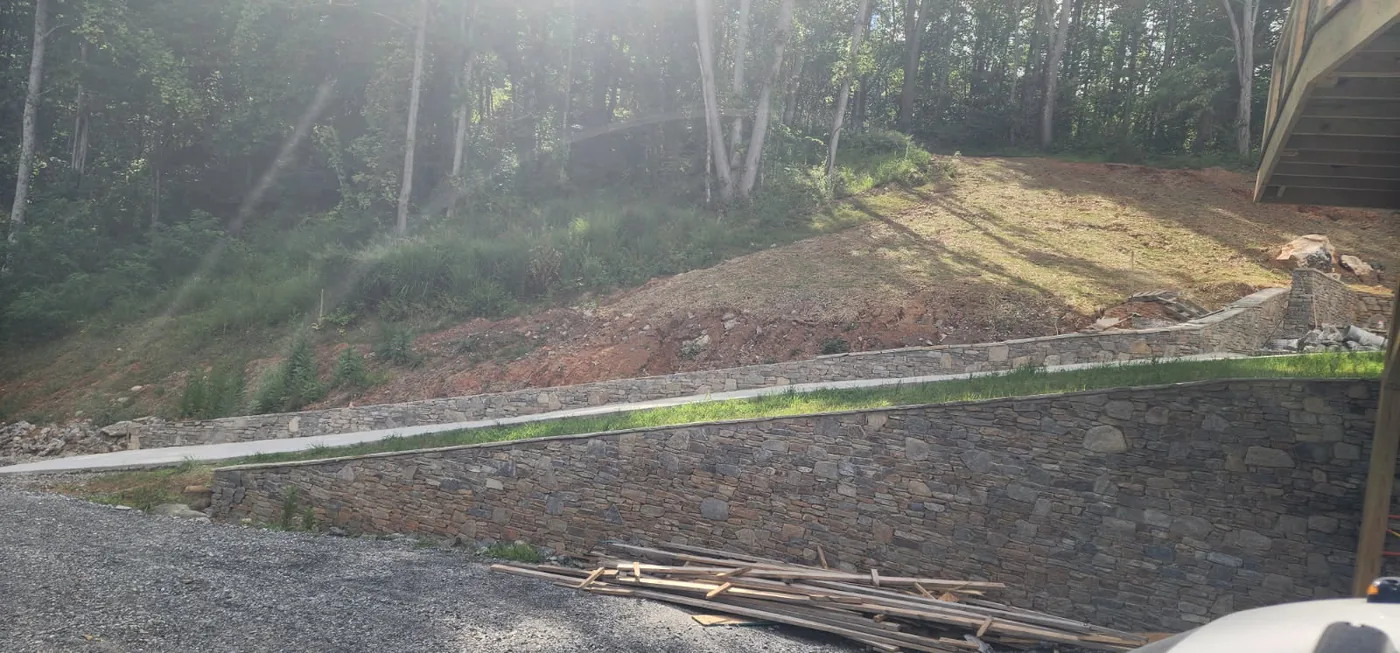
Buncombe County yards are shaped by terrain. Between the ridge properties above Haw Creek, the walk-out basements common in West Asheville and Oakley, and the slope-cut lots out toward Leicester and Black Mountain, most backyards here are on a grade, terraced, or backed by a retaining wall. That matters to a fireplace in three concrete ways: the footing has to be engineered for the soil you actually have, the chimney has to clear the roofline and nearby tree canopy for draft, and the stone and mortar have to come up a hill.
Soil is the quiet variable. A lot of what sits under Asheville backyards is clay, and clay does what clay does: it swells when it is wet and shrinks when it dries. Add a slope, and you have water that wants to move downhill under the pad you just poured. That is why the footing design on a hillside build is not a generic detail. A footing that is right on flat sand is wrong on a graded clay slope, and the fix is a wider, deeper, sometimes reinforced footing with drainage managed around it, not just to it. A homeowner comparing a slopeside bid against a flat-lot bid in the same town is comparing two different engineering problems and should expect two different prices.
The weather story reinforces it. 19 federally declared disaster events touch Buncombe County across 1973-2026, and they skew toward storm and flood families. A fireplace footing sitting in saturated hillside soil is exactly the kind of structure that heaves and cracks after a wet season, so drainage around the pad is not a nice-to-have here. Our stone veneer page goes into how mountain moisture affects the finish layer specifically.
The housing character matters too. A lot of West Asheville and Oakley homes are older bungalows with detached or semi-detached lots, and a lot of the newer construction is on grade lots where the builder already cut the pad. The older the neighborhood, the more likely the backyard is working with mature trees, a prior driveway that used to be gravel, and a grade the original builder was not thinking about. None of that is a dealbreaker, but it changes how a mason stages the job, and staging is labor.
Permits, clearances, and who can legally build it
In North Carolina, a masonry or gas outdoor fireplace typically requires a building permit through the county, and the work has to meet the residential code's provisions for footings, masonry construction, and chimney height and clearance. The applicable code family is published by the International Code Council and enforced in this state through the NC Office of State Fire Marshal. Clearances to combustible siding, deck framing, and roof overhangs are code requirements, not builder preferences, and they are checked.
Clearance is where a lot of do-it-yourself plans go wrong, and it is worth understanding why the code cares. A masonry fireplace looks inert, but heat radiates and conducts, and the inside of a stud wall behind a firebox gets hot enough over a long evening to char framing that sits too close. So the rules set minimum distances from the firebox and chimney to combustible materials, and they set requirements for how the chimney passes a roof or wall. A mason who knows the code builds a shield or an air gap into the design rather than discovering the problem at inspection. In a treed mountain yard, the chimney also has to terminate high enough and clear enough of the canopy to draft reliably, and "high enough for code" and "high enough to actually draw" are not always the same number.
Contractor licensing matters too. North Carolina sets a dollar threshold for general contracting work through the NC Licensing Board for General Contractors; once a project crosses it, the person signing your contract needs the right license class. Ask before you compare bids, not after.
There is a practical sequencing point that follows from the permit. If the fireplace is part of a larger outdoor build that includes a kitchen, a patio, or a fire pit, the permits and the inspections can run in parallel if the plans are drawn together, but they stack up if each piece is permitted separately months apart. Pulling one permit for the gas line that also serves the fireplace and the grill is cleaner than three trips through the same process, and it is cheaper on the administrative side.
How to compare two bids without getting burned
Fireplace bids are hard to compare because they are written at different levels of detail. Three things separate an honest bid from a vague one:
- Named footing depth and dimensions. "Concrete footing" means nothing. A specific depth, width, and thickness does.
- Whether the chimney height is calculated or assumed. Draft depends on it, and a code-minimum height is not always a good-draft height in a treed yard.
- What the number excludes. Gas line trenching, removal of old patio, and landings are commonly stripped out of a low bid and added later.
A fourth item is staging and access, which is the most Asheville-specific thing on the list. If your backyard is a walk-out basement grade or a ridge slope, ask each bidder directly how they plan to get material to the site and whether that plan is already in their price. The honest answer will be specific; the vague answer will be "we'll figure it out." On a steep lot, "we'll figure it out" is how a fixed price turns into a change order.
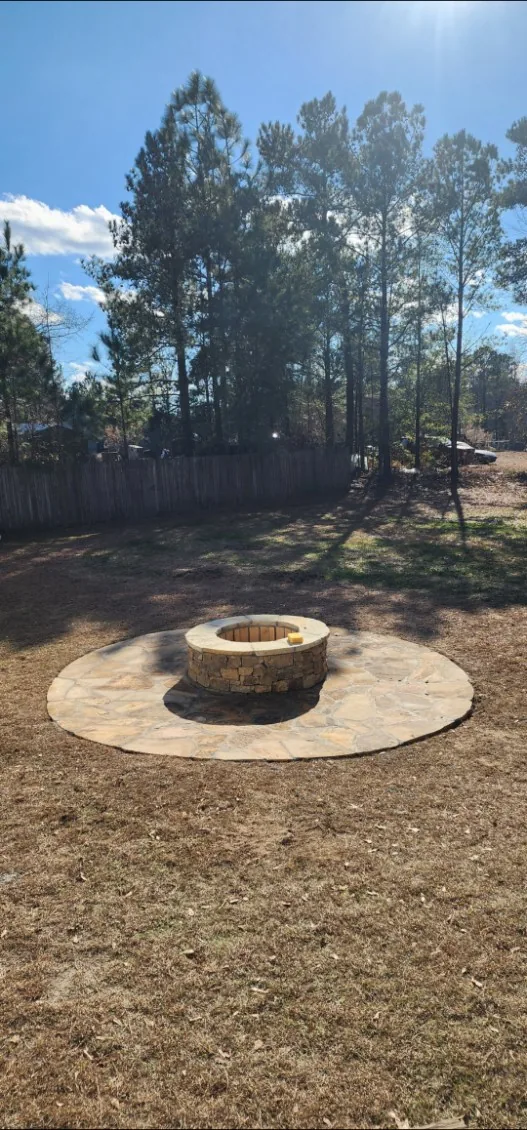
If the fireplace is one part of a larger backyard plan, read the fire pit cost page before you commit, because a fire pit and a built fireplace solve different problems and price very differently.
Finally, a note on scheduling season. Mountain weather compresses the outdoor construction calendar. A fireplace poured in late fall may sit through the winter before the stone goes on, and a homeowner who wants to be using the fireplace by the first cool evening in September usually needs the project under contract in spring. Asking a mason what their honest lead time is, and then planning backward from when you want to light the first fire, saves more frustration than any single line item on the quote.