Why two Arden water features the same size don't price the same
Arden sits in the French Broad valley south of Asheville, and the terrain does most of the talking. A lot off Sweeten Creek Road can be nearly flat pasture; a lot a mile east climbs a hardwood ridge toward the Blue Ridge escarpment. Same zip code, completely different build. On flat ground a waterfall is a pile of rock you truck in and stack. On a slope, the hill is free elevation — and also the reason every other line item gets harder.
That is the whole cost story here. The number isn't set by the size of the feature. It's set by how much earth you move, how many tons of stone get backed down a driveway that wasn't built for a dump truck, and how far a pump has to push water uphill. Two ponds that look identical in a photo can differ by five figures once you price those three things.
Consider what that means on the ground. Along the Fletcher border, where lots often flatten out after the last subdivision cut, a pondless waterfall might be a straightforward two-day dig: you set a basin, stack three or four boulders around a pump vault, and run a short conduit to an exterior outlet. Drive fifteen minutes toward the Cane Creek valley and the same feature sits on a 20-degree hillside where the mini-excavator has to be winched into position and every boulder is walked down by hand. The rock is the same rock. The labor isn't remotely the same.
The five line items that build your quote
Ask any builder for these separately and the quote stops being a mystery. Vertical drop is the height water falls or is pumped — every foot adds rock, liner, and pump head pressure. Liner and underlayment price by square footage of the actual basin plus a generous overlap, which is why a wide shallow pond costs more than a narrow deep one. Stone is sold by the ton, and mossy fieldstone hauled from a quarry an hour out is not the same line item as native rock pulled off your own property. Pump and electrical means a dedicated circuit, and in North Carolina any wiring or pump work tied into the home's plumbing or mechanical systems can pull in licensing requirements — see the NC State Board of Examiners of Plumbing, Heating and Fire Sprinkler Contractors for where that line sits. Access is the quiet killer: a machine that can't reach the back corner turns a two-day dig into a hand-dug week.
Two of those line items deserve more attention than they usually get from homeowners. The haul distance is real in Buncombe County because the closest sources of good mossy boulder are not always close. A load of three-to-five-ton granite or fieldstone that has to come up a narrow mountain driveway on a smaller truck, or be offloaded and moved again with a skid steer, adds cost that has nothing to do with the design and everything to do with the road. The electrical run is the other one: a pump needs a GFCI-protected circuit, and in older Arden homes the panel may not have spare capacity. A subpanel upgrade is a separate trade and a separate invoice, and it should be on the table before the first rock is set, not after.
Get the full picture of what a finished build includes on the stone waterfalls and ponds page before you compare bids.
Arden scope ranges, priced honestly
These are regional working bands for Buncombe County terrain, not a quote. Your lot decides where inside the band you land.
| Scope | Typical range | What moves it |
|---|---|---|
| Small bubbling rock or disappearing waterfall | $3,500–$7,500 | Single small basin, short electrical run, easy access |
| Pondless waterfall, 3–6 ft drop | $6,500–$14,000 | Rock tonnage, stacked boulder work, pump size |
| Pond with waterfall and planted edges | $12,000–$28,000 | Liner square footage, edging stone, fish-safe filtration |
| Multi-tier stream and cascade | $18,000–$45,000+ | Total drop, retaining structure, machine access |
| Slope stabilization tied to a feature | Add $4,000–$15,000 | Engineered wall, drainage, permitting |
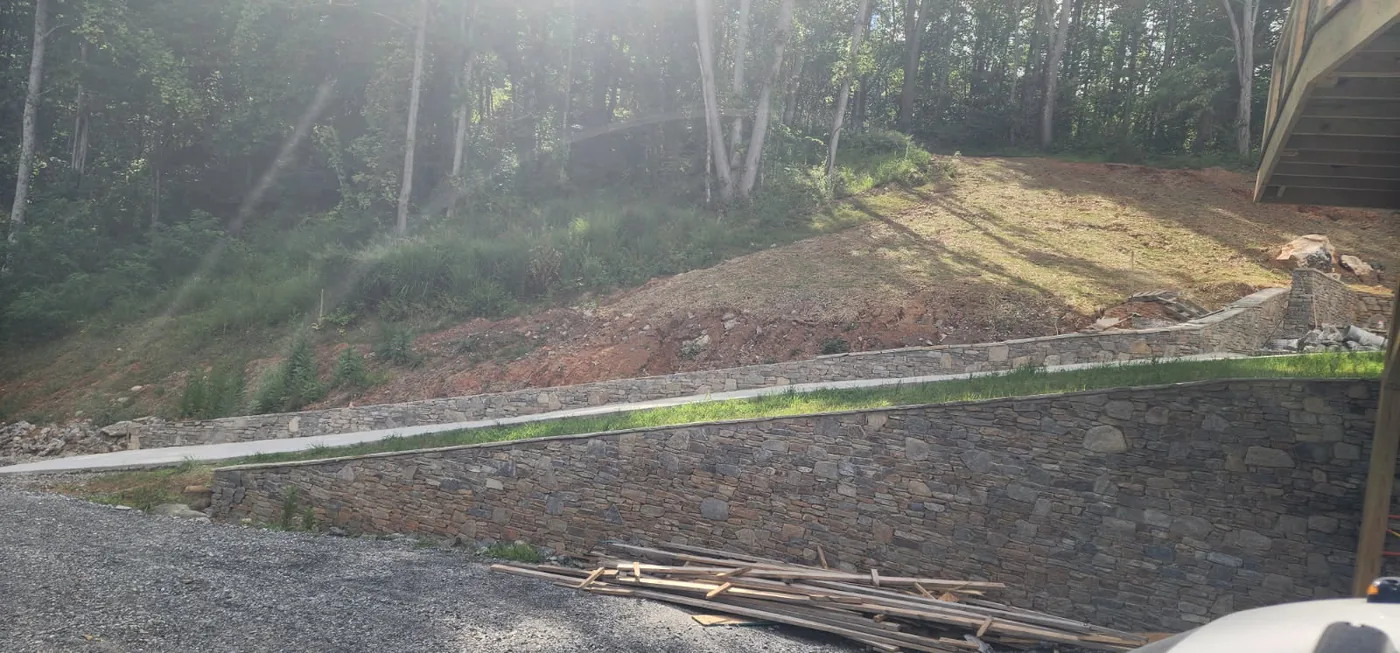
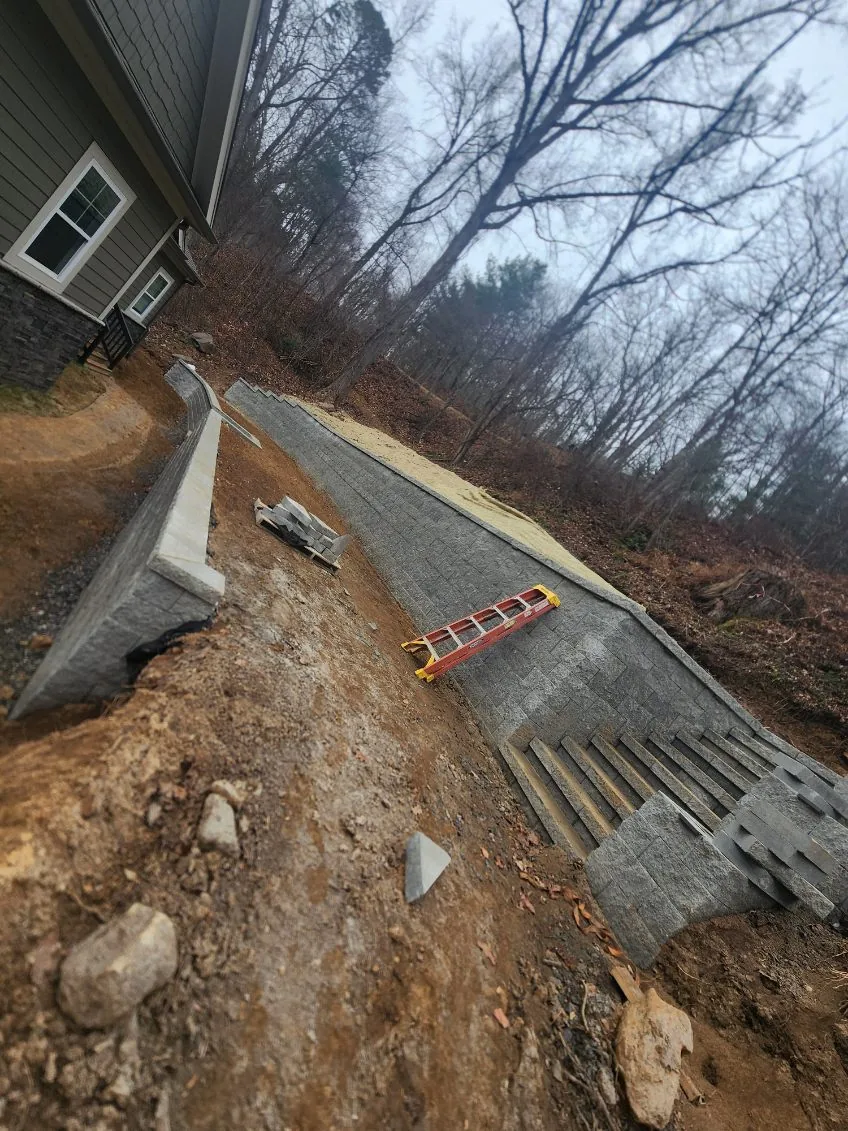
Notice that last row. When a waterfall is cut into a steep Arden hillside, it usually becomes a retaining structure at the same time — and retaining work carries its own pricing logic. Our Buncombe County retaining wall cost breakdown covers those numbers, and the crews who do both are listed on the Arden retaining wall contractors page.
One pattern worth flagging: the jump between a pondless waterfall and a full pond is not just liner and water volume, it's the edging. Edging stone is often the most labor-intensive part of a pond because every piece is hand-fit at the waterline so the liner disappears, and a pond with a natural-looking planted edge can carry more stone tonnage than the waterfall feeding it. If the budget is tight, ask the builder to price the waterfall and the pond as two phases and decide whether the pond is worth doing now or next season.
Water, storms, and why the drainage plan comes before the pretty plan
Buncombe County's federal disaster record is the reason every experienced builder here asks about uphill runoff before they ask about rock color. 19 declared events touch this county across 1973-2026, and the pattern is overwhelmingly storm and flood family. A waterfall is a recirculating system — it moves the same water over and over — but the ground around it still has to handle whatever a hard summer storm drops on the slope above. If a feature becomes the low point of a hillside, the first big rain will tell you in the form of a mud-filled pond.
So the design sequence is drainage first, then shape, then stone. Grading that sends uphill water around the feature instead of through it, a spillway that handles overflow, and an outlet that doesn't dump onto a neighbor's lot. The NC Building Code Council and the state fire marshal's engineering division both touch site and electrical requirements that apply once a project crosses certain thresholds — worth knowing before an electrical drop goes in next to water. The EPA also publishes stormwater guidance that's genuinely useful when you're deciding where runoff should go.
In practical terms, that means a builder should walk the hill above the feature with you and point out where the water arrives. On many Arden lots the answer is a driveway culvert or a neighbor's roof drain, and either one can be intercepted with a simple swale or buried French drain before the basin is dug. It also means asking where the feature's overflow discharges in a 100-year rain. A trickle that exits toward a septic drain field or a crawlspace foundation is a problem the feature just created. Handle it during the dig, when a small excavator is already on site, and the fix costs a fraction of what it costs to repair later.
Hiring in this market without getting burned
Three checks that matter more in Arden than anywhere. First, ask whether the crew has built on your grade — a builder who only does flat-lot ponds will either decline the slope or improvise on it, and improvising is expensive later. Second, ask who signs off on the retaining structure if the feature needs one; North Carolina's general contractor licensing rules via the NC Licensing Board for General Contractors apply once a project passes the statutory threshold, and a wall holding back a hillside is not a decorative garden border. Third, ask for the electrical plan in writing before work starts, since water and power share a trench and that's where corners get cut.
Two more questions separate the pros in this market. Ask who is responsible for the pump and filtration warranty after the last rock is set, because a feature that loses water or clogs within the first season should not become your problem. And ask to see a project they built at least two years ago, in person if possible. A waterfall looks finished the day it's stacked; whether the liner is still tight and the pump is still lifting water two winters later is the real test in this climate, and a builder with local references should be able to show you one.