Why Mars Hill walls work differently than Asheville's
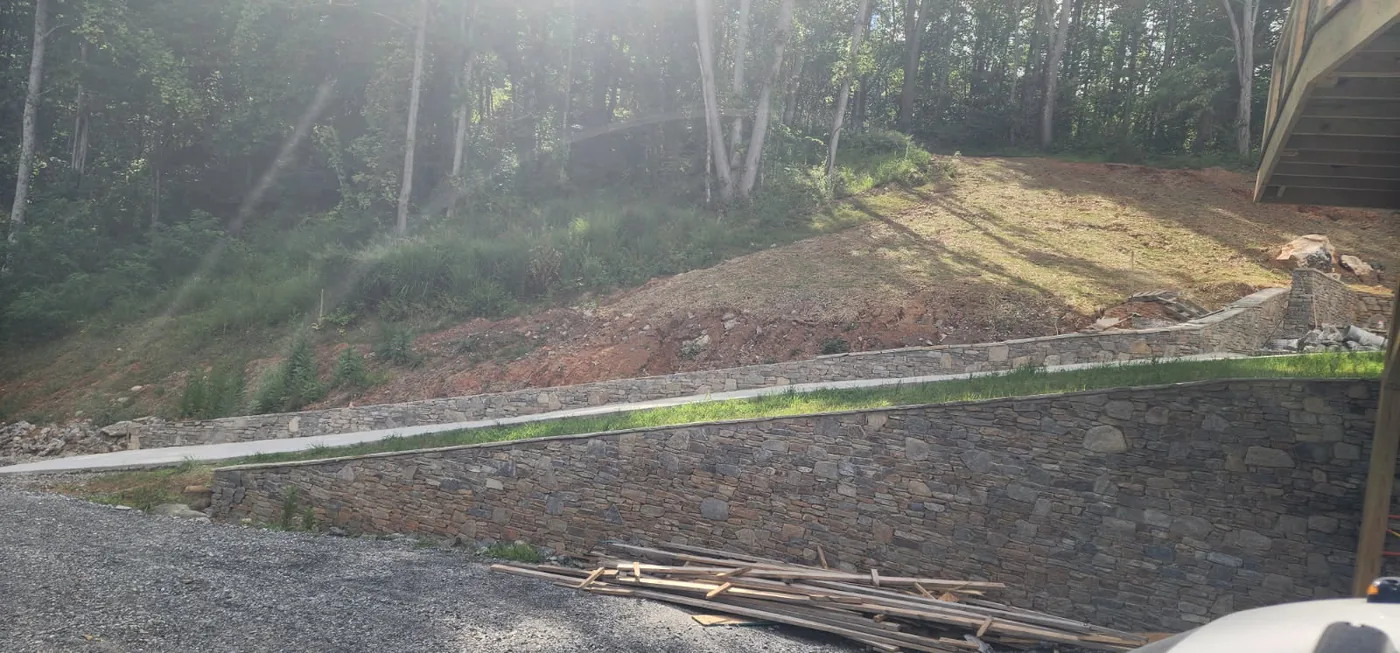
Mars Hill grew up as a college town on a bench of land that tips hard toward the French Broad Valley, and the lots show it. Drive the streets off Main Street and you'll see what we mean: narrow frontages carved into the hillside, retaining walls holding the yard up before the house even starts, and a lot of homes where the downhill side of the foundation is exposed two or three feet more than the uphill side. That geometry changes a stone veneer job.
When we quote stone veneer installation in Mars Hill, the first thing we look at isn't the stone. It's what's holding the wall. A veneer wall built on a footer that's already moving, or over a crawl space that's taking on water from the uphill slope, will crack no matter how good the stonework is. The second thing we look at is orientation. North-facing walls here stay damp through February, and if the top of the wall isn't flashed correctly, freeze-thaw does the rest. That's not an Asheville problem in the same way — Asheville's hillsides drain differently and its lots are typically wider. Mars Hill lots are tighter, steeper, and more likely to have a neighboring slope pushing water at your house.
So the sequence matters: water management, then substrate, then stone. Anyone selling you veneer without walking the grade first is selling you a future repair.
What Mars Hill stone veneer work actually costs
Madison County pricing tracks close to Buncombe but with a slope premium on the labor side, because staging on a hillside lot eats time. The table below shows the ranges we see for typical Mars Hill homes. These are installed prices including materials, prep, lath, scratch coat, and finish, but not including structural repairs or major drainage work if those are needed.
| Scope | Typical Price Range |
|---|---|
| Wainscot veneer, 100-150 sq ft (single-story front) | $3,200-$5,800 |
| Full front wall veneer, 200-300 sq ft | $7,500-$14,000 |
| Full chimney reface, single flue | $4,500-$9,000 |
| Foundation perimeter veneer, 300-400 linear ft | $12,000-$22,000 |
| Full-house veneer, 800-1,200 sq ft | $24,000-$48,000 |
| Retaining wall veneer over existing block | $45-$90 per sq ft of face |
Stone selection moves the number more than anything else. Local fieldstone and thin-cut Tennessee ledger stone sit at the low end; full-bed natural stone, imported travertine panels, and manufactured stone with a deep profile sit higher. If your wall needs new sheathing or the existing lath is failing, add $1,200-$3,500 on a typical Mars Hill home.
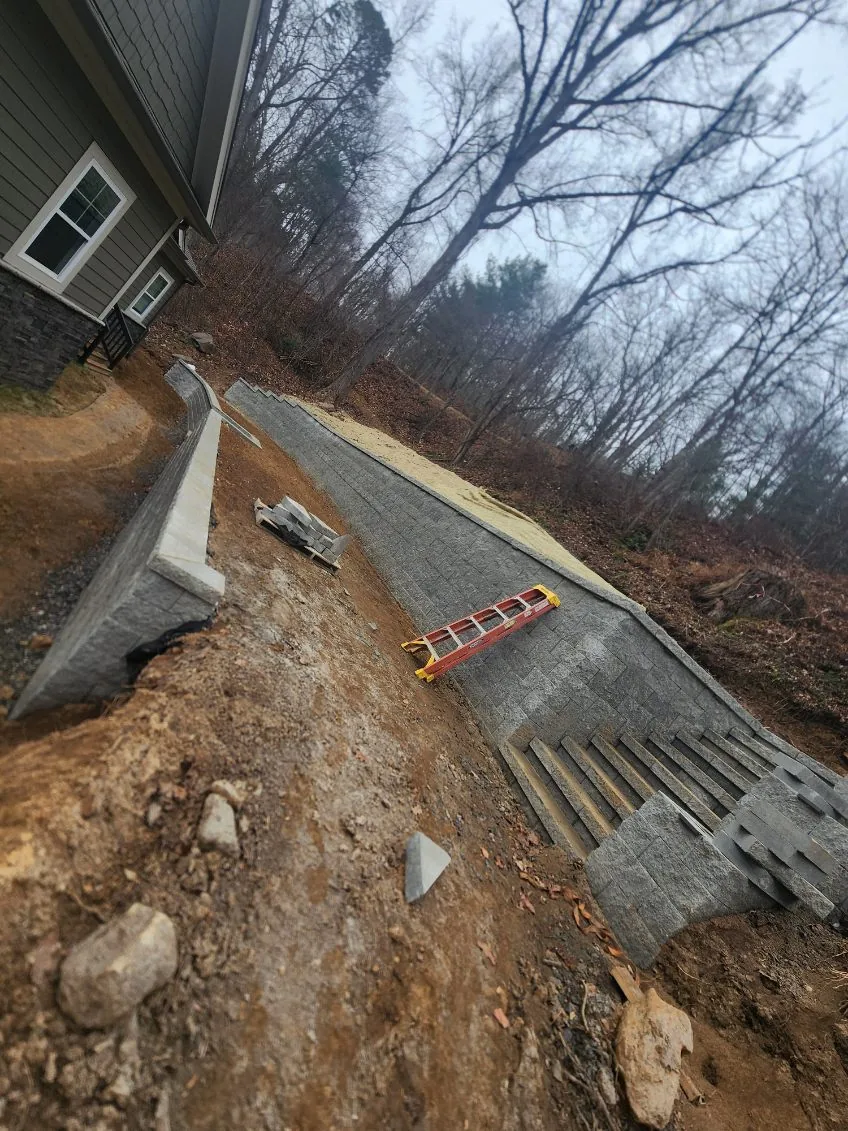
When a wall is also doing retaining work, the cost picture overlaps with our Madison County retaining wall pricing, which covers the structural side separately from the veneer finish.
The county rules and code that shape the job
Stone veneer is cladding, not structure, so most residential veneer projects in Mars Hill fall under the repair and maintenance carve-out rather than a full building permit. But two things change that. First, if the wall you're veneering is also a retaining wall over a certain height, Madison County treats it as a structural permit and the plans go through review. Second, if the veneer covers a chimney, a fire-rated assembly is involved, and that's where code requirements tighten. The International Code Council publishes the model codes North Carolina adopts, and the relevant sections on adhered veneer, lath, and weep screed are worth knowing before you approve a scope.
For projects large enough to cross the state threshold, the North Carolina Licensing Board for General Contractors sets the licensing line. If your veneer job is part of a larger renovation or new construction over that threshold, the contractor pulling the permit needs to be licensed. We mention it because hillside properties here sometimes trigger a scope that's bigger than the homeowner expected once the drainage and retaining work gets added in.
If the veneer work involves repointing or rebuilding a masonry chimney with a firebox or flue component, that touches the plumbing and heating contractor side in some scopes, and the North Carolina State Board of Examiners of Plumbing, Heating and Fire Sprinkler Contractors governs that licensure. It's not usually the whole job, but it's a good question to ask the crew before you sign.
Drainage, freeze-thaw, and the storm record
Madison County has seen 21 federal disaster declarations across a record spanning 1978-2026, and the pattern here is the same as the rest of the mountains: water events, not seismic. Every one of those pushed water against walls that were not designed for it. Stone veneer over a wet substrate fails from the inside out — you'll see spalling faces and efflorescence before you see a crack. Before we install any veneer in Mars Hill, we want to know where the roof water goes, how the neighboring slope drains, and whether the existing wall has a drainage plane. If it doesn't, we build one.
North-facing walls at this elevation take a real freeze-thaw cycle from December through March. Adhered veneer with a proper weep screed and a drainage mat handles it fine. Veneer installed tight to a wet wall does not. This is the single biggest quality difference between a quote that lasts twenty years and one that lasts five, and it's invisible on the invoice — which is why we walk the grade before we quote.
Choosing a crew for a Mars Hill veneer job
The mountain market has plenty of crews who can lay stone and fewer who understand hillside walls. Three questions worth asking: have they worked on a lot with a neighboring slope above the house, can they show you the flashing and weep detail on a finished wall, and do they coordinate with whoever's handling the drainage and retaining side. If the answer to the third question is vague, expect the veneer and the drainage to get done in the wrong order.
Our stone veneer service page lays out the process we use, and if your project includes a retaining wall under the veneer, our Mars Hill retaining wall contractors page covers how we sequence that work. The two scopes touch on almost every hillside job here, and getting them coordinated early saves real money.