The Mars Hill build calendar, start to finish
A waterfall on a Mars Hill hillside does not get built the way it does in the flatlands. The first visit is a walk of the grade: where the water enters the property, where it wants to go, and where it will pool if the December rain gets its way. That walk alone often decides whether the feature reads as a gentle 18-inch spill or a 4-foot drop, because the slope you have dictates the drop you can honestly build. Only after that walk does anyone talk liner width or pump size.
From there a typical build runs in this order: layout and grade check, excavation and sub-grade shaping, underlayment and liner set, boulder placement and falls carving, plumbing and pump vault, edge concealment with native stone, water test, planting, and finally a fill-and-cycle week where you run the feature and watch for leaks before the crew calls it done. A small feature usually finishes in three to five working days. A larger cascade with a pond and a retaining header takes one to three weeks, weather permitting. If the access is a steep gravel drive off a mountain road, add days for moving boulders and machine time, not for the waterfall itself.
Why Madison County terrain sets the price
Mars Hill sits in Madison County, where the ground rolls, the creeks cut, and the freeze line moves. A feature that would need a modest header wall in the Piedmont may need a genuine structural retaining element here, because the soil above the falls wants to move downhill and the weight of saturated ground behind a liner edge can push it out. That is why boulder selection and header design matter more than pump brand on these lots. Flat-ish yards near downtown Mars Hill and the college corridor price closer to regional norms; ridge and hollow properties price higher because every ton of stone has to be placed, not just delivered.
Water source is the other local variable. Spring-fed and well-supplied features are common in Madison County, and a pond or falls fed from a spring needs an overflow and a low-point drain designed in from the start. Tying a feature to a roof-drainage line or a driveway wash is a common shortcut that fails in the first hard rain. Get the overflow right and the water feature behaves for years.
Scope versus price, in table form
These are honest regional bands for the trade in and around Mars Hill, not a bid. Terrain, access, boulder size, and whether new retaining work is needed move every line.
| Scope | Typical range |
|---|---|
| Small single-drop falls, liner and boulders only | $4,500–$9,000 |
| Pond-and-falls combo, modest grade, standard liner | $6,500–$14,000 |
| Multi-drop cascade with larger boulder work | $12,000–$22,000 |
| Falls tied to a new retaining header or wall | $18,000–$30,000+ |
| Pondless waterfall, replace liner or rebuild | $3,500–$8,500 |
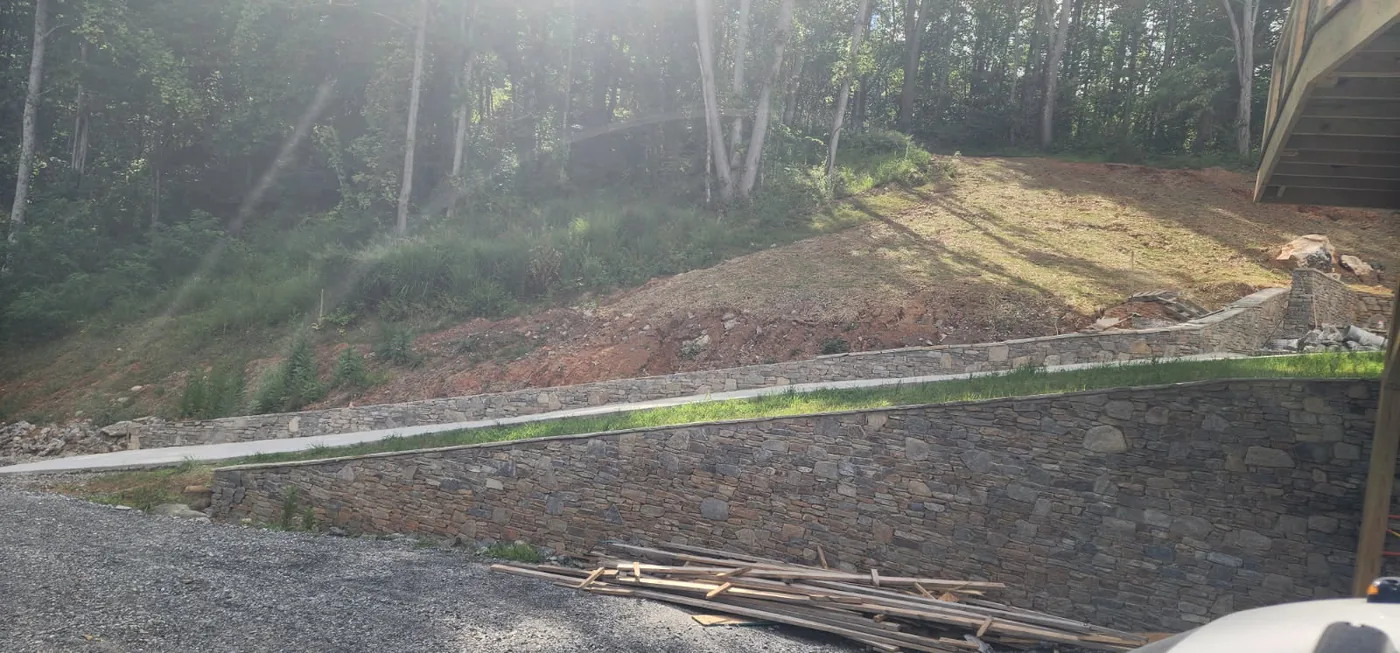
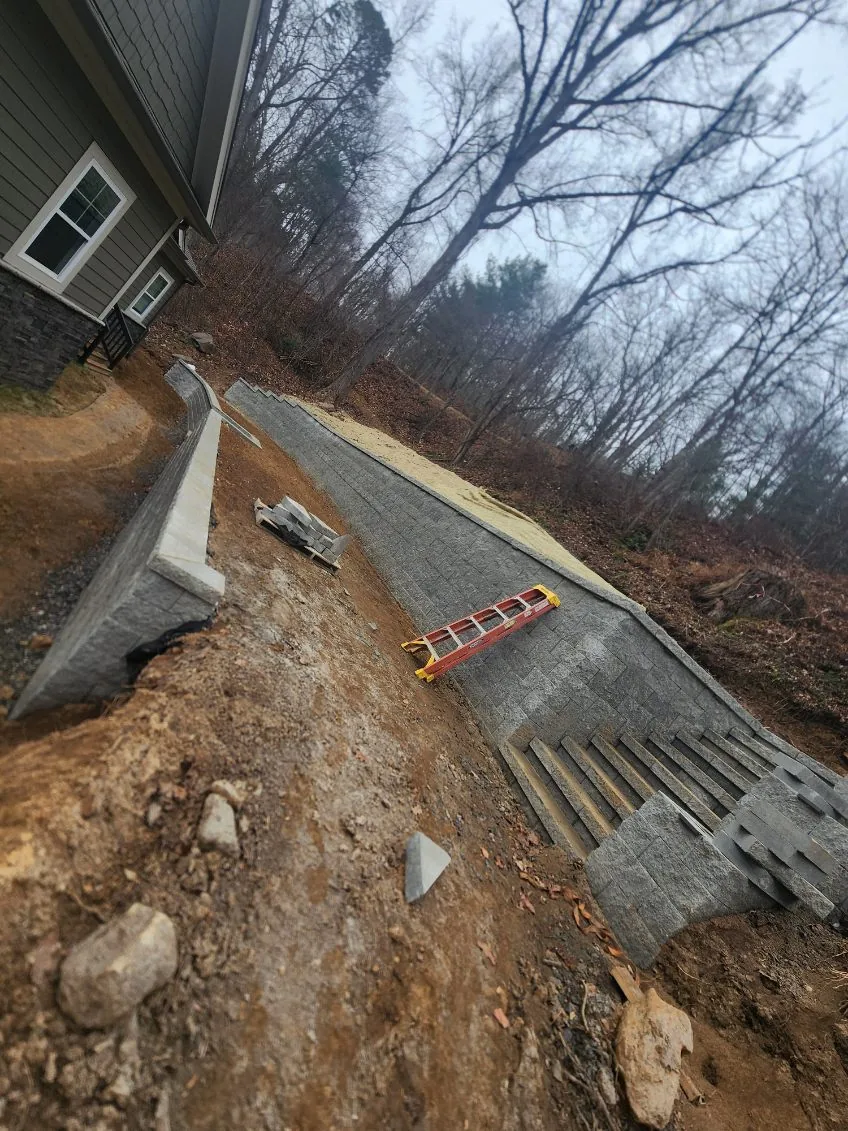
For the wall component specifically, see the Madison County retaining wall cost page; that number should be visible in the quote as its own line, not buried in the falls price.
Water rules, permits, and who can legally build it
Most residential ornamental ponds and waterfalls do not need a state permit, but the moment a feature intercepts a stream, disturbs a creek bank, or moves sediment toward a waterway, North Carolina rules apply, and the NC Department of Environmental Quality is the office that cares. Mars Hill's topography means stormwater from your falls overflow has to go somewhere sensible. Design the overflow toward a stable, vegetated outlet rather than the neighbor's driveway, and the project stays simple.
On the contracting side, the North Carolina Licensing Board for General Contractors sets the threshold where a project stops being a handyman job and starts being a licensed-contractor job; large hardscape and retaining scopes can cross that line. Ask any builder whether they carry the right license for the size of your job, and get the answer in writing before work begins. For the safety and code backdrop on retaining elements that hold grade, the International Code Council codes are what local plans reviewers reference. If your project is on a steep lot near a creek, it is worth a call to the county before anyone digs.
Storm history is why the drainage gets built first
21 federally declared events have touched this county across 1978-2026, and the pattern is mostly storm and flood family. That history is the practical reason a Mars Hill waterfall build starts with drainage, overflow, and grade rather than with stone. A feature that sheds a 10-year rain cleanly will survive the week the creek rises; one that pools against the liner edge will not. The National Weather Service keeps the local outlook that crews watch when scheduling the water test. If you want the feature-side design vocabulary before you call, the stone waterfalls and ponds guide covers the elements a good build should include, and the Mars Hill retaining wall contractors page explains how the wall side is scoped when the grade needs to be held.
How to read a waterfall quote without getting burned
Ask for the quote in the build order: excavation hours, liner square footage and underlayment, boulder tonnage and where the stone comes from, pump and vault specs, overflow and drain line, planting, and the water test. A quote that lists only a lump sum is hiding the variance in tonnage and access, which is exactly where the Mars Hill builds go over. Ask, too, what happens if excavation hits rock or an old spring line, because on these hillsides it sometimes does. A serious builder names that risk up front and gives you a per-day or per-ton adder before the first shovel goes in.
Finally, ask whether the builder stands behind the liner and the plumbing with a written workmanship term. Water features fail at seams, at the pump vault, and at the edge where the liner meets soil, and a one-season warranty does not cover the winter that exposes the mistake. Good local builders will put the term in writing without being pushed.