Why a Lake Junaluska patio quote starts at the driveway
A paver patio on the lakeside of Junaluska and a paver patio in a flat Waynesville subdivision can be the same square footage and thousands of dollars apart. The difference is almost never the pavers. It is whether a loaded tandem-axle dump truck can pull to the patio edge and whether a mini excavator can move enough dirt to build the base by machine rather than by wheelbarrow.
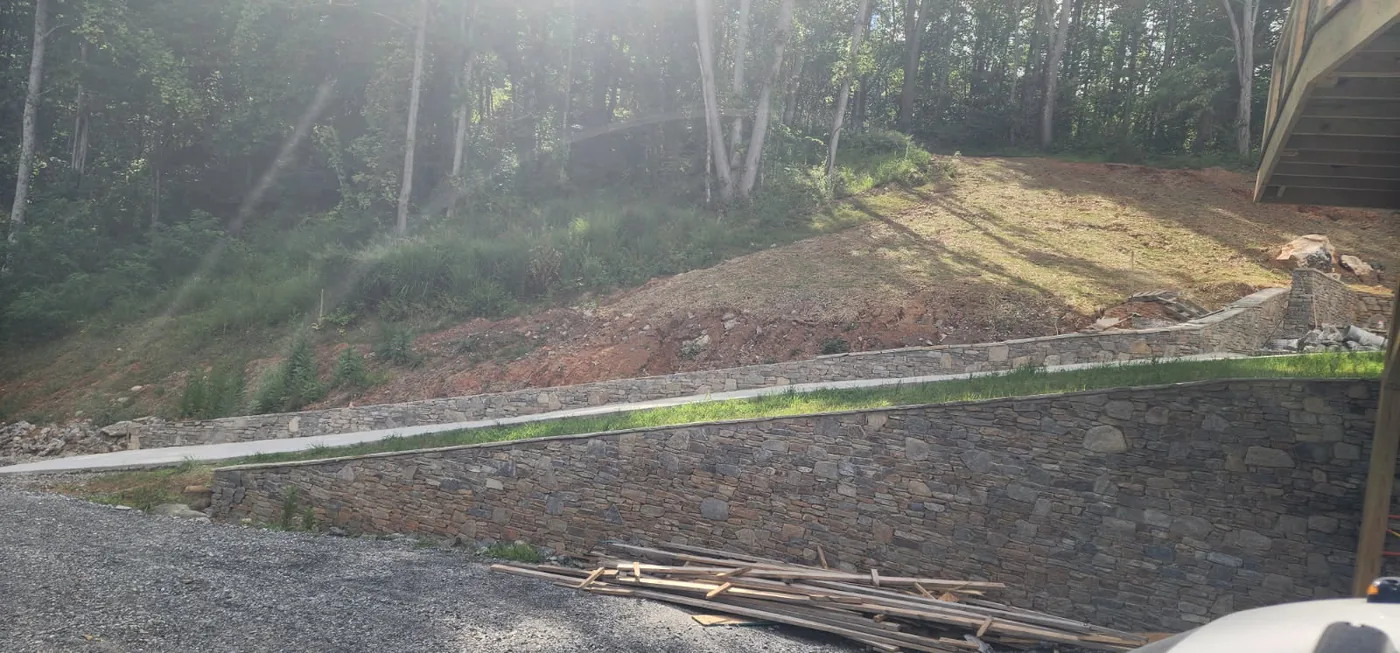
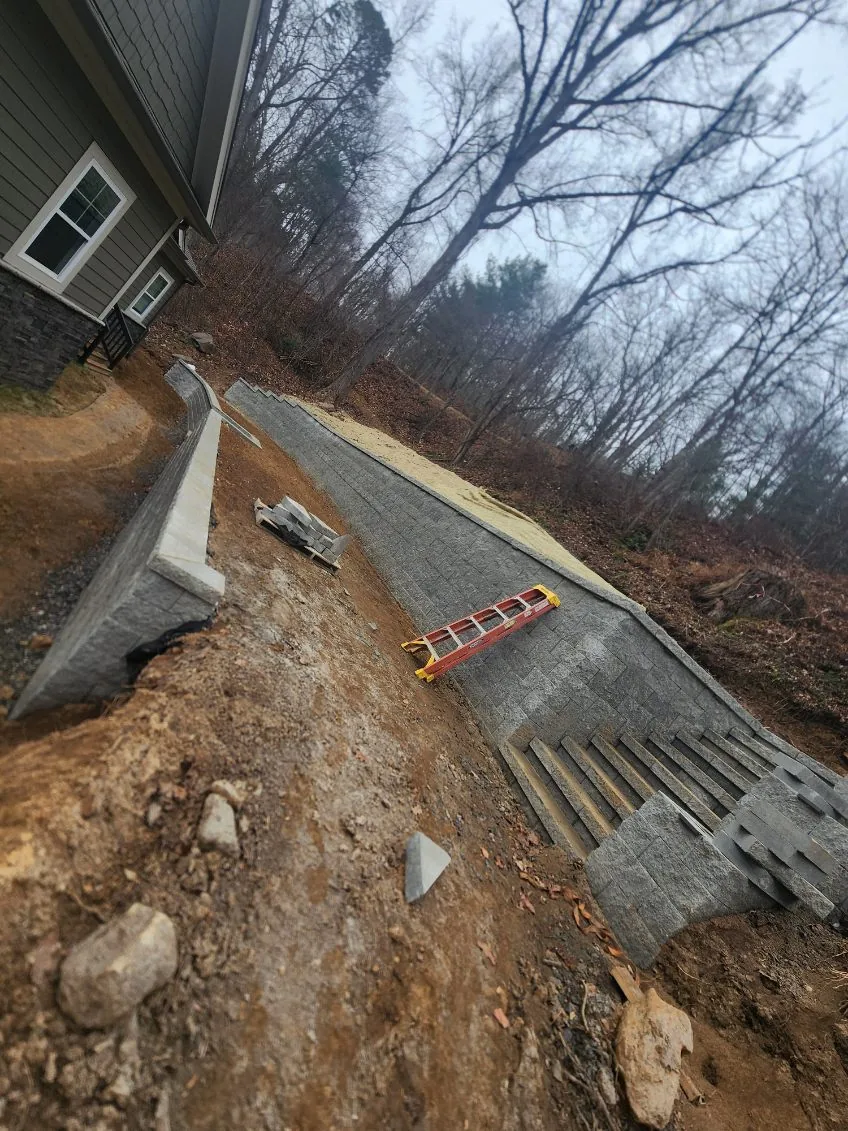
Around the lake, hillside lots drain down toward the water, and the road that gets you there often narrows before it gets to your door. Stone, sand, and compacted base course all have to reach the excavation, and the last fifty feet of that trip is billed at a labor rate. When the answer is "carry it," the same patio carries a different number. When the patio is above the road on a steep cut, add a retaining wall. When there is no street parking for the delivery truck, add a long hose-and-pump or shuttle arrangement. None of that is a markup — it is what the ground under this town actually charges.
For current official guidance, see the North Carolina State Board of Examiners of Plumbing, Heating and Fire Sprinkler Contractors. For current official guidance, see the U.S. Environmental Protection Agency (EPA).
Waynesville is the county seat and the supply hub, but Junaluska's terrain is its own animal. The roads that circle the lake — Lakeshore, the Methodist Assembly tracts, and the residential lanes off US-19 — tend to be narrow, curved, and lined with mature hemlock and white pine. A tri-axle dump truck is not making a three-point turn on most of those drives. That reality is why two crews can bid the same 400-square-foot patio and land $8,000 apart. One walked the drive; the other measured a rectangle on a satellite image.
Access and haul: the line items that decide your price
The difference between a low bid and an honest one in this town is usually whether the bidder bent over to look at your driveway. Here is how the variables typically land.
| Access / site condition | What it means for the build | Typical added range |
|---|---|---|
| Truck can back to patio edge | Machine excavation, direct dump | Base price |
| 50-150 ft carry or narrow drive | Mini skid, manual base placement | +$1,200-$4,000 |
| Steep grade, no equipment access | Long hose mortar, pumping, more labor hours | +$2,000-$7,000 |
| Patio above road on a cut bank | Engineered retaining wall added to scope | +$3,500-$12,000 |
| High side below water table / hillside seep | Subdrain, gravel blanket, extra base depth | +$1,500-$5,000 |
| Long soil haul-off | Spoil trucked out, disposal cost | +$800-$3,000 |
The base itself is where the money lives. A proper excavation, four to twelve inches of compacted base, bedding sand, edge restraint, and polymeric joint sand cost about as much as the pavers on top. A crew quoting square-foot-only numbers has either counted the access problem or ignored it, and one of those two is going to surprise you in week two.
Haul distance adds its own line. Aggregate and pavers for most Haywood County work are trucked in from quarries around the region, and a Junaluska address can mean a longer round trip than a Waynesville or Clyde job on flatter ground. That does not change the material price by itself, but it does change how many loads a crew can place in a day — and day rate is what a lot of the labor line is built on. A patio that needs eight loads instead of six because of a tight turn-around is a slower build, and slower builds cost more.
The cost picture for a patio this size
For a typical 300 to 500 square foot patio, installed, Lake Junaluska paver work generally runs $9,000 to $28,000 depending on access, wall, drainage, and paver selection. Small simple slabs nudge under that; a walled, dimmable-lighting, lakeside terrace with engineered retention can push past it. When the retaining scope takes over the job, the wall numbers matter more than the paving numbers, so the Haywood County retaining wall cost breakdown is the table to read next.
Two honest caveats. First, any quote that arrives before someone stands on your grade is a guess, and a polite one is still a guess. Second, the line between driveway repair and patio base prep is where grade-and-drainage work is easiest to skip on paper and hardest to skip in fact. Water that leaves your patio under your house is not a finish problem.
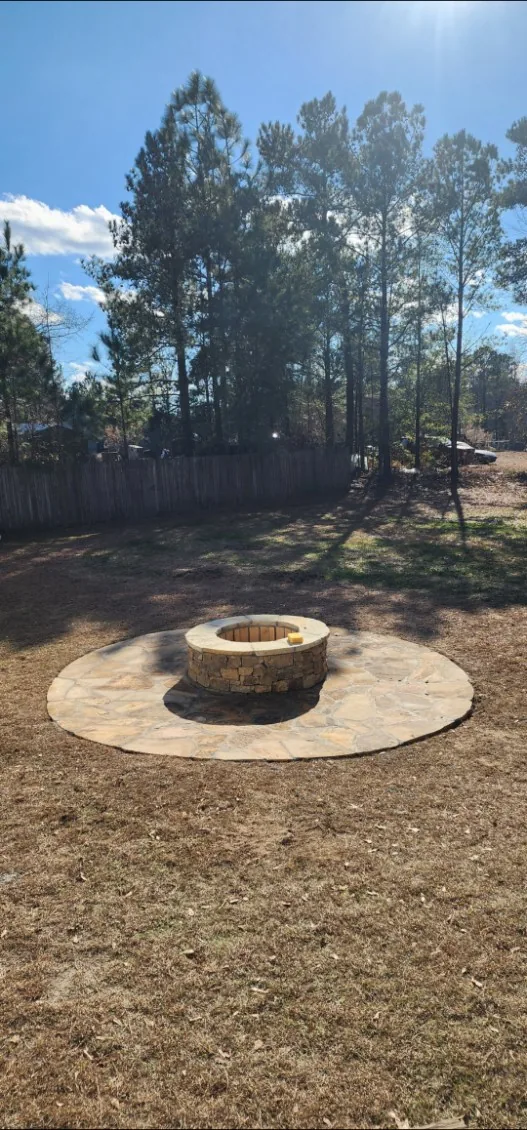
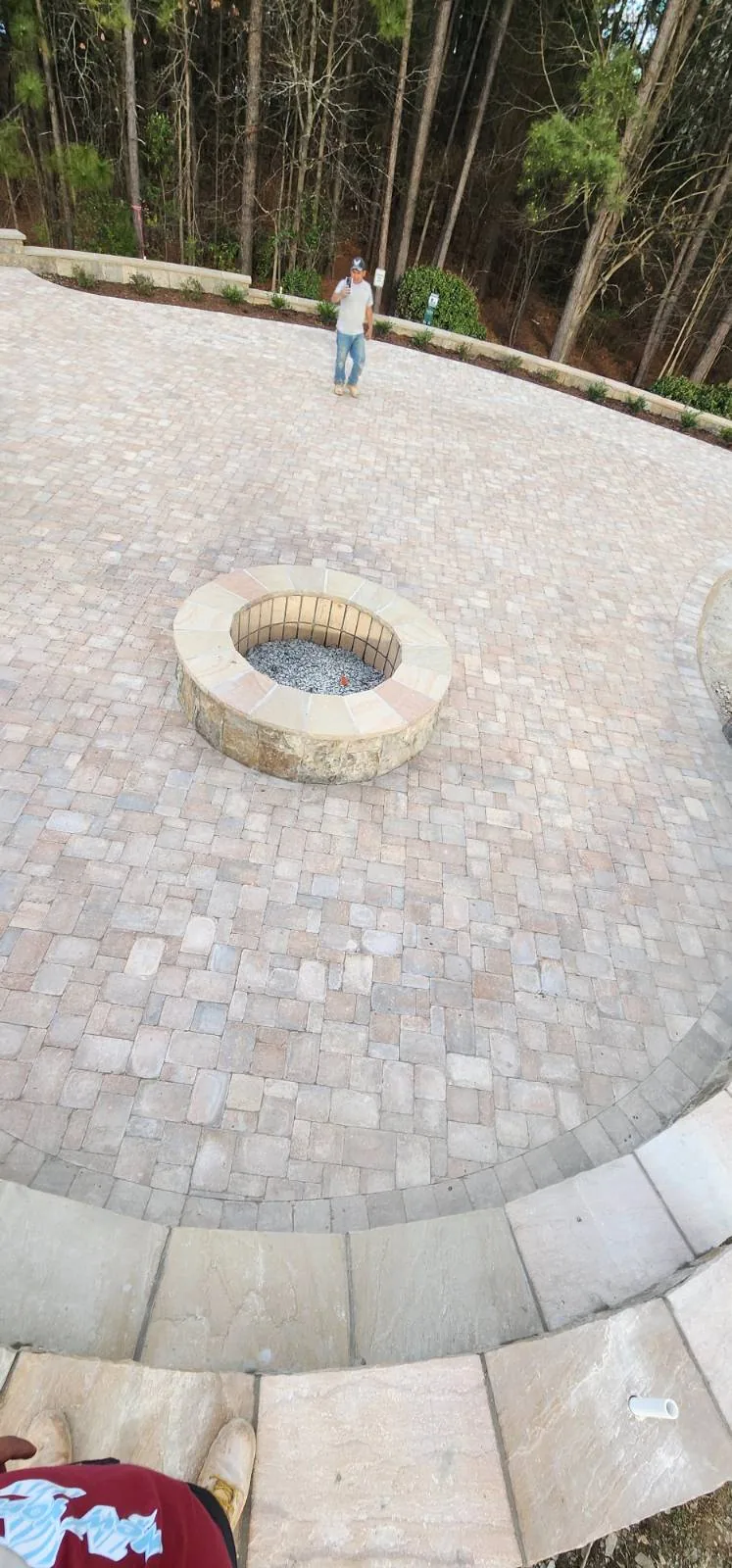
Most Junaluska patios are not a simple rectangle on flat ground. They are often an L or a stepped terrace to work with the grade, with a seat wall on the uphill side, a step down to a lower landing, or a fire pit cut into the slope. Those shapes add edges, edges add restraint and cuts, and cuts add hours. A plan that respects the hill usually costs less than one that fights it. Ask your installer to show you, on paper, where the water goes and where the wall ends before you sign for a paver pattern.
Build it for the slope and the storm record
Haywood County has seen 19 federal disaster declarations across 1973-2026, and the pattern here runs to heavy rain, slope movement, and water arriving with force. That history should change how your patio is built even when your lot looks peaceful. Subbase depth, a positive slope away from the house, a subdrain at the uphill edge, and a clean path for runoff to the street or lake side all matter more when the rain arrives like it does here.
Where a patio sits on a steep residential grade, retaining structures and site work can cross into scopes where the North Carolina Licensing Board for General Contractors sets licensing thresholds, so it is fair to ask a contractor which parts of the job they are licensed to perform and which parts they sub out. The permitting is local, but the wall is your money.
The soils along these ridges and lakeside slopes are often a mix of clay and weathered rock, and that combination holds water. A patio base that would drain fine on sand can perch water against your foundation on a Junaluska hillside. That is why a gravel blanket, filter fabric, and a positive outlet for the uphill subdrain are not extras here — they are the difference between a patio that survives a wet spring and one that heaves, settles, and grows weeds in the joints by the second summer. The paver pattern is the visible part; the buried details are the part that keeps it level.
What good base work looks like before anyone sells you pavers
Ask the crew three questions. How deep will the base be for my soil and my slope? How is the edge restrained, and is it pinned or just glued? Where does water leave the patio when it rains hard, and will that still work when half the subdivision has patched its yard since? If the answers arrive as adjectives instead of numbers, keep asking.
Whether you are planning new hardscape or repairing failed mortar under a smaller step project, the broader paver patio overview covers the sequence a proper installation follows. And if the wall is doing most of the work on your project, the Lake Junaluska retaining wall contractors page speaks to that scope in the same terms.
A good install day looks boring. Excavation to the depth called out on the plan, compacted lifts in the base, snapped string lines to check pitch, edge restraint pinned per manufacturer, and a final pass with a plate compactor before the joint sand is swept in. If you only watch one thing, watch the base depth and the compaction. Any crew that treats the base as a formality is a crew that will be back next year to fix what water did to their shortcut.