How a Woodfin fire pit build actually sequences
Most homeowners picture the finished circle and skip the part that decides whether it lasts: the order of work. In Woodfin, a reputable crew moves through the same steps every time, and the schedule you're quoted should reflect them.
Day one is layout and digging. The crew strings out the pit footprint and the patio edge, calls for utility locates (mandatory before any shovel touches ground near a gas or water line), and excavates. Woodfin sits in the French Broad valley north of Asheville, so the ground under a lot of these yards is river-deposited gravel, cobble, or fill — which digs fast but doesn't compact into a stable base the way people assume. That matters by the next step.
Days one and two are base. Crushed stone goes in lifts and gets compacted; on softer valley ground, expect deeper excavation and more base material than a ridge-top lot would need.
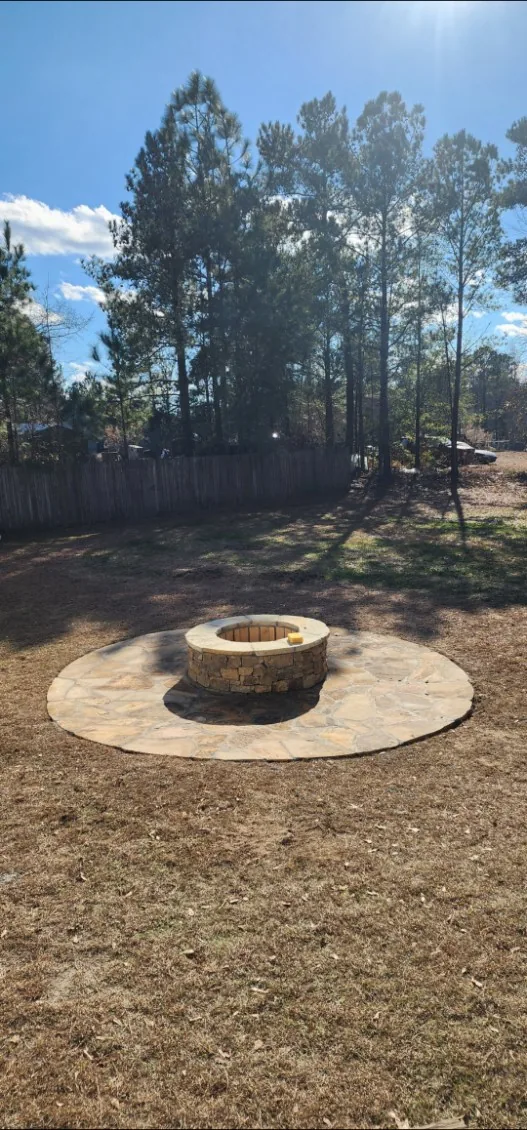
Days two through four are the build itself. The pit goes up on a compacted base with a drainage-friendly core, then stone or block veneer, then the cap. If you're running a gas line, that's trenched and pressure-tested before anything closes up.
The last stretch is finish and cure. Mortar or adhesive needs time before you light a fire. A simple build wraps in a few days; a full outdoor room with a paver patio, seat wall, and lighting runs two to three weeks of working days, and mountain weather can add to that.
What drives the price in Buncombe County
Woodfin pricing tracks the county, and the fire pit work we do breaks into bands that reflect material and site, not brand. The biggest single variable is whether you're adding a gas line, and the second is how much ground has to be reworked before the first stone sets. A flat, firm yard over good drainage is the cheap version of this job; a sloped lot draining toward the house is not.
| Scope | Typical range | Working days |
|---|---|---|
| Simple kit pit, homeowner-set, no hardscape | $600–$1,600 | 1–2 |
| Built-in block-and-stone pit, wood-burning | $2,600–$6,500 | 2–4 |
| Gas pit with trench and pressure test | $4,500–$9,800 | 3–6 |
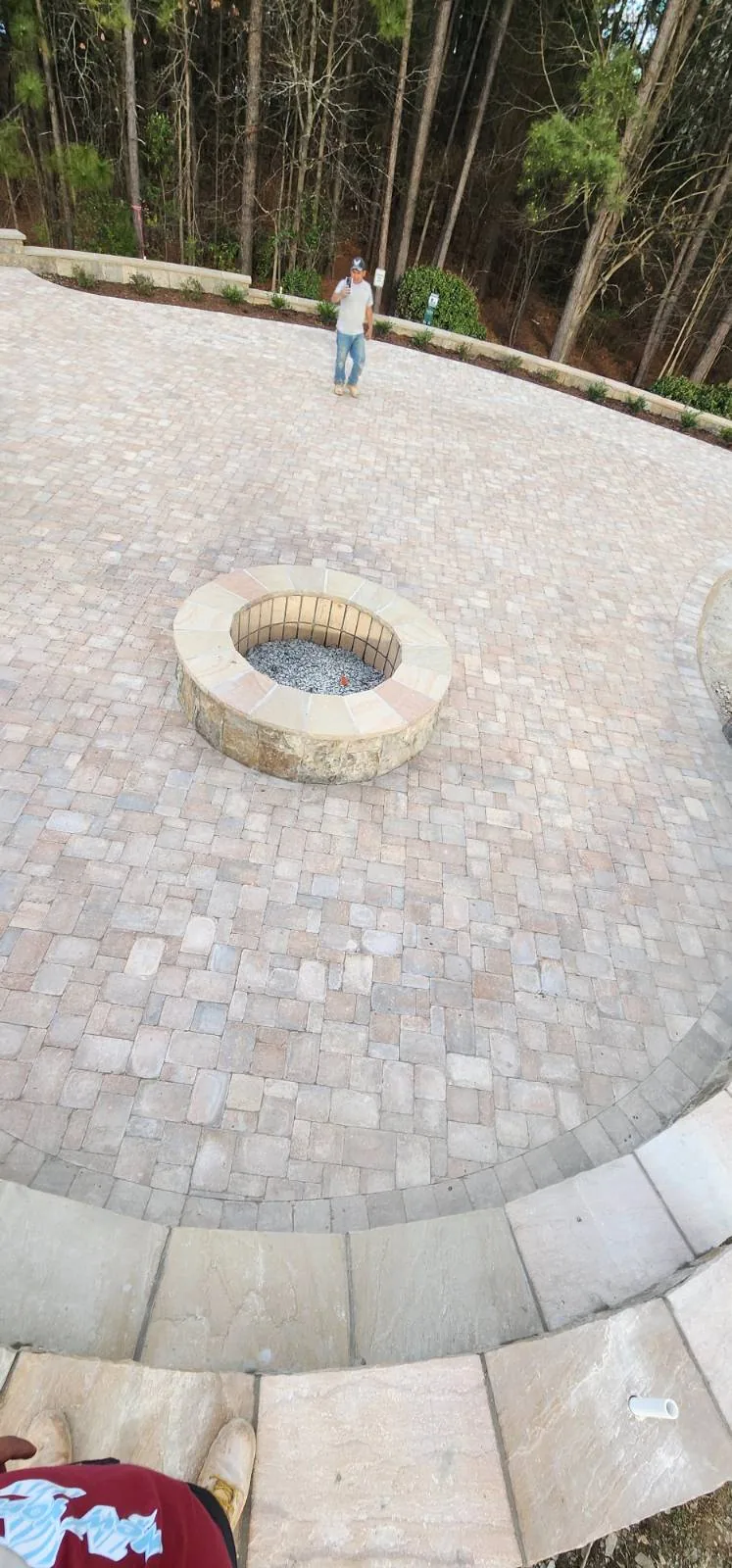
| Pit plus paver patio and seat wall | $9,000–$22,000+ | 2–3 weeks |
| Slope or drainage correction added | +$1,200–$5,000 | adds 1–4 |
Those numbers are regional working bands, not quotes. Site conditions decide where in the band a given yard lands, and no honest builder commits to a figure before seeing the ground and the gas situation.
Wet ground, slope, and the storm record
The French Broad corridor floods, and it has done so repeatedly — 19 federal disaster declarations have touched this county across 1973-2026, and the pattern here is storm and flood, not fire. For a fire pit, that history is not abstract: a pit dug into a yard that ponds after a hard rain becomes a bowl of ash and standing water. Your builder should be reading drainage first, pit second.
Two rules follow. Grade the ground so the pit sits slightly above its surroundings, and never bury a fire feature downhill of the structure it serves. The National Weather Service maintains the flood and precipitation record for this region, and the general code guidance that governs site drainage — the same logic that keeps a foundation dry — applies here. If the yard already needs regrading, that conversation belongs before the pit, and often pairs with the retaining and grade work in our Woodfin retaining wall work.
Hardscape and structure: where the line items come from
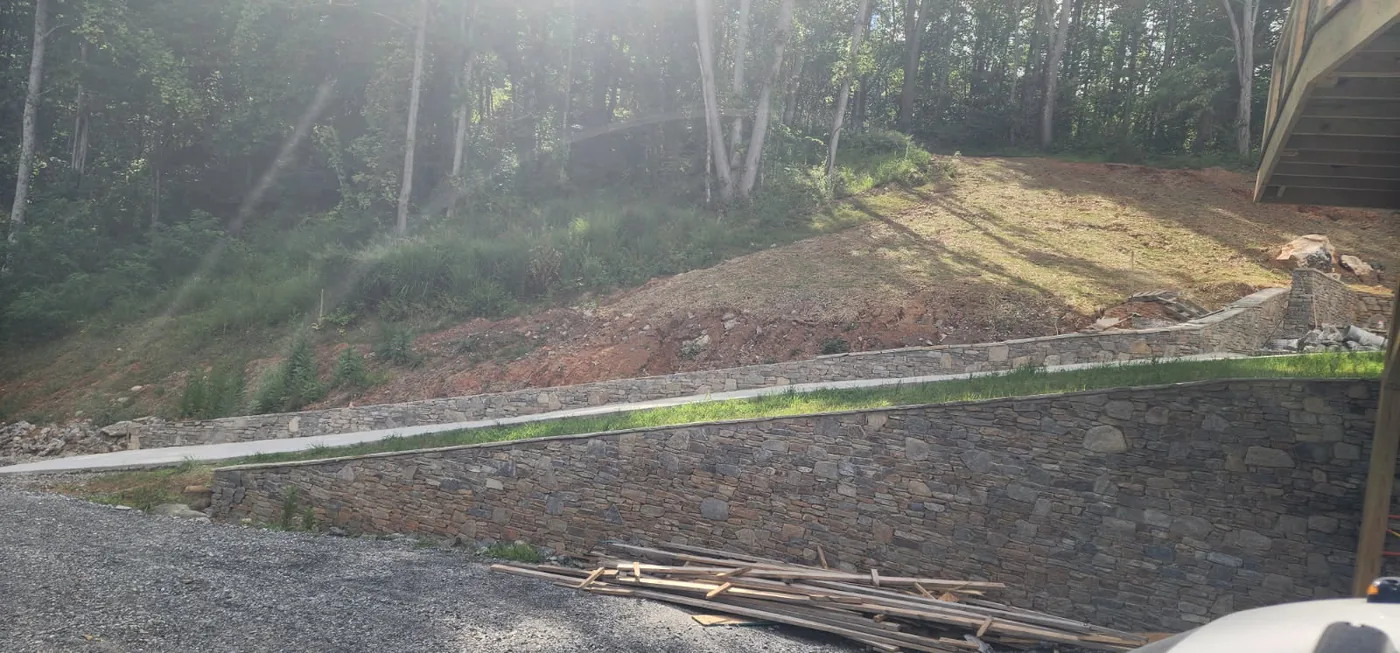
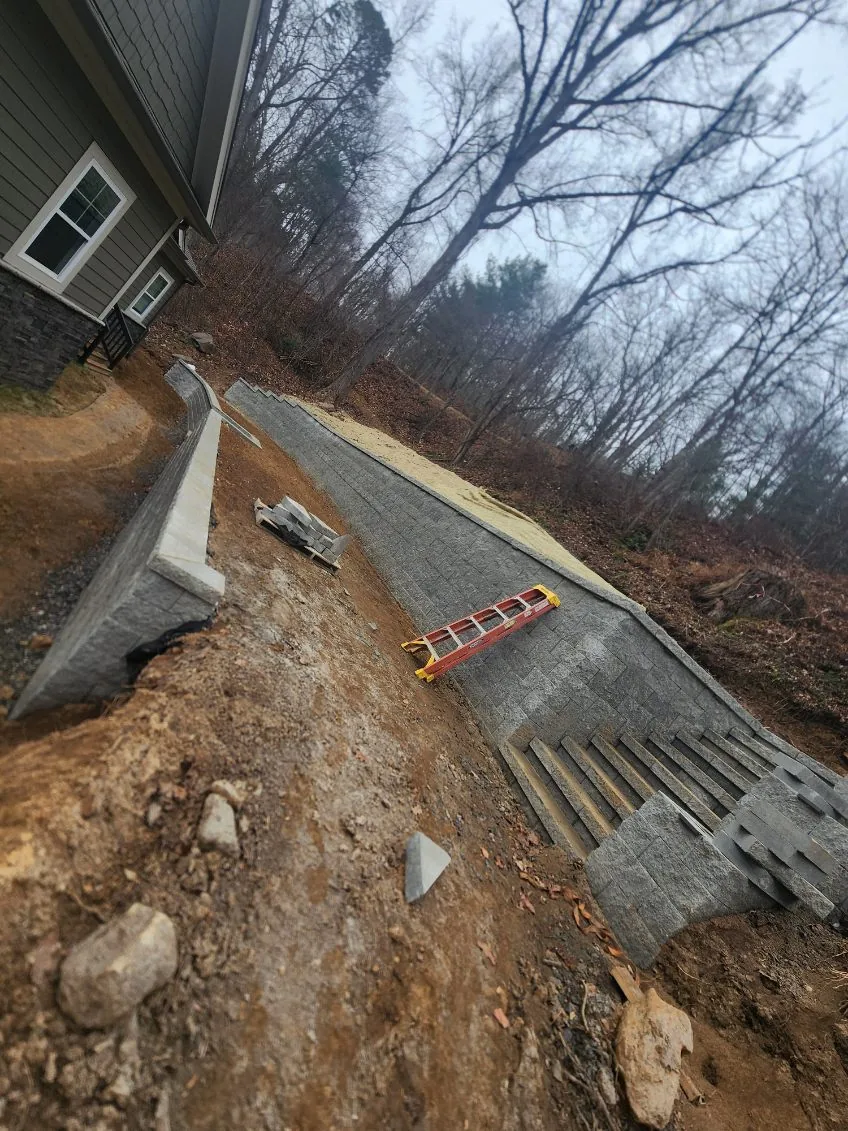
Most Woodfin fire pit projects are really hardscape projects with a fire feature inside them. The pit is the visible part; the paver or flagstone surround, the seating wall, and any retaining that holds a slope back are where the budget lives. If you want a benchmark before the first site visit, the Buncombe County retaining wall cost table shows how grade work prices around here, and it's the same labor and material logic that shows up in a patio line item.
One structural point worth stating plainly: an outdoor fire pit is a masonry assembly sitting on soil, and the soil here varies from lot to lot more than newcomers expect. A base that's fine on one street in Woodfin can fail two streets over. That's why the excavation and compaction steps at the front of the schedule aren't padding — they're the reason the pit is still square in five years. Where a build touches gas or electrical work, licensing thresholds apply; the NC Licensing Board for General Contractors publishes the current rules on when a project needs a licensed general contractor, and it's worth a look before you sign anything.
Choosing a builder without a sales pitch
Ask three things. First, what's the base spec — how deep, what material, how many compaction passes? A builder who can answer without looking it up has done the work before. Second, who handles utility locates and the gas connection, and is that in writing? Third, what does the schedule look like day by day, and what weather pushes it? A crew that gives you a sequence, not just a finish date, is telling you they've built this before.
Safety is the other filter. Built-in wood-burning pits need proper clearance from structures and combustible materials, and the model code language behind those distances comes from the International Code Council family of codes that North Carolina adopts. Any builder who waves off clearance questions is a builder to walk away from. When the sequence, the base spec, and the safety answer all line up, the price usually does too.