The first real number comes from reading what's already in the ground
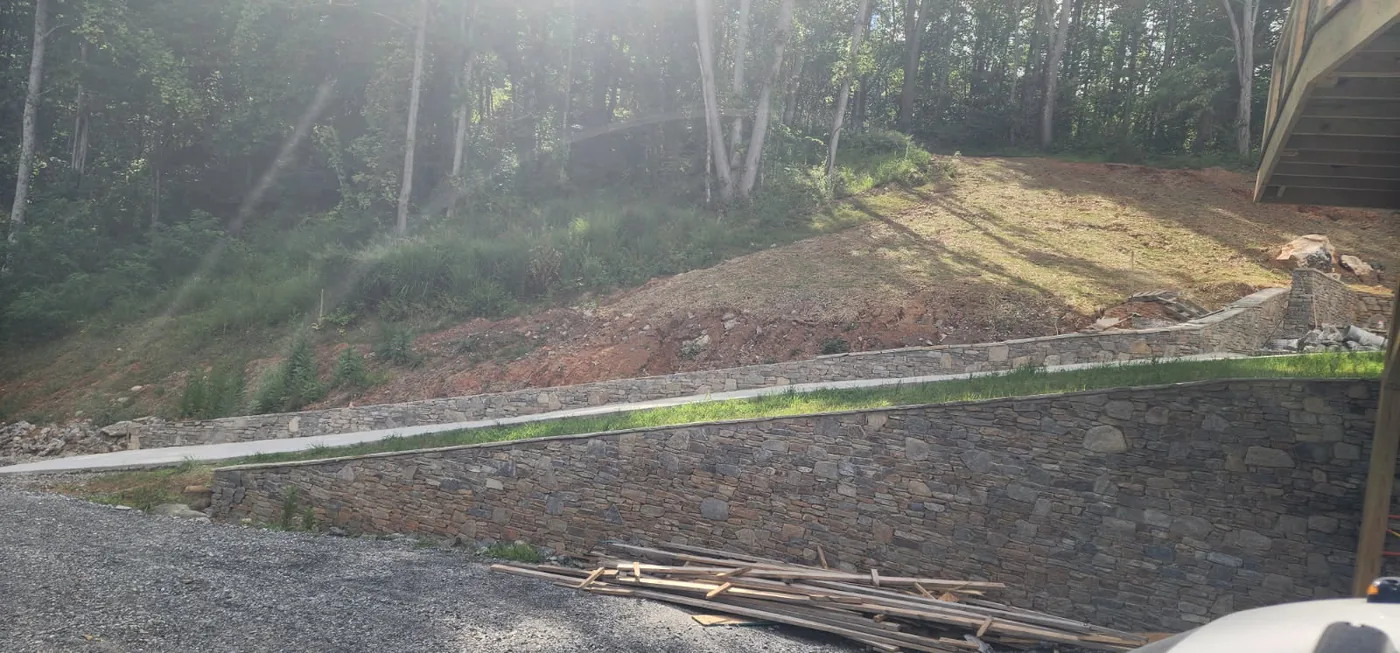
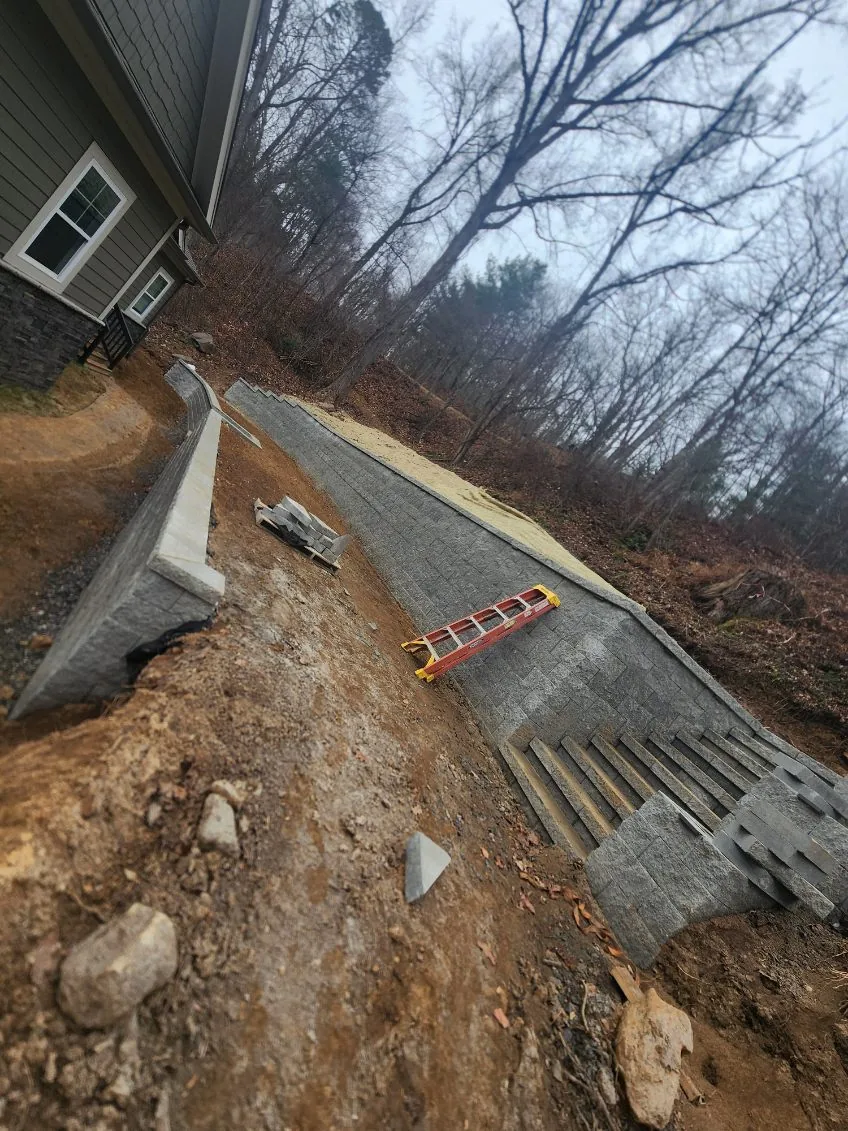
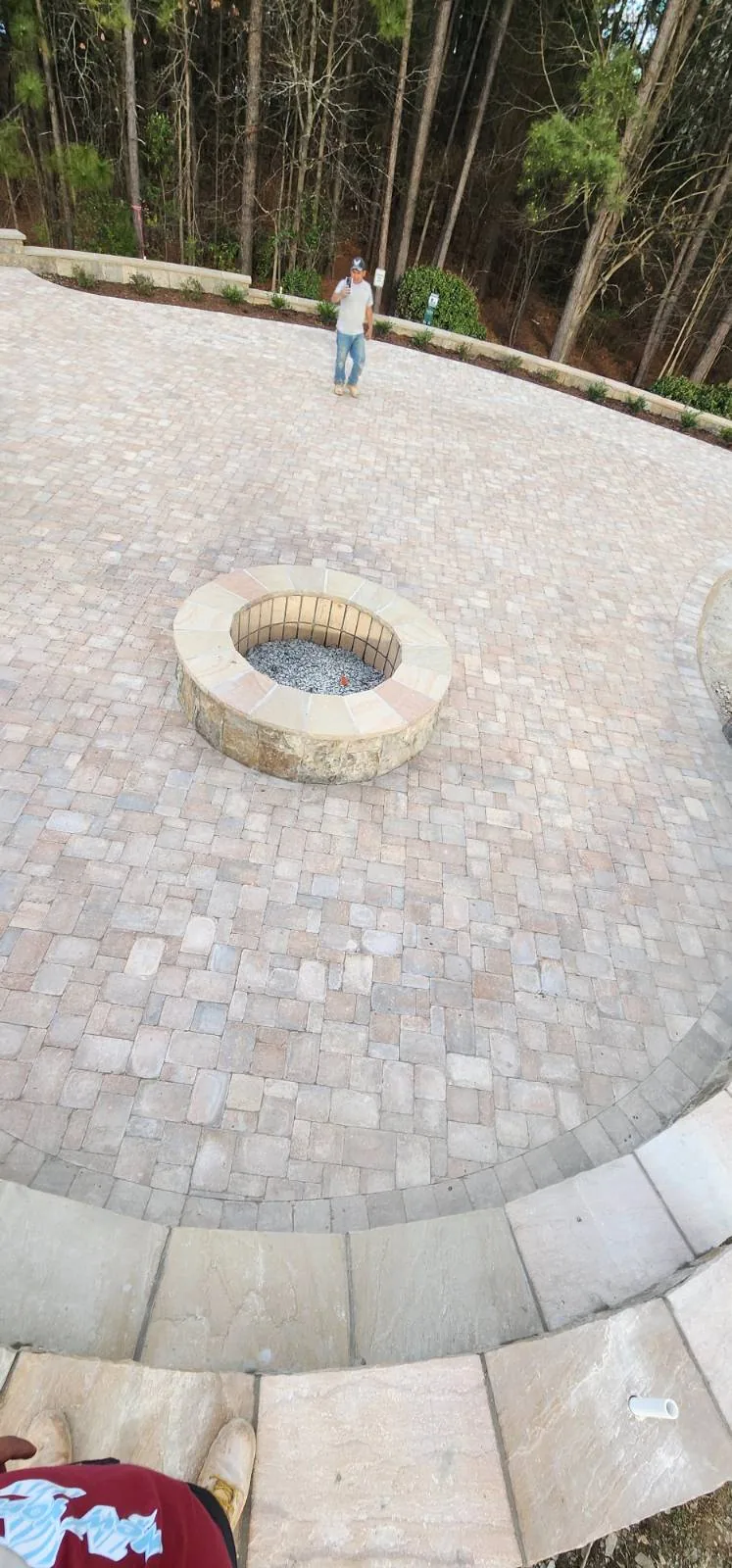
On most Asheville-area outdoor kitchen jobs, the bid isn't really about the counter. It's about the thing the counter is about to sit on: a paver patio laid into a hillside cut above Haw Creek, a block retaining wall holding back an uphill yard in Weaverville, a concrete slab off a West Asheville bungalow that cracked once, got patched, and cracked again. In this county, that existing work is the starting point, and it decides whether you're building fresh, tying into something sound, or rebuilding a feature that was never set on the right base to begin with.
That read changes the budget more than any finish choice. A cracked slab on a graded flat lot in Leicester might be a pour-over. The same crack with an uphill slope draining against it is a tear-out, a drainage correction, and only then a kitchen. We walk through that decision in more detail in our outdoor kitchens guide, but the short version holds: structure and water first, appliances and stone second. Skipping that order is how people pay for the same kitchen twice.
It's worth naming why this region is different. Buncombe County's housing stock is unusually varied for a single county. You'll find ridge lots with long gravel approaches, older brick bungalows on tight flat lots near the river, valley parcels out toward Leicester, and Black Mountain homes cut into wooded slopes where the backyard drops away faster than the front. A bidder who prices all of those the same way is guessing.
| Scope of work | Typical NC range (per linear foot) | What drives it |
|---|---|---|
| Grill island, framed and clad | $150 – $300 | frame type, cladding, counter cutouts |
| Masonry counter, concrete or stone base | $300 – $600 | block and mortar vs. dry-stack, counter thickness |
| Kitchen wall with fireplace | $600 – $1,200 | chimney height, firebox, flue detailing |
| Covered kitchen, roof tie-in | $1,000 – $2,000+ | roof structure, posts, ceiling, lighting |
Those are planning ranges, not quotes. Two counters that look identical in a photograph can differ by a factor of three once site prep, gas routing, and truck access on a steep driveway are accounted for.
Why water and slope, not the stone, move the number here
Buncombe County sits in the Blue Ridge, and the terrain decides more of the budget than the material list does. Uphill runoff has to be intercepted and carried away from any wall the kitchen leans against, not simply allowed to sheet across the patio. Where a counter is set into a slope, footings usually need to go deeper than a flat-lot crew would default to, and that depth is labor and concrete that never appears in a flatland estimate.
The federal record backs up why this deserves attention. 19 federally declared disaster events have touched Buncombe County across 1973-2026, mostly in the storm and flood family. That history shows up in the ground itself: saturated subgrades, washed-out wall footings, and patios that have crept a little every season. When someone asks why an Asheville quote runs higher than a Charlotte one for the same drawing, the honest answer is usually drainage correction that a flat lot never required. Building a kitchen on a base that's still moving is the most common version of paying twice.
Access is the second factor, and it's the one homeowners most often forget to raise. Long, steep, gravel driveways and narrow switchbacks matter for a concrete truck or a loaded stone delivery, and when a truck can't get close, material comes up the slope by hand. That's real labor, and it shows up per linear foot. Ask any bidder how they plan to get material to the site. The answer often reveals where the difference between two quotes actually lives.
There's a sequencing point that saves money here, too. If the patio under the kitchen is also failing, price the paving and the kitchen together rather than in two visits. Building a counter on finished paving risks cracking that paving the moment the base needs work, and combining the scopes avoids paying mobilization twice. Our paver patio cost page explains how that paving scope is typically broken out, and it's worth asking each bidder to separate hardscape prep from kitchen construction so you can see which line is carrying the cost.
The licensing line between masonry and the gas line
Outdoor kitchens split across two trades, and in North Carolina that split is a legal line, not a preference. Stone, block, and mortar work is masonry. Gas and plumbing lines are not. The state licenses those separately through the NC State Board of Examiners of Plumbing, Heating & Fire Sprinkler Contractors, and a licensed plumber or gas contractor has to pull that work and stand behind it. A mason who offers to run your gas line is telling you something about how they handle everything else, too.
General contracting thresholds matter as well. The NC Licensing Board for General Contractors requires licensure once a project crosses the state's threshold, and a full covered kitchen with framing and a roof can land there. Permits are usually triggered by the roof structure, the gas connection, and any electrical work, not by the counter itself, but that varies with scope and jurisdiction.
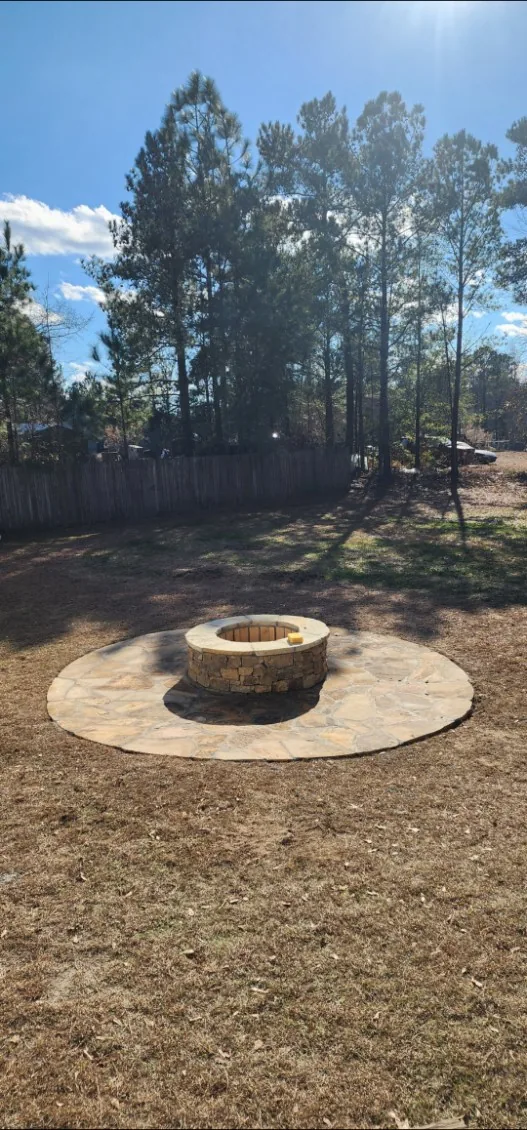
Outdoor fire features also fall under local burn rules, and where a chimney is involved, the same code family that governs indoor fireplaces comes into play. Those standards, including clearance and venting provisions, trace back through the International Code Council model codes that North Carolina adopts and amends. When you're deciding between an open counter and a full wall with a fire feature, our outdoor fireplaces and kitchens page walks through what each configuration demands in structure and venting before you commit to a footprint.
Repair it, re-clad it, or tear it out
Most calls in this county aren't for a brand-new kitchen. They're for a ten- or fifteen-year-old one that's leaning, spalling, or opening up at the mortar joints. The honest answer comes down to three questions: is the base still doing its job, is water draining away from it, and is the frame behind the stone intact. You can answer most of that with a careful look before any stone gets pulled.
- Mortar repointing only: the cheapest option, and worth it only when the base and drainage are sound and the joints are the sole problem. On a mountain lot, this is rarer than homeowners hope.
- Counter and cladding replacement: keeps a sound frame and gas rough-in and replaces the visible surfaces. Usually the best value when the structure holds and the drainage has already been corrected.
- Full rebuild: the honest choice when the base has moved, water has been draining into it for years, or the frame has rusted through. New stone on a bad base fails the same way the old one did, often within a season or two.
One more decision sits alongside those three: whether the existing patio is part of the problem. If the paving has settled toward the house or the wall, the kitchen will inherit that movement. Pricing the paving into the same project is often cheaper than discovering the issue after the counter is built. Our paver patio cost guide covers how that scope is priced separately from the kitchen itself.
How to compare three bids without getting played
Three habits keep an outdoor kitchen bid honest in this market. First, ask for a per-linear-foot price on the counter run plus separate line items for site prep, drainage, utilities, and any roof. Bundled quotes hide the part you most need to compare. Second, insist the quote states who pulls the gas and electrical permits and confirms the license behind each trade. Third, ask what happens if the base is worse than expected once the old counter comes out. A contractor who has a written change-order rate has thought about it; one who waves it off has not.
Finally, compare each bid against the ranges above. A bid far below the band usually means site prep and drainage were quietly left out, and a bid far above it should come with a clear reason tied to your specific slope, access, or structure. Getting that explanation is worth more than the number itself, because it tells you whether the person understands the lot they're standing on.