Where the money actually goes on a Clyde yard
Most quotes for a fire pit in Clyde come down to five line items: the burner assembly, the stone, the base prep, the fuel run, and the last ten feet of access. It is that simple, and it is that variable. A lot on a shelf off Crabtree Road with a flat back lawn houses a pit for a fraction of what a slope lot down toward the Pigeon River costs, because base prep on a grade means cutting, retaining, and hauling off spoil before a single stone is set. Clyde sits in the middle of Haywood County's shelf-and-ridge terrain, so almost every yard is either flat and easy or sloped and not. Fire pits in town tend to be one or the other, rarely in between.
The second thing that moves the number is whether the pit is wood or gas. A wood pit is essentially a stone bowl with a steel grate. A gas pit is a stone bowl with a burner, a key valve, a shutoff, a line from the meter or tank, and usually a decorative media layer on top of the burner. That fuel package can double the labor before any stone is laid. Neither is wrong. They just do not cost the same.
The scope-vs-price table for a Clyde install
Working ranges for a single pit on a typical Haywood County lot, materials and labor included unless noted:
| Scope | Typical price range |
|---|---|
| Paver kit, wood-burning, flat yard, homeowner picks up kit | $700–$1,400 installation only |
| Block kit with steel insert and grate, contractor-supplied | $1,800–$3,200 all-in |
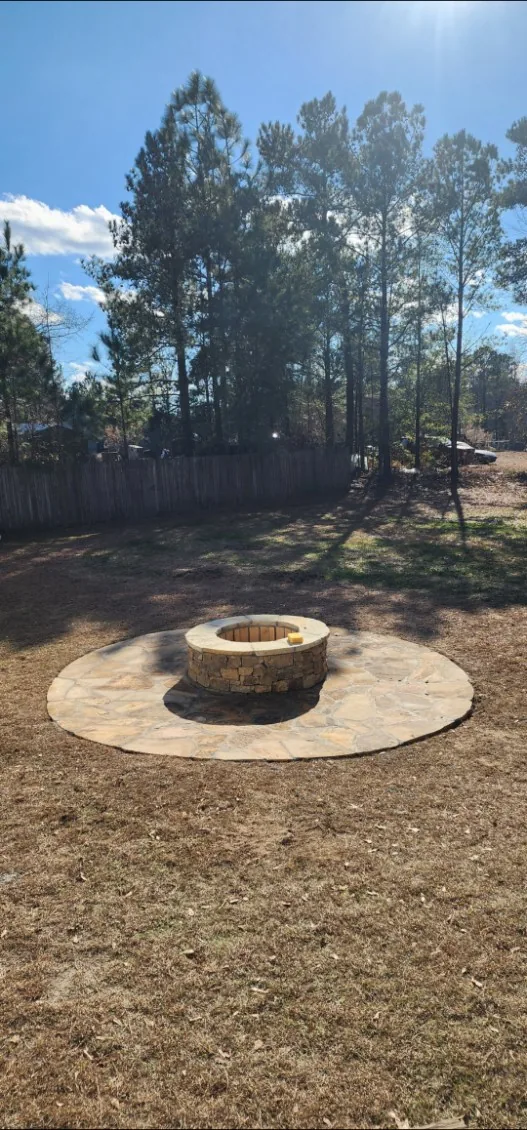
| Mortared stone veneer over form, wood-burning | $3,000–$5,200 |
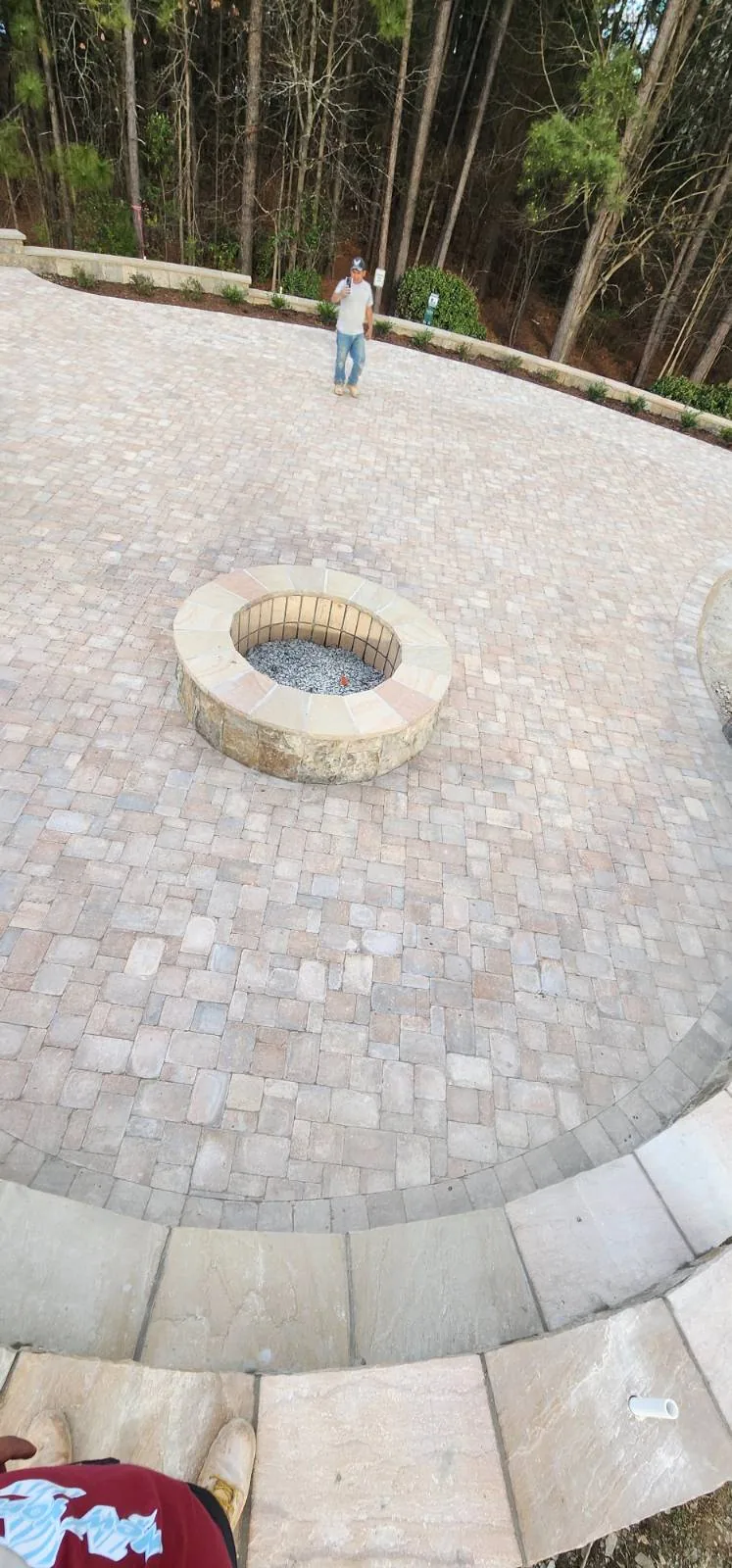
| Same pit, converted to gas with burner and key valve | add $1,200–$2,800 |
| Stone pit on a sloped yard with cut and retaining | $4,500–$7,500 with site work |
| Gas line run from meter or LP tank over 30 feet | add $600–$1,800, plumbing permit extra |
Those numbers assume normal access. If a truck cannot back within about 40 feet of the pit location and stone has to be wheeled in, add a labor line. If the yard is a tight in-town lot, expect the crew to say so before work starts, not after.
Water, storms, and why base prep is not optional here
Haywood County sits in the path of the same tropical and remnant storm systems that wallop the rest of western North Carolina. The federal disaster record for this county reflects 19 declared events spanning 1973-2026, overwhelmingly flood and storm family, per the National Weather Service. Every one of those events sent water across yards that were built assuming drier conditions. A fire pit that sits on a shallow gravel scrape will heave, tilt, and crack after the first decent soak. The correct base is compacted, and it drains. That is not upselling. It is why a pit on the low side of the yard is cheaper to build the second time, not the first.
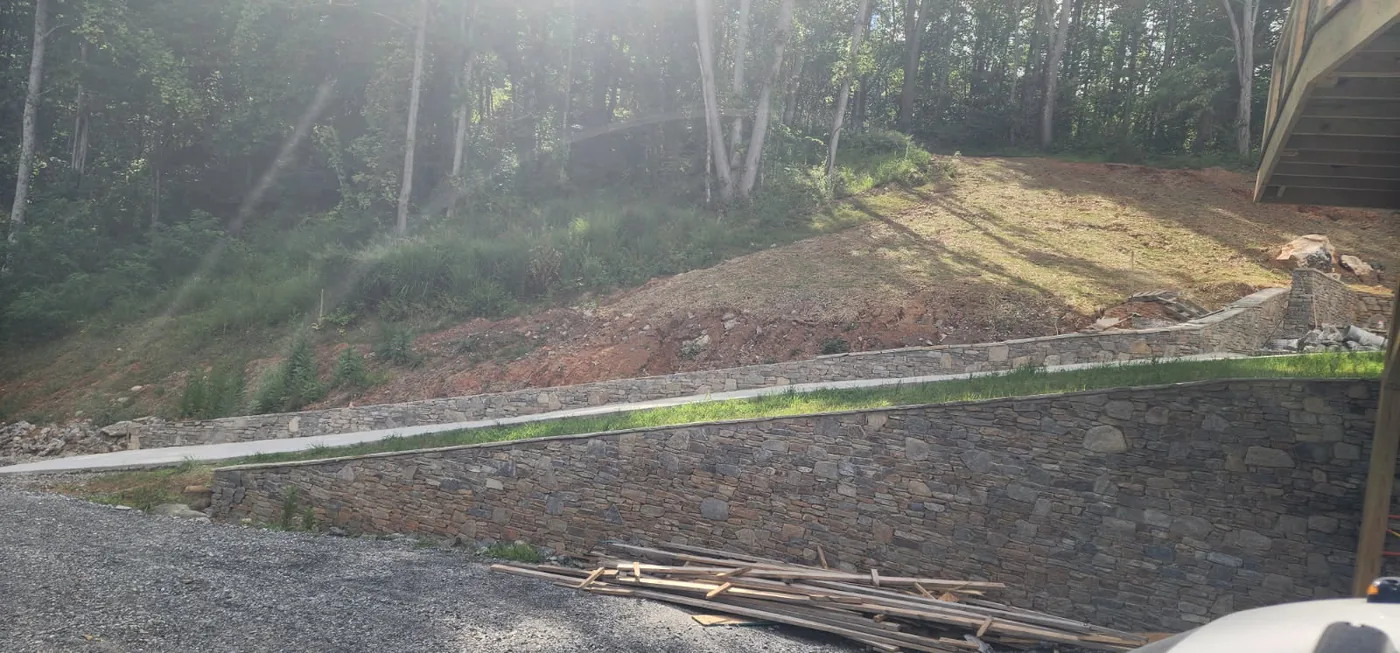
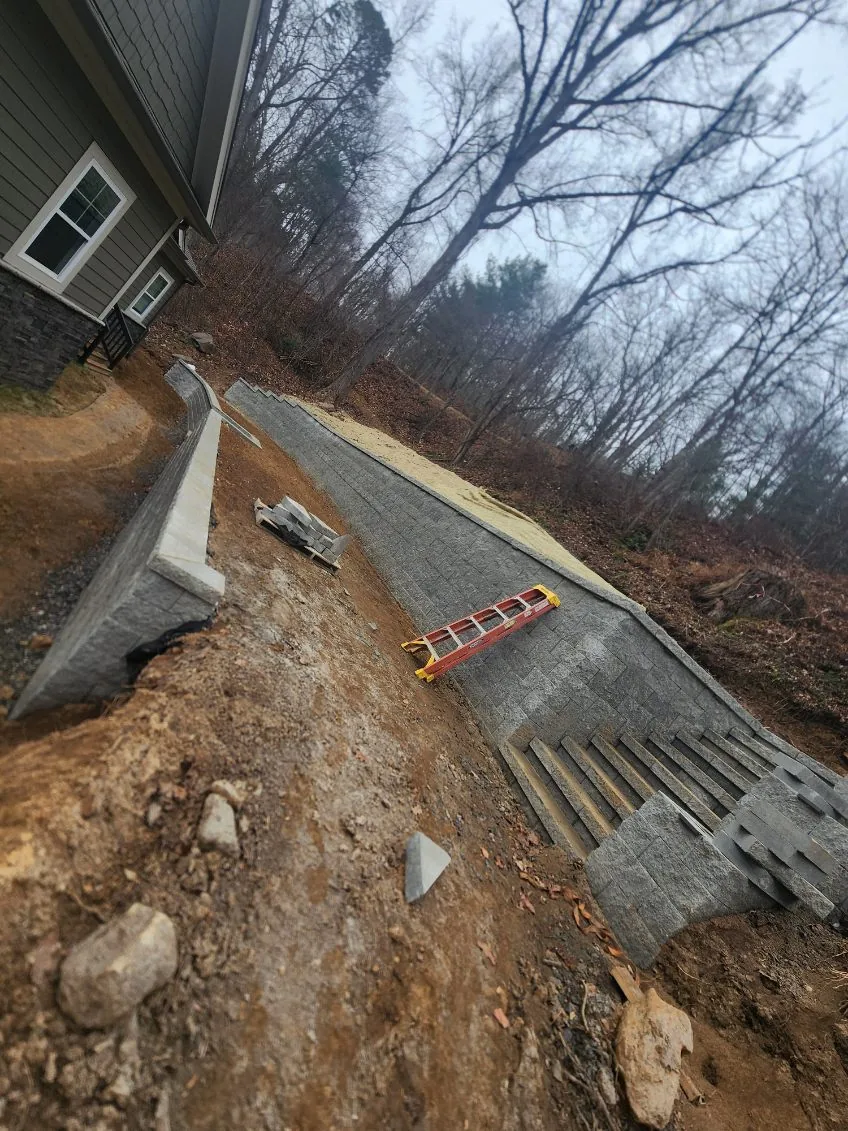
Slope lots pair naturally with a retaining wall. If your pit site is cut into a hill, the wall scope runs through a different budget line, and it is worth pricing separately. See Haywood County retaining wall cost for the working numbers, and retaining wall contractors in Clyde if the wall is the actual job. A pit against a wet slope without a wall behind it is a yard waiting to move.
Staying inside the lighter permit path
North Carolina draws a fairly generous line between a portable fire pit and a built structure. A gas unit with a rigid line to a meter or LP tank usually crosses into plumbing permit territory in Clyde and Haywood County. A wood-burning stone pit of modest size on a residential lot often does not. The safest read is to call the town and county before the crew digs. What separates the two is rarely the stone, it is the burner and the fuel.
There are also two codes worth knowing. First, the NC Department of Insurance, Engineering and Codes division maintains the statewide residential code that governs how close a built combustion appliance can sit to a structure, a property line, and overhanging branches. Second, the NC Licensing Board for General Contractors sets the dollar threshold at which a job needs a licensed general contractor. A fire pit on its own rarely crosses that line. A pit bundled into a full patio, pergola, and retaining wall package often does. If your project has more than one built element, ask who is carrying the license before the first shovel.
What a good builder asks before quoting
A builder who knows Haywood County yards will ask three things within the first five minutes. Where is the yard on the slope, top, mid, or bottom? Wood or gas? And is this the whole project, or the first piece of a patio plan? The third question matters most. A pit set today with no thought for tomorrow's patio, seating wall, and path is a pit that gets torn out in two years. The full menu of options, from simple kits to full outdoor rooms, sits on the fire pits page if you want to see what the finished version looks like before committing to the smaller job.
If you are pricing this yourself, the fastest way to sanity-check a bid is to break it into the five line items above and ask the contractor to do the same. A quote that arrives as a single number with no breakdown tells you nothing about where the money is going. A quote that names the base depth, the stone type, the burner model, and the fuel path tells you exactly what you are buying.