What Leicester walls are actually built from
Drive the Leicester Highway corridor and the housing tells you the material story: 1970s and 80s ranches with brick or block facades, a steady line of manufactured-home and modular properties, log and timber homes tucked into the coves off Sandy Mush and Newfound, and newer builds mixing hardboard, vinyl, and stone accents. That mix is the reason fieldstone, boulder, block and timber all get specified here — no single veneer profile fits every wall, and Leicester budgets rarely carry the all-natural, whole-house option that higher-end Buncombe addresses do. The practical pattern we see: manufactured stone on the front plane and around entries, real fieldstone saved for the chimney and any wall the owner looks at daily, and timber or block left exposed where the budget says so on purpose.
It matters because Leicester sits northwest of Asheville with genuinely mixed terrain. Slope-side walls on Newfound Road don't take the same scaffold plan as a flat-lot ranch off Alexander Road, and access alone can swing a quote by a third. See the material breakdown on the stone veneer service page before you price anything.
The scope-to-price table Leicester owners should start from
Treat these as Buncombe County working ranges. Material grade, height, corner count, and whether the wall is a veneer over existing masonry or a new scratch-coat application all move the number. Fieldstone on a tall chimney is genuinely more expensive than manufactured stone on a knee wall, and it should be.
| Scope | Typical installed range | What drives the price |
|---|---|---|
| Manufactured stone veneer, interior accent wall | $9-$16/sq ft | Access, corners, trim |
| Manufactured stone veneer, exterior wall section | $12-$22/sq ft | Height, scaffolding, weather prep |
| Natural fieldstone veneer, entry or chimney breast | $25-$45/sq ft | Stone sourcing, cutting, thickness variance |
| Boulder-facing a retaining wall or foundation stem | $30-$55/sq ft | Boulder size, lift equipment needed |
| Full chimney re-clad, natural stone | $4,500-$12,000+ total | Height, cap, flashing, roof access |
| Full front facade in mixed material | $12,000-$30,000+ total | Backing prep, window and door returns |
Anything involving a wall that also retains soil is a different conversation — cross-check the costs in the Buncombe County retaining wall cost table because footing, drainage, and geogrid line items change the math entirely.
Backing, water, and the part nobody wants to pay for
Every failed veneer we look at traces back to the same two sins: no drainage plane behind the stone, and no weep path at the base. Stone veneer is a rain screen, and on Leicester's hillsides the rain arrives at an angle and stays. The work that keeps a veneer on the wall for thirty years is the work you never see — moisture barrier, lath, scratch coat, and a flashing detail at every roof, window, and grade transition.
Federal disaster records are the honest local context: 19 declared events touch Buncombe County across 1973-2026, and the overwhelming majority are storm and flood family. Every one pushed water hard against exterior walls. The NC Department of Insurance, Engineering & Codes division publishes the state-adopted residential provisions that govern veneer attachment and flashing, and if a quote skips that layer of the conversation, the quote is short by whatever the repair costs later.
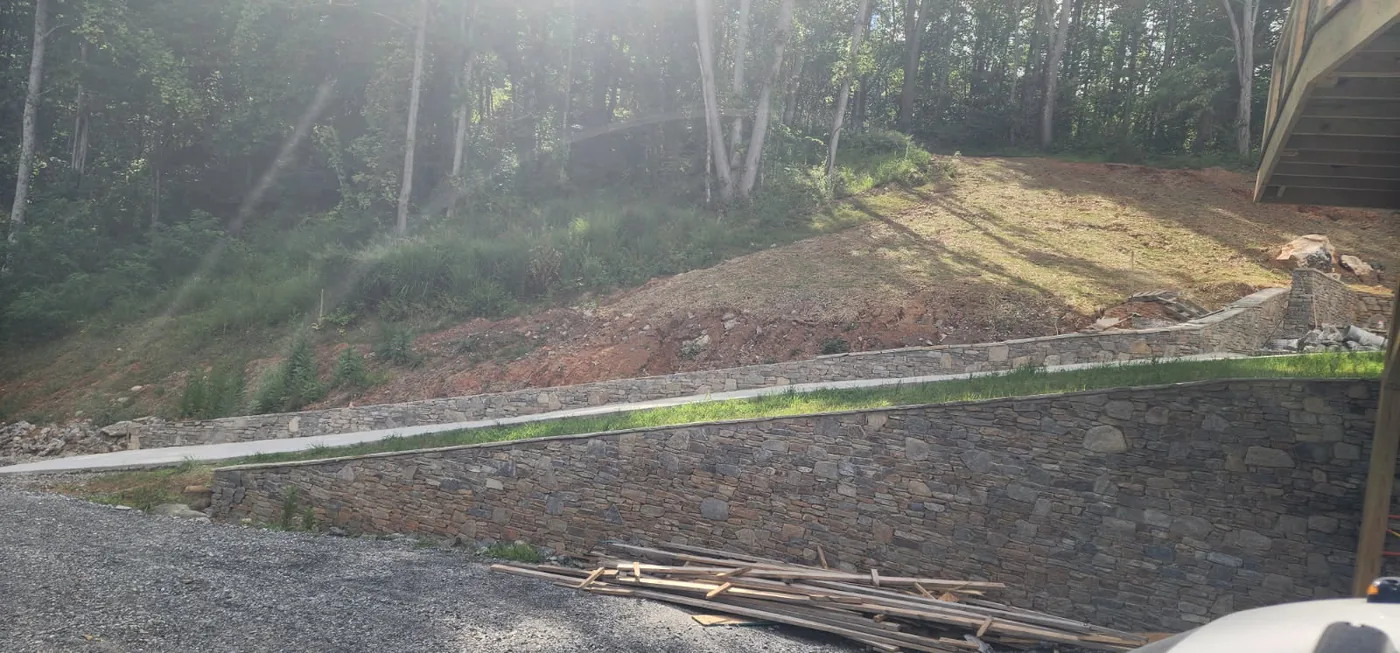
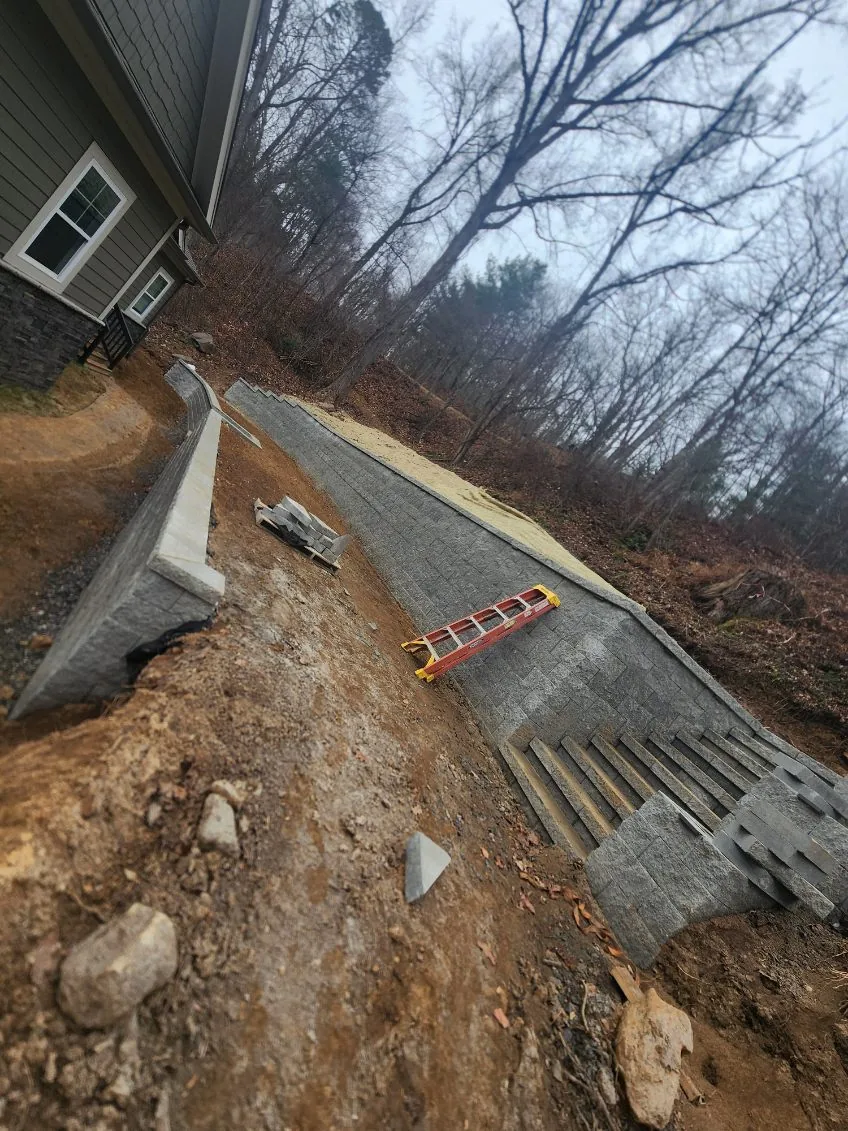
Retaining situations need the same respect. A veneered wall holding a slope is only as good as its footing and drainage. If a wall shows lean, bulging courses, or weep holes that stopped working, fix the wall before you spend on the face. The Leicester retaining wall contractors page covers who to call for the structural side.
Who's allowed to do this work, and what to check before you sign
In North Carolina, general contracting work above the state's cost threshold requires a license from the NC Licensing Board for General Contractors. Stone veneer projects cross that threshold faster than owners expect once they include backing repair, scaffold, or a chimney. Ask the license question explicitly, get the license number, and verify it on the board's site — that three-minute check is worth more than any review count.
Three questions worth asking a Leicester mason that most homeowners don't: How are you treating the drainage plane? What happens at the base of the wall — weep screed, weep holes, or open grade? And will the crew be doing this themselves or is it a broker arrangement? The answer to the second one reveals whether the installer understands the assembly or just installs the face. There's a related estimate trap in over-thin scratch coats and mechanical-fastened stone sold as if it were a full masonry bond — worth understanding before you compare bids.
Fieldstone, boulder, block, or timber — how the Leicester selection actually goes
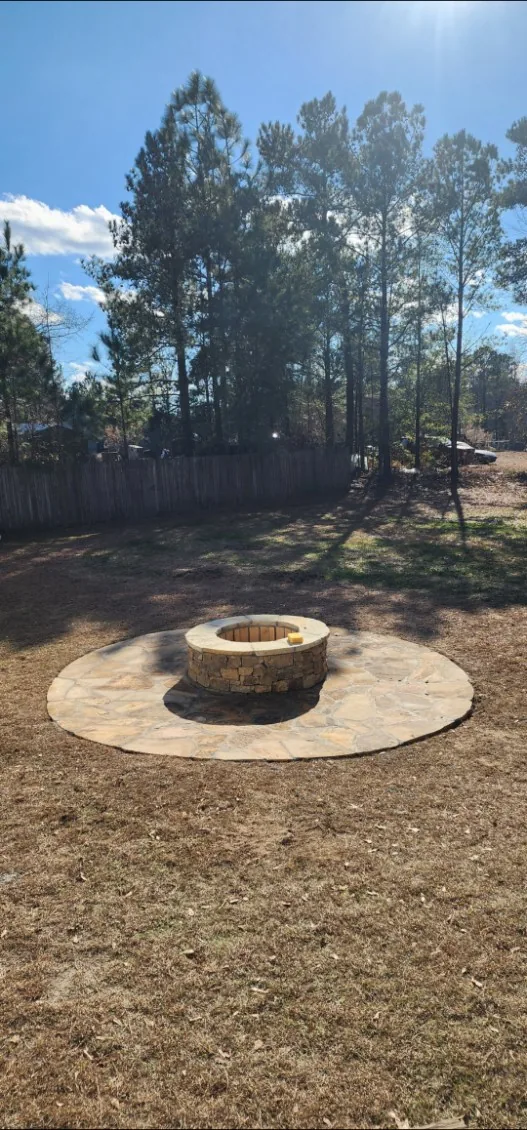
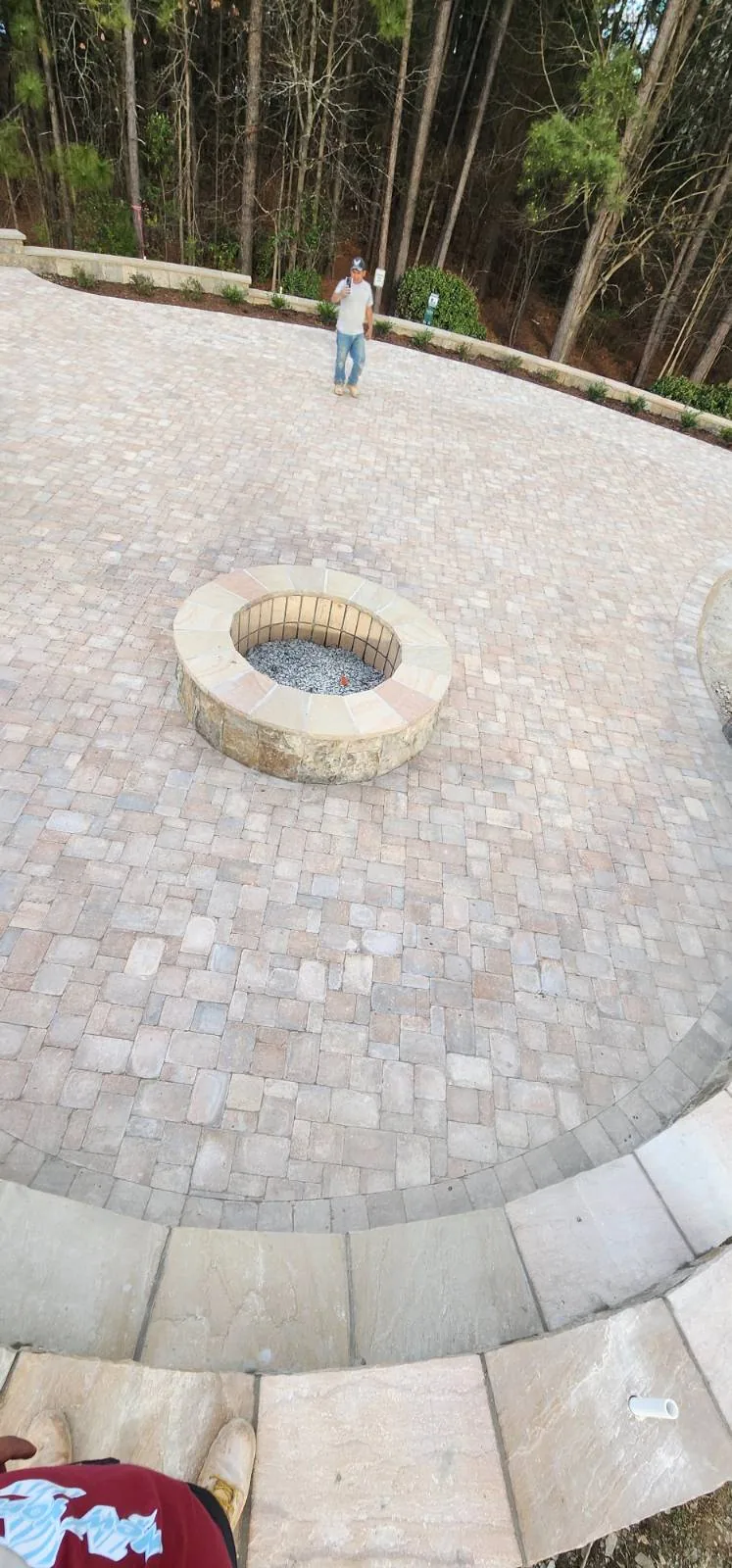
Manufactured stone is the value pick, and it's not a compromise on most Leicester facades — the profiles travel well and the cost per square foot stays reasonable. Fieldstone is the upgrade; you're paying for the stone's sourcing, the labor of sorting and chipping, and the tolerance for irregular thickness. Boulder-facing is the specialty line, usually paired with an existing foundation stem or a grade change where real mass reads better than thin veneer.
Block and timber matter as much as the stone. Exposed block left unpainted accents a manufactured veneer properly; timber lintels and post-and-beam entries frame a fieldstone wall in a way no synthetic product does. That cross-material look is what a lot of successful Leicester work actually is: modest material, honest detailing, good sequencing against the terrain. When someone quotes a veneer for a wall that really should be block-and-stone or timber-and-stone, that's a local knowledge gap, and it shows in five years. Before you commission anything, walk the property with the person who will actually do the work, and look at what the wall is holding back or holding up first.