Why access decides your Leicester quote
Ask three Leicester homeowners what they paid for a patio and you'll get three numbers that seem unrelated until you ask one more question: how far did the truck have to back in? Lots off NC-209, Sand Hill Road, and the smaller roads running up toward the Newfound Mountains were not laid out for a tandem-axle dump truck. When a driveway is narrow, steep, unpaved, or over a culvert that may or may not hold, the crew either uses smaller equipment (more trips, more hours) or stages material at the road and moves it by hand or with a compact machine. Either way, the labor line grows.
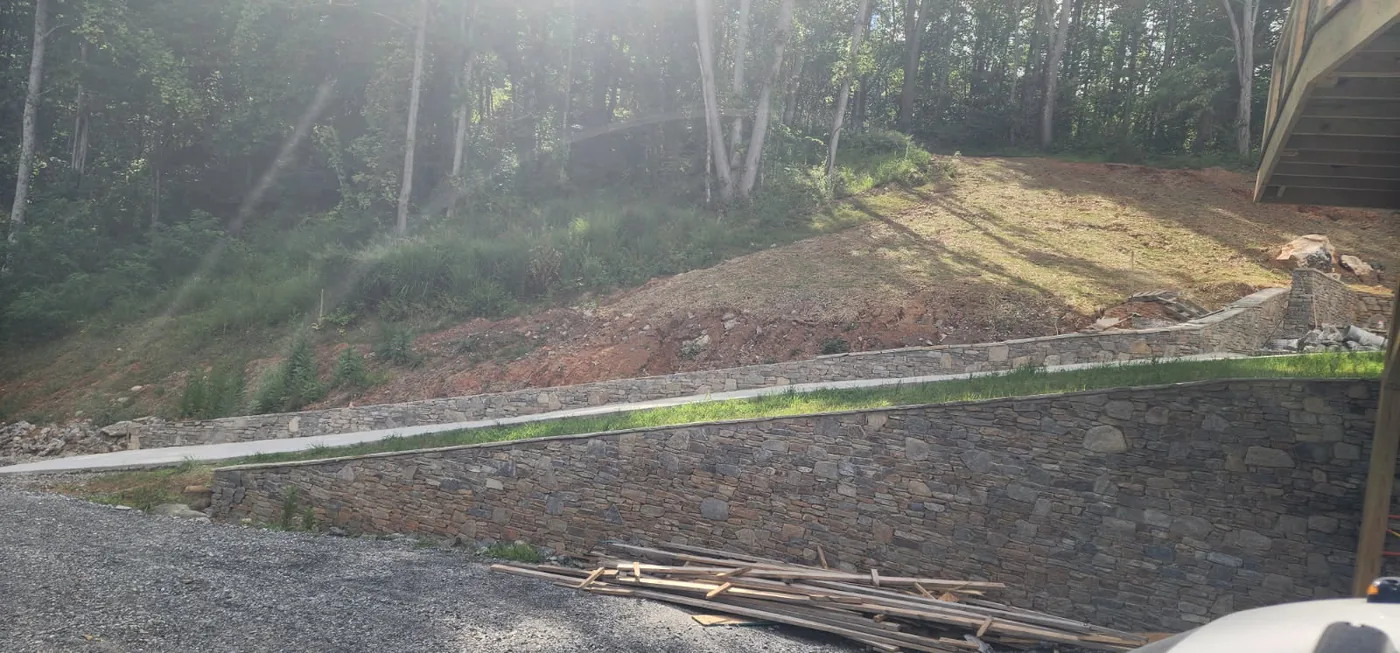
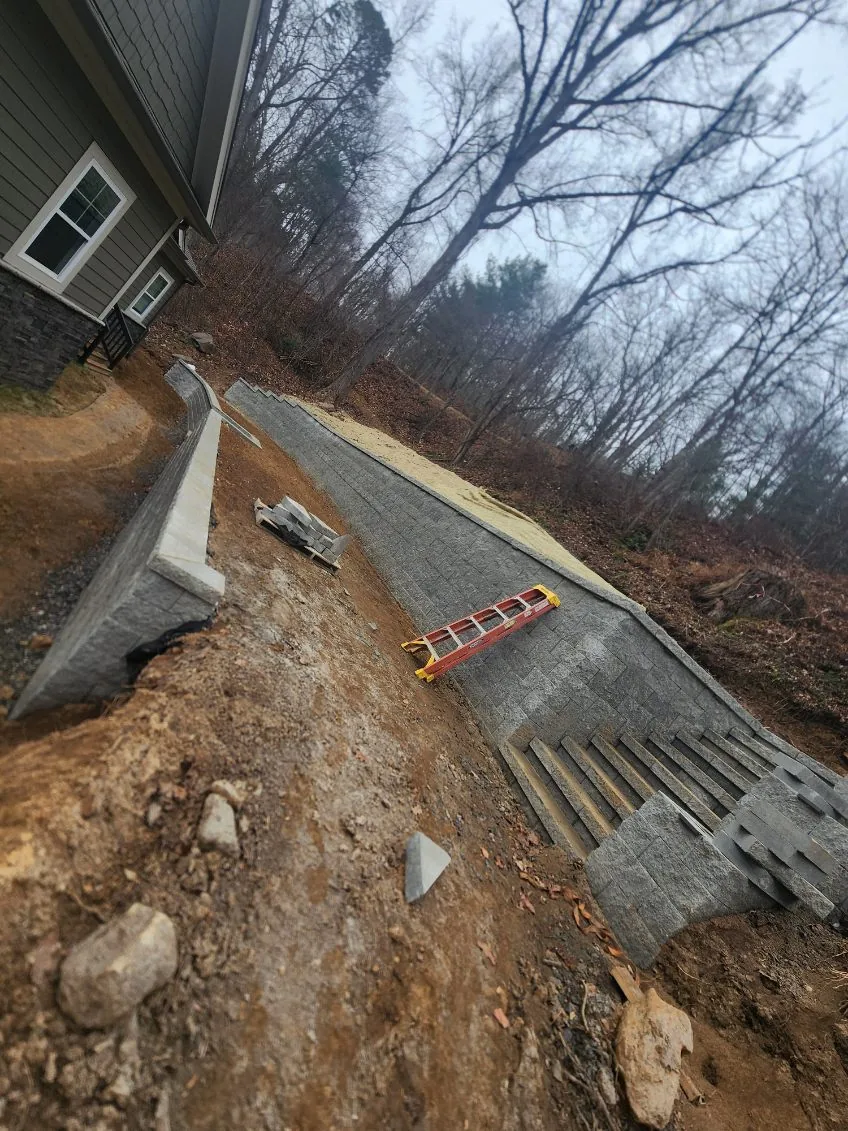
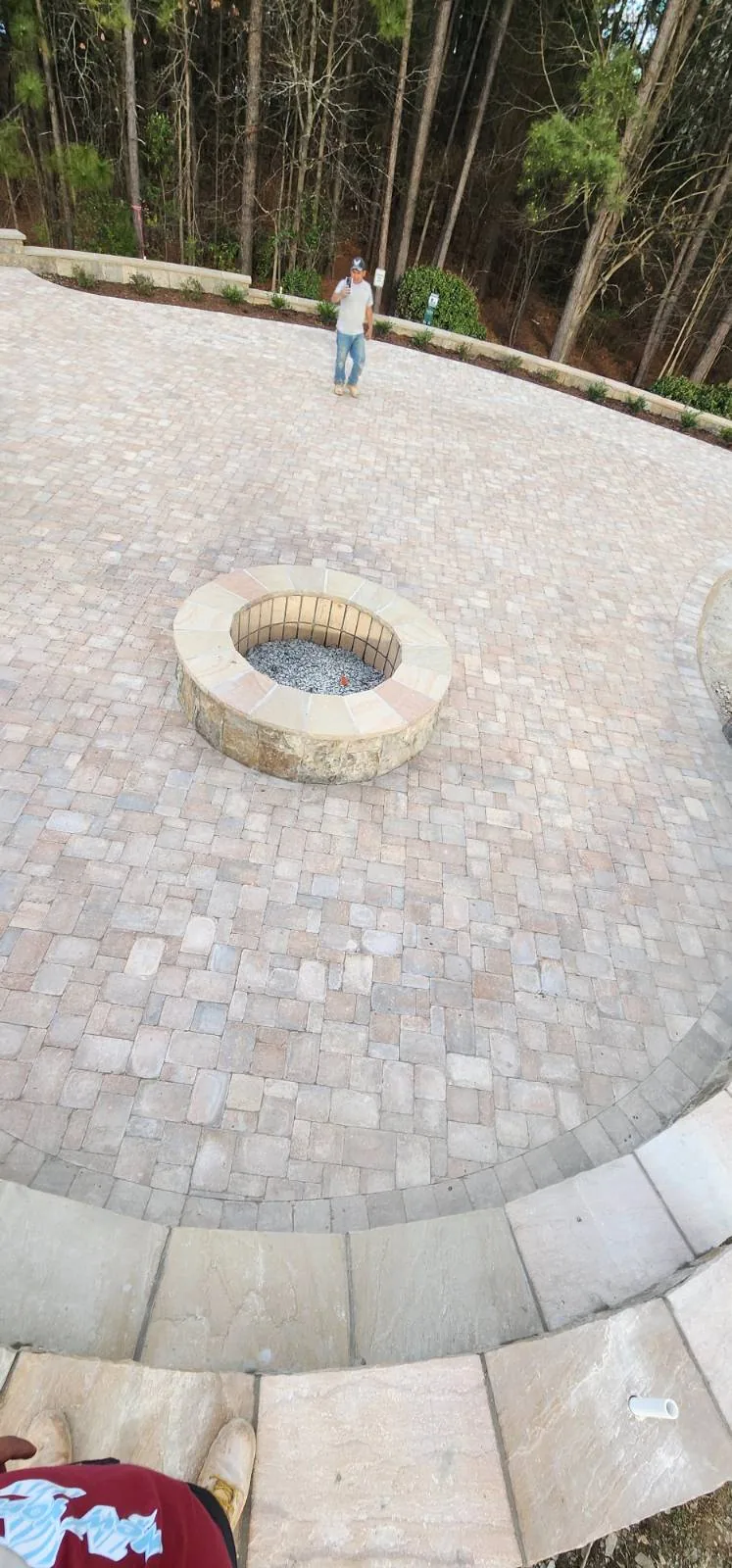
Grade matters just as much. A Leicester yard cut into a slope is almost never a single flat plane. A patio that would be a one-day excavation on a flat Buncombe County lot becomes a two-tier build with a retaining wall on the uphill side and drainage behind it. The scope changes, and so does the price. That is why we ask for photos of the driveway and the yard before quoting, and why a phone number alone rarely produces an honest figure.
What Leicester yards actually need
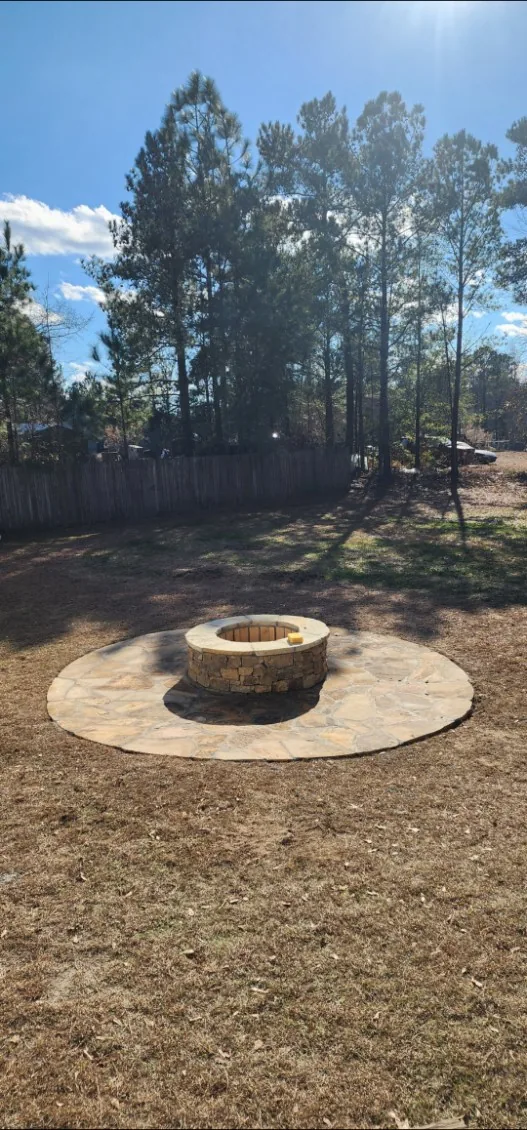
The terrain here is the whole story. Most properties in and around Leicester sit on slopes that shed water toward the house or toward a neighbor, and the native soil is a mix of clay and mountain rock that does not drain like the sandy piedmont. A fire pit ring set on bare ground with no base will heave within a winter. A wall built without a footing below the frost line and without proper batter will lean into the slope within a few seasons. These are not exotic failures; they are the normal outcome of building hardscape the way it is done on flat land.
Good hardscaping here starts with the water question. Where does runoff go when it leaves the uphill neighbor's property? Is there a swale, a French drain, or nothing? The hardscaping overview covers the trade generally, but locally the first decision is always drainage. A patio that floods is not a patio, it is a pond with pavers in it.
Scope vs. price range for Leicester hardscape work
The table below reflects realistic regional bands for the work, not quotes. The low end assumes easy machine access and a modest flat area; the high end assumes a steep driveway, hand-carry, engineered wall, or a multi-tier design. Material choice (concrete paver vs. natural stone vs. bluestone) moves the number as much as access does.
| Project | Typical range | What moves it |
|---|---|---|
| Patio, 200–400 sq ft, pavers | $4,500–$12,000 | Access, base depth, edge restraint, drainage |
| Retaining wall, 3–4 ft, segmental block | $3,500–$9,000 | Height, length, footing, geogrid, engineering |
| Retaining wall, 4 ft+, engineered | $9,000–$30,000+ | Engineering, permits, drainage, access |
| Fire pit, kit or masonry | $1,200–$4,500 | Gas line, masonry vs. kit, base prep |
| Walkway or steps, 40–80 lin ft | $2,800–$7,500 | Grade change, material, hand-carry distance |
For a deeper cost context across the county, see the Buncombe County retaining wall cost breakdown, which lines out how footings, drainage, and engineering show up as separate line items rather than being buried in a square-foot rate.
Walls, slopes, and when engineering enters the picture
North Carolina does not license hardscape installers as a standalone trade, but the State Licensing Board for General Contractors (nclbgc.org) sets the threshold at which a project becomes a general contracting job, and retaining walls above a certain height typically require an engineered design stamped by a licensed engineer. If a wall is holding back a slope that supports a driveway, a pool, or a structure, the failure mode is not cosmetic. Get the engineering.
The NC Department of Insurance Engineering & Codes division publishes the adopted residential code, which treats retaining walls and their drainage as structural elements once they pass the trigger height. Local enforcement in Buncombe County follows that code. A contractor who tells you a four-foot wall over a Leicester slope does not need a permit or a design is telling you something about how they work, not about the law.
Storm history changes what you build
Buncombe County has seen 19 federally declared disaster events spanning 1973-2026, and the overwhelming majority are storm and flood family. That matters for hardscape in a specific way: the drainage assumptions that were adequate twenty years ago are not adequate now. A patio that was fine through a normal summer can be undercut by a single tropical-moisture event when the uphill swale fails.
The National Weather Service (weather.gov) tracks the rainfall frequency estimates that engineers use to size drainage. If your design does not account for the higher end of that range, the first big storm will tell you. Build the base deeper, the drainage wider, and the wall footing below frost.
Choosing a crew for a Leicester project
The right questions are less about the company and more about the site. Ask how they will move material in, whether the driveway can take a loaded truck, and what happens to runoff after the build. Ask to see a wall they built on a similar slope that has been through at least one wet season. Ask whether they pull permits when the wall triggers them, and whether the design is signed. The Leicester retaining wall contractor page walks through what to verify locally. For retaining wall specifics and pricing, the cost page is the better starting point than a phone quote.