Read the pit you already own before you spend a dollar on a new one
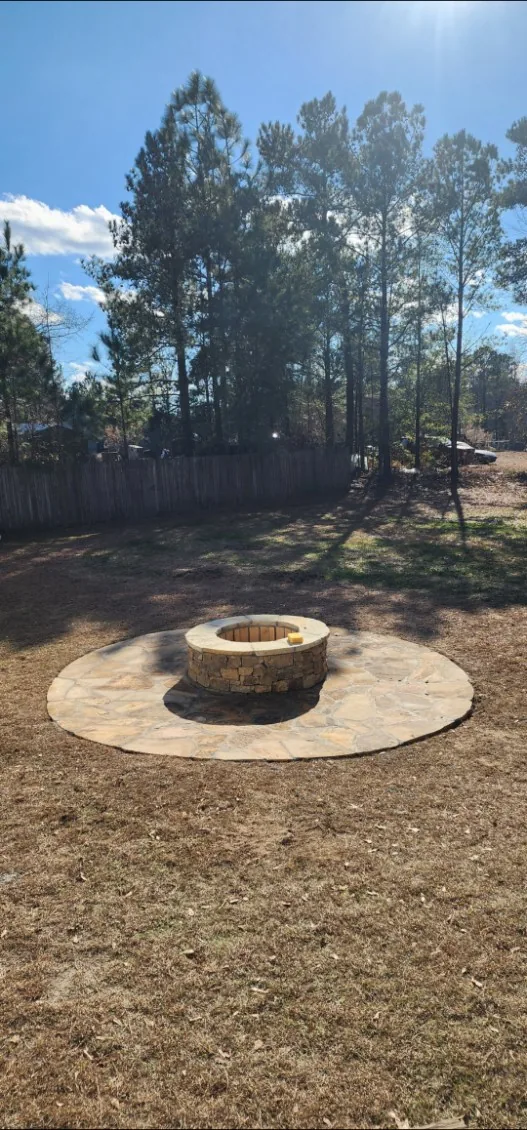
Most Weaverville fire pit calls don't start with a blank yard. They start with a pit somebody built five or fifteen years ago on a lot in a hollow off Reems Creek or up a graded shelf near Lake Louise, and it has gone crooked, cracked, or become a smoke machine. The first honest job is not demolition, it's a reading. A fire pit is a small retaining structure that happens to hold fire: it fails from water getting behind the wall, from a footer poured too shallow for our freeze-thaw swings, and from mortar that was never rated for direct flame. If the cracks run through the block and the base has heaved, rebuilding on the same spot without fixing drainage just buys you the same failure. If the ring is sound and only the cap and firebrick have spalled, a rebuild of the burning surface is a fraction of a new feature.
Weaverville sits in a bowl of ridges in Buncombe County, and that matters at ground level. Lots here are smaller and often steeper than a lot of the county, the soil is heavy clay in the valleys and rocky upslope, and the town sits on the far side of the French Broad from Asheville, so it catches different storm cells than the city does. A pit that looks fine in July can have water sitting behind it all winter.
The Weaverville price picture, scope by scope
Below is the working table for this trade in this county. Bands, not quotes; the range narrows once somebody has seen your ground and your grade.
| Scope | Typical range | What moves the number |
|---|---|---|
| Repair existing pit (cap, firebrick, mortar) | $600-$1,800 | Whether the base has heaved; number of courses to reset |
| Rebuild in place on existing footer | $1,200-$3,000 | Drainage correction behind the wall; veneer choice |
| New block or kit pit, flat usable yard | $1,500-$3,500 | Size, cap stone, whether gas is run |
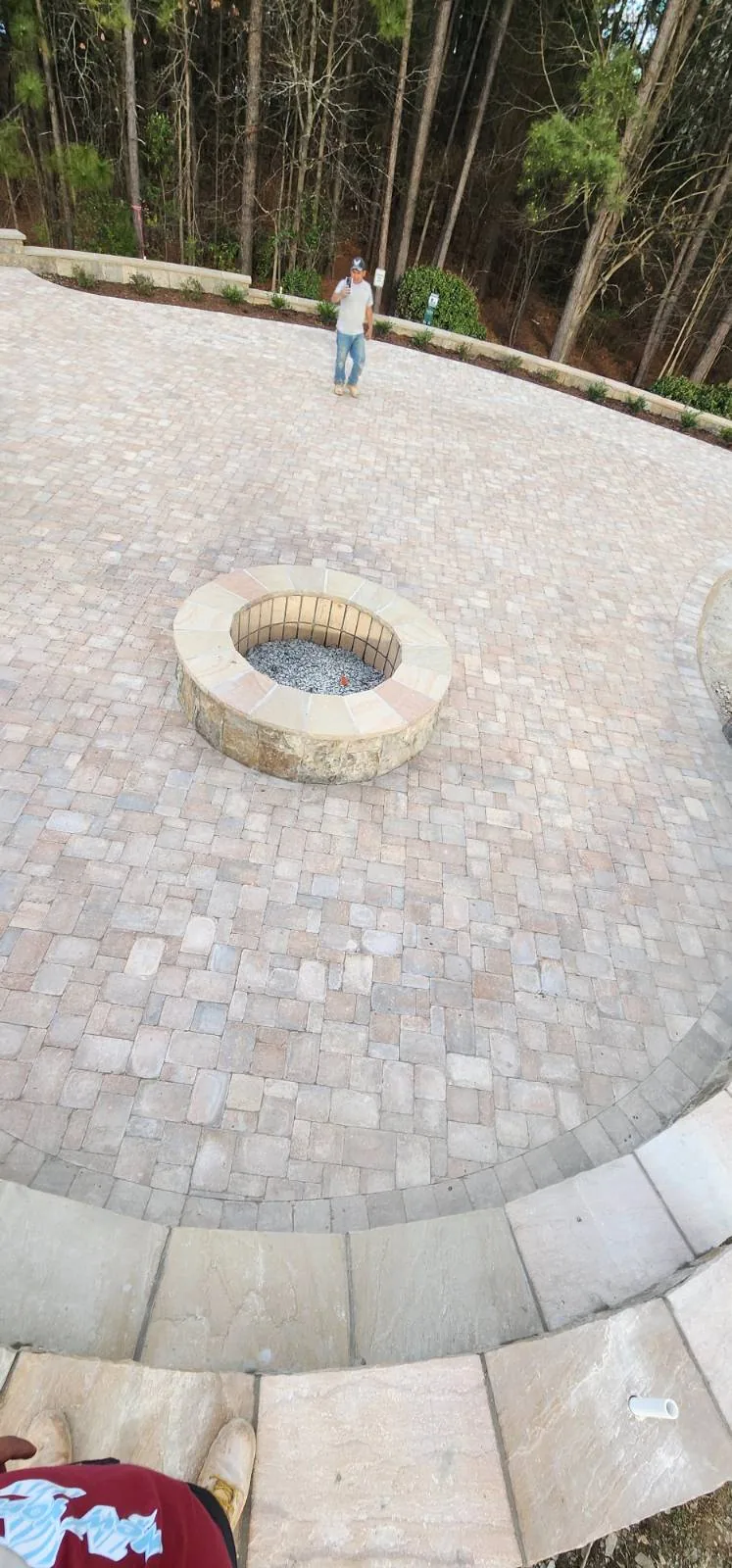
| Stone-veneer pit with bench seating | $2,800-$6,500 | Square footage of seating wall; stone selection |
| Gas-fed feature with permanent line | $4,000-$9,500+ | Line length from meter, burner media, permit scope |
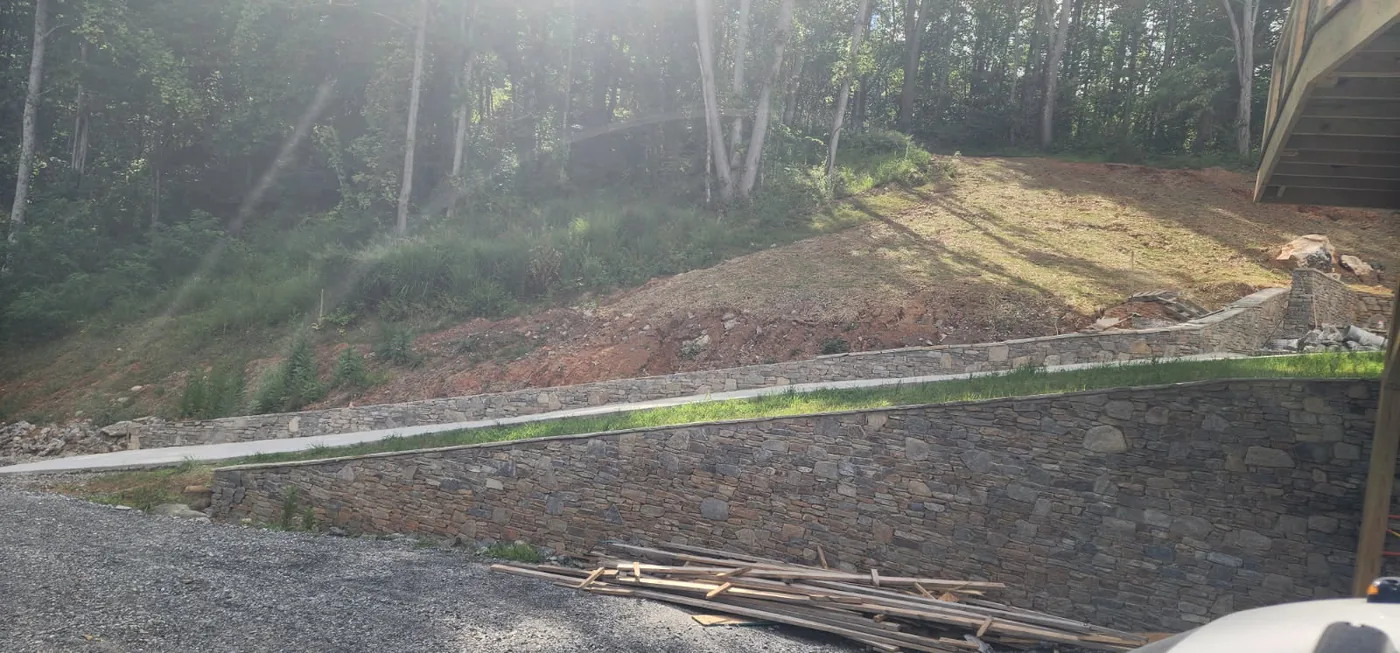
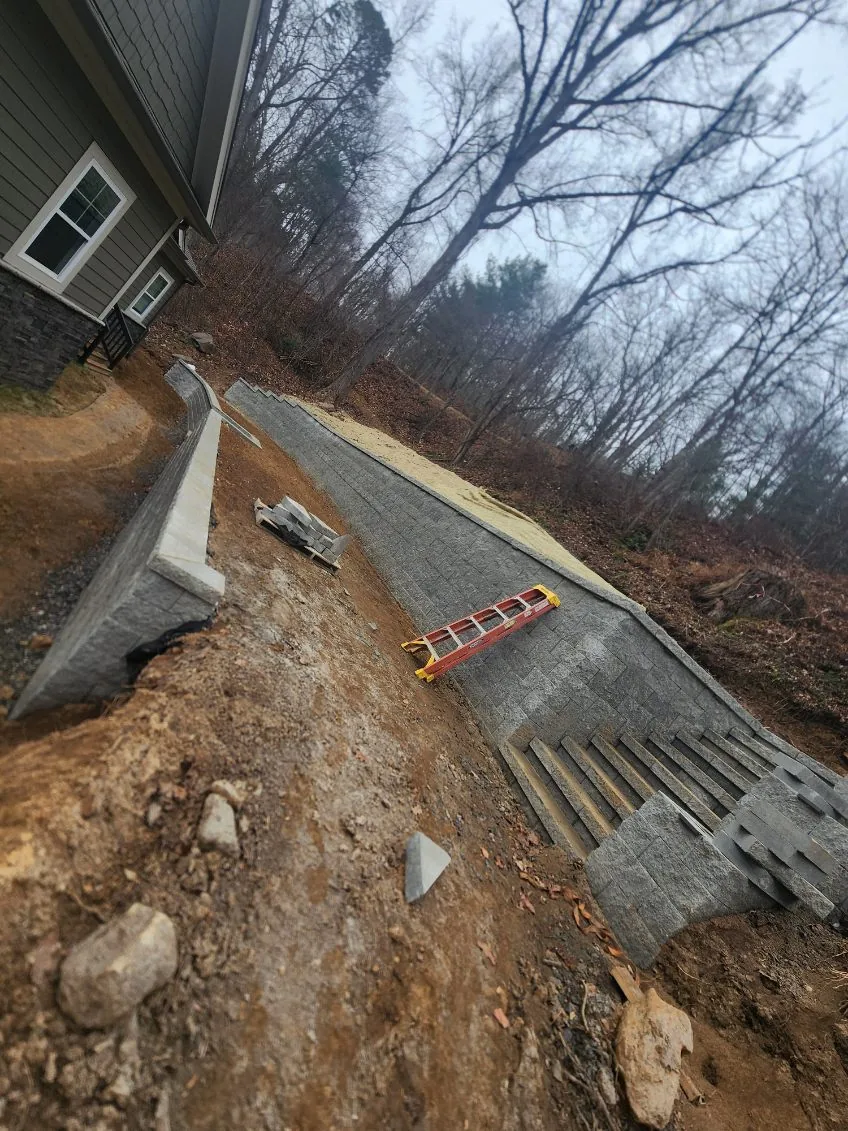
| Slope work, steps, or retaining to create the pad | Quoted alongside; see the county retaining wall cost page | Fall height, wall length, drainage behind the wall |
The line people miss is the last one. On a lot with any grade, the pit is the cheap part and creating a safe, level, drained pad for it is not. If a bid for a sloped Weaverville yard has no line item for the ground under the feature, the bid is incomplete rather than good.
What the code and the county actually care about
Two live questions decide how a pit gets built here: permanent fuel piping and any structure that functions as a retaining wall. A buried gas line to a fire feature is plumbing work with its own permitting and inspection path, and the state licensing thresholds for construction work apply once a job crosses the statutory dollar limit. Verify any contractor's standing through the NC Licensing Board for General Contractors. Where the feature is engineered or the town has adopted the current residential code, the relevant standards for fire separation and construction come from the International Code Council family of codes, and North Carolina's adopted amendments are administered through the NC Department of Insurance, Engineering and Codes division. Short version: wood-burning pits usually clear as a small site feature; permanent gas and anything that holds back earth get a paper trail.
Weather is the other rule-maker. Our storm record isn't trivia here — 19 federally declared events have touched this county across 1973-2026, overwhelmingly flood and storm family, and a pit built without thinking about where the uphill water goes is a pit built to fail. The National Weather Service outlooks are worth a glance before scheduling any concrete work, because a freshly poured footer that gets a mountain downpour the next day is a footer you'll pay for twice.
Choosing a builder in this town, not just in this county
Weaverville is small enough that a bad build gets seen. Ask three things. First, whether the crew has built on your kind of grade — the difference between a flat in-town backyard and a lot that falls toward the creek is the whole job. Second, whether they will quote the drainage and the pad separately from the pit, because that separation is the honest way to price a site. Third, whether any retaining or grade work adjacent to the pit is being handled by people who do that trade as a specialty rather than as a side task; if your project needs a wall to hold the pad, start with Weaverville retaining wall contractors before anyone stacks stone. If you already know what you want built, the fire pit service page covers materials, sizes, and what a first visit looks like. If you're still deciding whether to repair or start over, say so when you reach out — that answer is free and it's the one that saves the most money.