Why the first question in Mills River is how a truck gets to the backyard
In most towns the hardscape quote starts with the patio. Here it starts with the driveway. Mills River is still Henderson County's agricultural south — wide valley floor along the river bottoms, working hay and cattle ground, and steep wooded ridges climbing toward the Pisgah line. That split produces two very different job sites: a level farmhouse lot off a paved state road, where a dump truck and mini excavator back straight to the work, and a graded mountain drive where the delivery has to stop at the top and every pallet of pavers walks down by machine or by hand.
That second site is where quotes diverge. A crew that prices hardscaping in Mills River NC without walking your access is pricing a driveway, not a patio. Machine time spent shuttling material up a grade, a gate too narrow for a skid steer, a yard that has to stay intact for a septic field — each line item in a real bid traces back to how the material physically reaches the excavation. Distance from the quarry or block yard matters less in a county with this much local stone, but hauling still shows up on the invoice on long gravel drives, and it shows up hardest when a load has to be split into smaller deliveries than a flat lot would need.
What Mills River jobs actually cost, by scope
These are honest regional bands for Henderson County, not quotes. The spread inside each range is access, grade, drainage, and material choice — a level lot with good truck access sits at the low end; a steep or tight site sits at the high end.
| Scope | Typical range | What moves the price here |
|---|---|---|
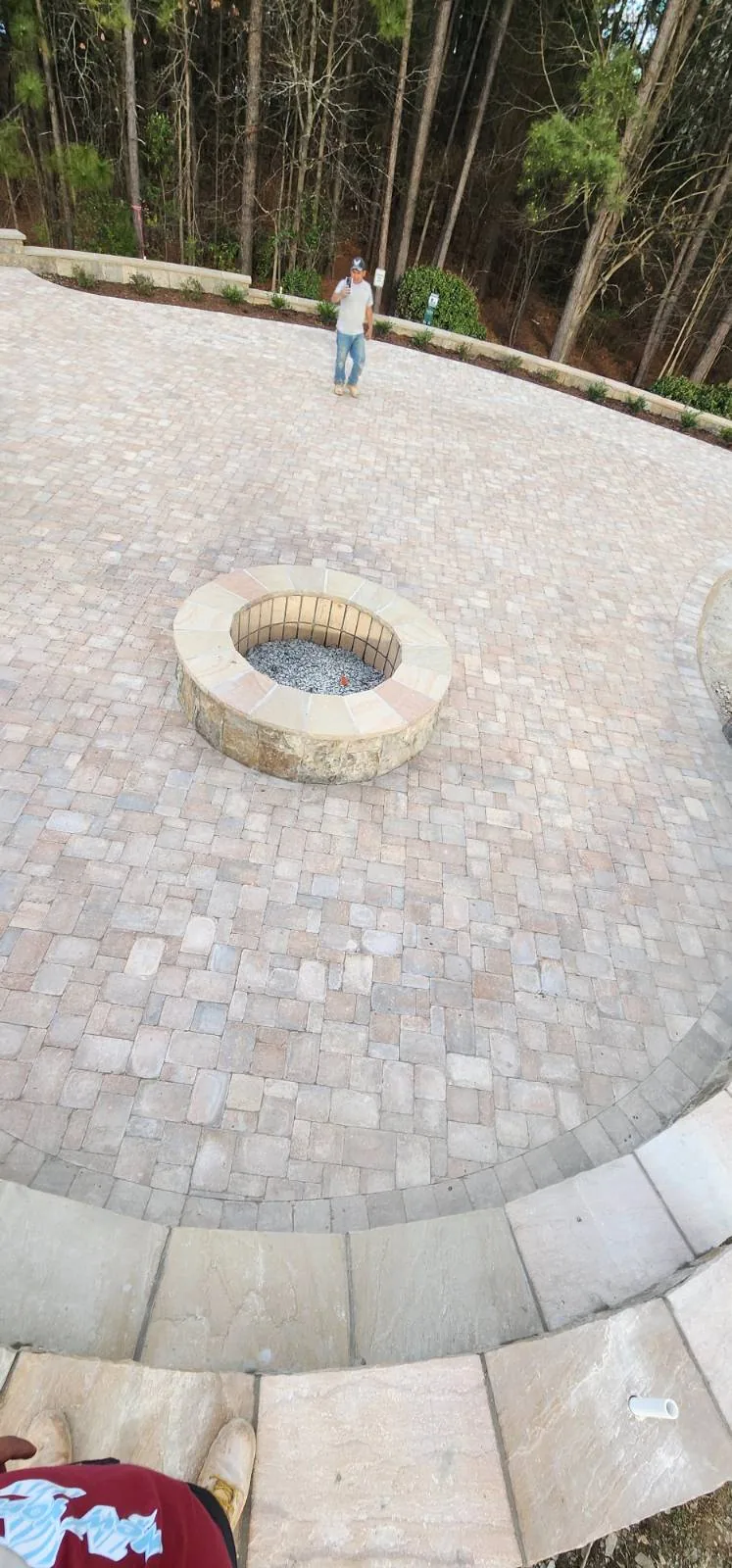
| Paver patio, standard grade, good access | $9–$18 per sq ft | Base depth, edge restraint, pattern waste |
| Paver patio, sloped or tight-access lot | $16–$28 per sq ft | Machine time, hand-haul, terracing |
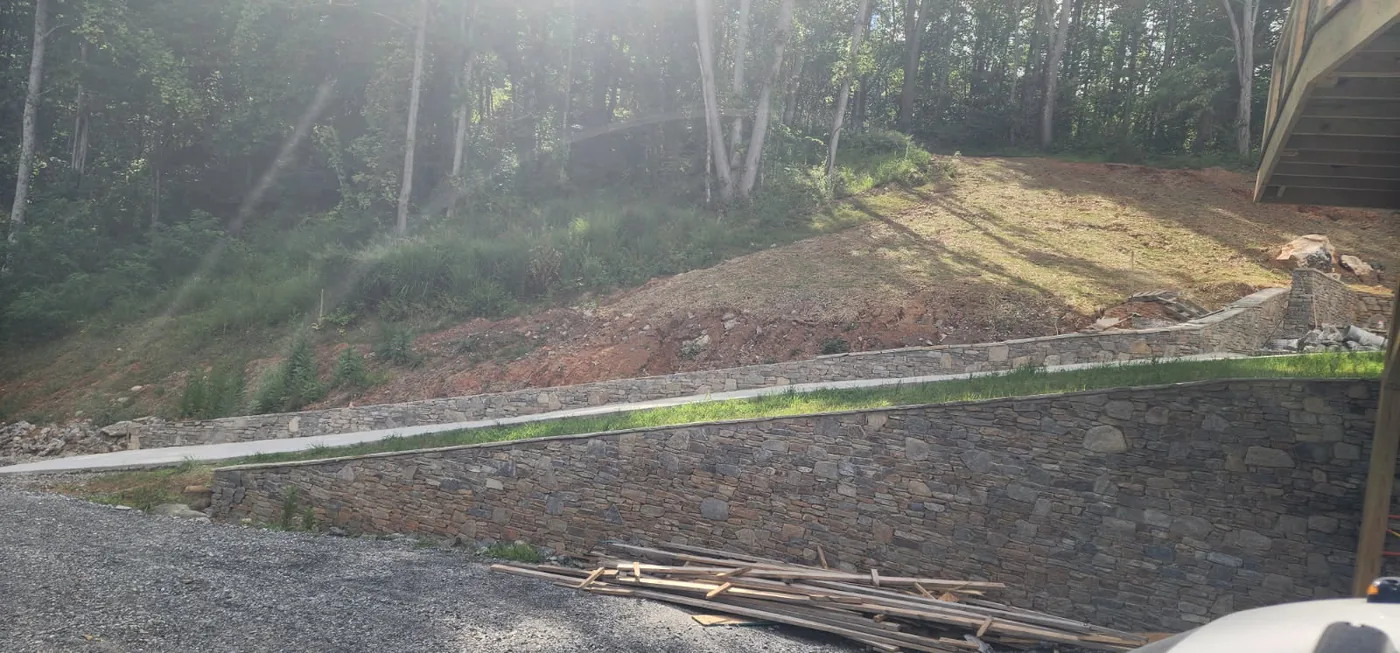
| Retaining wall, block, under 3 ft | $40–$55 per sq ft of face | Footing, drainage stone, backfill |
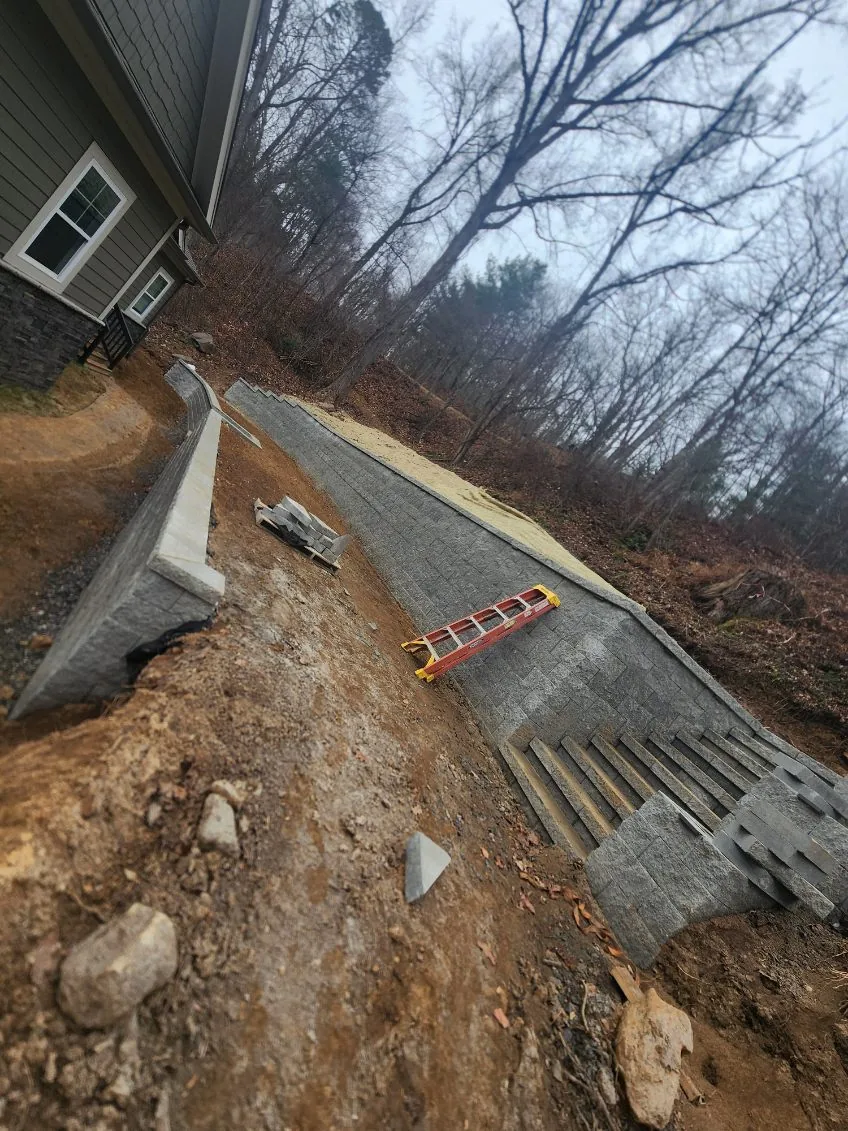
| Retaining wall, engineered, over 3 ft | $55–$75+ per sq ft of face | Engineering, geogrid, permitting |
| Natural stone wall (fieldstone or veneer) | $60–$95 per sq ft of face | Stone selection, mortar vs. dry stack |
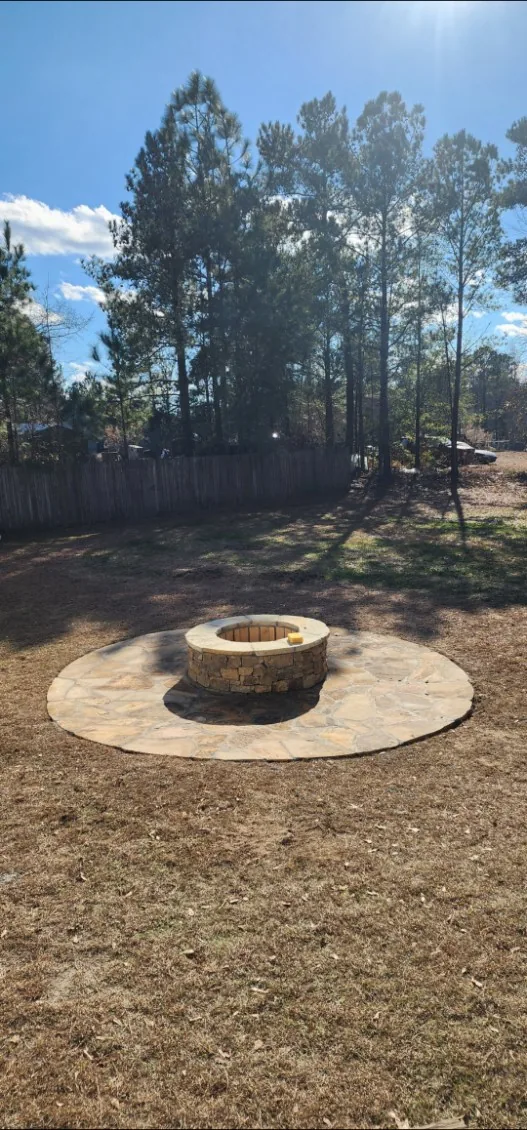
| Fire pit, built-in block or stone | $3,000–$9,000 | Size, gas line, seat wall integration |
| Walkway or steps, per linear ft | $45–$120 per linear ft | Rise and run, number of landings |
| Full outdoor living build (patio, wall, pit, lighting) | $18,000–$70,000+ | Total square footage, access, utilities |
If a wall is the project, the cost page goes deeper — see the Henderson County retaining wall cost breakdown for line-item detail. The short version is that walls over roughly three feet of exposed face stop being a landscaping line item and start being a small structure, with the footing, drainage, and engineering that implies.
Water, slope, and what the county expects before you dig
Mills River gets the same storm and flood family as the rest of Western North Carolina — 16 federally declared events touch this county across 1978-2026 of record, and that history is visible in the ground. The valley floor drains slowly; the ridges shed fast. A patio or wall has to be designed for whichever one you're on, because the failure mode is different. On flat river-bottom ground, the enemy is standing water under the base and frost heave pushing pavers out of plane. On a graded ridge lot, it's concentrated runoff finding the back of a wall and hydrostatic pressure doing what water always does.
Drainage is not an upsell. Base prep, slope away from the house, French drains behind walls, and where the uphill neighbor's water ends up are the difference between a patio that lasts and one that settles. The EPA's guidance on stormwater and runoff is written for exactly this reason, and the code requirements for footing and drainage behind retaining structures live in the International Code Council's residential provisions. A wall built without a drainage plane behind it is a wall waiting on the first wet spring.
Who can legally build it in North Carolina
Hardscaping sits in an interesting licensing spot. A paver patio or a low garden wall is landscaping work. But once a project crosses into structural retaining walls, engineered footings, or utility connections for a gas fire pit, state licensing thresholds come into play. The North Carolina Licensing Board for General Contractors sets the dollar and scope lines where a licensed general contractor is required, and gas line work for a fire pit falls under the State Board of Examiners of Plumbing, Heating and Fire Sprinkler Contractors. Ask any crew you consider where those lines fall on your specific job — a straight answer is worth more than a low bid.
For retaining walls specifically, the local retaining wall contractor guide covers the questions to ask. And if you're still deciding how the whole outdoor space fits together before committing to scope, the hardscaping overview walks through how patios, walls, steps, and fire features get sequenced.
For current official guidance, see the North Carolina State Board of Examiners of Plumbing, Heating and Fire Sprinkler Contractors. For current official guidance, see the U.S. Environmental Protection Agency (EPA).
Stone that belongs here, and what to expect from the ground
Mills River has local stone to work with — fieldstone from old fence lines, mountain granite, and the slate-and-quartz character that shows up across Henderson County. Natural stone costs more per square foot than manufactured block, but it wears in a way block never quite matches, and it ties a valley farmhouse property to the land in a way no catalog pattern does. Manufactured pavers and block still do most of the patio and wall work here because they're consistent, warrantied, and cheaper to lay. The right call is usually site-specific: level ground near the house, natural stone reads better; a slope that needs terraced retaining, engineered block is the honest answer.
One more local note: septic. Much of Mills River is on private wells and septic systems, and excavation for a wall footing or patio base has to respect where the field lines run. Before anyone puts a shovel in the ground, the site plan and septic layout should be part of the conversation. That single check prevents the most expensive kind of surprise.