Why Montreat lots change the hardscape math
Montreat is not a flatter version of Asheville — it's a town built into a cove, with lots that pitch 15 to 30 degrees, mature hemlock and white pine canopies, and driveways that were graded for a 1950s station wagon, not a dump truck. That means two things on nearly every job: access is the first line item, and drainage is the second. A pallet of pavers that takes twenty minutes to drop in a West Asheville driveway can take an hour and a half of shuttle work here, and the labor to move it is baked into every quote whether the contractor itemizes it or not.
The other Montreat-specific reality is ground water. Lots along Flat Creek and the lower slopes drain toward the valley all winter, and the mountain above drains onto them in every summer storm. A patio that ignores that flow will heave within two seasons. Any hardscape plan here starts with where the water goes when it leaves your uphill neighbor's yard, not with which stone you like.
Driveways in Montreat are often single-lane, gravel, and hemmed by rhododendron and old stone curbing. Some properties are reached by shared easements or private drives with no turnaround, which means the excavation crew may park at the bottom and carry material by hand or track machine. That reality alone can add days to a job that would be a one-day dig on a flat lot in Arden or Fletcher. It also affects what equipment can be used: a full-size excavator may never make it up the drive, so smaller machines and more hand work become the norm.
Housing stock matters too. Montreat has a mix of historic cottages, mid-century homes, and newer builds tucked into the trees, and each one presents a different challenge. Older homes may have unpermitted additions, unknown drainage, or existing walls that are failing. Newer homes often have engineered building pads that push runoff to the edges of the lot, which is exactly where a patio or fire pit is likely to go. Reading the site before choosing materials is what separates a hardscape that lasts from one that gets ripped out in five years.
Rock is the other wild card. Much of Montreat sits on bedrock that shows up inches below the surface, and what looks like a simple patio excavation can turn into a day of hammering and hauling. Contractors who work here regularly build a contingency into their bids for that possibility, and homeowners should ask how rock is handled in the pricing — hourly, per-yard, or baked into the square-foot rate. The answer tells you a lot about how honest the estimate will be.
The scope and price picture
Montreat bids run higher than Buncombe County flatland for honest reasons: steeper excavation, tighter equipment access, rock that shows up where the plans said soil. The table below reflects working regional ranges, not fixed rates — expect site conditions to move any of these by 20 percent in either direction.
| Scope | Typical range | What moves the number |
|---|---|---|
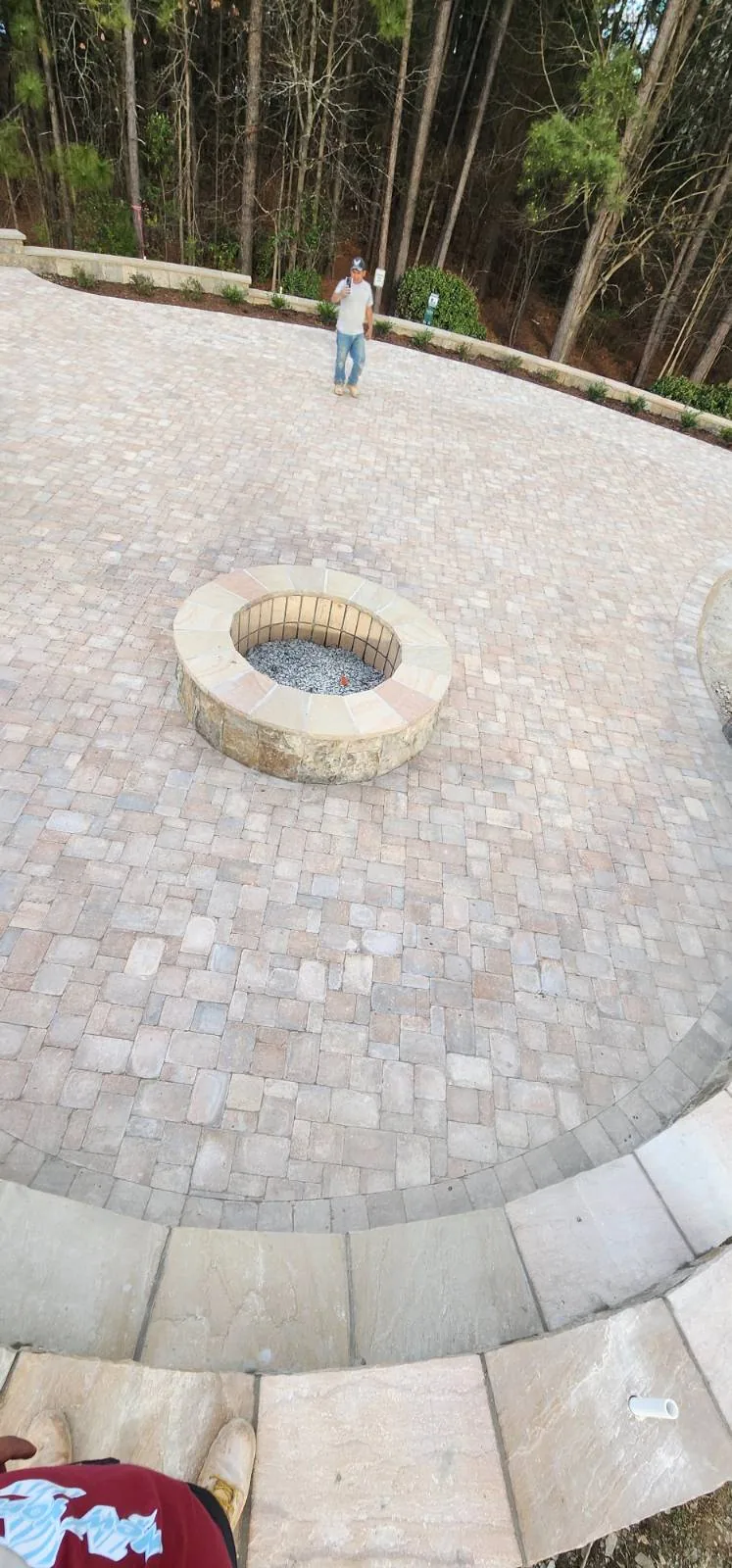
| Paver or flagstone patio, 200–400 sq ft | $6,000–$18,000 | Slope cut, base depth, haul distance |
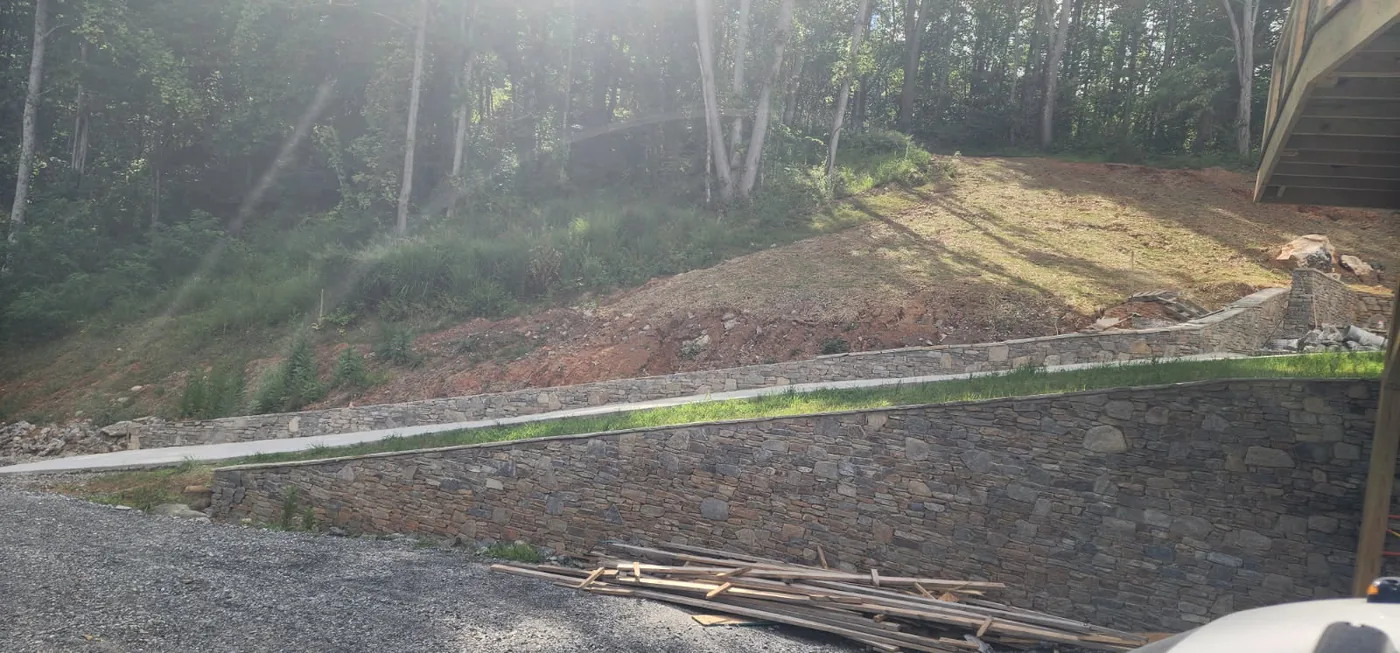
| Natural stone retaining wall, per face foot | $35–$75 | Height, batter, engineered vs. garden wall |
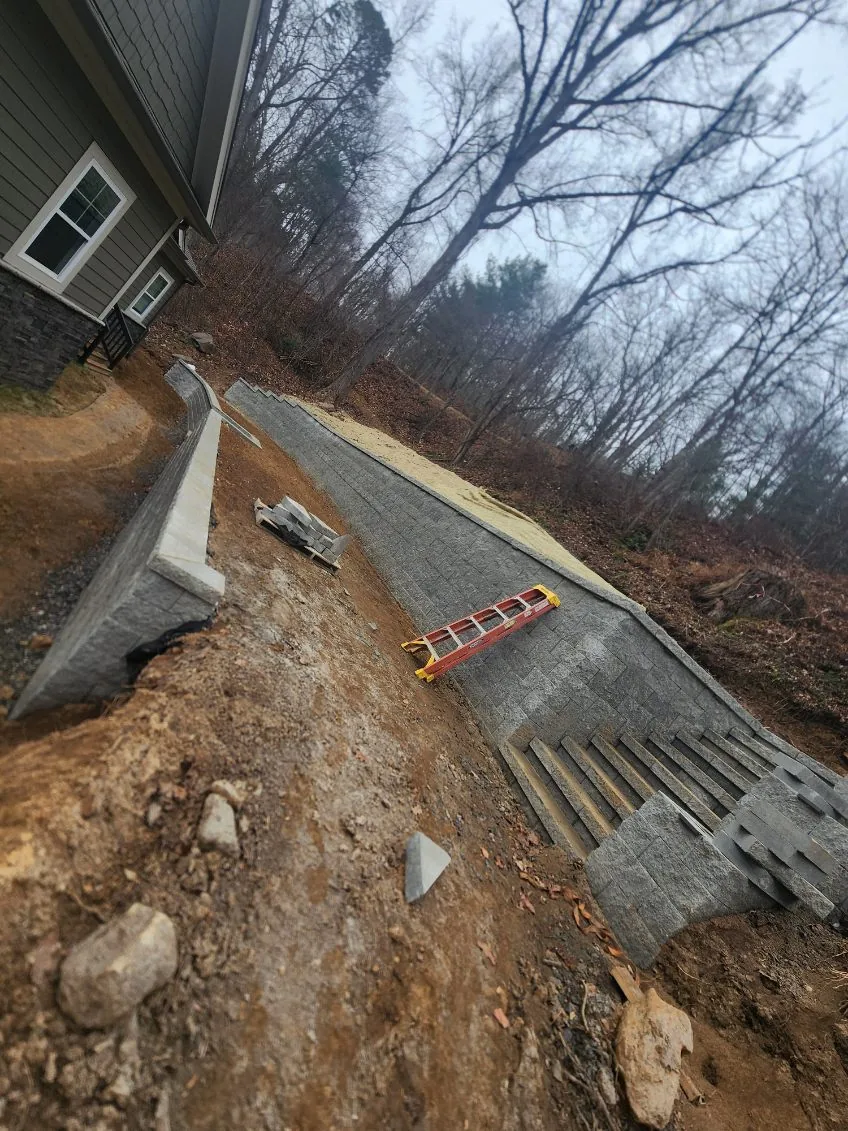
| Engineered wall over 4 ft (permit + design) | $70–$140 per face foot | Engineering, geogrid, drainage detail |
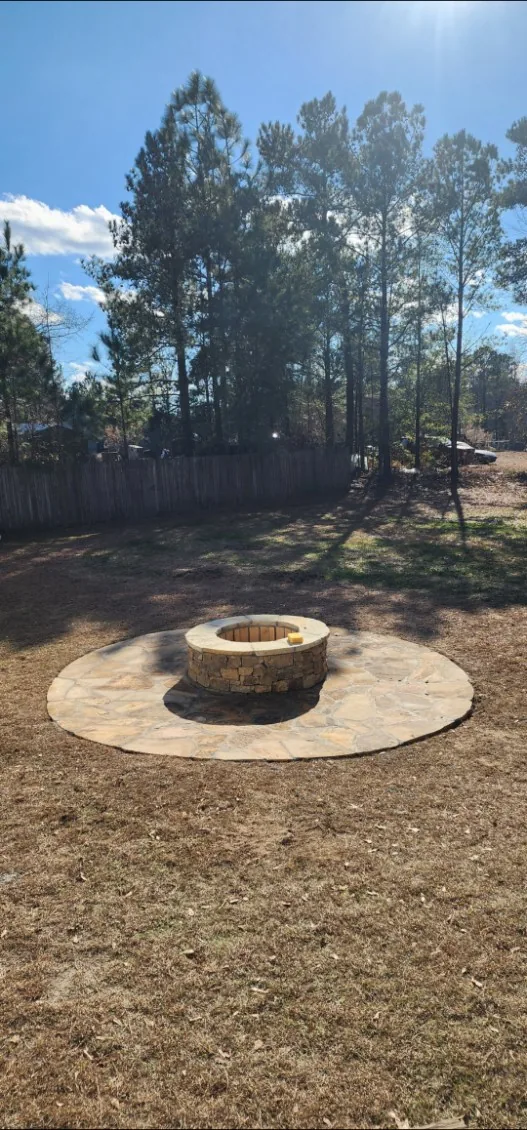
| Fire pit, stone or block, installed | $1,200–$6,500 | Gas vs. wood, seat wall, stone type |
| Walkway or step run, 40–80 linear ft | $3,500–$12,000 | Grade change, step count, lighting |
| Full backyard hardscape package | $20,000–$60,000+ | Combined scope, access, drainage work |
If your project is mainly a wall, the Buncombe County retaining wall cost breakdown walks through the line items that separate a garden wall from a structural one.
On a Montreat slope, step runs and grade changes are almost always part of the conversation. A walkway that drops twelve vertical feet over sixty feet of run needs more than pavers and sand — it needs a proper stair detail, edge restraint on both sides, and drainage that moves water off the treads instead of pooling on them. Those details are where a $3,500 walkway becomes a $12,000 one, and they're the details that decide whether the walkway is still level after two mountain winters.
Fire pits follow the same logic. A simple block ring with a steel insert is on the low end; a natural stone pit with a seat wall, gas line, and matching patio surround sits on the high end. In Montreat, the deciding factor is often where the pit sits relative to the slope — a pit on a bench cut into the hillside needs retaining on the uphill side, and that wall is part of the fire pit budget whether it's called out separately or not.
Stone choice, honestly compared
Montreat has a look — native stone, low walls, patios that read as if they were always there — and the material palette that delivers it is narrower than a big-box showroom suggests. Fieldstone and Tennessee flagstone weather well here and match the surrounding architecture; manufactured pavers cost less and handle freeze-thaw with more predictable movement; bluestone looks right but ships from Pennsylvania and the freight shows up in the bid. What matters more than the name of the stone is the base: compacted crusher run at the right depth, geotextile separation on clay, and a pitch that sheds water away from the house. A cheap stone on a correct base outlasts a premium stone on a bad one every time.
Freeze-thaw is the real test in this part of Buncombe County. Montreat sits in a cove where winter temperature swings are sharp, and any stone that holds water will spall or shift. Dense, low-absorption stone — granite, fieldstone, and good-quality flagstone — handles that cycle better than porous alternatives. Manufactured pavers with a tight joint and proper polymeric sand also perform well, but they depend on the base staying intact. If the base moves, the pavers move with it, and no amount of premium material fixes a failed subgrade.
Color and finish matter for matching the neighborhood. Montreat's older walls are often gray and tan fieldstone with a rough face, and a bright, uniform paver patio can look out of place next to them. Many homeowners here choose a stone that blends with the existing walls and lets the planting and trees do the visual work. That's a design decision as much as a materials one, and it's worth walking the property with the contractor before ordering anything.
Walls, grades, and the permit line
Retaining walls are where Montreat projects most often cross into regulated territory. A knee-high garden wall is a weekend decision; a wall holding back a slope above a structure or a neighbor's property is an engineered assembly, and North Carolina's general contractor licensing thresholds apply once the job scope grows past the statutory figure — the NC Licensing Board for General Contractors publishes where that line sits. Walls over four feet, or any wall surcharging a slope, should carry an engineer's stamp and a drainage plan behind the face. The International Code Council codes adopted by Buncombe County treat retaining wall drainage and setback as structural requirements, not suggestions.
Because much of Montreat drains steeply and sits above creeks, wall and patio plans also need to respect stormwater rules — the NC Department of Environmental Quality sets the statewide framework that local jurisdictions implement. Ask any contractor how they handle runoff before you sign; the good ones start the conversation there. In a cove like Montreat, where water from several properties can converge on one low corner, a wall that blocks flow instead of managing it can create a problem for the neighbor below — and that becomes a legal issue, not just a drainage one.
Setbacks and property lines are another Montreat-specific concern. Many lots here are irregular, some are steep enough that the buildable area is a small bench, and the line between two properties may run through what looks like open slope. Before any wall is built near a boundary, it's worth confirming the line and understanding how excavation on one side affects the other. A wall that pushes fill onto a neighbor's slope, or that changes the drainage path across a property line, can turn a straightforward project into a dispute. Contractors who work here regularly will raise that question early rather than after the equipment arrives.
Permits for hardscape in Montreat generally follow Buncombe County's process, and the scope of the project determines what's required. Patios and walkways below a certain size and height often don't need a permit; walls over the height threshold, structures with gas or electrical connections, and any work in a floodplain or stream buffer typically do. The specifics depend on the site, so the honest answer is to check before breaking ground, not after. The 19 federal disaster declarations recorded across 1973-2026 in this region are a reminder that water, not stone, is the force that most often undoes outdoor construction in western North Carolina.
Hiring for a Montreat job
Three questions separate the crews who work here from the crews who don't. First: how will equipment reach the site, and what does that add to the bid? Second: what happens to water that used to run across this spot? Third: can they show you a wall or patio on a comparable slope that has been through three winters. The answers are the whole story. When you're comparing bids, the hardscaping overview explains the scope language you should expect, and the Montreat retaining wall contractor guide covers the wall-specific checks. Slope, rock, and access — not material brand — are what actually drive the number on a Montreat project.
It also helps to ask how the contractor handles the end of the job. On a steep lot, cleanup is not trivial: spoils from excavation have to be hauled out or placed somewhere on site, and leftover stone and base material need to go somewhere. A crew that plans for that from the start leaves a cleaner site and a more predictable final invoice. A crew that doesn't may leave a pile of dirt on your driveway for a month.
Timing matters too. Montreat's access roads and narrow drives can be difficult in wet weather, and spring and fall storms can stall a project for days. Contractors who schedule realistically around that, rather than promising a fixed completion date regardless of conditions, tend to deliver better work. The best bids here include a clear scope, a clear sequence, and a clear understanding that mountain sites sometimes surprise you — and a plan for what happens when they do.