Buncombe County walls fail differently than flatland walls
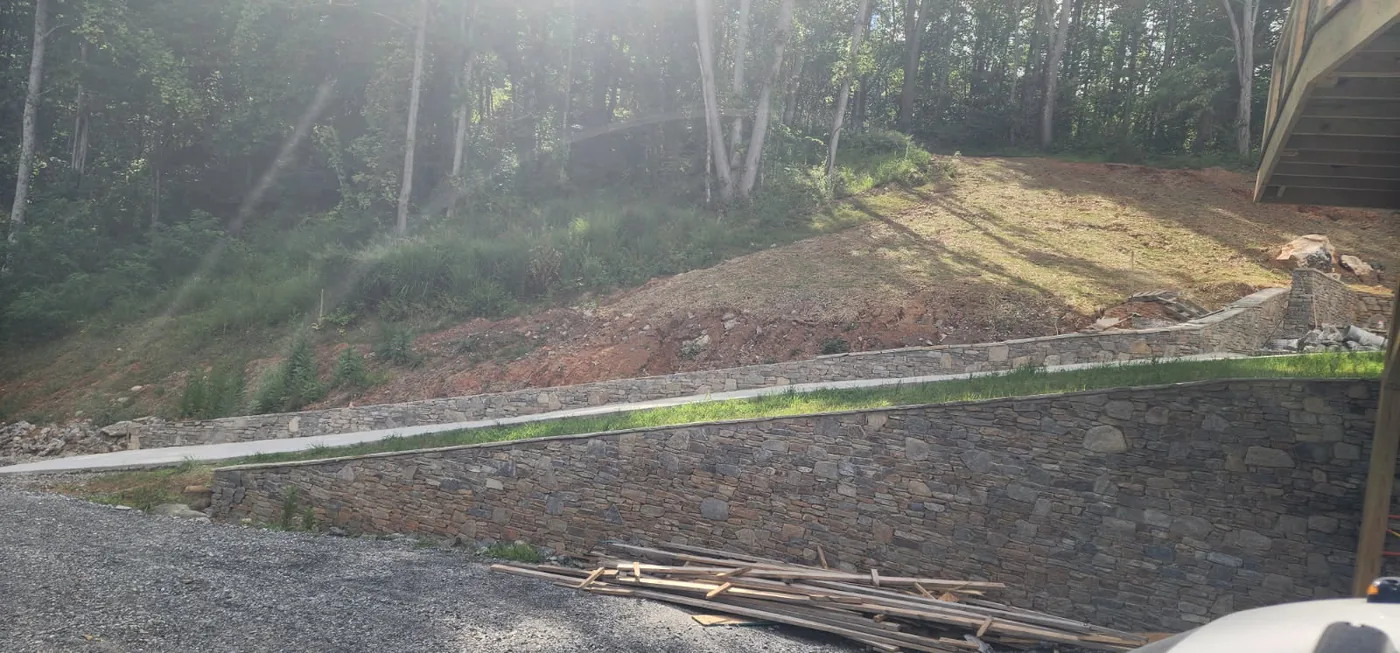
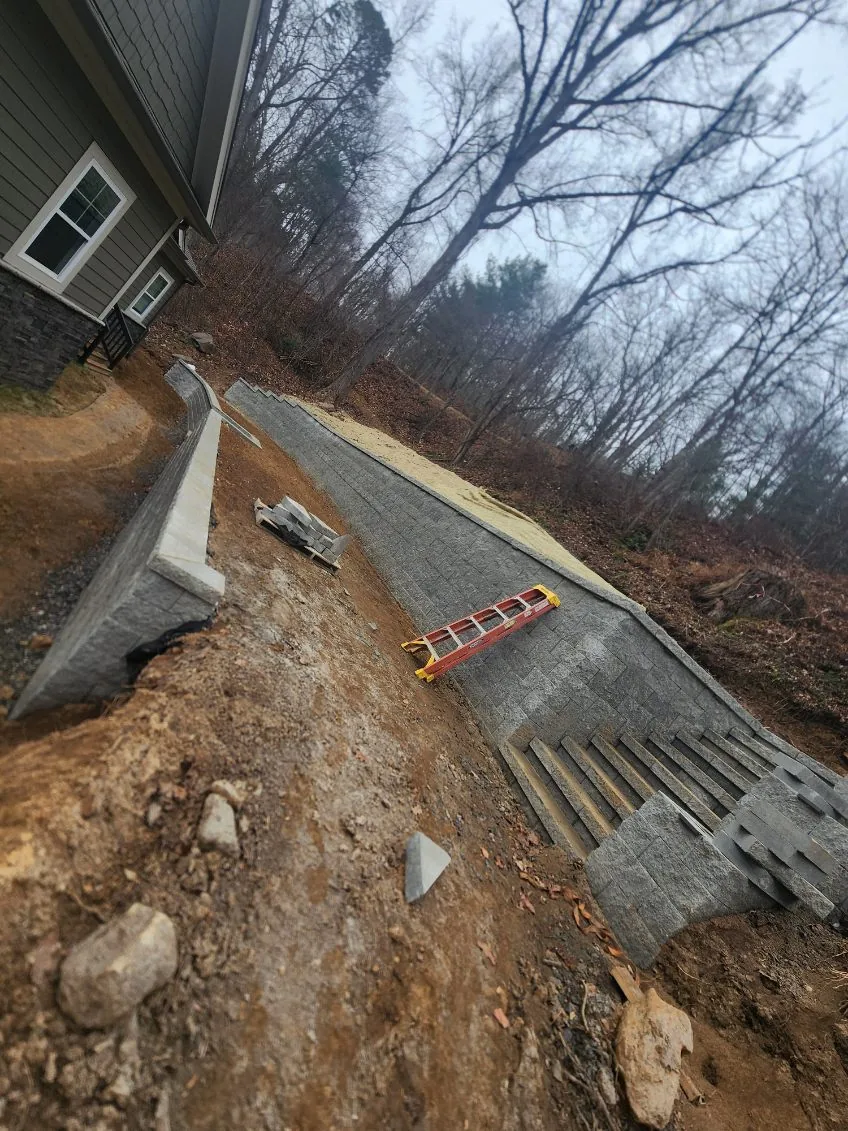
Fieldstone and boulder walls terrace the older neighborhoods up the slope — Montford, parts of West Asheville, homes climbing off Town Mountain and Beaucatcher. Those walls have been leaning into gravity and groundwater for decades and often still hold, because the people who built them stacked rock without mortar and let water pass through. The walls that fail here now are the other kind: block and timber walls built on cut lots across the county, retaining the uphill side of a driveway or a walkout basement, holding back clay that swells every wet season and pushes hard every winter.
That distinction matters before you call anyone. A dry-stacked fieldstone wall that has bulged a few inches since the 1970s is a different repair — sometimes no repair — than a six-foot block wall that moved a foot this spring next to a newer build on engineered fill.
What to check before you spend anything
Stand back and look at the whole line. A wall that curves or bulges in one section is usually a drainage failure behind that section. A wall leaning as a unit from the base is a footing or soil-bearing problem. Cracks that track along the mortar joints of a block wall point to the same pressure story told in a different way.
Then look up the hill. The single most common Buncombe County cause is water that used to run around the wall now running into it — a regraded neighbor yard, a clogged gutter discharging at the top of the slope, or a French drain that has filled with mountain clay. The National Weather Service keeps the rainfall record for this region, and a glance at recent wet seasons explains why so many walls start moving in the same years. The federal disaster record tells the same story: 19 declared events touch this county (1973-2026), overwhelmingly storm and flood family. If a wet year triggered the movement, drainage is where your money should start.
Before anything gets buried or rebuilt, know the rule. In North Carolina, wall construction that crosses certain height and scope thresholds falls under the NC Licensing Board for General Contractors, and structural retaining walls must be designed to carry the loads the soil puts on them. If your wall is over roughly four feet tall, near a foundation, or holding a driveway, assume engineering and permitting are in play and ask any contractor how they handle both. The NC Office of State Fire Marshal publishes the state's adopted building codes and local amendments that apply.
Scope versus price in this market
The range below reflects Buncombe County work on residential walls. The two biggest price movers on an Asheville-area slope job are access (can equipment reach the wall, or does everything move by hand?) and whether the repair requires a stamped design. Because so much of the county is hillside, those line items appear in most real bids here and flatland quotes often leave them out.
| Scope of work | Typical range |
|---|---|
| Crack and joint repair, minor drainage correction, small block wall | $1,800-$4,500 |
| Rebuild a failing section, new footing and drainage, up to about 4 ft tall | $5,500-$12,000 |
| Full replacement, block wall 4-6 ft tall with drainage and geogrid | $14,000-$28,000 |
| Engineered replacement on steep slope, tall or long wall, tight access | $22,000-$45,000+ |
| Fieldstone or boulder wall repointing and selective rebuild (historic assemblies) | $3,500-$15,000 |
Treat these as ranges, not quotes. Any contractor who gives you a firm number from a photo is selling you a guess.
Stop the water, then fix the wall
Drainage is the repair most homeowners skip and the one that determines whether the repair lasts. On a Buncombe County slope that means addressing three things: uphill runoff before it reaches the wall, a functioning drain behind the wall that can actually discharge, and surface grading that slopes the yard away rather than into the top of the wall. Correcting those first is often the difference between a repair that holds for decades and one that fails again in five years. The EPA and the U.S. Department of Housing and Urban Development both maintain homeowner resources on managing runoff and protecting foundations that apply directly to how water behaves against a retaining wall. If your wall has already pushed past a few inches and is leaning toward a house, driveway, or neighbor's property, stop trying to fix it yourself — call for an inspection and keep people and vehicles out of the fall zone.
Once drainage is addressed, the structure itself gets repaired or rebuilt. That step is covered in detail on our retaining wall repair page. If the wall is still in the early stages — leaning or bulging but not collapsed — see our guide on what a leaning retaining wall needs. And if you are working through the question of repair versus replacement, our main retaining walls page walks through how we decide.
Hiring for a wall on a Buncombe County slope
Ask two questions before you get a number. First, how will the crew handle water behind the wall after the repair? Second, if the wall is over four feet or holds anything important, will the job carry a design that matches the state's adopted code, and does that step change the price? Crews that can answer both in plain language are the crews worth hiring. A contractor without a plan for drainage is a contractor who will be back in the same spot in a few years — this time on your dime.