Where Black Mountain patio water actually comes from
The lots tell you everything. A cottage off Cherry Street sits on a small flat yard where the only water problem is a downspout dumping beside the foundation. A house up on a hillside off Montreat Road has a different situation: stormwater sheets down the slope behind the house, hits the patio area, and needs somewhere to go that is not the basement. And a property on the flat valley side toward the golf course has the opposite problem — slow-draining clay that holds water for days after a rain.
Every one of those lots needs a patio that moves water away from the house and off the stone. That means slope on the patio surface itself (typically 1 to 2 percent away from the structure), a compacted base that will not pump under freeze-thaw, and a plan for where the runoff exits. A flagstone patio that ignores those three things will show it within two winters.
Most of this watershed drains toward the Swannanoa River, and the federal record backs up why water is the lead concern here. 19 declared disaster events have touched Buncombe County (1973-2026), heavily weighted toward storm and flood. That history is not abstract if you own a sloped lot in Black Mountain.
Reading your ground before anyone quotes a number
Before we talk square footage, walk the site. Is the patio going onto existing grade, or will it need fill and a retaining wall to create the flat area? How much fall does the yard have across the work zone? Where does the roof water land today? Are there tree roots close enough to lift stone over time?
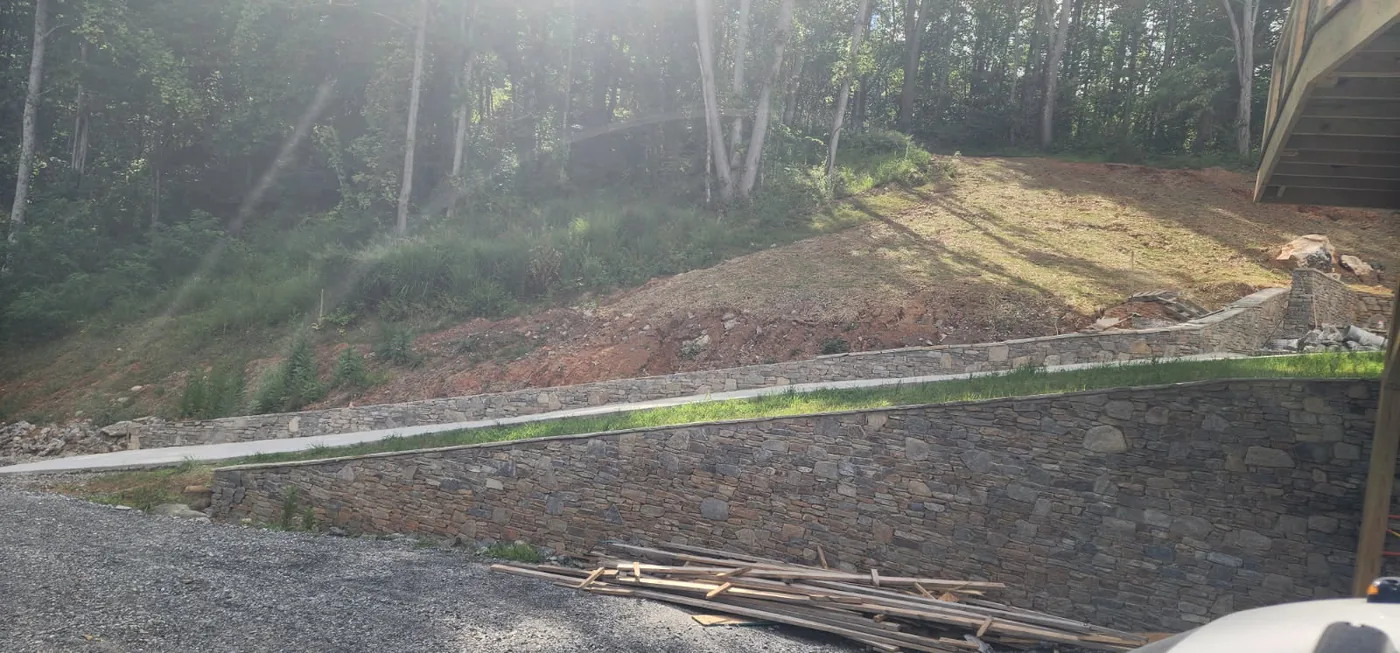
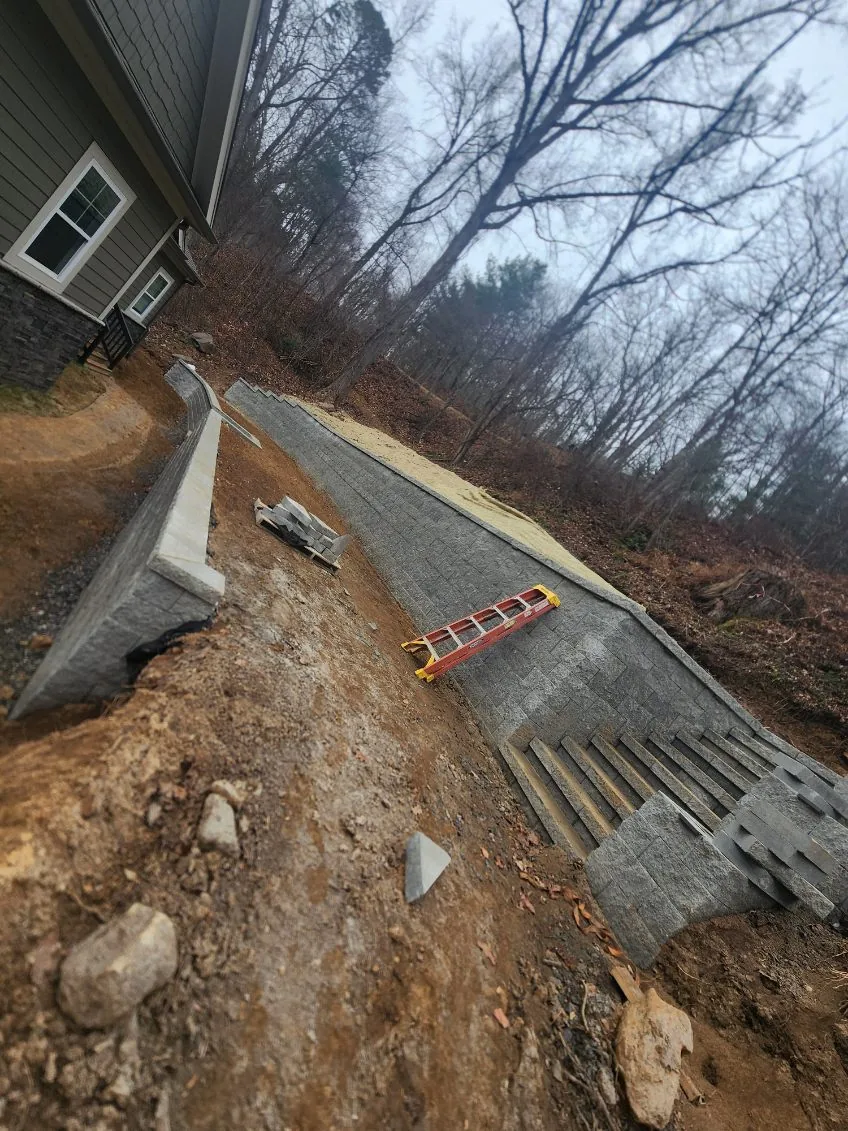
Flagstone is heavy and unforgiving of a bad base. A patio on a hillside needs an engineered retaining structure uphill or downhill of it, and that structure has its own permitting and design questions. See the Buncombe County retaining wall cost breakdown for what that adds, and the retaining wall contractors Black Mountain page if the grade work is the larger part of your job. On steep lots, the wall often costs more than the stone surface.
The Black Mountain patio price picture
This is a range game. Stone type (Tennessee fieldstone vs. Pennsylvania bluestone vs. local NC flagstone), thickness, joint style (mortared vs. dry-laid), and site access all move the number. A truck that cannot reach the backyard means wheelbarrows, and wheelbarrows cost labor hours. The table below shows typical scope bands for this market. Treat any bid below the bottom of a band as a bid that is missing something — usually base prep or drainage.
| Scope | Typical price range |
|---|---|
| Small dry-laid flagstone patio, 150–250 sq ft, easy access, minor grading | $6,000–$9,500 |
| Mid-size dry-laid patio, 250–450 sq ft, some grade work | $10,000–$16,000 |
| Mortared flagstone patio with concrete base, 300–500 sq ft | $14,000–$22,000 |
| Patio on slope requiring retaining wall and drainage correction | $18,000–$35,000+ |
| Drainage correction alone (French drain, grading, downspout extensions) | $2,500–$7,500 |
Those bands assume a straightforward compacted gravel base. If the patio is over a septic field, near a wellhead, or inside a setback, that changes what is possible and what permits apply.
Rules, codes, and who should be doing the work
A patio on grade is typically not a structure that pulls a building permit, but a retaining wall over a certain height often does, and any work inside a floodplain or near a stream buffer has its own review. North Carolina code treats drainage and grading as serious matters. The NC Licensing Board for General Contractors sets the threshold where a project legally requires a licensed general contractor, and the International Code Council publishes the model residential code local inspectors apply. Ask your mason which side of that line your job falls on before signing.
Hardscape work often touches the same soil and water questions the EPA covers under stormwater rules, especially when runoff leaves your property. And if your home is older or has any federally related financing, HUD guidelines can apply to ground disturbance near the structure. None of these are reasons to avoid the project. They are reasons to hire someone who knows they exist.
Stone choices that hold up in this climate
Black Mountain sits at elevation, which means more freeze-thaw cycles than the valley floor below. That matters for stone selection and base design. Dry-laid flagstone on a properly compacted and drained base flexes with the ground and handles frost heave better than a rigid mortared surface on a marginal base. Mortared patios look cleaner and hold furniture better, but they need a concrete slab or an engineered base under them to avoid cracking.
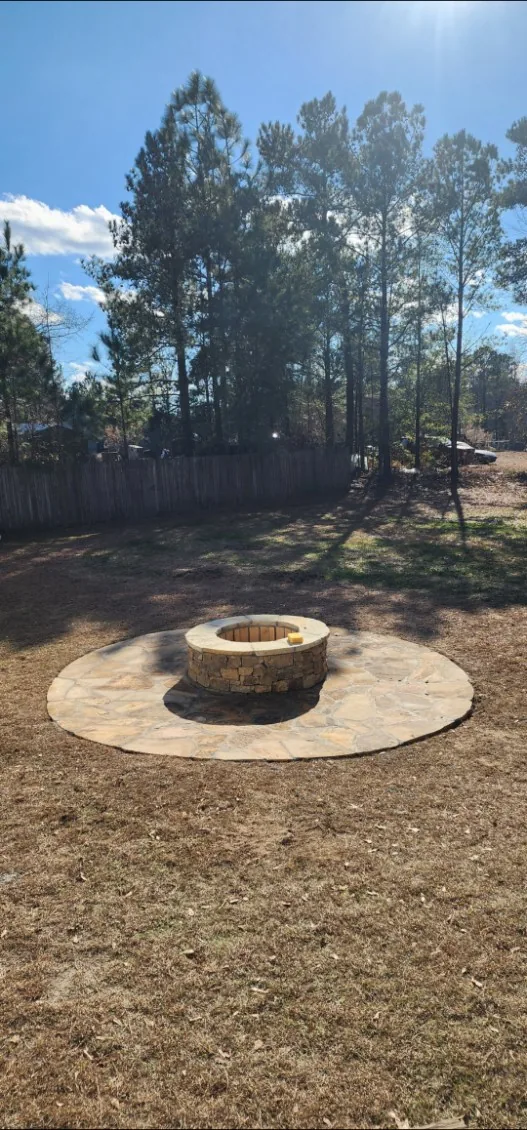
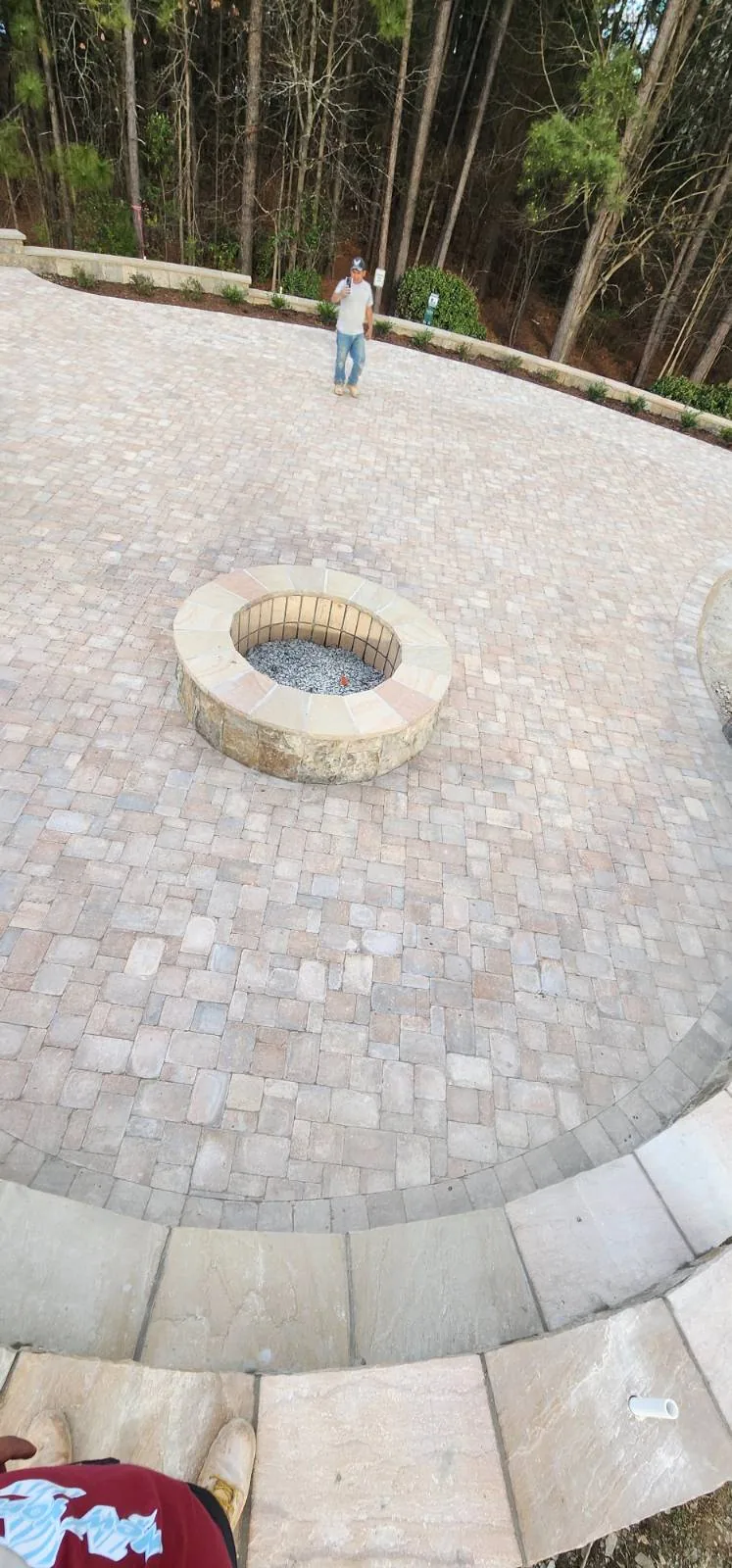
Local NC flagstone and Tennessee fieldstone are the workhorse choices here. Bluestone is denser and more expensive. Each has a different look and a different price per square foot once installed. The flagstone patio guide covers stone-by-stone comparisons and what each performs like in mountain conditions.
What to expect from a proper first visit
A real estimate starts on the ground, not in a truck. Someone should walk the yard, check the fall, look at where water goes now, and ask how you plan to use the space. Photos do not replace that step on a sloped lot in Buncombe County. Expect questions about drainage, access, and what is under the surface before anyone puts a number on paper. If a quote arrives without anyone standing on the dirt, it is a guess.