Where the money actually goes on a Flat Rock stone job
A quote for stone steps and walkways in Flat Rock, NC reads nothing like a quote in flat coastal Carolina, because almost nothing about the work here is flat. The village sits at the foot of the Blue Ridge escarpment, and parcels slope toward the Green River drainage in ways that turn a simple front path into a retaining problem. When we break a bid apart, four line items do nearly all the moving: excavation and haul-off, base stone and compaction, the stone itself, and drainage or retention that the slope forces you to add.
Excavation is the quiet killer. A walkway crossing a 12-inch fall needs a shallow scrape; the same run on a 4-foot fall needs cut, haul, and often a buried footer under the steps. Base stone is sold by the ton and compacts in lifts, so a 60-foot path can swallow multiple tandem loads before the first flagstone is set. The visible stone — Tennessee flagstone, Asheville-area fieldstone, or bluestone — is the line homeowners focus on, but it is rarely the biggest one. And drainage: if water sheets down an uphill neighbor's yard into your path corridor, the walkway is also a stormwater structure whether the bid says so or not.
Flat Rock's housing stock spans 1800s estate grounds to 1990s golf-course subdivisions, and that mix changes the estimate. On an older parcel off Greenville Highway, the stone may need to tie into an existing granite curb or an old retaining wall that has settled. On a newer lot in Kenmure or Cumberland, the path may cross a septic field or an irrigation main, which means hand-digging instead of machine work. Both scenarios add labor, and neither shows up in a per-square-foot price.
Scope versus price, line by line
The table below reflects typical Henderson County ranges for residential work, assuming machine access and a normal suburban lot. Steep lots, tight backyards, and long hand-carry distances push every row up.
| Scope | Typical range | What drives it |
|---|---|---|
| Simple front walk, under 40 ft, mild grade | $2,200–$4,800 | Base depth, stone type, edge restraint |
| Stepped entry, 3–6 stone risers, landing | $3,500–$8,000 | Riser count, footer depth, cut stone vs. dry-laid |
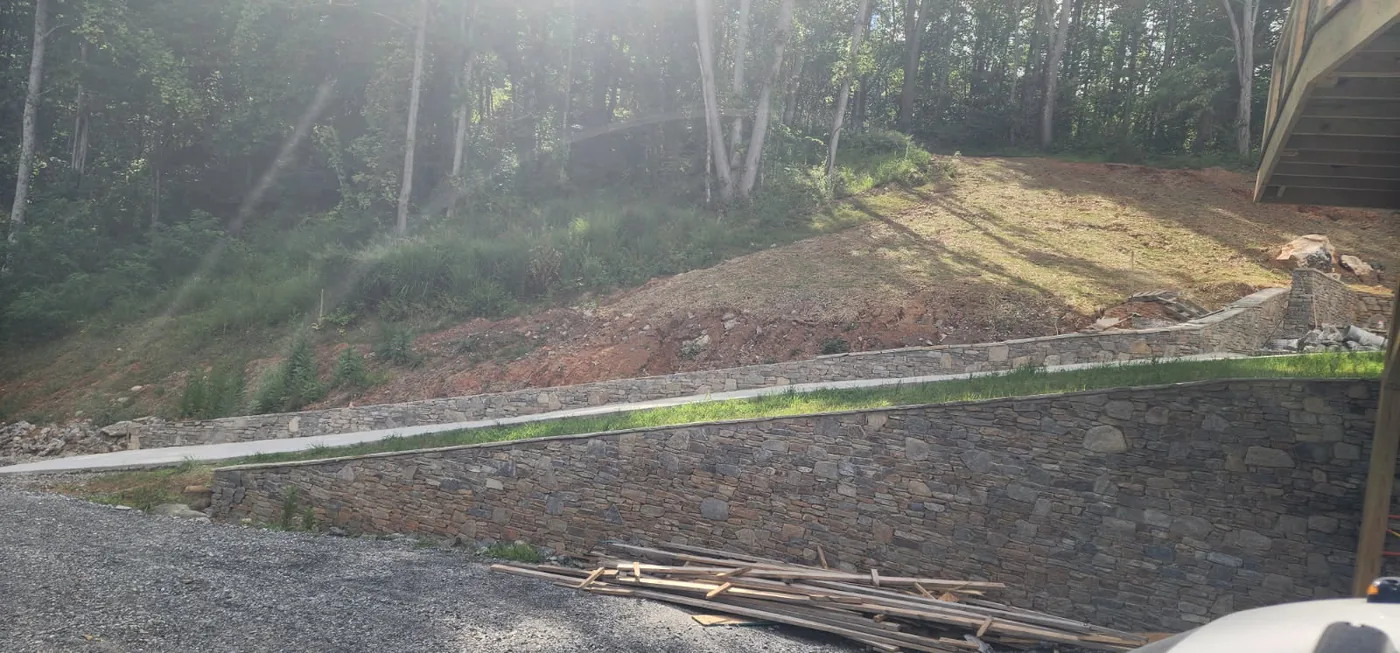
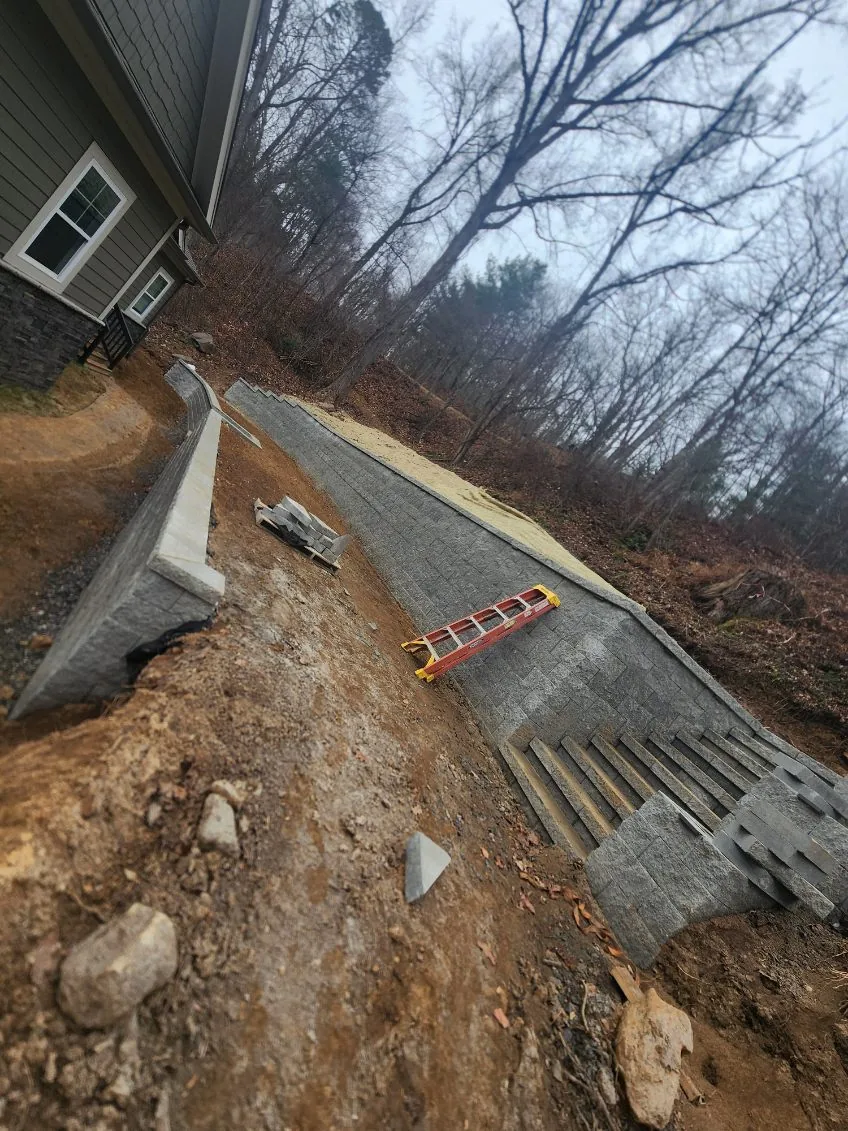
| Hillside stair run, 15+ ft of fall | $7,000–$18,000+ | Excavation, retaining tie-in, hand-carry haul-off |
| Full path plus landing and terrace walls | $12,000–$30,000+ | Wall footage, drainage engineering, stone selection |
Any number without a grading line and a drainage line is a placeholder, not a bid. Ask for both.
One more Flat Rock-specific cost driver: access. Many properties here sit behind mature rhododendron and mountain laurel, and a mini-excavator cannot reach the work zone without clearing. If the bid doesn't mention tree protection or root pruning, you may be paying for damage later. The stone steps and walkways service overview covers how a proper site walk should flag these before excavation starts.
Why the slope at Flat Rock rewrites the estimate
The village's terrain — rolling foothill ground with mature hardwoods and historic estate parcels — means water arrives from above and leaves slowly. Federal disaster records show 16 declared events touching Henderson County across 1978-2026, mostly storm and flood family, and every one of them pushed runoff at paths, steps, and retaining structures built for gentler assumptions. The International Code Council treats site drainage and stair geometry as safety provisions, not decoration, and that is the right frame here: a stone stair on a 30-degree slope is a small piece of civil work, not a landscaping afterthought.
What that looks like in a real scope: subgrade compacted in lifts, a footer under the bottom riser, weep points or a French drain behind any wall face, and riser heights that stay consistent because inconsistent risers are how people fall. The Henderson County retaining wall cost breakdown covers the tie-in side of this in detail, since most long stair runs here terminate in a wall.
Flat Rock also gets more freeze-thaw cycles than the Piedmont because of elevation. That matters for mortar and for base depth. A walkway built to coastal specs will heave within a couple of winters. Local crews who understand this typically spec deeper base and more forgiving joint details, which is a cost you pay once rather than twice.
Stone choices and what they do to the bottom line
Three stone families dominate local work, and each carries a different labor profile. Tennessee flagstone is the regional standard — irregular, thick, durable, and forgiving on grade changes. Local fieldstone reads more mountain-native and pairs well with older Flat Rock estate architecture, but it varies in thickness, so setting time rises. Bluestone is the premium option, more uniform and more expensive per square foot, often chosen for formal entries.
Dry-laid versus mortared is the other fork. Dry-laid stone moves with freeze-thaw and drains itself; mortared work holds crisp edges but needs proper base and, in our climate, attention to water behind the joints. Neither is wrong. What is wrong is a bid that does not name the method, because the labor and lifespan differ by years. When you are ready to compare approaches against your actual grade, the stone steps and walkways service overview walks through what a site visit should cover.
Stone sourcing is local and seasonal. Quarries in the region run on their own schedules, and a stone that was available in spring may be back-ordered by fall. If your project has a hard deadline — a wedding, a sale, a family event — tell the contractor up front so the order goes in early. A two-week delay in stone delivery can push the whole job into a wetter season, and wet seasons here are real.
Contractor vetting for a hardscape job this size
North Carolina draws a licensing line by project value, and a combined steps-plus-wall project can approach it, so verify status through the NC Licensing Board for General Contractors before signing. Three local questions separate real hardscape crews from lawn outfits: ask to see a recent hillside stair job within driving distance, ask how they handle haul-off on a lot without rear access, and ask what they do when they hit rock during excavation. That last one is not hypothetical on this side of the county.
Also confirm insurance and that the crew owns compaction equipment rather than renting it by the day. Base preparation is invisible in the finished walk, and it is the single biggest predictor of whether the steps are still level in five years. If a wall is part of the plan, cross-check the Flat Rock retaining wall contractor guide for the overlapping vetting points.
Ask about cleanup, too. On a wooded Flat Rock lot, excavation spoils pile up fast, and haul-off fees are real. A bid that lists disposal as "included" should say where the dirt goes. Some crews spread it on-site, which can bury root zones and kill trees you wanted to keep. Others haul it, which adds cost but leaves the landscape intact. Either is fine if it's stated, not discovered later.