Read the existing wall before you price new stone
In Marshall and the rest of Madison County, most stone veneer calls start with a photo of something already built: a 1970s split-level with a brick front popping off in sheets, a chimney clad in fake stone that has gone chalky on the south side, a concrete porch face the county inspector flagged. The instinct is to price replacement by the square foot. The better first move is to read the assembly — what is behind the stone, how water leaves it, and whether it was ever built to hold cladding at all. A veneer that has failed because the wall behind it is wet will fail again on a new wall, and a veneer that has failed because a single flashing detail was wrong can often be picked off, prepped, and reclad for a fraction of a tear-down.
That reading decides the job. Repair-in-place versus rebuild is the difference between a few thousand and low-five figures on the same wall, and no honest contract should be signed before someone has put a hand on the substrate.
Why this valley writes a different rulebook than the coast
Madison County is mountain ground: the French Broad cutting through Marshall's tight floodplain, hillsides stepping up past 3,000 feet in the Shelton Laurel and Big Pine valleys, and a housing stock that mixes pre-war brick along Main Street with modern timber-frame homes on steep cut lots. Veneer lives under two loads here. Water from the inside, because slab and crawl walls in the county's older houses sell moisture outward through whatever stone is attached. And water from the outside, because freeze-thaw cycling on a north-facing wall in this elevation band works mortar joints every winter in a way it never does in Raleigh.
The federal record reinforces it. 21 federal disaster declarations have touched this county over 1978-2026, and the recurring families are storm and flood. That history is why the correct rebuild detail here is not just "stone on wall" but drainage plane, weep system, and a flashing detail that will still work in year fifteen, not just year one. The International Code Council treats adhered-veneer installation as a specific assembly with specific clearances, and the detail matters more than the stone brand.
Repair versus rebuild: a scope table
Real numbers on real Madison County walls. These are installed ranges for the scope described, not per-stone prices, and they move with access — a steep Shelton Laurel driveway adds labor in a way a Main Street flat lot does not.
| Scope | Typical range | When it is the right call |
|---|---|---|
| Spot repair, repoint, and re-adhere | $450-$1,800 | Isolated pop-outs, sound substrate, no bulk water history |
| Reclad over prepared existing wall | $18-$28 / sq ft installed | Substrate is dry and plumb, existing lath or scratch coat is salvageable |
| Full tear-off and rebuild over framing | $26-$40 / sq ft installed | Failed drainage plane, rotted sheathing, no existing WRB |
| Stone-clad retaining or porch wall | $35-$70 / sq ft of face | Structural wall face being finished; see the county retaining wall cost page for the structural side |
| Chimney reclad | $2,400-$6,500 per stack | Crown, flashing, or cap failure is the actual source; test before pricing |
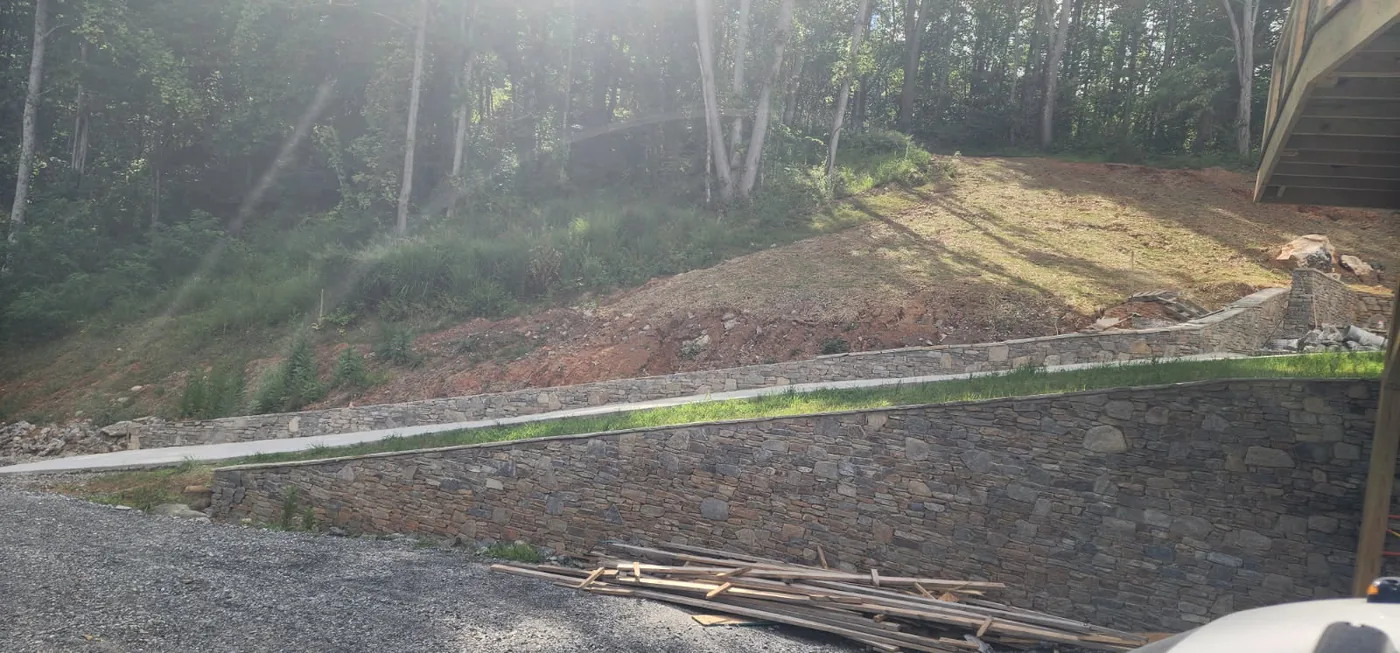
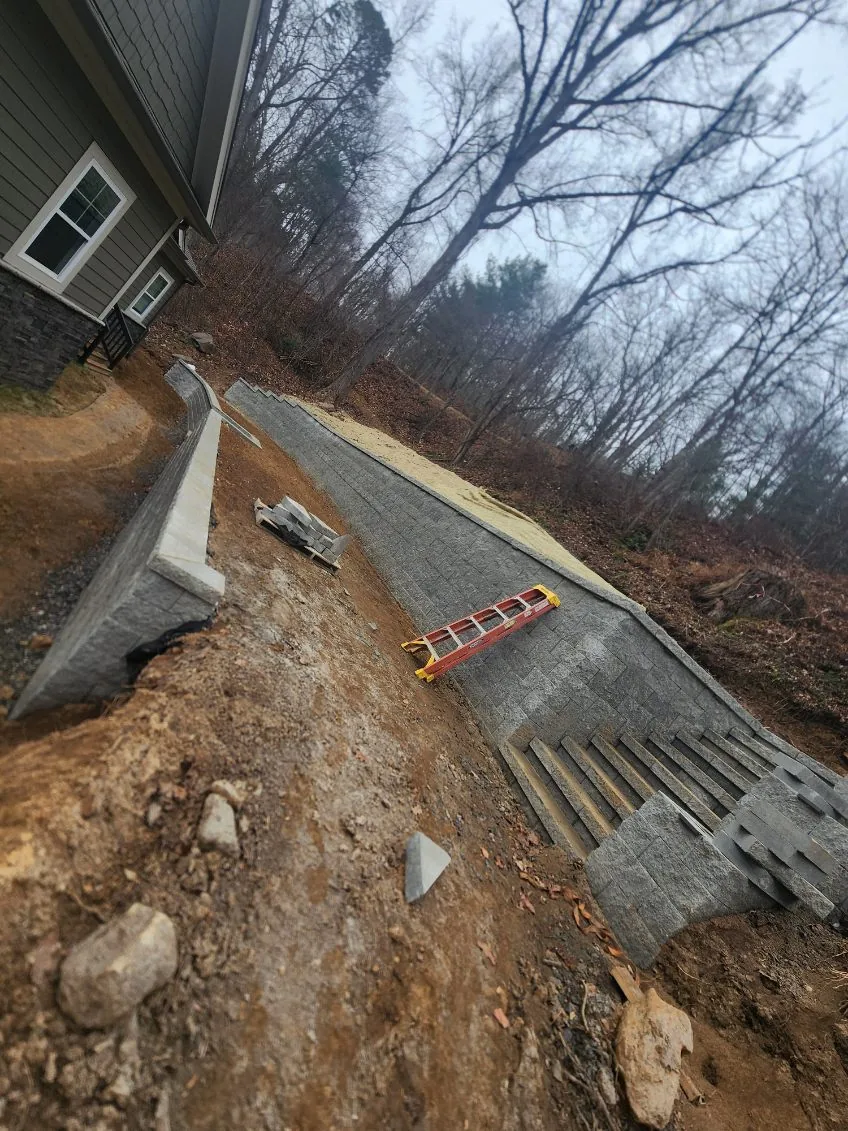
If your project is a retaining wall being faced in stone rather than a building wall, the structural scope should be priced first by a Marshall retaining wall contractor and the veneer treated as finish, not structure. Mixing those two line items into one bid is how homeowners end up paying stone prices for drainage work.
What a proper first visit actually inspects
A real assessment in this county looks at six things: the substrate behind the veneer (drill a probe hole, don't guess), the drainage plane and whether one exists, the flashing at roof-to-wall and at the base, the weep system, the crack pattern (stair-step means movement, vertical means joint), and the uphill water source. That last one matters more here than in flatland markets. On a Walnut Creek hollow lot, the water hitting your wall in a storm may originate on someone else's ridge.
Any contractor who cannot describe the flashing detail they plan to install by name, or who proposes to re-stone a wall without addressing a known interior moisture problem, is selling stone, not masonry. The stone veneer guide walks through the assembly layers in order.
Hiring and the licensing line in North Carolina
North Carolina draws a clear line: residential general contracting above a statutory threshold requires a license from the NC Licensing Board for General Contractors, and masonry contracting can sit on either side of that line depending on scope and dollar value. For any job that crosses into structural wall work or carries a permit, confirm the license. For waterproofing and drainage components, trades regulated through the NC State Board of Examiners of Plumbing, Heating and Fire Sprinkler Contractors may be involved on the associated plumbing side, particularly on rebuilds that run new weep or drainage lines.
Ask three Marshall-relevant questions: have you worked on stone over a masonry backing versus stone over framed sheathing (different trades, different failures); what is your flashing plan for the base and the top termination; and who removes the old stone and where does it go. The third question has a real answer here because Madison County's transfer options are limited and hauling fake stone to the landfill is not cheap.
When repair is the wrong answer
There is a case for demolition. If the substrate behind the veneer is rotted, if the wall has no drainage plane and has been wet for years, or if a prior reclad trapped moisture against sheathing that was already compromised, repairing the stone just delays the inevitable by one winter. A correct rebuild costs more up front and is not a sales pitch — it is the honest description of what the wall needs. If a contractor cannot tell you which category your wall is in, get a second opinion before signing. The cost of one more assessment is trivial next to the cost of redoing a tear-down that was not taken far enough.