The first three days decide the next thirty years
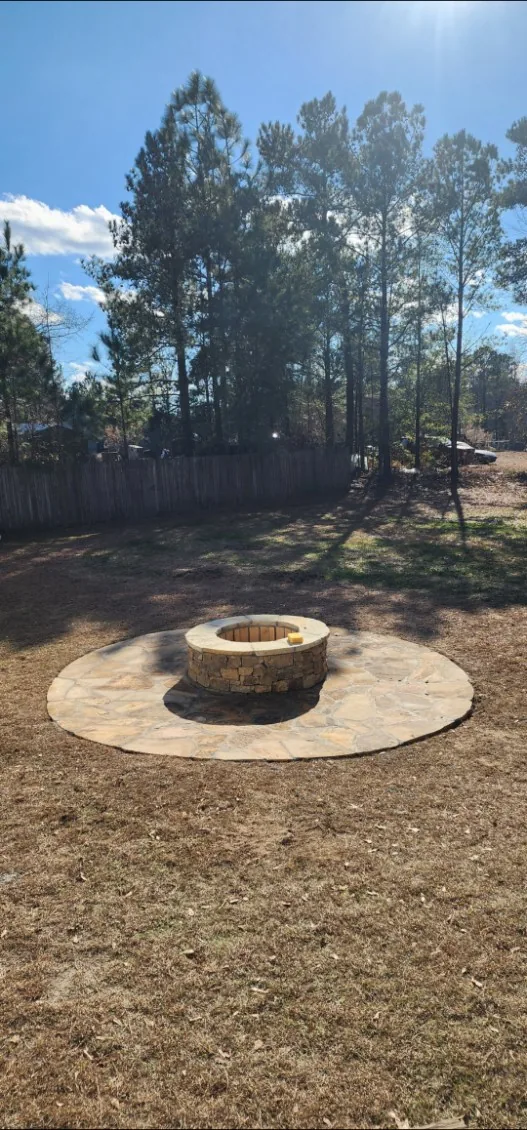
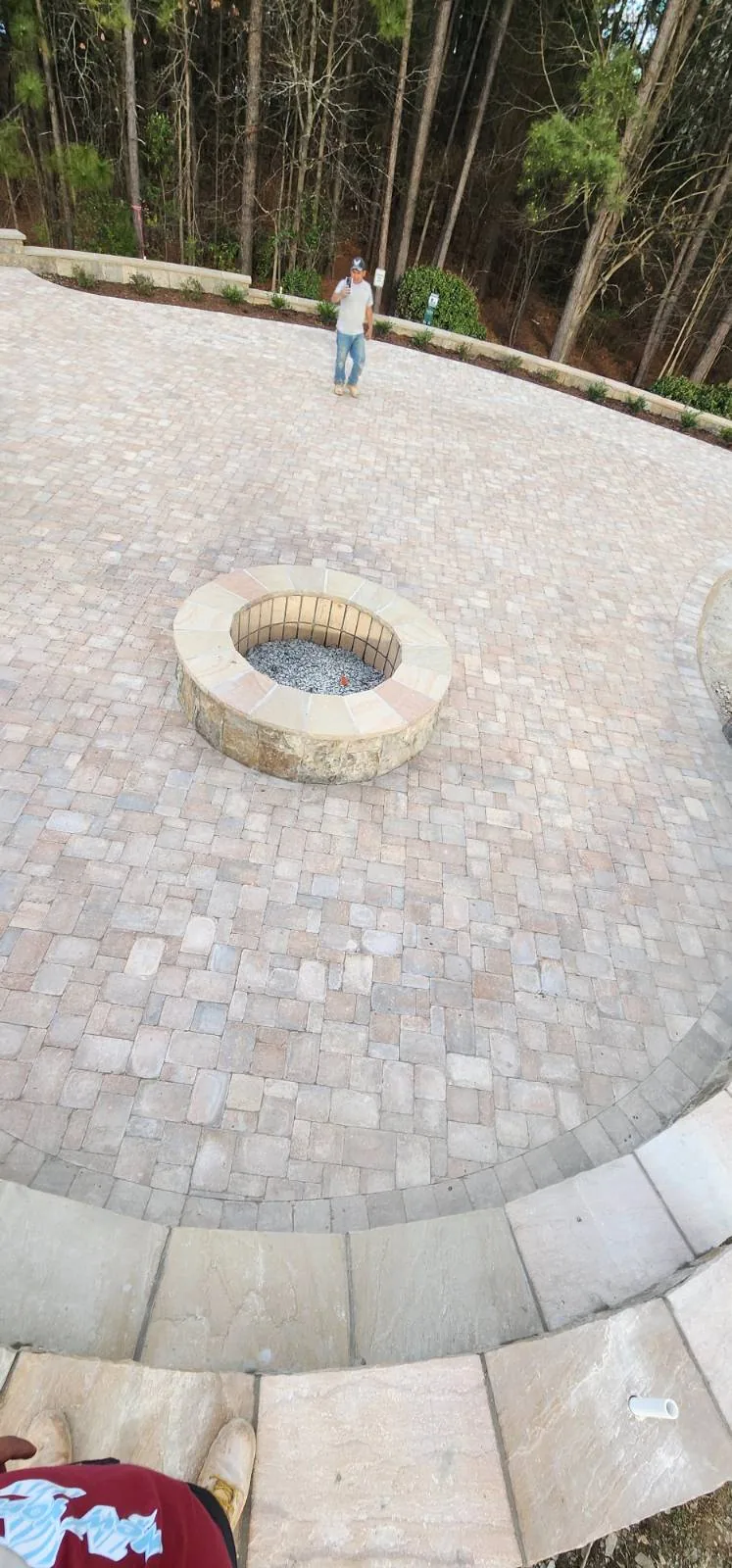
A flagstone patio done right in Weaverville follows a fixed order: layout and utilities check, then excavation, then base, then drainage, then stone, then joints. Crews that skip ahead to stone because it's the visible part are the reason so many mountain patios heave after two winters. Day one is usually locate and layout, marking the outline with paint and confirming no irrigation or septic line runs through it. Day two and three are excavation and base: digging down six to ten inches, compacting crusher run in lifts, and setting a slope of roughly one inch of fall per four feet away from the house. Everything above that base is veneer, not structure.
That order exists because of what's under the grass here. A lot of Weaverville sits on ground that was graded by a developer twenty or thirty years ago with fill pushed toward the creek side, and fill settles unevenly. If a crew digs the outline, eyeballs the subgrade, and starts laying stone in the same week, they're betting that the fill under the patio won't move. Sprinkler lines and old septic laterals are the other day-one trap: a paint outline that crosses a buried line means a redesign before anyone digs, not a repair after the stone is set. Pulling the layout a few feet can avoid a line entirely, and that's a conversation worth having on day one rather than week two.
The real marker of a professional crew isn't the stone you see on day twelve. It's whether anyone checks the base with a laser or a string line before setting the first piece, and whether the compaction gets documented lift by lift. Ask to see that step. A crew that can't explain their compaction process is a crew that's hoping you won't ask.
Why Weaverville patios get an engineered base, not a sandbox
Weaverville sits at the edge of the Blue Ridge, and much of the town is either floodplain along Reems Creek or steep cut-and-fill ground above it. Both demand base depth a coastal patio never sees. Clay-heavy soil under a shallow base holds water, swells through freeze-thaw, and lifts. The NC Department of Insurance code office treats frost depth and footing bearing as first-class requirements because the state's mountain counties routinely see it. A patio slab is not a foundation, but the compaction logic is identical: if the subgrade moves, the on-grade structure moves with it.
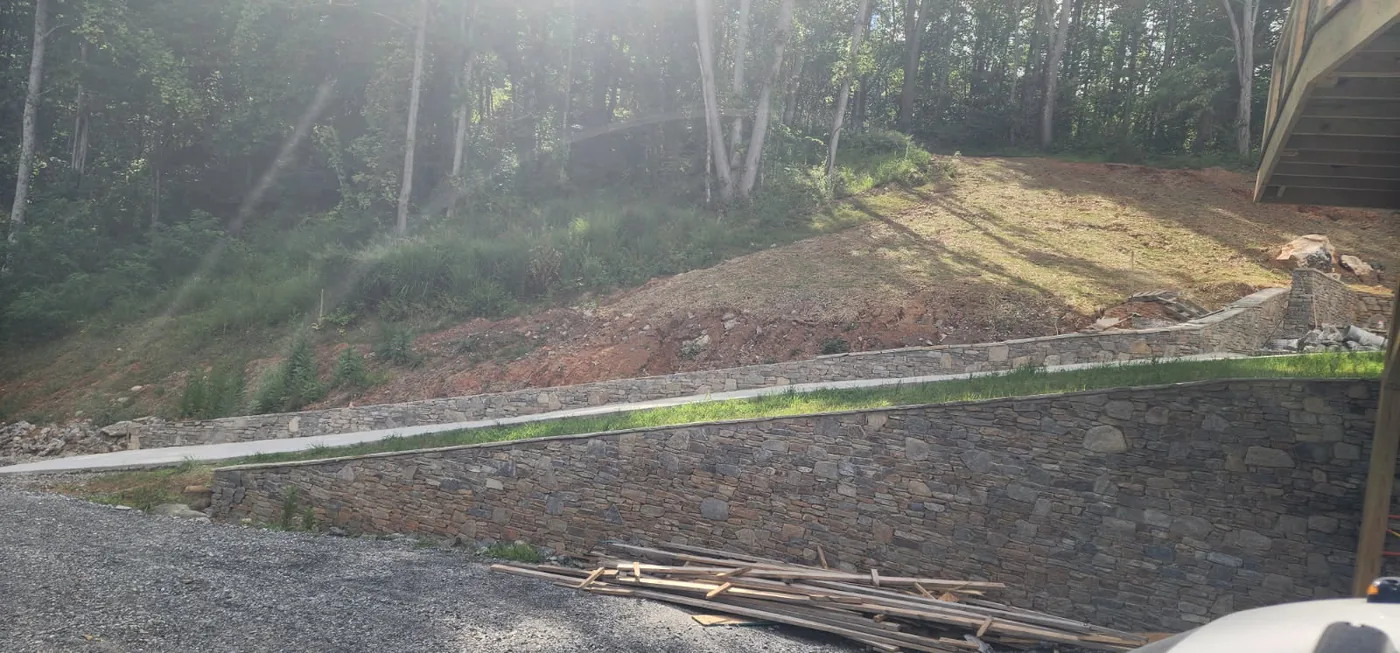
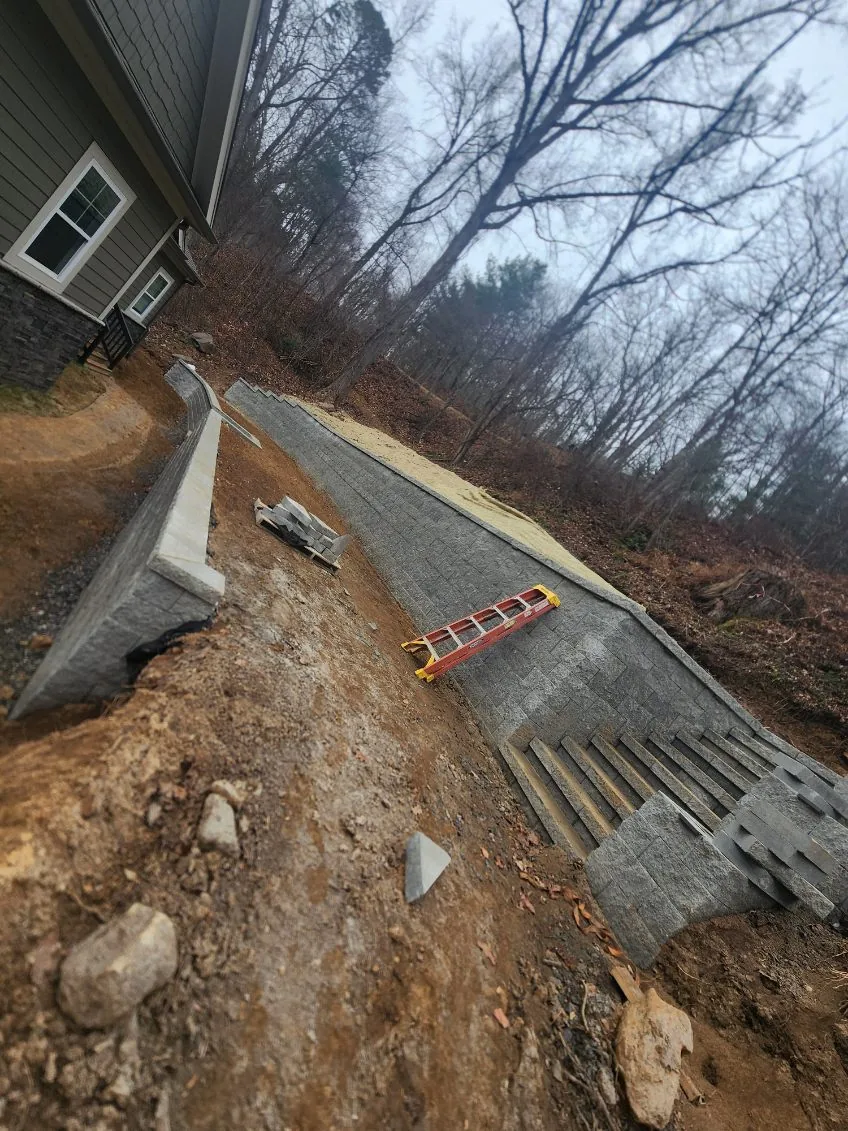
The Weaverville-specific wrinkle is uphill water. A patio on a hillside lot collects surface runoff from everything above it. That means a buried French drain line, sometimes a swaled edge, and a planned exit point that isn't the neighbor's yard. The retaining side of the same job is often what makes the patio flat enough to use; see the Buncombe County retaining wall cost breakdown for how that line item prices.
There is also the freeze-thaw rhythm specific to this elevation. Ground around Weaverville can thaw on a sunny January afternoon after a hard freeze the night before, and that cycle repeats all winter. Each cycle works on any void under the stone. Dry-laid flagstone on a properly compacted and drained base handles that movement by flexing; mortar-set stone on a dressed slab handles it by being rigid and well-drained; the same patio on four inches of loose gravel and no drain fails within a few seasons. The base is the whole game. Stone is just the top of it.
The build order, with the clock attached
A typical 400-square-foot flagstone patio in Weaverville is a seven to twelve working-day job, weather permitting:
| Phase | Typical duration | What it covers |
|---|---|---|
| Layout & utility locate | 1 day | Paint outline, check for buried lines, confirm slopes |
| Excavation & subgrade | 1.5–2.5 days | Remove topsoil, rough grade to a planned fall, compact |
| Base stone & compaction | 2–3 days | Crusher run in lifts, plate compactor each lift, laser check |
| Drainage | 0.5–1 day | French drain, exit point, edge grading |
| Flagstone setting | 2–3 days | Dry-laid or mortar-set stone, cut and fitted |
| Joints & clean-up | 1 day | Polymeric sand or mortar, wash down, final grade |
Steep access adds time the table doesn't show. A patio that a wheelbarrow can't reach in one push means stone moves by hand or by machine the crew has to bring in, which is a real cost driver in this terrain. That's also why quotes swing: two contractors can bid the same square footage and differ by thousands because their timeline assumptions are different.
Weather is the other variable, and it doesn't announce itself. A single rainy stretch in the middle of a Weaverville build can add days to the schedule because base stone that's saturated can't be compacted, and stone set on wet subgrade won't hold. A good crew watches the forecast the way a roofer does and builds slack into the calendar. If a bidder quotes you a hard-and-fast completion date in a wet month without any weather contingency, that's a signal about how honest the schedule is.
What a Weaverville patio costs, line by line
Regional installed pricing for flagstone patios in Buncombe County runs roughly like this:
| Scope | Typical installed range |
|---|---|
| Dry-laid flagstone over compacted base | $15–$30 per sq ft |
| Mortar-set flagstone with concrete slab base | $25–$45 per sq ft |
| Typical 300–500 sq ft residential patio | $6,500–$22,000 total |
| Steps, landings, or grade change | $1,500–$6,000 |
| Drainage work (French drain, regrade) | $1,200–$5,000 |
| Retaining wall supporting the patio | Quoted separately, often the largest line |
Thin flagstone veneer over an existing slab is at the low end and is a different product than a full-depth patio. The honest question to ask any bidder is how deep the base goes and how they compacted it, because that's the part you can't see later. On the licensing side, North Carolina's General Contractors Licensing Board sets the threshold where a project needs a licensed general contractor, so ask before signing anything above a small repair.
Two more lines that Weaverville homeowners don't always anticipate: edge restraint and haul-off. On a slope patio, the downhill edge needs a real restraint, either a low garden wall, a soldier course, or a pinned edge, or the whole field migrates downhill a fraction of an inch per year and the joints open. Haul-off is the disposal of excavated clay and topsoil, and on a tight lot with no place to stash it, that's a trucking cost. Both are legitimate charges. Both should be in the quote up front, not added mid-job.
Sequencing around Weaverville seasons and slope
The window that matters here is late spring through early fall, when the ground is workable and the compaction holds. Winter jobs in this county are possible but slower: wet clay subgrade doesn't compact well, and mortar-set stone is weather-sensitive. A crew that tells you this up front is being straight with you.
If your patio needs a retaining wall first, the order changes. The wall goes in, it cures or settles, drainage behind it is tied in, and only then does the patio base go down. Trying to build both at once on a slope is how you get a wall that leans into the patio two winters later. The Weaverville retaining wall contractor guide covers that sequence in more detail. If you're earlier in the process, the flagstone patio overview walks through material and design choices before you start collecting bids.
And it's worth saying plainly: water is the recurring theme on this side of Buncombe County. Between the creek bottoms and the steep lots above town, heavy rain events have a real history here. The region has seen 19 federal disaster declarations over roughly 1973-2026 of record, and most of them were water-driven. That's not a scare tactic, it's a design brief. A patio graded to shed water away from the house, with a drain that exits somewhere useful, is doing the same job the house's roof and gutters do, and it should be built with the same seriousness.