Why access drives the number in Candler
Candler sits west of Asheville in Buncombe County, where a lot of properties are working parcels off Highway 151 or narrow lanes that climb fast off the valley floor. Stone steps and walkways in Candler cost what they cost mostly because of one thing: how the material and the crew get to the work. A flat front walk near the road is a straightforward job. A hillside path behind a house on a steep gravel drive is a different day entirely.
The quarry-to-site haul is the first variable. Stone is heavy, and the closer the load source, the lower the delivery line. The second is staging: if the truck can't back to the work zone, every flagstone and every bucket of base gravel gets moved by hand or machine. That labor is real and it shows up in the bid. When we look at a Candler property, we walk the driveway before we talk about the steps.
It helps to picture two real scenarios we see often. The first is a rancher off a paved county road with a flat, 30-foot front yard. The truck backs to the edge, the mini-excavator digs the run in an afternoon, and the crew lays stone the next morning. The second is a split-level up a private gravel drive with a 20 percent pitch and a switchback. The delivery truck stops at the bottom, the pallets get shuttled up one at a time on a compact machine, and someone walks the last stretch with a wheelbarrow because the turn is too tight for equipment. Same four steps, same stone, very different labor hours. That gap is why two neighbors can get bids that differ by a few thousand dollars for what looks like identical work from the road.
Distance from the quarry matters in a quieter way. Weathered Tennessee fieldstone and Pennsylvania bluestone both travel, and the freight line scales with miles and weight. A local granite that comes from closer in reduces that line but may cost more per ton at the source. The honest thing is to price the stone you actually want and let the haul number be visible in the quote rather than buried in a lump sum.
What the work actually involves
A proper stone walk or step run is a small civil project: excavation, compacted gravel base, sometimes a concrete footing under steps that carry real traffic, then the stone itself. In this county, freeze-thaw cycling and our wet winters punish shortcuts. Base prep is where the durability lives. The International Code Council publishes the residential code that governs stair geometry and guard requirements, and any crew you hire should be building to it.
The choice of stone matters too. Tennessee fieldstone, Pennsylvania bluestone, and local granite all behave differently underfoot and on a slope. A dry-laid path is faster and costs less; a mortared or concrete-set run is more stable on grade and priced accordingly. The right answer depends on your slope, your traffic, and your budget, not on a single house style.
Step geometry is not a style choice. Treads that are too narrow, risers that are inconsistent, and landings that don't shed water are the three things that make a staircase feel wrong underfoot and fail early. On a slope, a run of steps should be broken with landings so a person isn't committed to a long, steep flight. Guarding comes into play once a run or a landing sits high enough above grade, and that's a code question, not a preference. The NC Department of Insurance Engineering & Codes division is the state reference point for how those requirements are adopted and enforced locally.
Under all of it is drainage. Excavation should bottom out below the frost line for anything structural, the base should be compacted in lifts rather than dumped in one pass, and the finished grade should pitch away from the house and off the treads. A step run that holds water at its base is a step run that will heave, settle, and need to be rebuilt. We would rather spend an extra day on base prep than come back in two winters to fix a walk that moved.
The Candler price picture
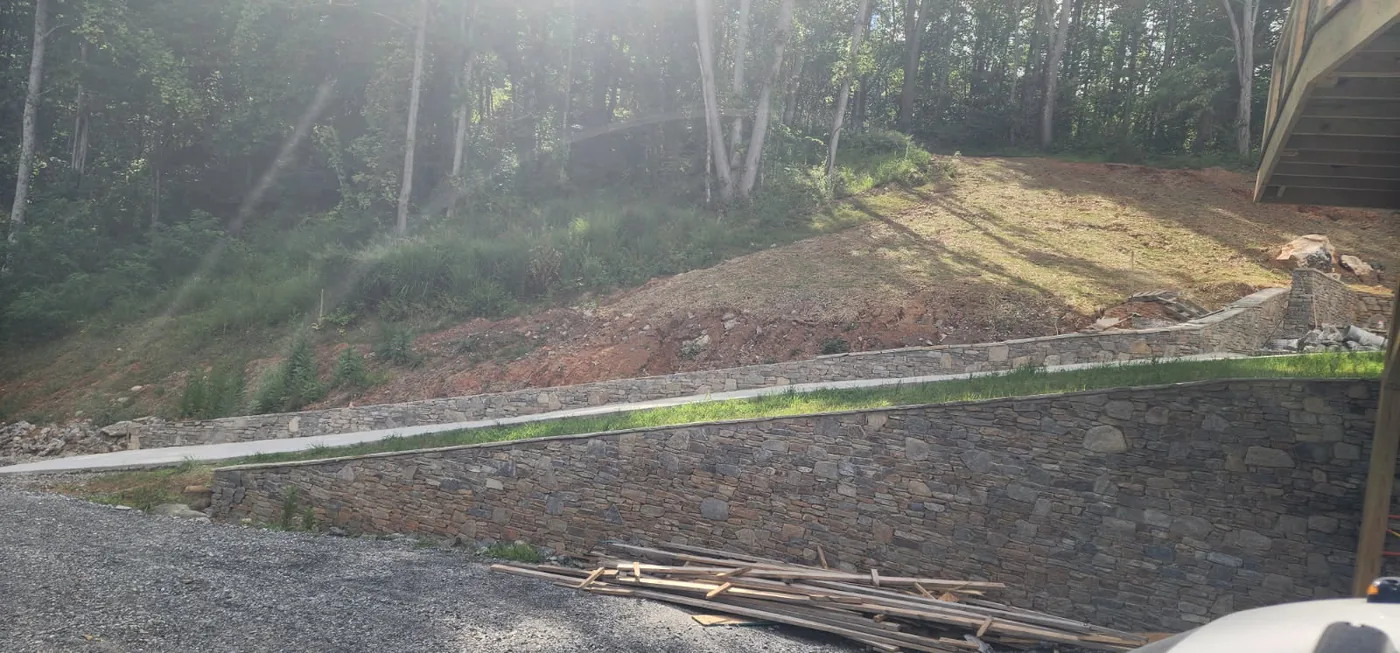
Ranges below reflect typical residential work in this area. Steep grades, long carries, and hand excavation push toward the top of each band. See the Buncombe County retaining wall cost breakdown for how walls that often accompany these paths are priced.
| Scope | Typical price range |
|---|---|
| Simple walkway, 3-5 steps, near-road access | $1,800-$4,200 |
| Terraced walkway on grade, 20-40 linear feet | $4,000-$9,500 |
| Freestanding garden steps, dry-laid | $1,200-$3,500 |
| Steps plus retaining, hillside access | $6,000-$18,000 |
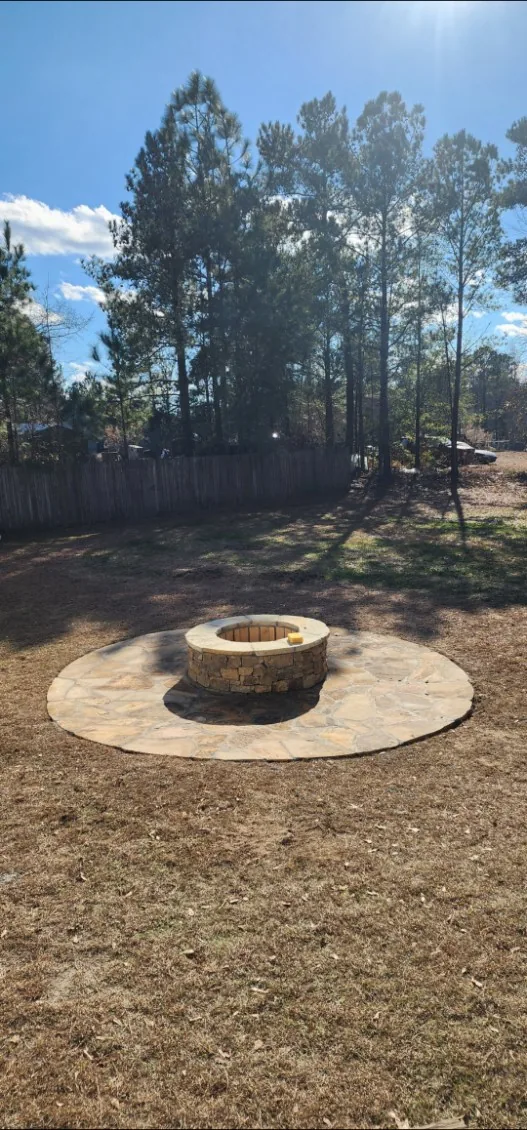
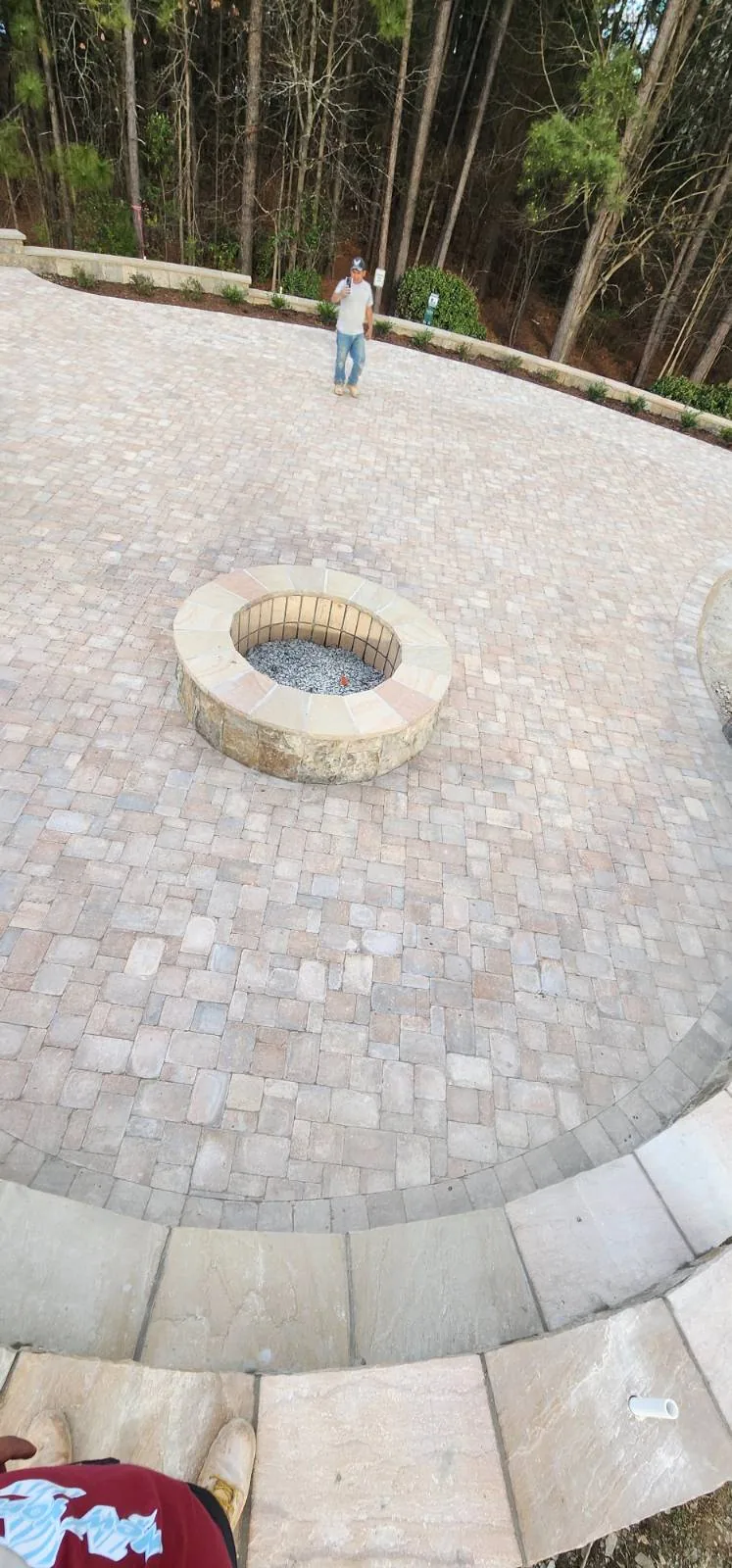
| Flagstone landing or patio edge to match | $2,500-$7,000 |
These are not flat rates. A tight driveway that forces a mini-excavator instead of a full-size machine, or a path 200 feet from the closest parking, can add several thousand dollars to any row above.
Material selection moves the number within each row. Dry-laid fieldstone is the value end; thick bluestone treads with a mortared base sit at the top because the stone costs more and the install takes longer. A concrete footing under a step run adds a line item but is often the difference between a walk that lasts a decade and one that needs resetting after a couple of hard winters. If you want a landing or a patio edge in matching stone, that's typically priced as its own scope. The honest approach is to price the base assembly, the stone, and the access separately so you can see where the money is going and decide what to trade off.
Water, slope, and the retaining question
Candler's federal disaster record tells the story: 19 declared events touch this county across 1973-2026, mostly flood and storm family. That history is why we care about drainage on every step and walkway we touch. Water that pools at the base of a step run will undermine it in one or two winters. Slight grade away from the house, a footing deep enough to sit below frost, and a path that sheds rather than collects are the difference between a walk that lasts and one that heaves.
The National Weather Service tracks the heavy-rain and flood events that drive this, and the pattern is what matters for construction: our soils get saturated, then freeze, then thaw, and anything holding water is going to move. On a hillside, the water has to be managed before the steps go in, not after. That can mean a French drain, a graded swale, or simply a path designed to run with the contour rather than straight down it.
Where a hillside path needs structural support, you're into retaining wall and hardscape work, and the engineering rules and licensing thresholds change once load-bearing structure is involved. The NC Licensing Board for General Contractors sets those thresholds, and a reputable Candler crew will tell you when a project crosses them.
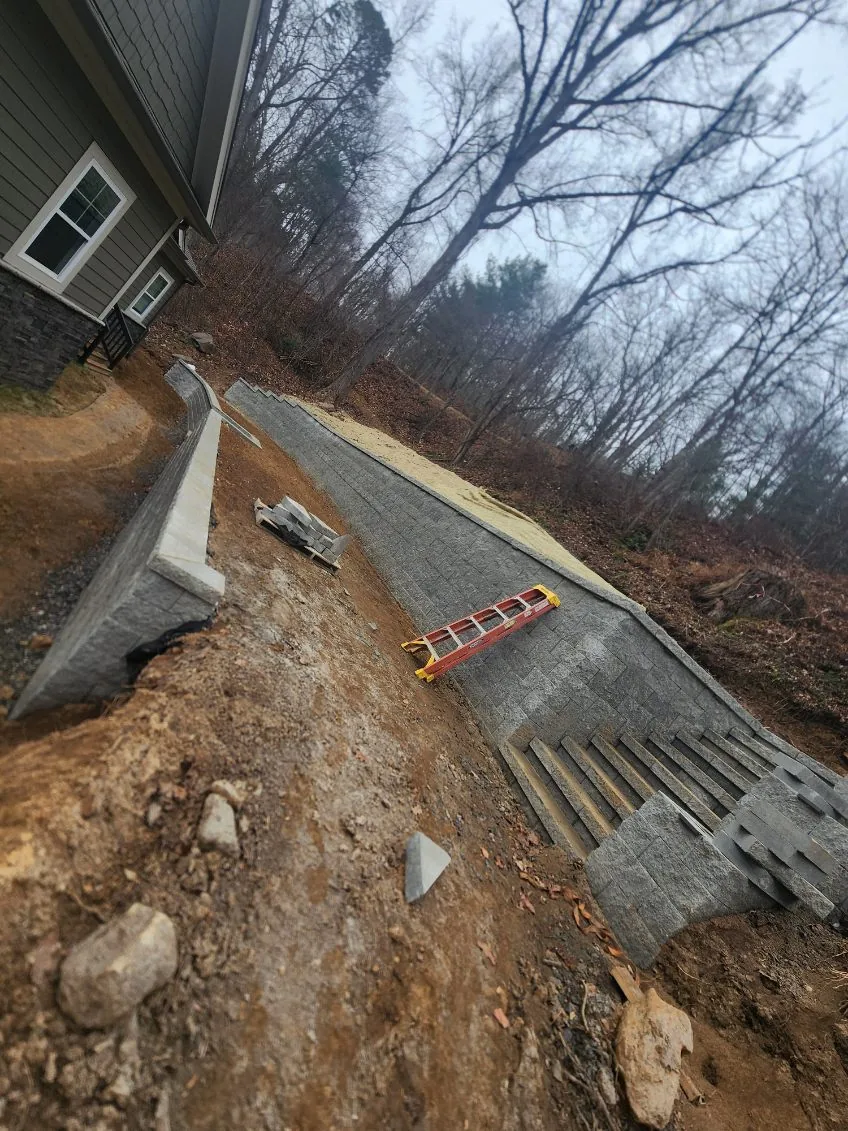
The question we get most is whether a wall is needed at all. Sometimes it isn't: a path can follow the grade on a series of short flights with landings, which spreads the vertical change and avoids structure. But when the slope is steep enough that the path would otherwise need to be cut into the hill, a low retaining wall at the toe is often the more durable answer. That's a site-by-site call, and it's the reason we walk the ground before quoting.
Scheduling and what to ask before you hire
Most walkway-only projects in this area book two to five weeks out in dry season; step-and-wall combinations take longer because excavation and masonry are sequenced. Three questions worth asking any crew: where does the stone come from and how does that affect the quote, how do they handle drainage at the base of the run, and what does the base assembly look like under the stone. The answers separate masons from installers.
Spring and early summer are the busiest stretch because everyone wants the outdoor work done before the fall rains. Late fall and winter can actually be a good time for a walkway if the ground isn't frozen, and schedules open up. Weather is the wild card either way; a run of wet weeks can push a project, and a crew that tells you otherwise is either new or optimistic.
If you're planning the whole outdoor scope, it's worth reading our stone steps and walkways overview first so you know what to compare between bids. Get two or three written quotes. The line-item detail matters more than the total. A bid that separates stone, base materials, labor, and access is easier to trust than a single number, and it makes it clear what you're paying for when you compare one contractor to the next.
One last thing: ask to see work the crew has done in the area, ideally a couple of winters back. A step run that has been through two freeze-thaw cycles tells you more than any photo of a fresh install. Stone work in this county is a long game, and the crews worth hiring will be happy to show you jobs that have held up.