The 4-foot line decides your Montreat fire pit scope
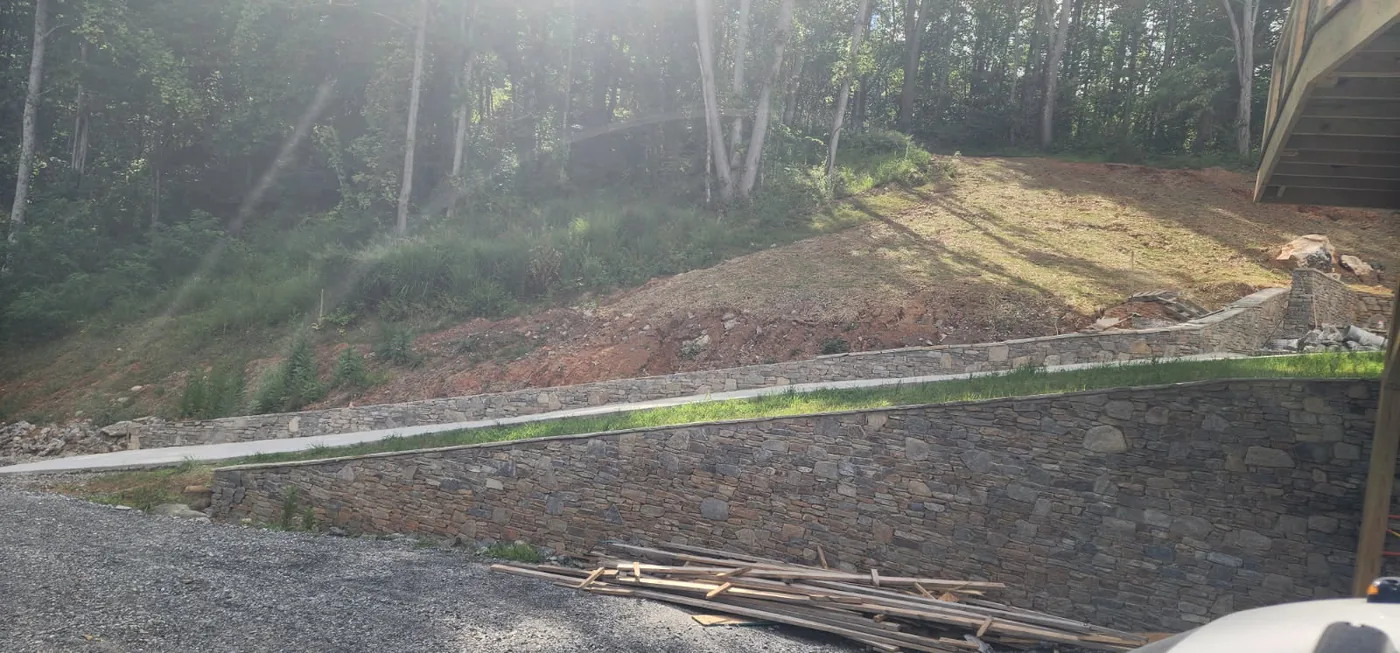
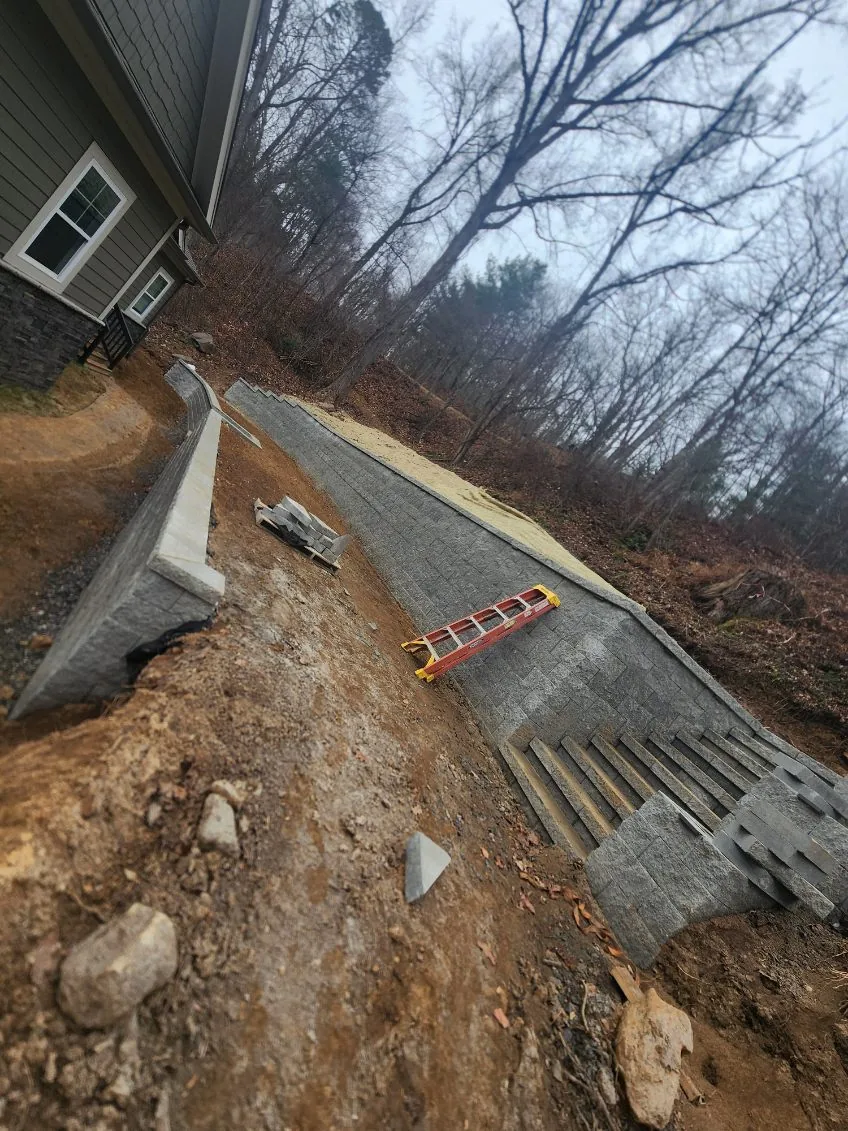
Montreat is a small incorporated town tucked against the slopes below Greybeard and the Seven Sisters, inside Buncombe County, and most of its lots are either steep, wooded, or both. That terrain is why fire pit projects here almost always come with a retaining component: a level pad has to be cut into a hillside, and the downhill side needs a wall. The single most useful number in any Montreat fire pit conversation is 4 feet. Under 4 feet of retained height, most walls are a straightforward masonry scope. At 4 feet and above, the project generally crosses into engineered design and a county building permit, and the cost structure changes accordingly. Read the county line-item picture in the Buncombe County retaining wall cost breakdown before you assume a low bid covers that engineering.
Montreat's housing character is unusual for the area: a mix of historic assembly-era cottages, mid-century seasonal homes, and a growing number of year-round builds, all on tight wooded lots. Tight lots mean small equipment, hand-carried stone, and careful staging. Those are real cost drivers, not upsells.
What a Montreat fire pit actually costs
Prices below are realistic Buncombe County regional ranges for a finished, built-in masonry fire pit. They assume reasonable access; a steep driveway with a switchback changes everything.
| Scope | Typical range |
|---|---|
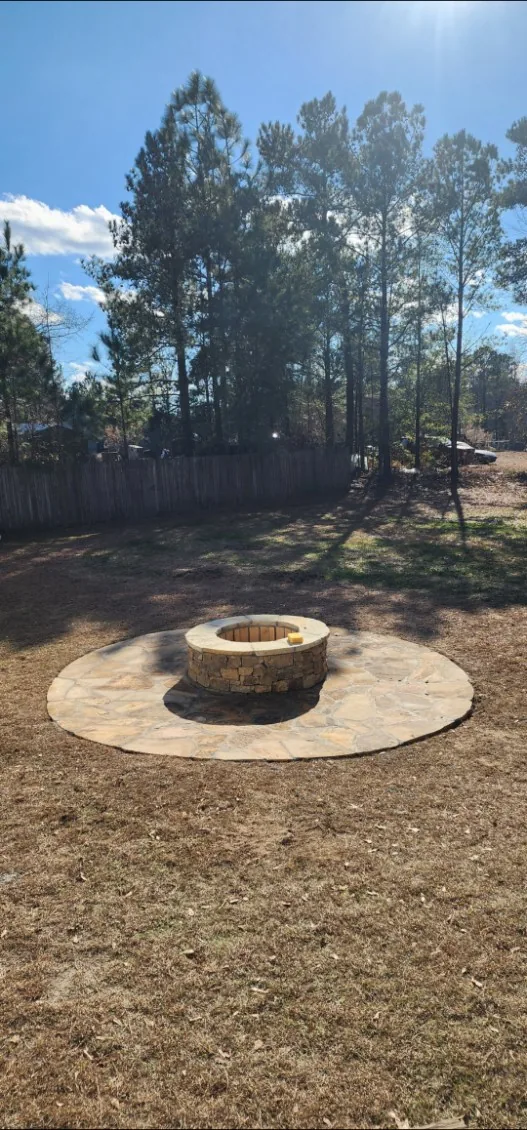
| Simple stacked-stone fire ring on grade | $800-$1,600 |
| Built-in block pit with stone veneer, wood burning, on existing pad | $2,400-$4,800 |
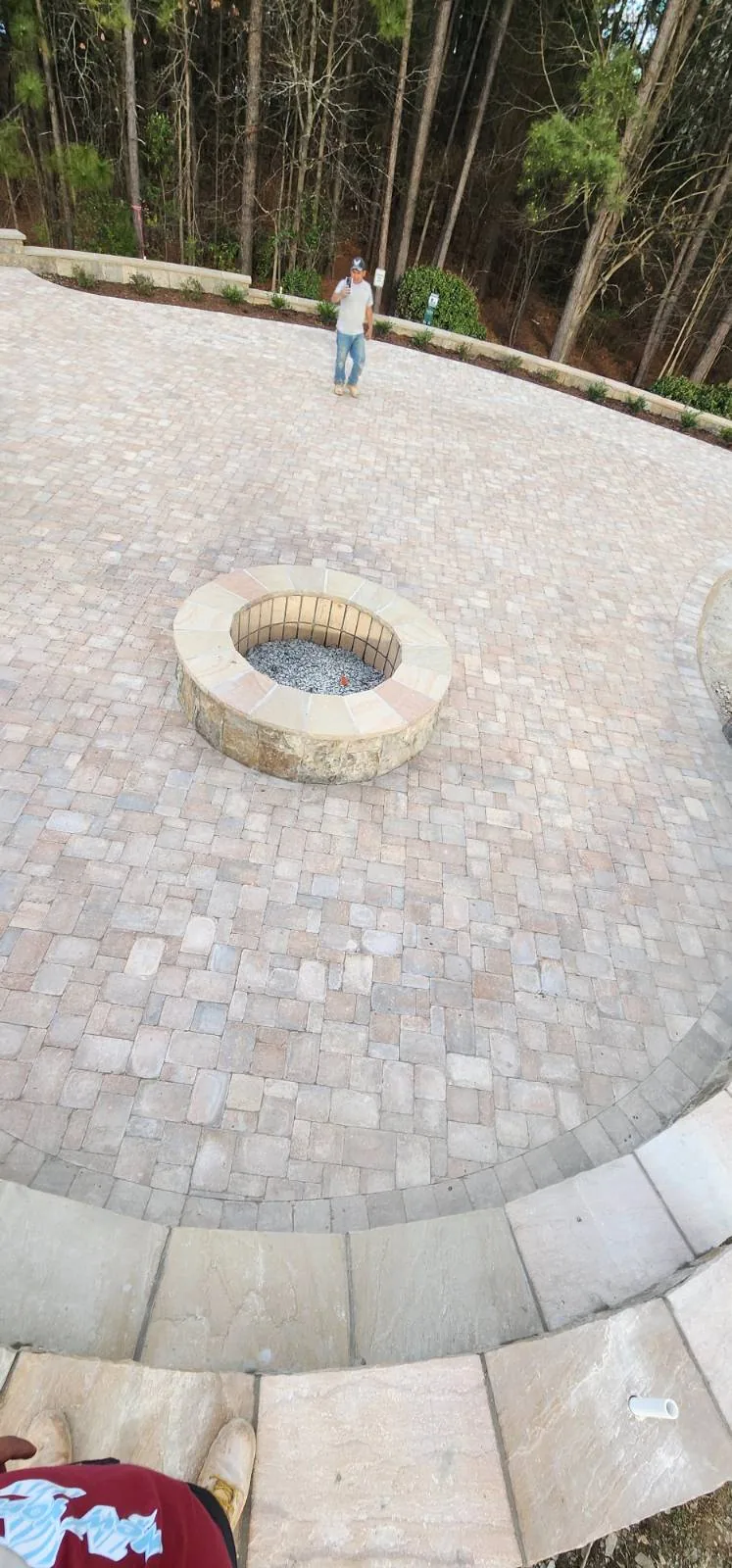
| Raised stone pit with seating cap, framed and veneered | $4,500-$8,500 |
| Gas fire pit with burner, line, and key valve | $3,200-$6,800 |
| Integrated pit plus partial retaining wall under 4 ft | $6,500-$14,000 |
| Engineer letter and permit add-on when walls cross 4 ft | $1,200-$3,500 typical |
| Natural stone masonry instead of block-and-veneer | add roughly 30-60% to the pit line |
Masonry crews price Montreat jobs higher than flatland jobs for labor, not materials. Stone carried down a slope by hand and mortar mixed at the bottom of a hill is priced accordingly. Any bid that looks like Asheville flatland pricing is either missing the access reality or missing the wall engineering.
When you need an engineer, and when you need a permit
North Carolina does not let just anyone take a contract for this kind of work. The North Carolina Licensing Board for General Contractors sets the threshold: above roughly $40,000 on a single project, the contractor must hold a general contractor's license, and the board publishes the current figure and rules. Most individual Montreat fire pits sit under that line, which is exactly why the wall component matters — pit plus wall plus patio can stack past it fast, and consumers who do not check get burned by unlicensed outfits working above the threshold.
The 4-foot retaining wall line itself is a building code matter, and Buncombe County enforces it through permitting. The International Code Council publishes the model residential provisions most jurisdictions, including this county, adapt for retaining wall design and engineer oversight. Practically: a wall retaining 4 feet or more of unbalanced soil, or any wall that also supports a structure or surcharge load, is treated as a designed element, not a stack of stones. That means a seismic and lateral analysis by an NC-licensed engineer, a stamped plan, and a permit before anyone digs a footing. Below 4 feet, most single-family retaining walls are handled without engineering, though the county can still require a permit based on height, location, or drainage impact.
Montreat's historic district matters too. The town applies its own design review to visible construction in the historic core, and materials, profile, and placement of any wall or pit get reviewed before approval. Check with the town before ordering stone.
Burn rules, slope, and why this town is stricter than it looks
Montreat sits in a steep, heavily wooded valley with a single main road. The federal disaster record explains why local attention to slope and runoff is unusually high: 19 declared events have touched this county across 1973-2026, dominated by storm and flood family events. Every one of those sent water and debris down the same type of hillside lots that fire pits get built on. That is the honest context for why the wall and drainage conversation leads every project here. The National Weather Service maintains the warning and outlook data that local crews watch during fire season; in dry stretches the county and town can restrict open burning, and a wood-burning pit is not exempt. A gas pit sidesteps the burn-ban problem entirely and is why a growing share of Montreat installs are gas.
Slope cuts also trigger stormwater questions. The North Carolina Department of Environmental Quality regulates erosion and sediment control during construction in this region, and rough terrain grades disturb more soil than flat submissions plan for. A one-page erosion plan is cheap; a stop-work order is not.
Picking a crew for sloped, wooded, small-town lots
Ask three specific questions. First: have you built on a slope this steep, and who did the wall engineering? Second: what is the retained height on the downhill side of my pad, and does it cross 4 feet? Third: what does your scope do about drainage above and below the wall? The crew that answers those from experience is the crew that has done this in Buncombe County before. Our fire pit construction guide walks the same scope questions in detail, and if your project includes any wall, start with retaining wall contractors in Montreat rather than a pit builder who subcontracts the hard part.