Read the existing wall before you spend a dollar
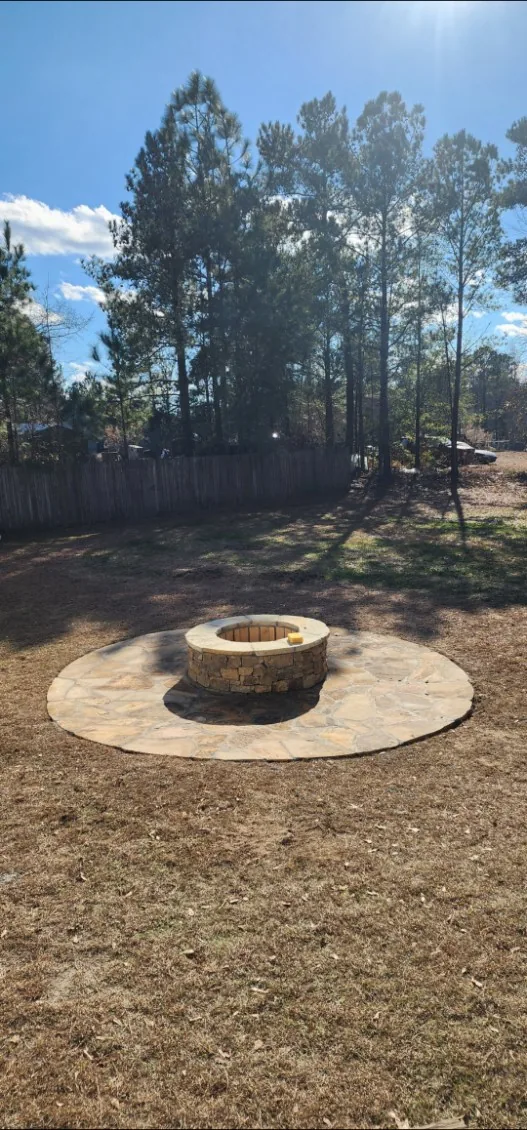
Most fire pit calls in this town start the same way: a homeowner has a pit that has shifted, or a stone terrace left from a previous owner, and wants to know whether to fix it or tear it out. The honest answer lives in the wall itself. Stone and block pits fail from three directions here — freeze-thaw lifting the cap course, water sitting at the base after a storm, and tree roots pushing the ring out of round on the wooded lots that define this town. A dry-stacked wall that has settled two inches and still drains is a repair. A mortared wall with a crack that runs the full height and a cap that rocks when you press it is usually a rebuild, because the footing has moved and re-pointing will not stop it.
Before any quote, walk the pit and check four things: does the base hold water after rain, does the cap move, does the wall lean away from the fire, and do the joints crumble when you scrape them. Those four answers tell you more than any photo. It matters here because Laurel Park sits at the foot of the Blue Ridge, in Henderson County, where the county seat of Hendersonville is a short drive and the slope-and-wooded-lot character means drainage is never an afterthought.
What a Laurel Park fire pit actually costs
Pricing depends on what you are keeping. A rebuild reuses the stone and the hole; a new build pays for everything. Below is the working range local crews quote for this area. These are bands, not bids — grade, access, and stone choice move them.
| Scope | Typical price range | What drives it |
|---|---|---|
| Re-point and re-cap existing stone pit | $450-$1,400 | Joint condition, cap size, access to the ring |
| Rebuild ring on existing footing (reuse stone) | $1,800-$3,600 | Footing condition, number of courses, drainage fix |
| New mortared stone or block pit with cap | $2,400-$5,500 | Diameter, stone type, cap style, seat wall add-ons |
| Gas-fed pit with line and burner | $3,800-$9,500 | Trench length, permit, burner and media, ignition type |
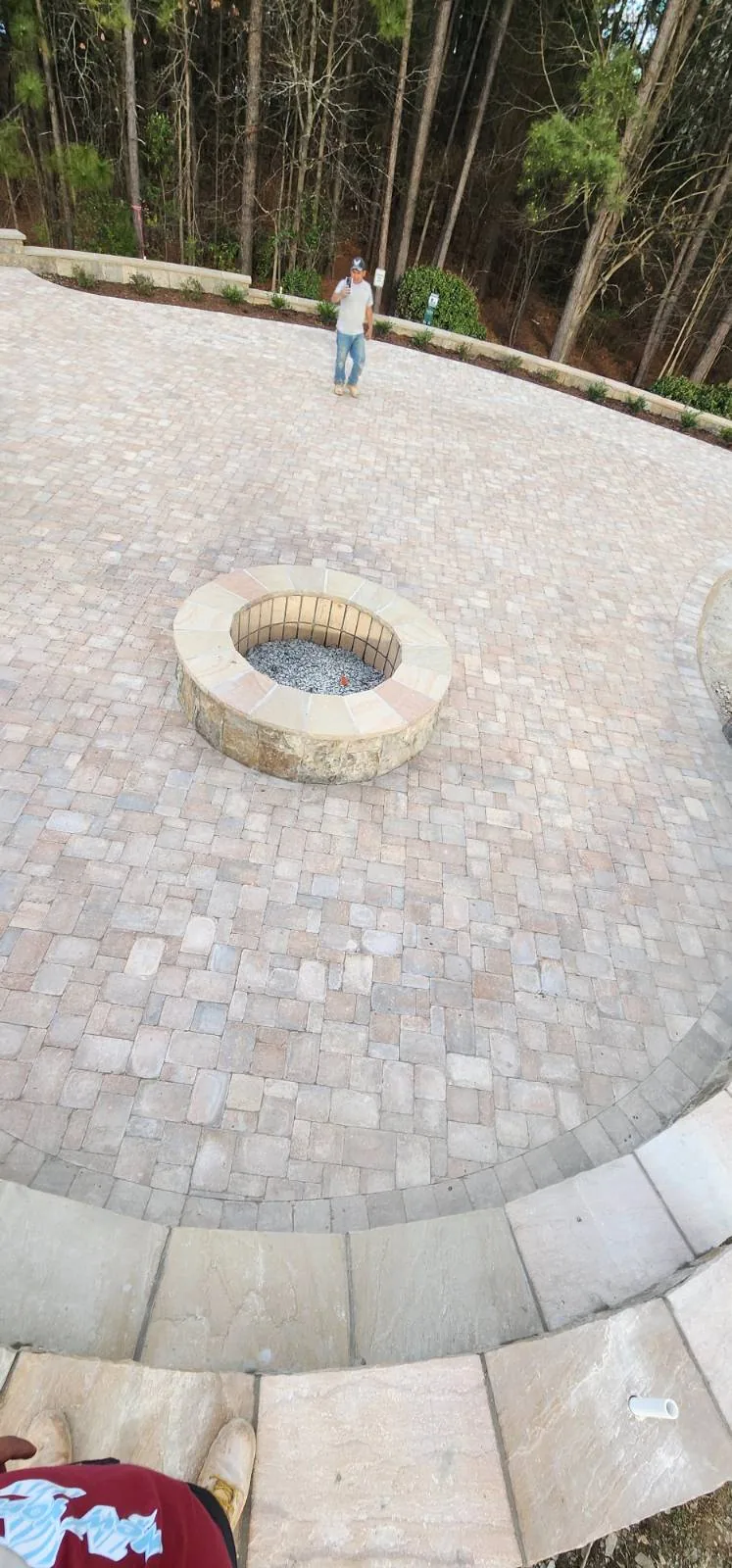
| Paver or flagstone apron around pit | $2,000-$7,000 | Square footage, base prep, slope correction |
Notice that re-pointing sits under $1,500 and a full rebuild with a gas line can top $9,000. That gap is why reading the wall first saves real money. Fire pit work is often scoped alongside other hardscape, so if your slope is failing too, the Henderson County retaining wall cost breakdown shows how those line items stack.
When the job needs a licensed contractor
A stone ring set on grade is one thing. A gas-fed fire pit crosses into regulated territory. In North Carolina, fuel-gas piping and appliance connection fall under the State Board of Examiners of Plumbing, Heating and Fire Sprinkler Contractors, whose licensing scope is laid out at nclicensing.org. If your build includes a buried gas line, expect a permitted, licensed plumber or gas fitter on that portion, separate from the mason who lays the stone. When a project's total value crosses the state threshold, the general contractor rules of the NC Licensing Board for General Contractors apply as well.
Wood-burning pits in most Henderson County residential settings do not require a permit, but seasonal burn rules and any HOA or neighborhood restriction still govern when you can use it. The cleanest approach is to ask your builder which parts of the job they hold a license for and which parts get subbed out. A crew that answers that plainly is a crew that has done permitted gas work before.
For current official guidance, see the U.S. Environmental Protection Agency (EPA). For current official guidance, see the U.S. Department of Housing and Urban Development (HUD).
Why slope and stone choice decide the build
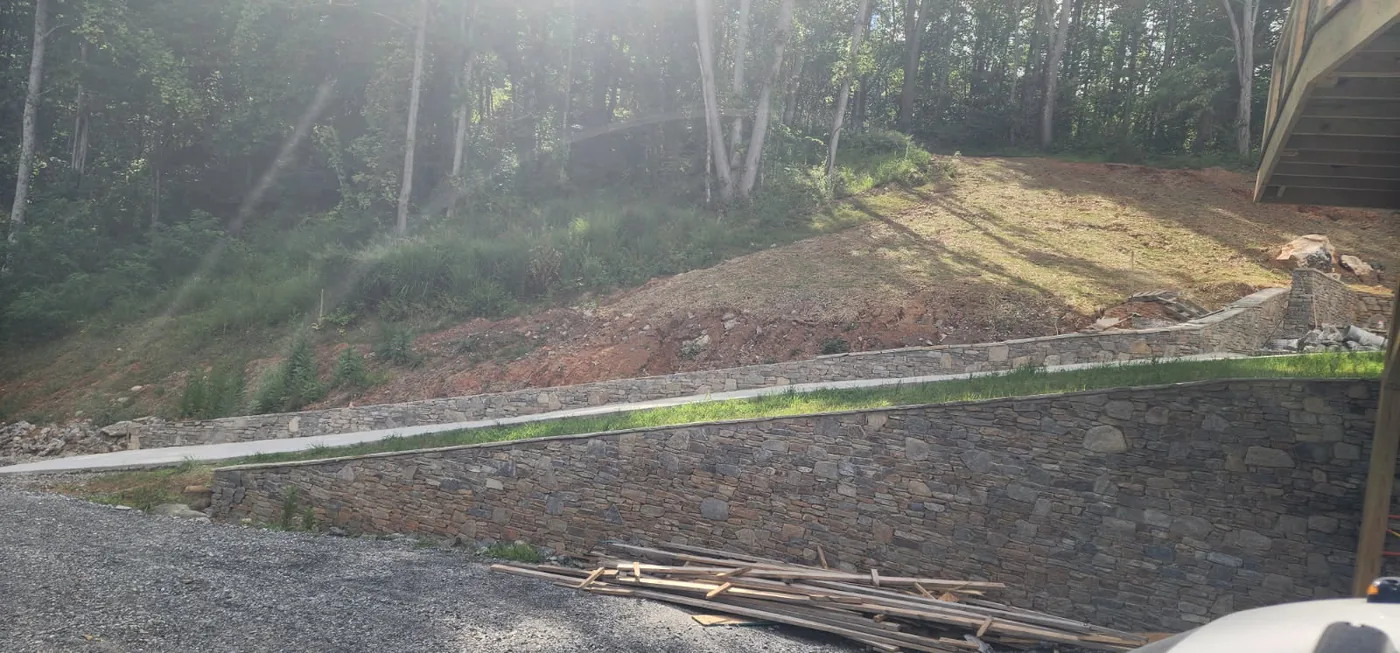
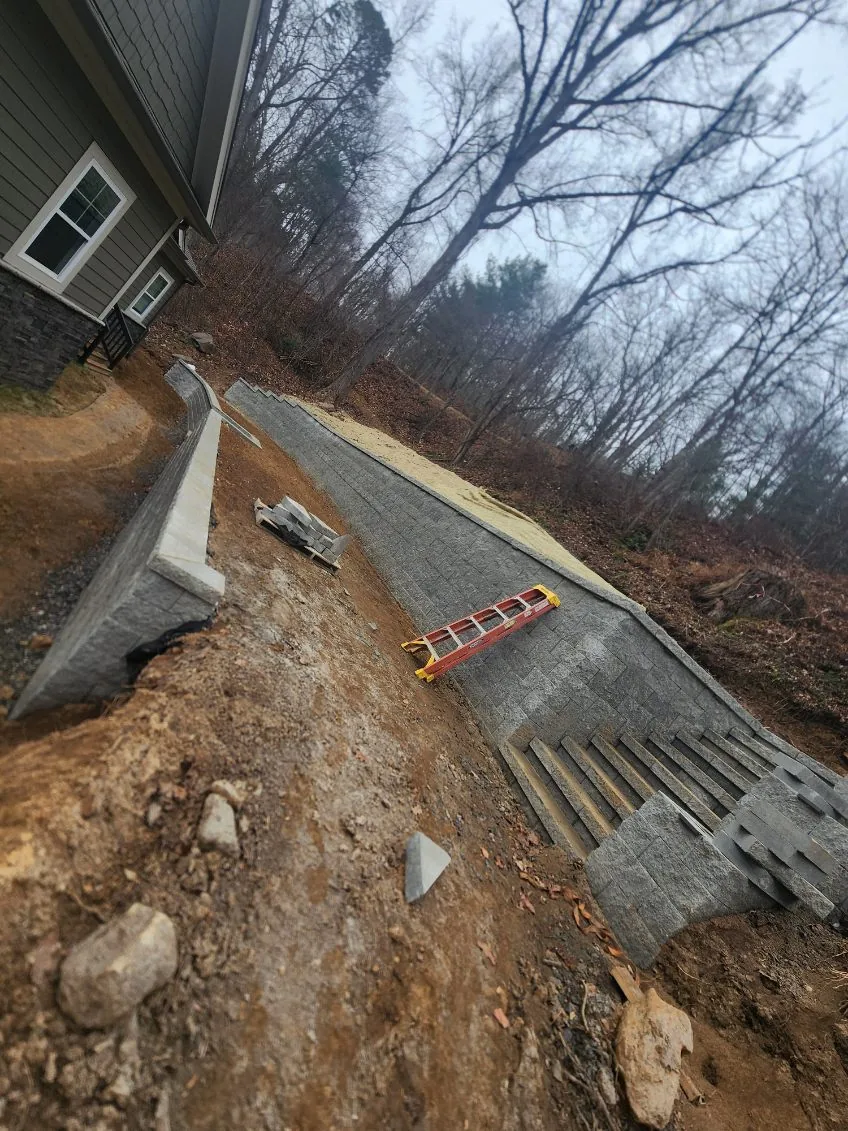
Laurel Park is a wooded, hilly town wrapped around the county seat, and that terrain shapes every hardscape decision. A pit on a cut bank needs a retaining ring behind it before the stone goes in, or the first heavy rain undermines the back of the wall. A pit on a flat wooded lot may need nothing but a compacted gravel base. The stone itself matters too: local fieldstone and Tennessee ledgerock both weather well here, but they take different mortars and different footing depths, and a builder who only works in one material will quote you that material whether it fits the slope or not.
Water is the recurring theme. The federal disaster record shows 16 declarations touching this county over 1978-2026, mostly storm and flood events. Every one of those pushed water at outdoor features built without drainage in mind. That is why a good fire pit scope includes where runoff goes, not just how the stone looks. If your yard already has a failing wall, it is worth reading the Laurel Park retaining wall contractor guide before committing to a pit, because the two features share a base and a drainage plan.
How to hire without overpaying for stone
Three questions separate the honest builders from the rest. First: will they tell you if your existing pit can be repaired instead of rebuilt? If every answer is rebuild, get a second look. Second: how do they handle the footing and drainage detail, in writing? A one-line scope that says "build fire pit" tells you nothing about the base. Third: for gas, who pulls the permit and holds the license?
Ask to see photos of pits they built at least two winters ago, not last month. Freeze-thaw is the real test in this climate, and a pit that looked perfect in July can spall and shift by February. When you are ready to compare scopes, the fire pit service page covers what a complete build should include and how to read a bid line by line.