Fieldstone, boulder, block and timber: reading the Waynesville yard before choosing
Drive from Frog Level up toward the Smoky Mountain range and the material question answers itself. Waynesville yards come in three flavors. The old downtown blocks near Main Street have small, tight lots where a 10x12 fieldstone patio between a Victorian porch and a property line is the whole project. The mid-century neighborhoods off Russ Avenue and Hazelwood sit on grade that falls away fast, so a patio is really a terrace held by a wall. And the mountain-view builds out on the ridges need engineered restraint, not decoration, before anything gets set on top.
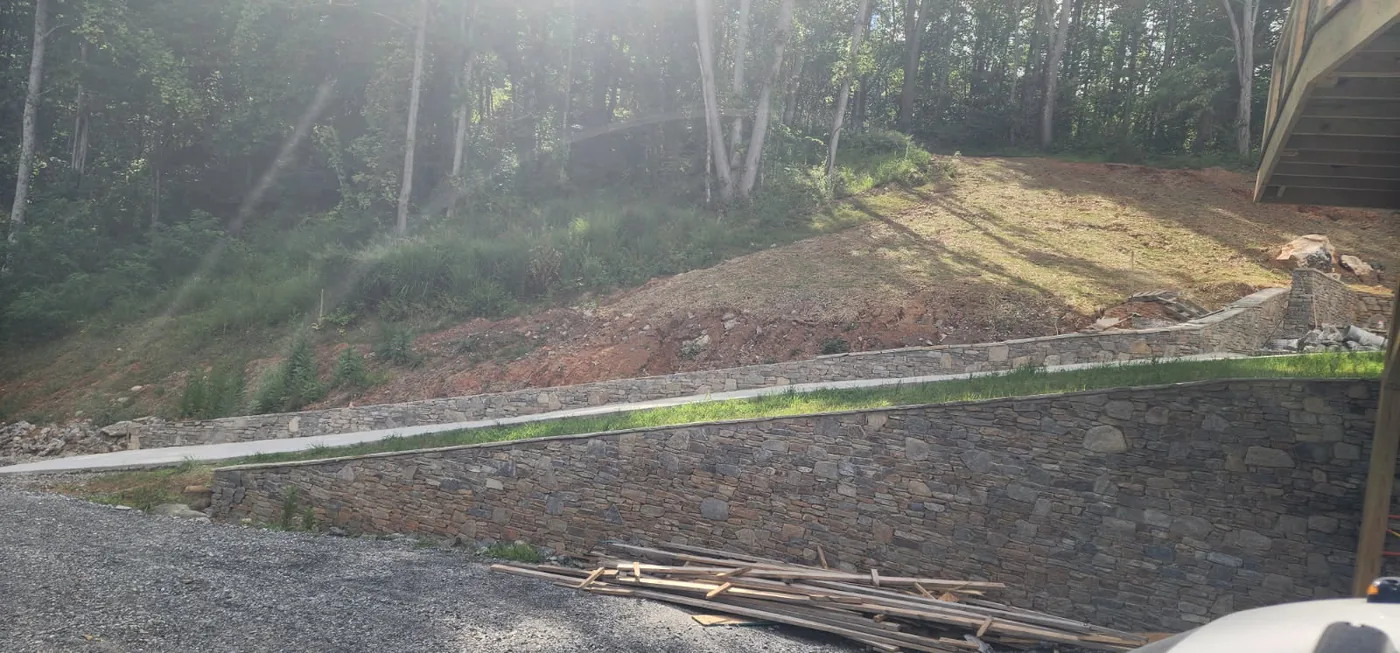
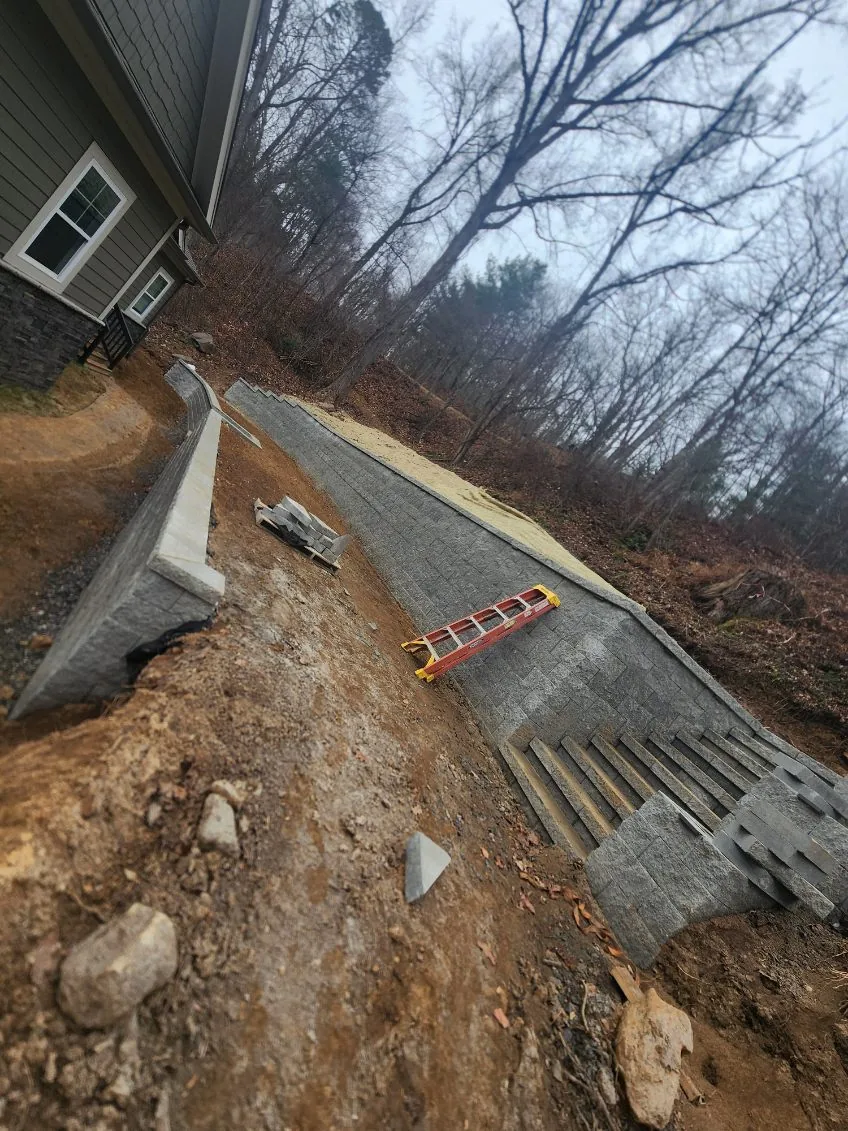
Material choice follows the ground. Fieldstone reads correctly against the town's brick and clapboard housing stock and has been quarried and reused around Haywood County for generations. Boulder retains a slope with fewer courses and a rough, native look. Segmental block is the honest budget option when the wall needs to hold real load, since manufactured units carry tested engineering values and installers can price them predictably. Timber is the cheapest face material and the shortest-lived in this climate. On clay-heavy mountain soil that heaves with the freeze-thaw cycle, timber walls routinely need replacement inside a decade where block or stone would still be sound.
What a project actually costs on a Haywood County slope
Waynesville sits in a county of valleys and ridges, and the word that separates a cheap bid from a real one is slope. A flat patio behind a house is excavation, base, and stone. A patio cut into a hillside is the same plus drainage, a retaining structure, and often an engineer's input once the wall passes the state's height threshold. That is why two neighbors on the same road can get quotes that differ by thousands. The full working ranges live on the Haywood County retaining wall cost page.
| Scope | Typical range | Notes |
|---|---|---|
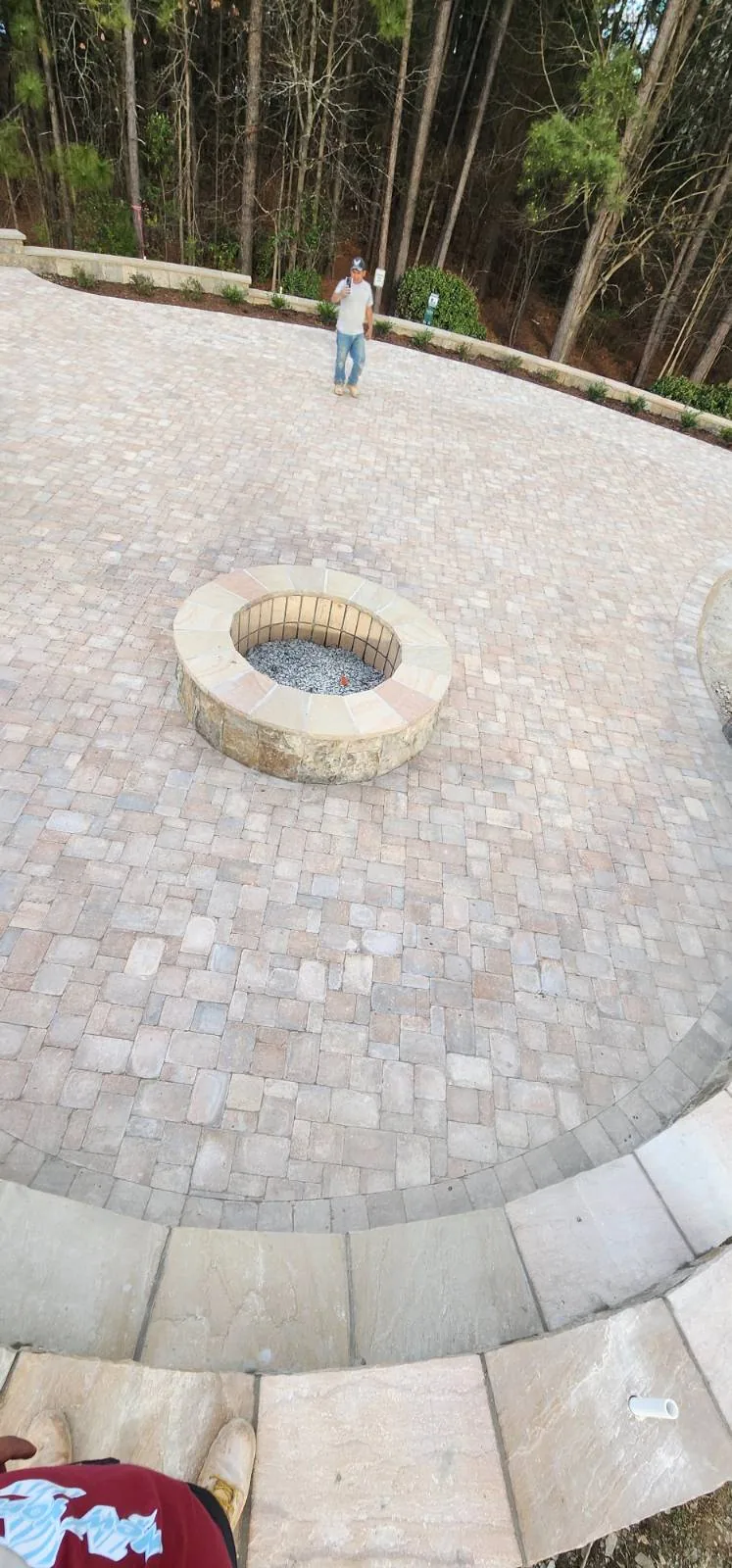
| Flagstone or pavers patio, on-grade, under 300 sq ft | $6,000-$12,000 | Base prep, drainage, one material |
| Timber retaining wall, under 3 ft | $35-$55 per sq ft of face | Budget option; shorter service life in freeze-thaw |
| Segmental block retaining wall | $45-$75 per sq ft of face | Engineered units; pinned courses on taller walls |
| Natural stone or boulder wall | $65-$120 per sq ft of face | Labor-intensive; matches mountain lots |
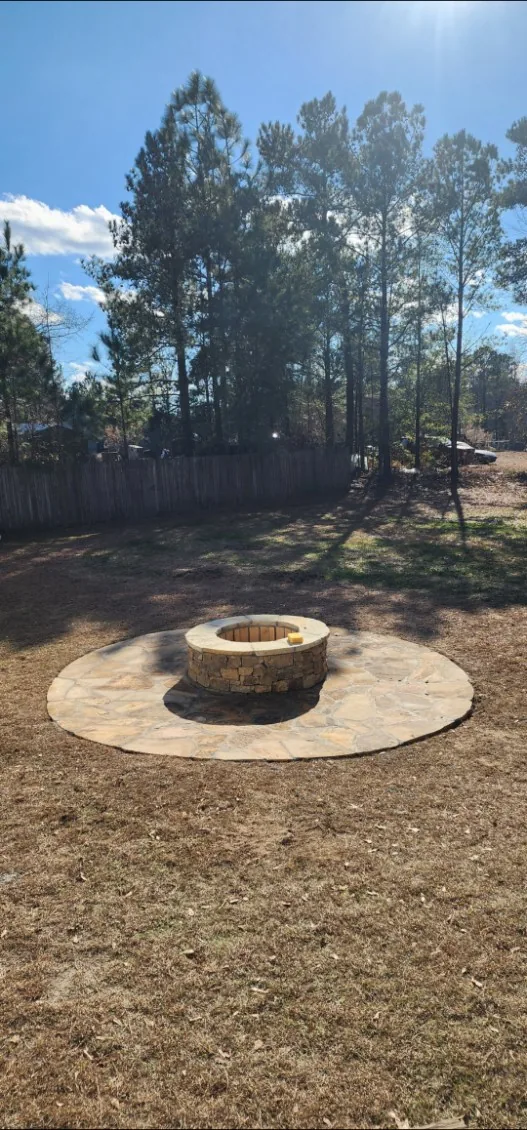
| Fire pit, stone or block, gas or wood | $2,000-$6,500 | Gas line and venting push the top of the range |
| Paver walkway or steps | $25-$60 per sq ft | Step count and grade drive price |
| Full patio + wall + fire feature package | $18,000-$45,000+ | Slope, access, and engineering are the movers |
Treat any number without a drainage line item as incomplete rather than cheap. Mountain runoff does not stay politely behind a wall it was not designed for.
Why slope and water, not material, decide most Waynesville hardscape budgets
Haywood County's federal disaster record is a storm and flood record. 19 declarations reach this county across a 1973-2026 span, and most of them pushed heavy water at ground that was already steep. When a retaining wall fails here it usually fails because the water behind it was never managed, not because the block was wrong. That means every hardscape conversation on a mountain lot is actually two conversations: the visible one about pavers and stone, and the invisible one about where uphill runoff goes. The National Weather Service tracks the rainfall patterns that make this concrete, and the practical takeaway is local. Grading away from the house, footing drains, and surface swales are line items that protect the investment you are actually paying for.
Freeze-thaw is the second quiet cost driver. Water gets into a joint, freezes, expands, and works the stone loose over a winter. Proper base compaction and correct joint material are what separate a patio that survives ten Waynesville winters from one that shifts in three.
Licensing, code, and what to confirm before work starts
North Carolina draws a licensing line that matters for hardscaping. The NC Licensing Board for General Contractors requires a general contractor license once a project crosses a defined dollar threshold, and retaining structures can trigger both licensing and permitting questions depending on height and proximity to a structure or property line. The NC Department of Insurance, Engineering and Codes division maintains the statewide code framework that local permitting follows. Ask any hardscape contractor two questions. First, is a permit required for this wall or structure, and who is pulling it? Second, if the wall exceeds the engineer threshold, who is stamping the design? A crew that answers both without hesitation is a crew that builds for Haywood County's ground rather than a brochure photograph. When you are ready to compare bids, the Waynesville retaining wall contractor page covers what to ask, and the broader hardscaping guide walks through the full scope from design to finish.
Matching material to the house you actually own
Fieldstone tends to be right against the older in-town housing stock, and boulder or natural stone reads honestly on mountain-view lots where manufactured block would look imported. Segmental block is the pragmatic choice on tighter budgets and taller walls, because engineered units carry tested values and installers price them reliably. The mistake to avoid is choosing material from a photo. Walk the yard, find the grade, and let the ground and the house together make the call. A fire pit that sits well on a flat lot can become a drainage problem when it is set into a slope, and steps that look simple on paper become a significant line item on a steep Hazelwood hillside.