Why Fletcher yards get fieldstone, boulders, block, or timber
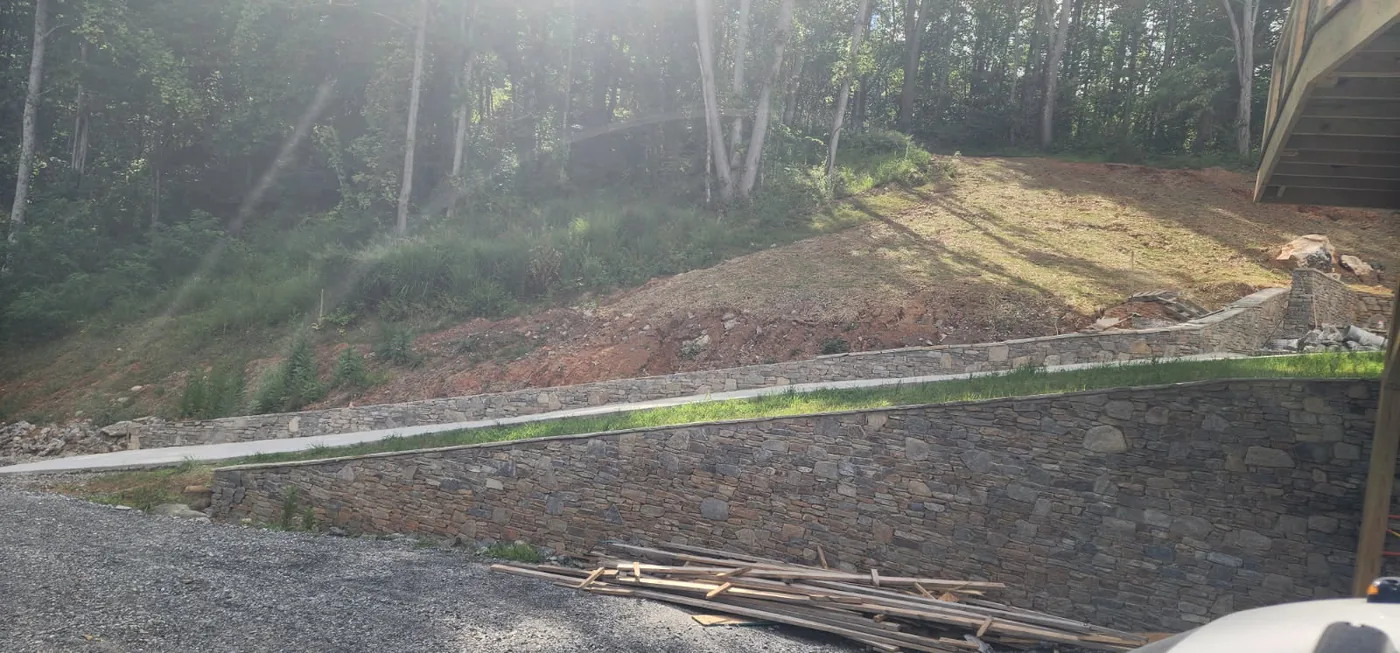
Fletcher sits low in the Henderson County valley where the French Broad and Cane Creek flats meet ground that climbs fast toward the however the ridges rise toward Edneyville and the eastern slope of the county. That split personality shows up in backyards: a level lot off Howard Gap Road wants a clean block pit with a veneer and a paver apron, while a graded lot near the Blue Ridge foothills usually ends up wanting boulder and dry-stacked fieldstone because the yard already has rock, grade, and a view worth keeping.
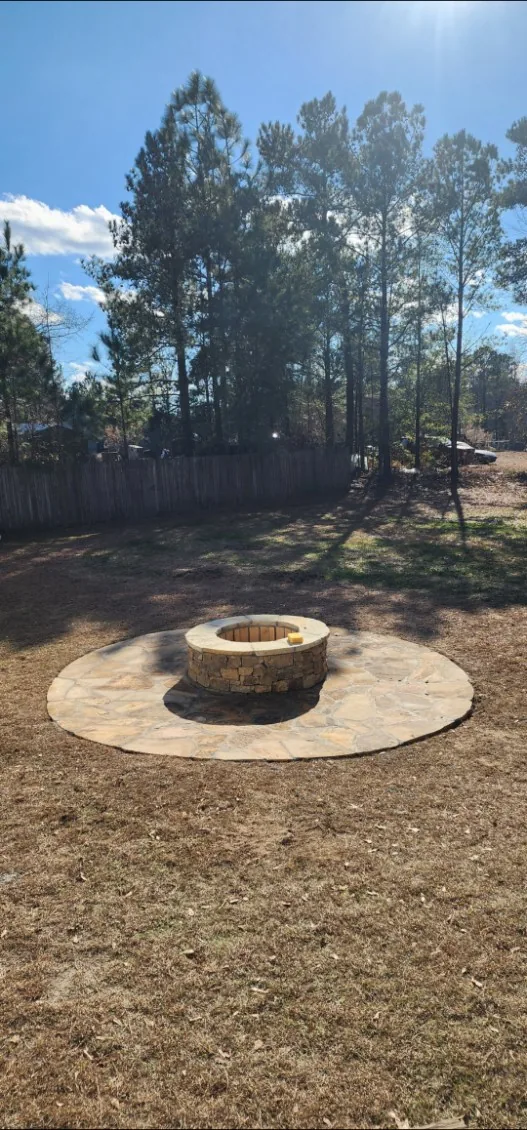
Most Fletcher housing stock falls into three camps, and each pushes a different material. Subdivisions built from the 1990s forward, close together with HOA architectural review, favor block cores with manufactured or thin-veneer stone so the pit reads tidy and inspection-friendly. Older ranch and farmhouse properties along the valley roads often already have fieldstone on the property line or an old chimney stub, and owners want that same stone reused. Newer custom lots on the rising ground east of town lean boulder and timber because the terrain looks better left rough.
Honest material reality check: fieldstone is labor, boulder is machine time, block is speed, and timber is the budget play that still needs a proper gravel base or it heaves. Which one you pick should follow your grade and how you use the yard, not a photo on a phone.
Realistic scope and price bands for a Fletcher build
Prices below reflect the Henderson County market and assume a normal-access backyard, a workable base, and no retaining structure. Steep lots, long gas runs, and tight machine access move the numbers up. If your pit has to sit behind a grade change, the earthwork side of the project lives in the Henderson County retaining wall cost breakdown rather than in the pit line.
| Scope | Typical price range | What drives the number |
|---|---|---|
| Kit pit reset on existing pad | $600-$1,800 | Removing the old ring, re-leveling, new base and cap |
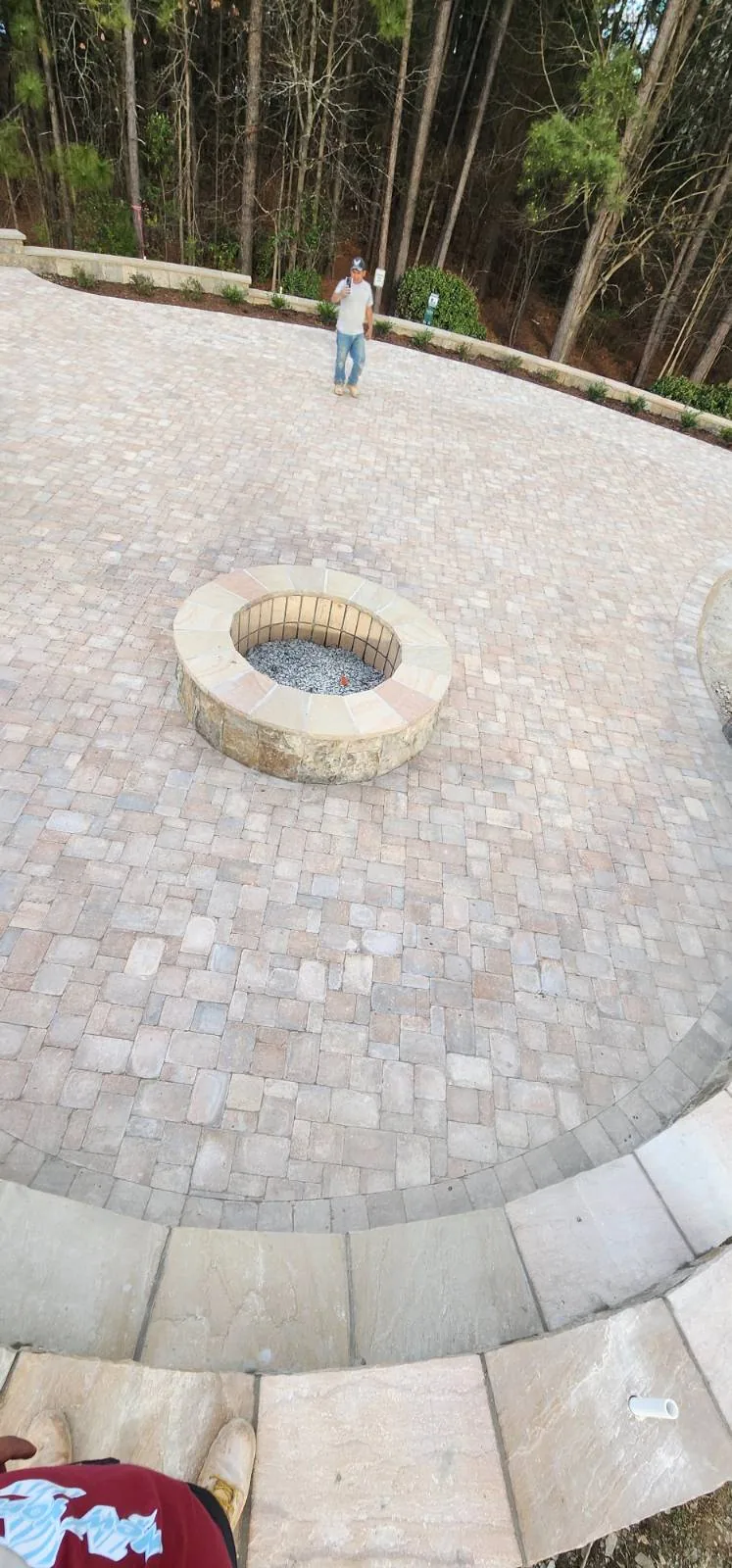
| Block core, veneer, 36-42 in. diameter | $2,400-$4,500 | Veneer type, cap stone, drainage collar |
| Gas line addition (plumbed, keyed valve) | $900-$2,600 | Trench length, permit path, burner and pan |
| Dry-stacked fieldstone, 48-60 in. diameter | $4,500-$9,500 | Stone sourcing, wall thickness, seating course |
| Boulder pit with bench and gravel apron | $5,500-$12,000 | Machine access, boulder size, slope work |
| Timber-and-gravel pit, budget build | $900-$2,200 | Base depth, timber grade, edge restraint |
Two line items get left off cheap quotes and then appear on the invoice: the gravel drainage collar around the pit, and the disposal of excavated dirt. On a Fletcher slope lot that dirt has to go somewhere, and hauling is real money. Ask up front.
Gas, code, and who is allowed to touch the line
A wood-burning pit is mostly a masonry and clearance question. A gas pit is a plumbing and fuel-gas question, and North Carolina draws a hard line there: fuel-gas piping and appliance connection work falls under the NC State Board of Examiners of Plumbing, Heating and Fire Sprinkler Contractors, so the person running your gas line should hold that credential, not just a masonry skill set. Any builder who waves that off is telling you something useful.
On the structural and site side, the NC Licensing Board for General Contractors sets the dollar threshold where a project needs a licensed general contractor, and a pit plus seating wall plus gas plus grade work can cross it faster than homeowners expect. Setback expectations, burn-ban seasons, and open-burning rules are enforced at the county and municipal level in Henderson County, and the International Code Council publishes the model codes that local amendments build on, which is usually where clearance-to-combustibles numbers come from.
One more reality for the valley: if your subdivision has an HOA, architectural review happens before the first shovel, and the ARC cares about veneer matching and sight lines. Get that approval in hand early, because it is the most common source of a stalled Fletcher build.
Drainage, our wet years, and why the base matters more than the stone
Henderson County has seen 16 federally declared disaster events across 1978-2026, and the overwhelming share of them are storm and flood family. That history is the whole argument for spending on the base. A pit sitting in a low corner of a Fletcher yard that pools after every summer storm will heave, crack its cap, and tilt its ring no matter how good the stonework is. Drainage and grading decisions belong in the same conversation as the mortar.
Practical base spec for this area: excavate below the frost-influenced zone, compact in lifts, and set the first course below grade. The fire pit guide walks through how a correct assembly is layered. If water arrives from an uphill neighbor or a roof downspout, fix that before the pit goes in. The EPA's stormwater and residential runoff resources at epa.gov are a plain-English starting point for why concentrated runoff is the enemy of any hardscape in a valley that drains this much water.
Choosing a builder in the Fletcher trade area
Fletcher shares its contractor pool with Asheville, Hendersonville, and the rest of the county, which means the good crews book out and the schedule pressure is real. Three questions separate the pros. First: ask to see a pit they built two winters ago, not last month, because a base problem shows up after a wet season, not a dry one. Second: ask who is pulling the gas permit and who holds the credential. Third: ask how they handle the dirt, because a builder who plans to leave the spoil pile on your lawn is planning to leave you the cost.
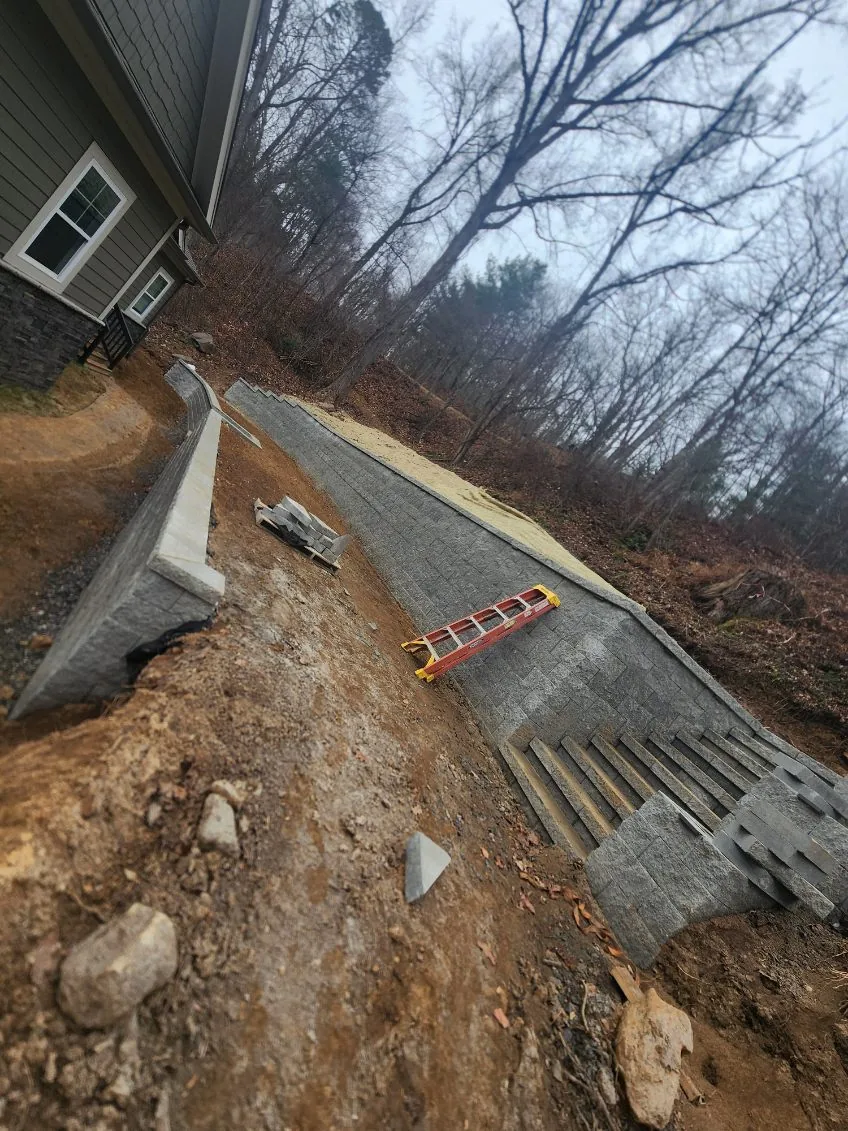
If your pit needs a grade change behind it, the same crews usually do that work, and the Fletcher retaining wall contractors page covers how that scope is priced and sequenced so you are not paying twice for the same excavation.