Access and haul set the price before the first stone lands
Hendersonville is a town built across grades, not on them. From the terraced yards off Kanuga Road to the switchback driveways climbing toward Jump Off Rock, most properties here ask a builder to move heavy material across terrain that flatland crews never price for. That single fact, more than masonry style or fire pit size, decides what a project actually costs. A truck-and-trailer rig that can back within thirty feet of the build site saves you real labor hours. One that has to park at the road and send material downhill by wheelbarrow adds them back fast, at a rate most quotes bury or omit.
Haul distance is the second lever. Stone for retaining walls, veneer, and fire rings in this region comes from quarries around the county, and every loaded mile adds fuel, time, and sometimes a minimum-delivery surcharge. When a contractor quotes your pit, ask two direct questions: where is the stone coming from, and how far is the truck parking from the work. The answers explain most of the gap between two bids on the same yard.
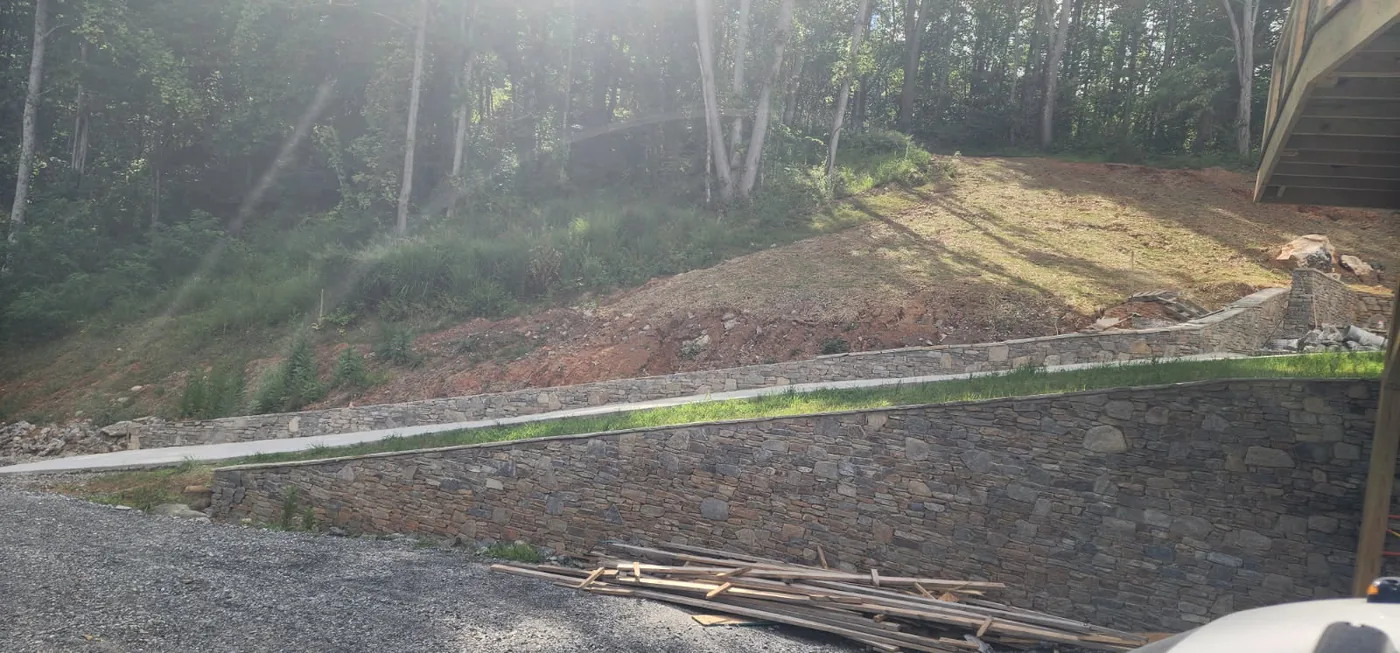
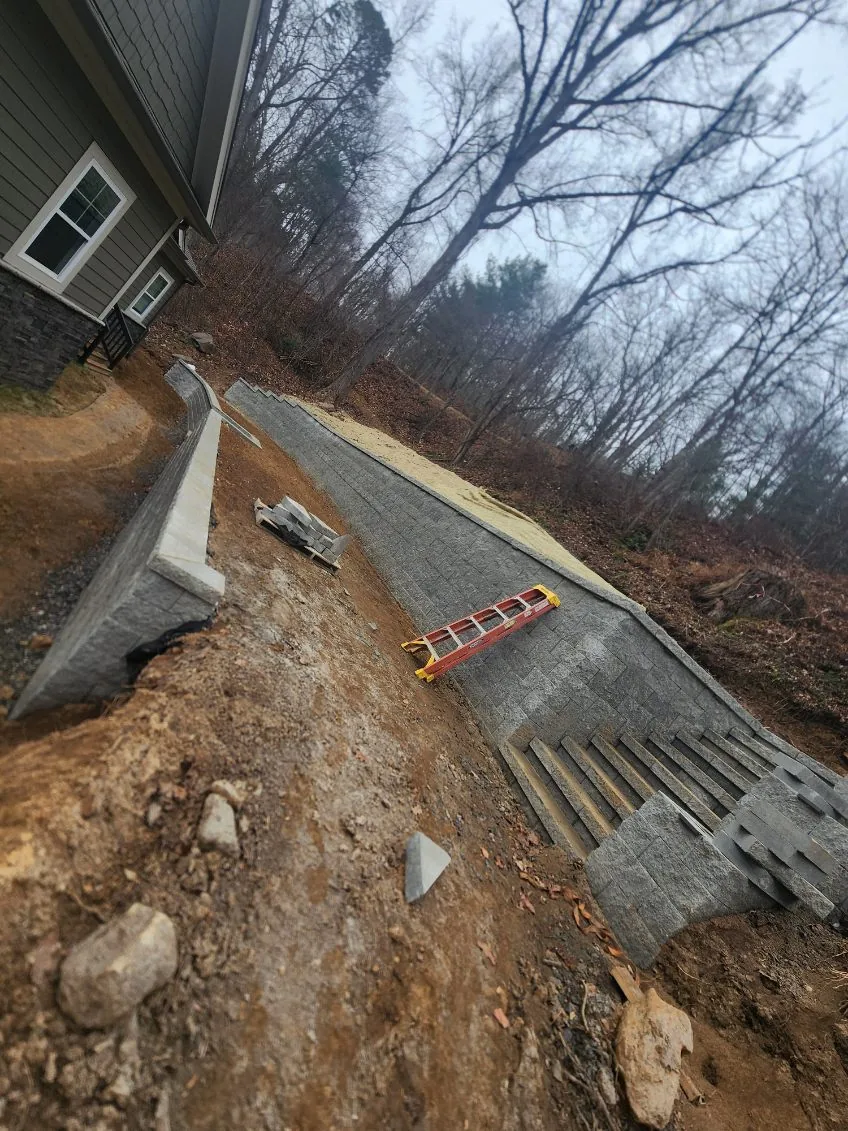
On the west side of town, homes tucked off Cummings Road and North Mills River Road often sit on lots that fall eight to twelve feet from the driveway to the backyard. A crew can't just roll a wheelbarrow down that slope loaded with stone; they need a machine or a chute, and both cost more. If your property backs up to a wooded ridge, expect the builder to bring a mini excavator just to prep the pad. That equipment line shows up in the bid whether they itemize it or not.
Driveway width matters too. A single-lane gravel drive with a tight turn at the top won't take a tandem-axle dump truck, so the stone gets dropped at the road and shuttled up in smaller loads. That shuttle time is pure labor. On a flat lot in Etowah, the same pit might take two days; on a steep lot near Laurel Park, it can stretch to four. The stone is identical. The access is not.
What drives scope: kit, block, or full masonry
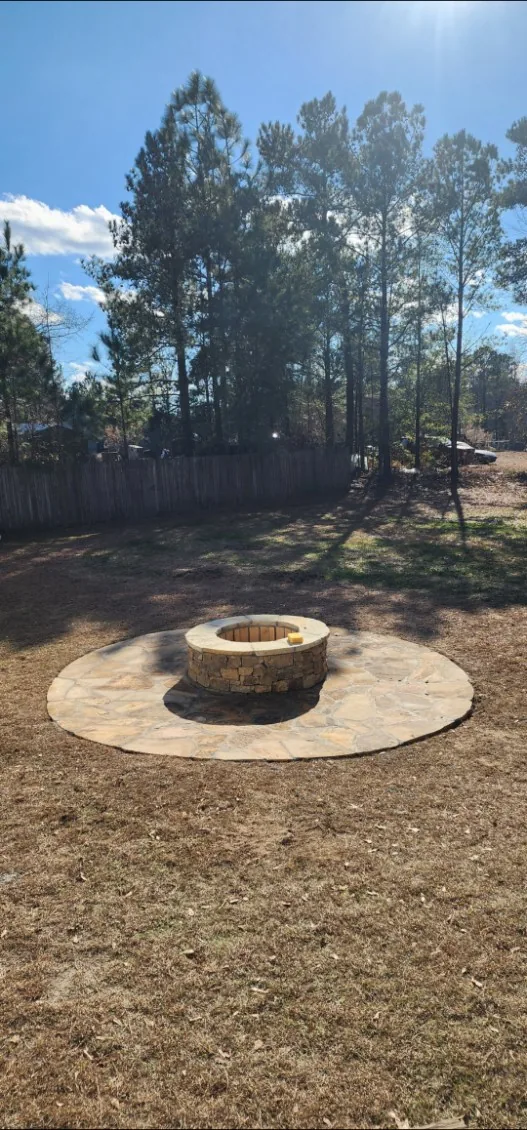
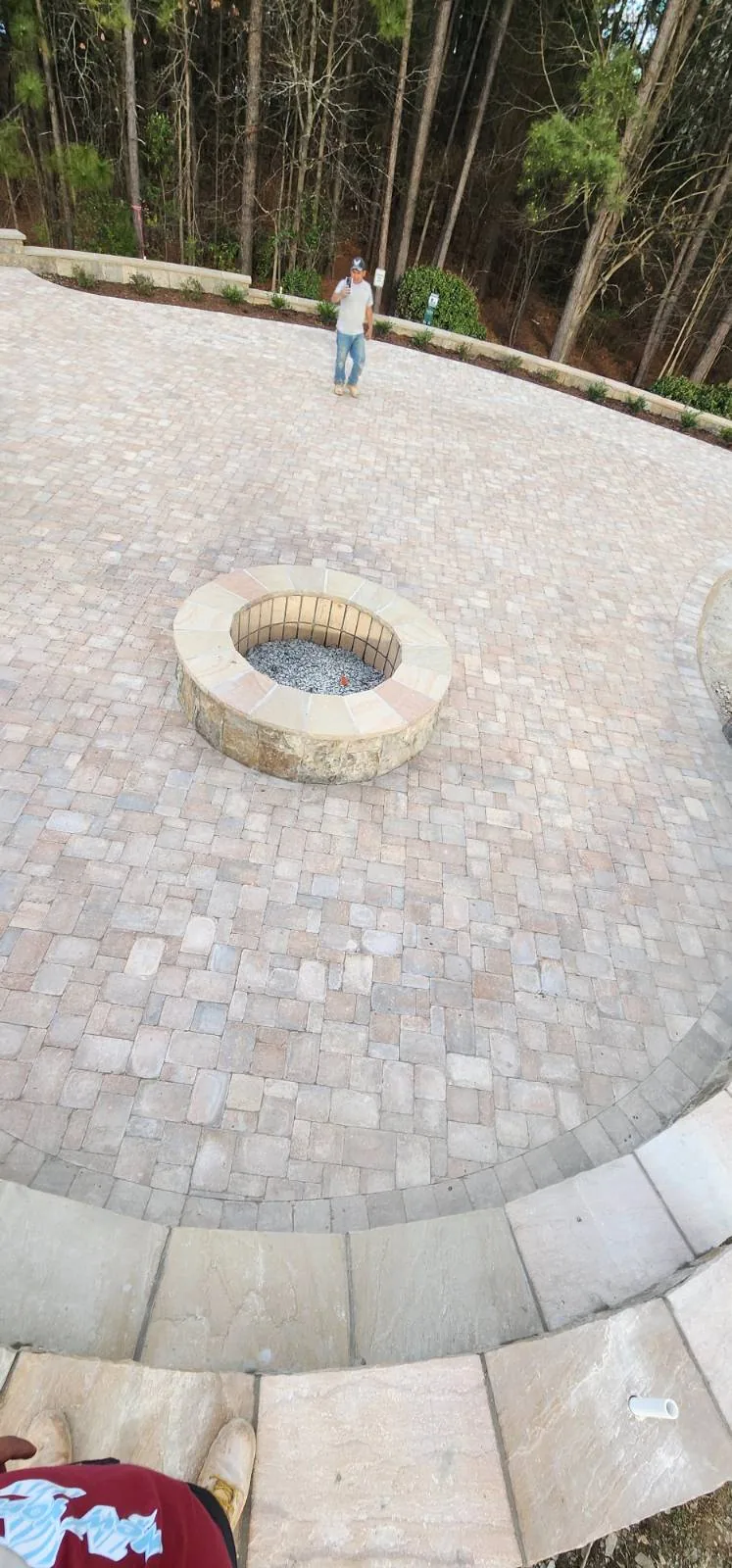
A steel or cast-stone fire pit ring set on a gravel pad is the entry point. It's fast, it's portable, and on a level side yard it can be finished in a day. A mortared block pit with a steel insert sits in the middle: real masonry, real permanence, still approachable on a straightforward lot. A full custom build — natural stone veneer, a gas line, integrated seating, sometimes a paver patio apron — is a landscaping project more than a purchase, and it prices like one.
Two code-adjacent realities matter regardless of tier. First, any permanent hardscape or masonry structure close to a home needs proper clearance and a non-combustible base; the International Code Council publishes the model codes most North Carolina jurisdictions build from. Second, if a gas line is part of the plan, the plumber connecting it is licensed through the NC State Board of Examiners of Plumbing, Heating and Fire Sprinkler Contractors — worth confirming before anyone trenches your yard.
Material choice also tracks the local supply. Many Henderson County builders favor a regional stone that matches the gray-brown fieldstone found in older chimneys around town. That stone is heavy and irregular, so a veneer pit takes longer to lay than a uniform block pit. The trade-off is a look that fits the Blue Ridge instead of a big-box kit that looks the same in Florida. If you want that regional character, ask to see the quarry sample before you commit. The color varies by seam, and a photo on a phone won't tell you what it looks like wet.
Gas adds another layer. A plumbed line means trenching, a shutoff, and a burner rated for outdoor use. The trench length alone can swing a bid by a thousand dollars or more if the meter sits on the far side of the house. Some homeowners choose a propane tank instead, which avoids the trench but adds a tank pad and a refill schedule. Neither is wrong. They're just different line items.
Henderson County price ranges by scope
Use this table as a working guide, not a bid. Steep access, long haul, or gas work push any row toward its top end; easy access and level ground can land you at the bottom. For yard work that combines a fire pit with terracing or slope retention, see the companion Henderson County retaining wall cost breakdown, since the two projects often share excavation and haul.
| Scope | Typical range | What moves it |
|---|---|---|
| Steel or cast-stone ring on gravel pad | $2,400-$4,200 | Pad prep, distance from truck to site |
| Mortared block pit with steel insert | $3,800-$6,500 | Stone type, base depth, slope |
| Natural stone veneer pit, wood-burning | $5,500-$9,000 | Veneer selection, haul miles, capping |
| Gas fire pit with plumbed line | $6,500-$9,800 | Trench length, burner spec, licensing |
| Pit plus seating wall or paver apron | $9,000-$18,000 | Square footage, drainage, grading |
Two bids on the same scope can differ by $2,000 and both be honest. The variable is usually what happens before the first block is laid: how much dirt moves, how far the stone travels, and whether the site needs a retaining wall to create a flat pad. Ask each builder to break out excavation, stone, and labor separately. If one bid is a lump sum with no detail, you can't compare it to anything.
Terrain, water, and why the base matters more than the stone
This part of the Blue Ridge sees the kind of rainfall that finds every unsealed seam in a hardscape. The federal disaster record reflects it: 16 declared events touch this county across 1978-2026, overwhelmingly storm and flood family. That history is not abstract for a fire pit build. A pit set on a poorly compacted base in a yard that sheets water will heave, tilt, and crack within a season or two, and no veneer choice saves it.
The fix is unglamorous: excavated base, compacted aggregate, and a drainage plan that assumes a hard mountain rain. If your yard already collects water, that problem gets solved before the pit gets built, not after. The fire pit service page walks through how base prep and drainage fit into a build, and it's the right starting point if you're still deciding between a simple ring and a permanent masonry feature.
Henderson County soils vary more than people expect. Creek-bottom lots near Mud Creek hold water differently than ridge-top lots off Chimney Rock Road. A builder who has worked both will know to test the base depth before quoting. On clay-heavy ground, the excavation might need to go six inches deeper and use a geotextile fabric to separate the aggregate from the subsoil. That's not an upsell; it's the difference between a pit that lasts ten years and one that shifts the first winter.
Also watch where the downspouts empty. If a gutter dumps within ten feet of the pit pad, no amount of compaction will save it. The honest fix is a splash block or a buried drain line, and a good builder will point that out before pouring a base. It's a small cost that protects a much larger one.
Choosing a builder who has worked this ground
Hendersonville sits in a market where landscaping and masonry skills overlap, and not every crew that can stack stone can lay out a base that survives a graded lot. Three checks separate them. Ask how they handle a slope: do they terrace, do they retain, or do they hand you a pit that leans? Ask where the stone comes from and whether haul is itemized in the bid. And ask what happens after a heavy rain, because the answer tells you whether they thought about water at all.
For large combined projects, retaining walls, patios, and structural masonry, general contracting thresholds apply, and the licensing rules set by the North Carolina Licensing Board for General Contractors are worth knowing before you sign. If you're also shoring up a slope, the retaining wall contractors in Hendersonville guide covers how to vet that side of the job.
One more local check: ask if the builder has worked in your part of the county. A crew that spends most of its time in flat subdivisions off Howard Gap Road may not have the equipment or the patience for a steep lot near Mountain Home. Experience with the terrain is worth more than a fancy portfolio. A builder who has solved drainage on a similar slope before will spot problems in ten minutes that a newcomer misses until the first storm.