Why Fletcher access changes the number more than the stone does
Fletcher sits in Henderson County where the Blue Ridge foothills start breaking up the flat ground fast. A lot on a gentle grade off Naples Road lets a mini-skid and a truck-mounted crane reach the work; a lot tucked behind a narrow shared drive with a 20 percent pitch means every pallet of Tennessee fieldstone gets staged at the street and carried in by hand or by a tracked carrier. That difference, not the stone itself, is what most often moves a quote by thousands.
Haul distance is the second lever. Most local wall stone comes out of the Tennessee and North Georgia quarries that supply Western North Carolina, so a job near US-25 carries less freight than a job up a switchback where the delivery truck can't turn around and has to back down. When we scope a Fletcher address, we measure two things before we talk stone: how close a loaded truck can get, and how many tripping hazards the slope creates before we place a single tread.
Fletcher is also a town of small lot lines and older driveways. Along the older roads near the French Broad River bottomlands, driveways tend to be short and flat, but once you climb toward the ridgelines off Cane Creek or Hooper's Creek, the grade tightens and the road shoulders disappear. A driveway that looks fine in dry weather can turn into a staging problem after a week of rain when a loaded truck sinks to the axle. That is why a first visit here is really an access audit as much as a design meeting.
It helps to think in terms of zones. Zone one is the street or driveway apron where the stone gets dropped. Zone two is the carry path from that drop point to the stair cut. Zone three is the stair itself, where the base is dug and the treads are set. The farther apart zones one and two are, and the steeper the path between them, the more the labor portion climbs, even when the stone tonnage and the finished stair look identical to a job a mile away on flatter ground.
Scope and price ranges for Fletcher stone work
These are working ranges for Henderson County, not flat rates. Grade, access, and the amount of base prep under the stone drive where a given job lands.
| Scope | Typical range | What moves it |
|---|---|---|
| Simple step set (3–4 risers, landing) | $1,800–$3,800 | Riser height, whether a machine can reach the landing |
| Full entry walkway (30–50 ft, steps + path) | $4,500–$9,000 | Base depth, drainage, number of treads |
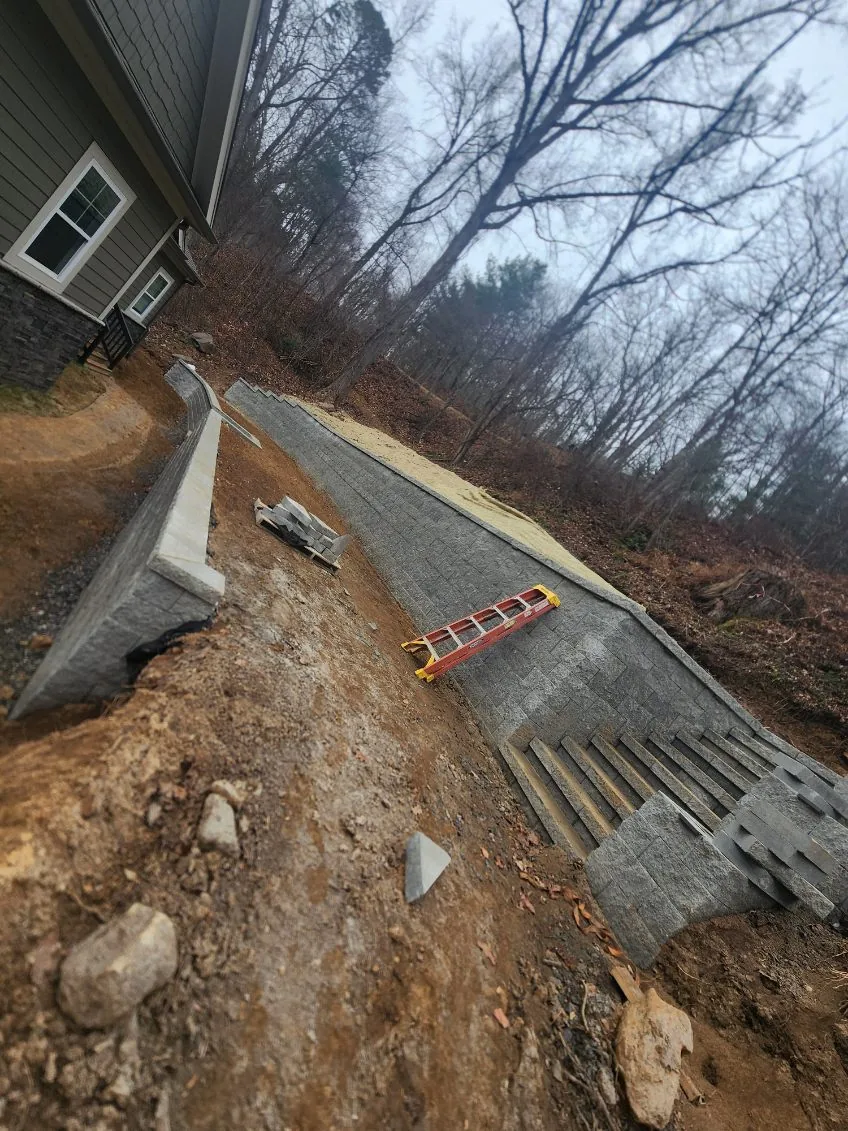
| Slope staircase with switchbacks | $7,000–$14,000 | Vertical drop, rail or wall integration, hand-carry distance |
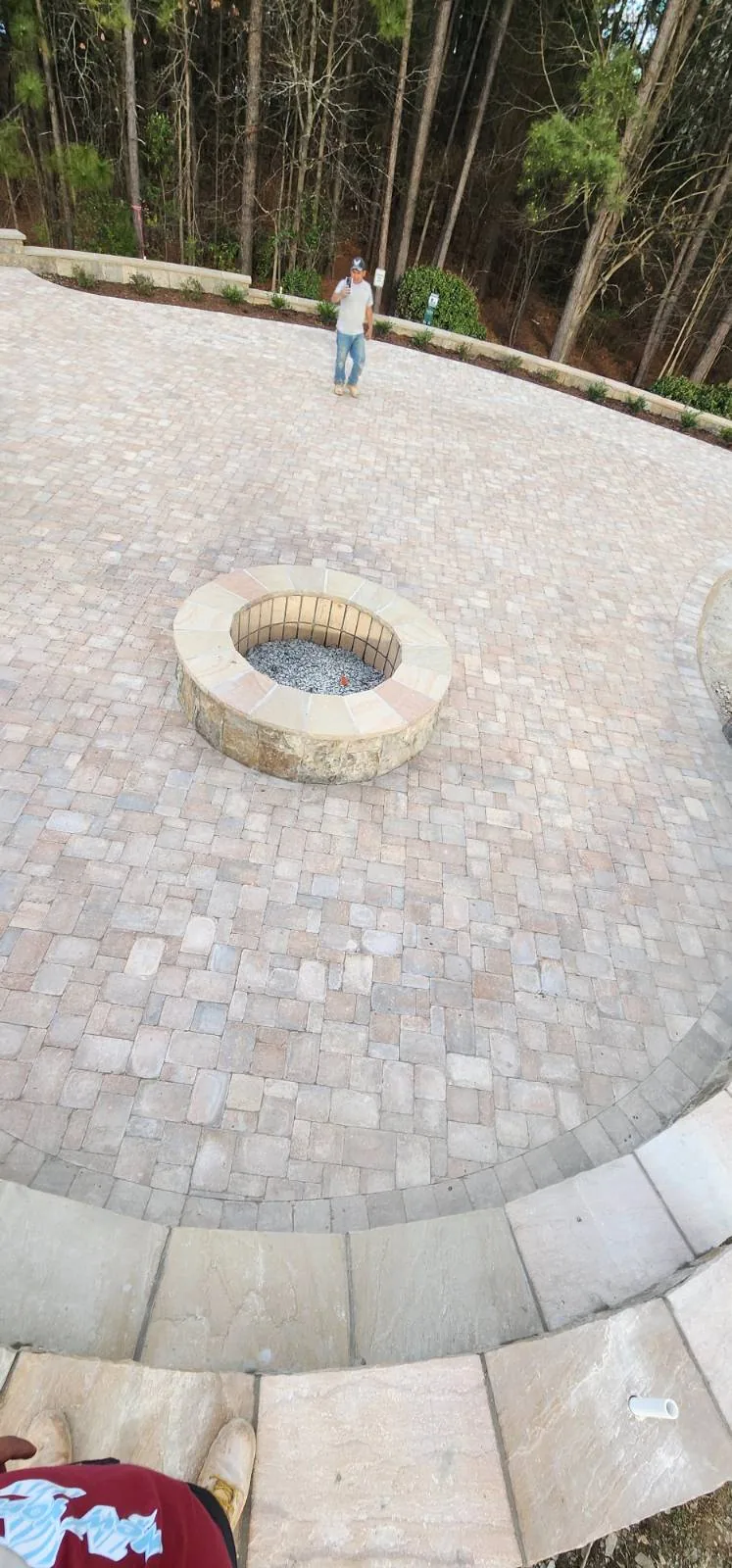
| Paver or flagstone walkway (flat grade) | $3,200–$6,500 | Stone type, edging, jointing method |
| Retaining wall flanking steps | See Henderson County wall costs | Wall height, drainage, tie-back |
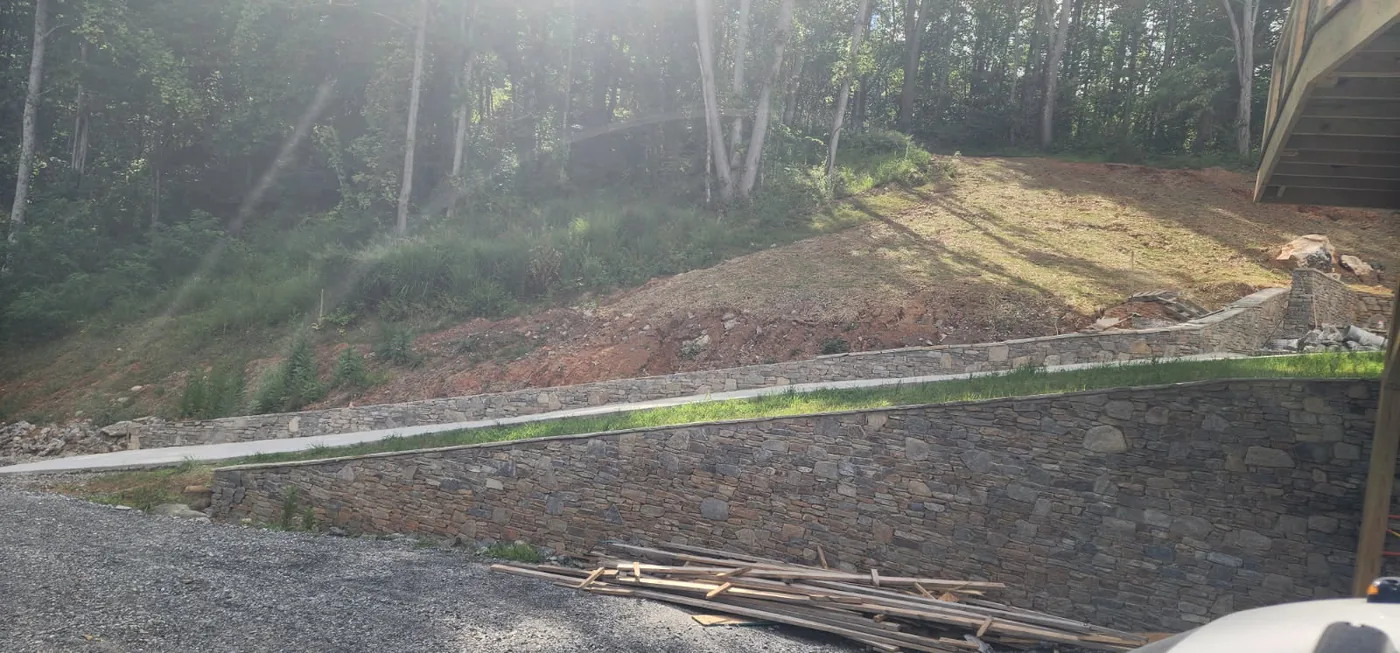
If your project includes a wall over a few feet tall, the Fletcher retaining wall page covers the engineering threshold separately, because walls and steps fail differently and get permitted differently.
Two jobs at the same price point can look very different on the ground. A $4,800 walkway on a flat lot off Butler Bridge Road might be forty feet of wide flagstone with a couple of shallow risers. The same $4,800 near the top of a Hooper's Creek ridge might buy only twenty feet of stair with two landings and a hand-carried base, because the labor to move material eats the budget. That is not padding. It is the honest arithmetic of slope work in Henderson County, and any contractor who quotes both addresses the same without walking them is guessing.
Stone choice matters, but less than most homeowners expect. Tennessee sandstone, regional fieldstone, and dimensional bluestone all perform here when the base is right. The premium stone can add a noticeable percentage, but a poor base under premium stone will fail faster than a good base under modest stone. Put the money in the prep first, then upgrade the face if the budget allows.
Water is the quiet line item on every Fletcher slope
Henderson County has seen 16 federally declared disaster events across 1978-2026, and the pattern is storms that dump water fast on ground that is already pitched. A staircase cut into a hillside becomes the drain for everything above it unless the design intercepts that flow. The International Code Council model codes treat exterior stair rise, run, and landing as safety requirements, not style choices, and drainage that undercuts a footing is the most common reason a young set of steps starts to shift.
The fix is unglamorous: base course deep enough for the soil, gravel and geotextile behind the risers, and a swale or catch that moves roof and uphill runoff around the stair instead of through it. Skipping that step is how a Fletcher walkway turns into a repair call in three winters.
On a typical Fletcher slope, roof runoff and uphill sheet flow both want to use the stair as a chute. A properly detailed stair interrupts that path with a gravel-filled trench behind each riser, filter fabric to keep fines out of the gravel, and a discharge that daylights somewhere below the last tread without scouring the yard. When the grade above the stair is substantial, a shallow swale or a French drain across the top of the cut is often the difference between a staircase that lasts decades and one that heaves after the second wet winter.
Soil matters too. Much of Henderson County sits on clay-heavy residual soils that hold water and expand when saturated. That is why base depth is not a place to save money. A deeper compacted base with proper drainage costs more up front and less over the life of the stair. The EPA publishes stormwater guidance that reinforces the same principle at a site scale: manage water where it falls and slow it down before it concentrates.
When the work crosses into licensed territory
A set of garden steps is a landscape task. But once a project includes a retaining wall over a few feet, structural grading, or anything tied to a building permit, North Carolina's contractor licensing rules apply. The North Carolina Licensing Board for General Contractors publishes the thresholds, and Henderson County inspects permitted work to those standards. If a contractor waves off the permit question, that is the signal to get another bid.
Ask two things on any Fletcher slope job: how the base is prepared, and how the stairs are anchored against frost and water. Good crews answer both without reaching for a brochure.
It also helps to know which trade is which. General contracting thresholds fall under the state licensing board, while plumbing, heating, and fire sprinkler work is governed separately by the North Carolina State Board of Examiners of Plumbing, Heating and Fire Sprinkler Contractors. If a walkway project grows to include exterior lighting tied to a panel, or drainage that connects to a storm system, the scope can touch more than one license category, and it is worth asking who is responsible for what before work starts.
What to expect on a first visit
A real site visit measures drop, checks soil and drainage, notes truck access and staging, and confirms whether any part of the plan moves dirt that needs a permit. You should leave with a sketch or measurement, a stone choice, and a written range tied to the access reality of your address. The stone steps and walkways overview covers how a full scope is assembled if you want to compare before calling.
A good first visit also flags the unknowns. Is there an old set of steps under the vines that needs removal? Is the grade change coming from a retaining wall that is already leaning? Does the driveway cross a drainage swale that will flood the staging area after a storm? None of these are deal-breakers, but each one changes the labor and the sequence, and a written range should mention them rather than ignore them.
If you can, have a few photos ready before the visit: the grade from the street, the proposed landing area, and any existing hardscape. A photo of the driveway approach is especially useful in Fletcher, because it tells us immediately whether a loaded truck can reach the work or whether everything has to be staged at the street and carried in.