Fieldstone, boulder, block, timber: what fits a Mills River lot
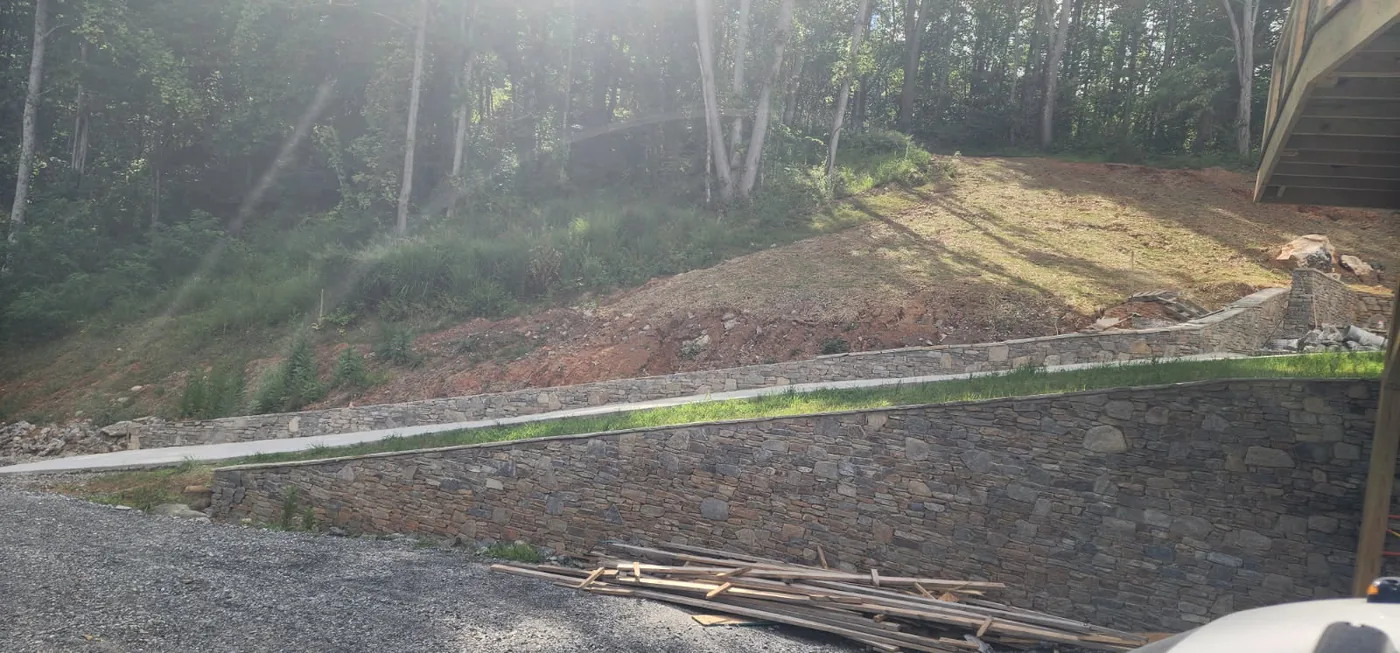
Mills River doesn't build like downtown Hendersonville, and its stonework shouldn't either. The town is largely wooded acreage, horse property, and newer homes set on graded pads off Boylston Highway and North Mills River Road. Front walks here are long, grades are real, and the material question is usually fieldstone or boulder for character, or block and timber when budget rules. Fieldstone reads native against hardwood shade and stacked-rail fencing; boulder steps handle elevation change without a long staircase; block and timber step-and-tread systems get a family from driveway to porch for materially less. None of that is aesthetic preference alone. On a lot that falls eight feet corner to corner, the material you pick determines how much excavation and how many drainage line items appear in the bid.
Drive the valley roads and the pattern becomes obvious. Along the North Mills River corridor, older farmhouses sit on cut banks with a simple set of stone or timber risers down to the drive, because the builder worked with the fall of the land rather than flattening it. Newer builds on the ridge lines above Boylston tend to have a graded pad, a manufactured slope, and a longer approach from parking to door. That history matters when you're choosing material: a 1950s farmhouse walk often only needs three or four risers and a tidy landing, while a 2010s house on a graded pad may need a switchback path with intermediate landings to satisfy both the grade and the code geometry. Fieldstone from the site itself, when there's usable material left from grading, keeps character high and haul cost low; imported boulder gives you bigger risers with fewer pieces; block and timber give you the most predictable treads per dollar. A local mason should be able to look at your lot and tell you which of those three stories it is, not hand you a brochure.
Reading the grade before anyone quotes a number
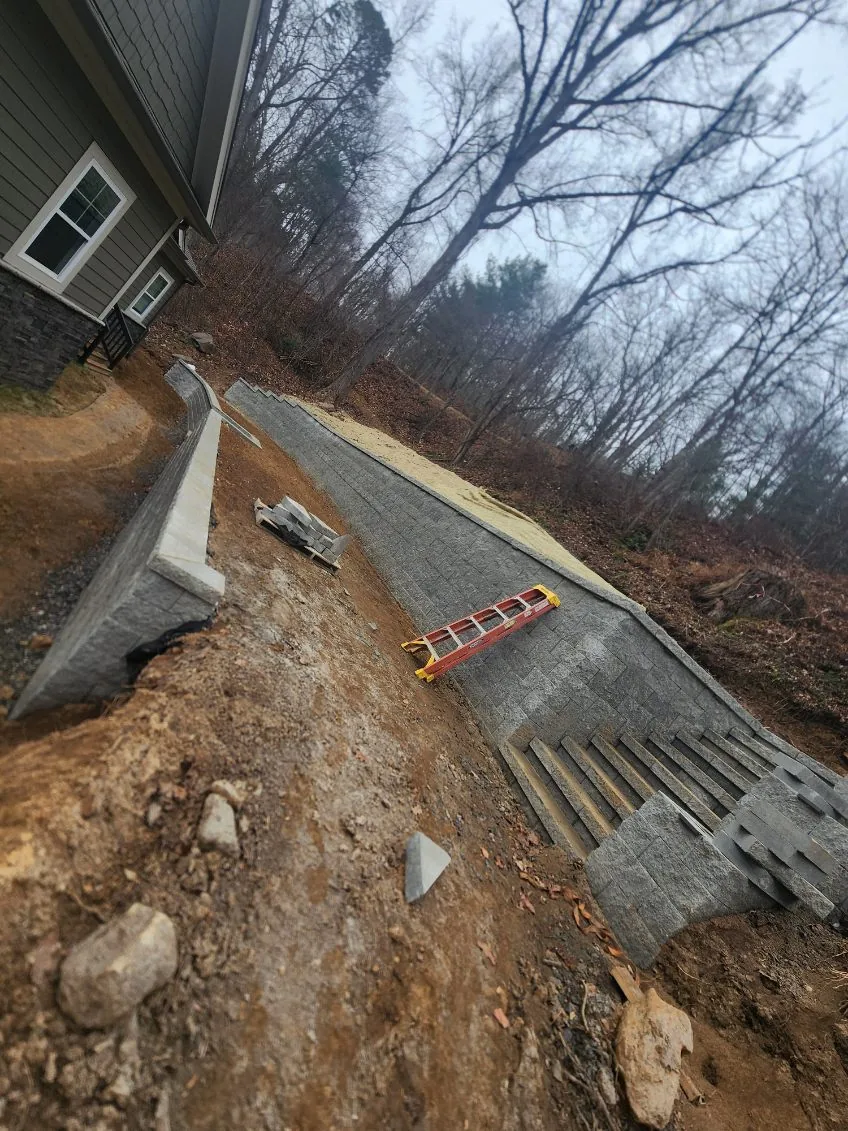
Most walkway budgets in this town are decided by two things: total rise and where water goes when it rains. A gentle approach from a gravel drive to a front door is a weekend-to-two-week job. A terraced path down a wooded slope, with switchback steps and a runnel to move stormwater off the treads, is a different scope entirely — and it often overlaps with retaining work, which is why the honest sequence starts with the Henderson County retaining wall cost table next to any step bid. The federal record explains why water keeps coming up in this county: 16 declared events touch this area across 1978-2026, overwhelmingly storm and flood family. Stone that sheds water correctly lasts decades; stone that ponds it under a tread heaves within a few seasons. The International Code Council standards treat exterior stair rise, run, and landing geometry as safety requirements, not suggestions, and a path that ignores them fails inspection and ankles both.
What does rise actually look like on a Mills River lot? A gently sloped front yard might drop two feet over twenty, which is a simple run of shallow risers or even a ramp-grade path. A wooded back slope behind a house off North Mills River Road can drop ten or twelve feet over the same run, and that is a design problem, not just a labor problem: you need intermediate landings so someone carrying groceries can pause, switchbacks so the run per step stays comfortable, and a way for stormwater to cross the path instead of running down it. That is also where the material choice loops back in, because switchbacks need tighter turning radii than a straight boulder run allows. The crews that do this well walk the path in the rain or ask where it sheets during a storm before they quote a single tread.
One more honest point about the base. In this county, freeze and thaw cycles work on the soil under a path the same way they work on a roadbed, and a tread set on bare ground without compacted, draining base material will move. A mason who talks about base depth and drainage before finish material is telling you the truth; one who leads with color and shape is selling you a surface.
The Mills River price picture
Expect a real site visit before a real number, because length and rise are what move these ranges:
| Scope | Typical range |
|---|---|
| Short block or timber step set (3-5 risers), small landing | $2,200-$4,800 |
| Fieldstone steps with dry-laid or mortared treads, integrated landing | $4,500-$9,000 |
| Boulder steps on grade, naturalistic placement | $3,800-$8,500 |
| Full walkway build, 40-80 linear feet, drainage included | $6,500-$12,000 |
| Drainage add-on: runnels, French drain, regrading at path | $900-$3,500 |
Steep, wooded lots and long runs above the valley floor carry excavation and haul-off line items that flat-driveway quotes never show. Treat a bid without them as incomplete rather than cheap. The Mills River retaining wall contractors page covers how those same crews sequence walls and paths together, which is usually the cheaper order to build.
Two local cost factors deserve their own line items and often don't get one. First, haul-off: if your lot is wooded and the path runs through cut material, the spoils have to go somewhere, and on acreage with a long, soft driveway that means trucks and time. Second, access: a lot off a steep gravel drive above the valley floor may not let a full-size machine reach the work zone, and hand excavation on a long run is slower and priced differently. Neither is a trick — they're realities of this terrain that a mason familiar with Mills River lots will flag up front. Ask specifically how spoils leave the site and what equipment reaches the path, and compare bids on those answers rather than on the finish line alone.
Hiring checks specific to this trade and town
Stonework sits in a gray zone in North Carolina: it's not plumbing or electrical, but jobs crossing the state's cost threshold fall under general contractor licensing rules enforced by the NC Licensing Board for General Contractors. So the first check is whether your project crosses that line and whether the crew is properly licensed for it. The second is dry-laid versus mortared: dry-laid fieldstone moves with frost and drainage and belongs on many wooded lots here, while mortared work needs a proper footing to survive. The third is references on material — a crew that's excellent with block may never have set boulder steps on a slope. Ask what they've built with your material, on ground like yours. When you're weighing the whole project, the stone steps and walkways overview lays out how steps, paths, and walls usually scope together.
Plumbing and grading work that ties into a path sometimes pulls in a separate licensed trade, and the state board that governs those is the NC State Board of Examiners of Plumbing, Heating and Fire Sprinkler Contractors — useful to know if a bid mentions moving a downspout or tying drainage into a system. For most walkway jobs neither board comes up, and that's the point: a straight step-and-path project is largely a craft-and-soil job, which is exactly why the references matter more than the paperwork. Ask to see two or three completed walks within a reasonable drive, ideally on ground that resembles yours — a wooded slope, a graded pad, a horse-property frontage — and ask what the owners would change. The answers tell you more about a mason than any portfolio photo.
Soil, freeze, and the long view
Western North Carolina soil and freeze cycles punish shortcuts. Treads set on bare ground without compacted base will rock within a year. Mortar joints on a footing that drains poorly will crack and spall. Native stone holds up; the base beneath it decides whether the job lasts five years or fifty. That's also where environmental rules can enter — work that disturbs drainage near a waterway or wetland may raise questions best answered against EPA guidance before excavation starts, especially on the larger holdings common around Mills River. None of this is reason to overbuild. It's reason to spend the money where it can't be seen.
Think about the seasons a walkway actually lives through here. A Mills River path sees wet winters where the ground saturates, then freezes, then thaws, and that cycle lifts anything that isn't tied to a draining base. It sees summer thunderstorms that dump a month of rain in an afternoon and test every runnel and landing you built. It sees leaf fall from hardwood canopy, which is beautiful and also means treads stay damp longer and moss finds a foothold on north-facing stone. None of that argues against stone — it argues for stone done with a base and a drainage plan. A fieldstone path that's set correctly will outlast the house's first roof; one set on dirt will be a trip hazard before the second summer. The cheapest-looking bid is rarely the cheapest job, and on this county's ground that gap shows up fast.