Matching the build to Lake Junaluska's housing stock
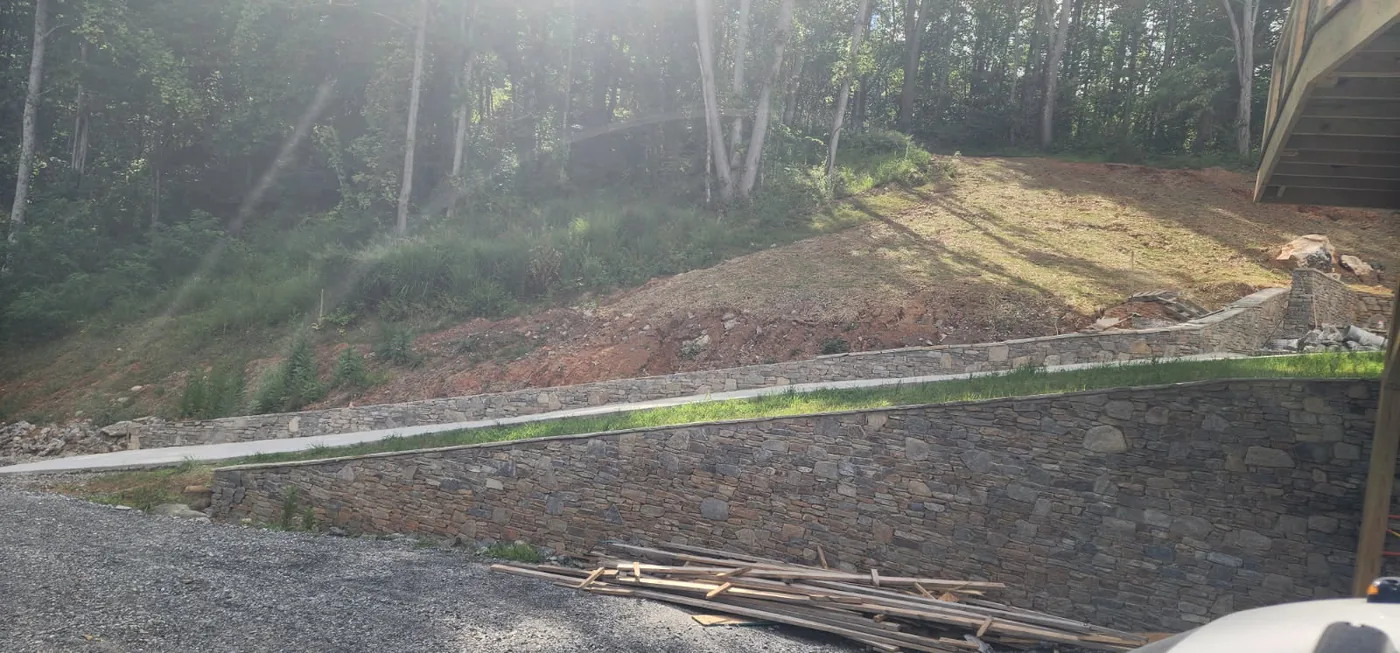
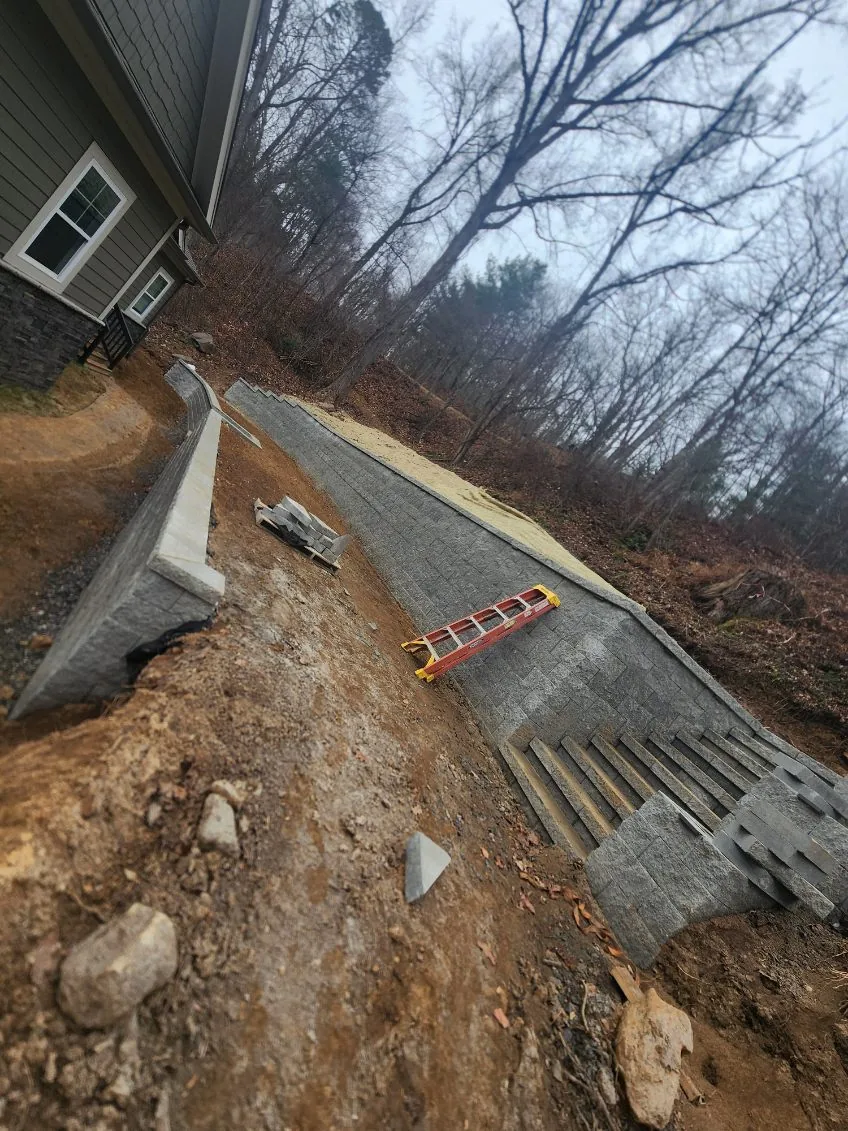
The cottages ringing the lake and the newer homes climbing the ridges toward Waynesville were not built with the same backyard in mind. A 1930s lake cottage usually has a tight, shaded yard with a stone or brick foundation already in place, so a fieldstone pit that echoes the existing masonry reads as original rather than added. A newer build on a graded slope off the county seat side often wants a block-and-timber pit: concrete block core, timber or stone veneer, stone cap, engineered to sit on ground that was cut and filled. Choose material before you choose a builder, because the crew that stacks fieldstone well is not always the crew that pours and veneers block well. Both are legitimate builds. The mistake is letting a quote decide the material for you. If your yard also needs grade changes before a pit belongs there, the Haywood County retaining wall cost table is the honest first read, because wall and pit budgets overlap more than people expect.
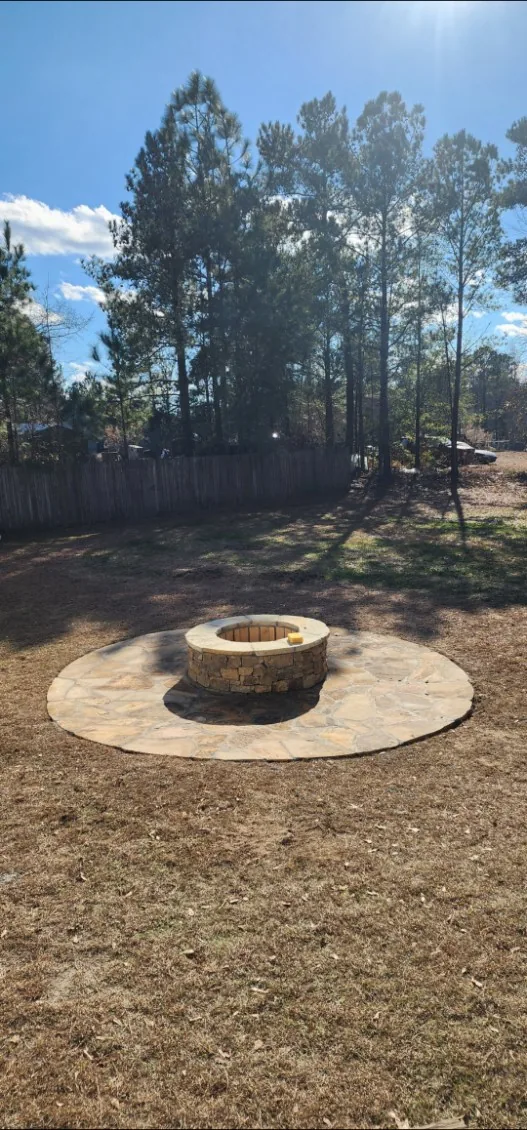
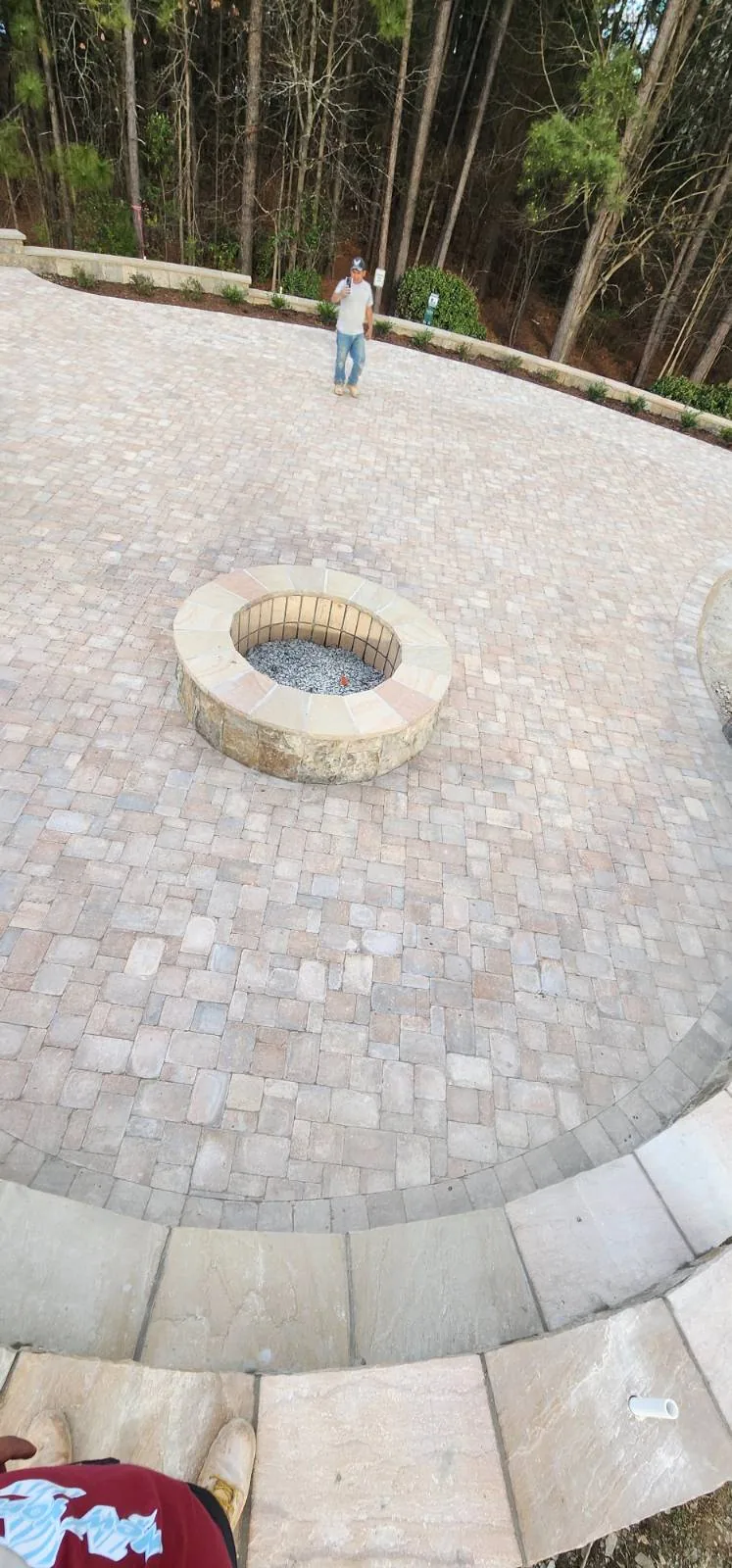
Walk any of the older streets near the lake and you will see what the housing stock is telling you: rough fieldstone foundations, brick chimneys, and walls that were laid by hand when the cottages went up. A fire pit built from the same regional stone, whether it is the gray-blue fieldstone that shows up in old property lines or the rounded boulders pulled from nearby creek beds, will look like it has always been there. On the newer side of the lake and up the ridge roads toward Waynesville, homes often have engineered footings, vinyl or fiber-cement siding, and decks rather than porches. There, a block-and-timber pit with a clean stone cap fits the architecture and the budget, because the block core does the structural work and the veneer is a finish choice you can scale up or down. Mixing the two languages, a rustic fieldstone pit against a brand-new deck, can look like a costume. Matching the pit to what the house already says is the whole design decision.
Material also drives who you hire. Fieldstone and boulder work rewards a mason who can fit irregular shapes by eye, and that skill is learned over years on this terrain. Block-and-timber work rewards a crew that understands footings, reinforcement, and veneer adhesion. Neither is better, but asking a fieldstone mason to bid a block core, or a block crew to bid a dry-laid boulder ring, is how projects get change orders. If you are still weighing shapes and styles, the fire pit guide walks through the standard builds and what each one actually looks like finished.
What a fire pit actually costs here
Prices below reflect Haywood County labor and material bands, phrased as ranges because every yard differs. Slope access, distance from the driveway, and whether a gas line is trenched are the three variables that push a quote up or down.
| Scope | Typical range |
|---|---|
| Simple kit pit, block core, homeowner-supplied stone | $1,800-$3,200 |
| Fieldstone or boulder pit, mortared, 36-48 inch | $3,000-$6,000 |
| Block-and-timber pit with stone cap and veneer | $4,000-$7,500 |
| Gas-fired pit with trench, burner, and key valve | $5,500-$9,000 |
| Seating wall or bench integrated with the pit | $2,000-$5,500 additional |
Anything above a modest kit sits on a footing, and a footing below the frost line is not optional in this county. Builders crossing the state's general contracting threshold on the whole project scope trigger licensing under the NC Licensing Board for General Contractors, so ask which licensed entity is carrying the job.
Two line items surprise people in this market. The first is access. A pit on a flat driveway apron can be built in a day with a wheelbarrow and a mixer; the same pit on a steep lot off a ridge road, where every pallet of block and every bucket of mortar has to come down a slope or around a house, adds labor that is invisible in a material quote. The second is what happens under the pit. A simple kit can sometimes sit on compacted gravel, but a mortared fieldstone or block-and-timber pit wants a concrete footing with rebar, poured below the frost line so winter heave does not crack the ring. That footing is not glamorous, and it is the difference between a pit that survives a decade of Haywood County winters and one that starts separating by the second spring. If you are comparing three bids and one is dramatically lower, ask what the footing detail is and whether the price includes a gas line if you want one. A quote that skips the footing or the trench is not cheaper; it is just incomplete.
Slope, water, and where the pit belongs
Lake Junaluska sits in a bowl. Water comes off the ridges, crosses yards, and pools where the grade flattens, and the county's federal disaster record reflects it: 19 declared events touch Haywood County across 1973-2026, overwhelmingly the storm and flood family. A fire pit placed in the path of that runoff will heave, crack, or sit in mud within a season or two. The National Weather Service keeps the local precipitation record if you want to see how much water a given month can deliver. The fix is unglamorous and cheap relative to a rebuild: set the pit on high ground or a built-up pad, keep the uphill grade draining around it, and never let the pit double as a low point. If the yard needs a wall to make that happen, start with the Lake Junaluska retaining wall contractors page before you buy stone.
This is not abstract advice on these slopes. Yards that step down toward the lake or climb away from it shed water fast, and the places where that water slows down are exactly the flat spots where a fire pit feels natural to put. The result, when the grade is ignored, is a pit that pools water in the bowl after every heavy rain, mortar that stays saturated through winter, and a ring that cracks or tilts by the second or third season. The honest sequence is to fix the grade first, then build the pit. Sometimes that means a small retaining wall or a French drain uphill of the pad; sometimes it just means raising the pit on a compacted base so the surrounding ground falls away from it in every direction. A mason who has worked these yards will walk the lot and tell you where the water goes before talking about stone. A mason who has not will quote the pit and leave the yard alone, and you will find out which one you hired after the first hard storm. If the project also needs a wall to make the grade work, the pit and wall budgets should be planned together rather than one at a time.
Code, safety, and the burner question
Wood pits in Haywood County need to respect setback from structures and overhanging limbs, and burn bans during dry stretches are real. Gas pits add a different layer: an underground line, a burner rated for the enclosure, and ventilation so the pit does not trap gas. The International Code Council publishes the outdoor appliance and fuel-gas provisions that most local adoptions draw from, and the EPA maintains the burn and air-quality guidance worth reading before you plan open burning on a regular basis. Practical rules that keep a build legal and safe: three feet of clearance from combustible structures, no pit under a roof overhang or low canopy, a screen or spark arrestor on wood pits, and a gas shutoff you can reach without leaning over the flames. If a buried gas line is part of the job, confirm who is pulling the permit before work starts.
The wood-versus-gas decision is really a question about how you want to use the pit. A wood pit is simple, inexpensive to build, and gives you the smoke, crackle, and smell that most people picture when they imagine a fire. It also means storing or buying firewood, managing ash, and accepting that on a dry week in a burn-ban stretch you may not be able to light it. A gas pit costs more up front because of the trench, the burner, and the key valve or control, but it lights with a turn, produces no sparks or ash, and works when wood burning is restricted. If you are building on a wooden deck or close to a structure, gas is often the safer and more code-friendly choice. If your pit sits well away from the house on a stone or gravel pad, wood is hard to beat for character. Many homeowners here choose a wood pit with a gas starter, which gets the fire going without lighter fluid and still gives you the real thing. Whichever way you go, the safety details above are not optional, and the permit question should be settled before the first shovel goes in.
Questions to ask before you sign
Four checks separate a crew that builds pits from a crew that builds them here. First, ask what the footing detail is and how deep it goes; a pit with no footing is a decoration. Second, ask how they handle drainage around the pad, because that answer tells you whether they have worked this terrain. Third, ask to see a pit that has been through two winters, not one. Fourth, ask who carries the gas permit if the build is gas. When you are ready to compare materials and shapes side by side, the fire pit guide walks through the standard builds and what each one actually looks like finished.
Two more questions are worth adding for this market. Ask where the stone comes from and whether it is a material they can get again, because a pit built from a one-time load of boulders that nobody can source a second time is hard to match if you later want a matching wall or bench. And ask how they protect the work during cure, especially on a slope where rain runs through. A mason who covers a fresh mortared ring before a forecast storm, and who knows which weeks in Haywood County tend to be wet, has done this before. The crews worth hiring here will answer all of these without hesitation, and the answers will sound specific to this terrain rather than generic. When you are ready to talk scope, flag your timeline and we will route the closest available crew.