Why Swannanoa fire pit quotes swing so wide for the same pit
Two homeowners on the same Swannanoa road can get the same drawing and quotes that differ by thousands. The pit is identical. What changes is the approach. Swannanoa sits in the Swannanoa Valley between the Craggy and Black Mountain ranges, and a bulk of the housing stock climbs the slopes off Bee Tree Road, Warren Wilson Road, and the ridges above the river. A flat driveway that backs to a graded building pad is a different job than a one-lane gravel switchback where a loaded stone truck cannot turn around.
The three things that move a bid here: grade (can a truck or mini-skid get to the work zone without tearing out a retaining wall), carry distance (every wheelbarrow load from a street parking spot to the pit is billable labor), and where the stone comes from. Quarried fieldstone and Tennessee flag move on freight; local river rock and native granite are closer but only some yards stock them. When a quote looks cheap, it is almost always because it assumes easy access and a short carry. If that is wrong, the change order comes after the first morning.
What a Swannanoa fire pit actually costs
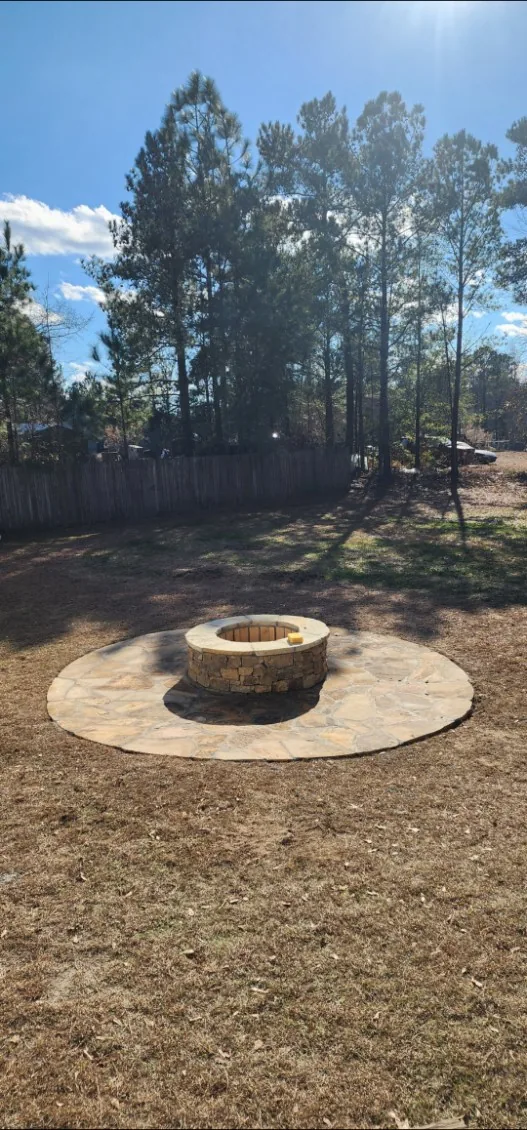
Pricing below reflects typical Buncombe County ranges for a wood-burning masonry or stone fire pit, standard 36-48 inch bowl, gas line and hardscape apron excluded unless noted. Use the rows to compare scopes, not to pick the cheapest line. A block-core pit with a thin stone veneer is not the same build as a solid dry-stack fieldstone ring, and it will not last the same way in freeze-thaw winters.
| Scope | Typical range | What drives the number |
|---|---|---|
| Pre-fab steel or concrete insert pit, gravel pad, no masonry | $600-$1,600 | Insert cost, hauler access, no masonry trade required |
| Block-core pit with stone veneer, firebrick liner, cap | $2,400-$4,800 | Block and veneer material, liner, carry distance |
| Solid dry-stack fieldstone pit, cut cap | $4,000-$7,500 | Stone type and tonnage, shaping labor, cap stone |
| Masonry pit with gas burner, key valve, lava rock | $5,500-$9,500 | Gas plumbing, licensed sub, burner and media |
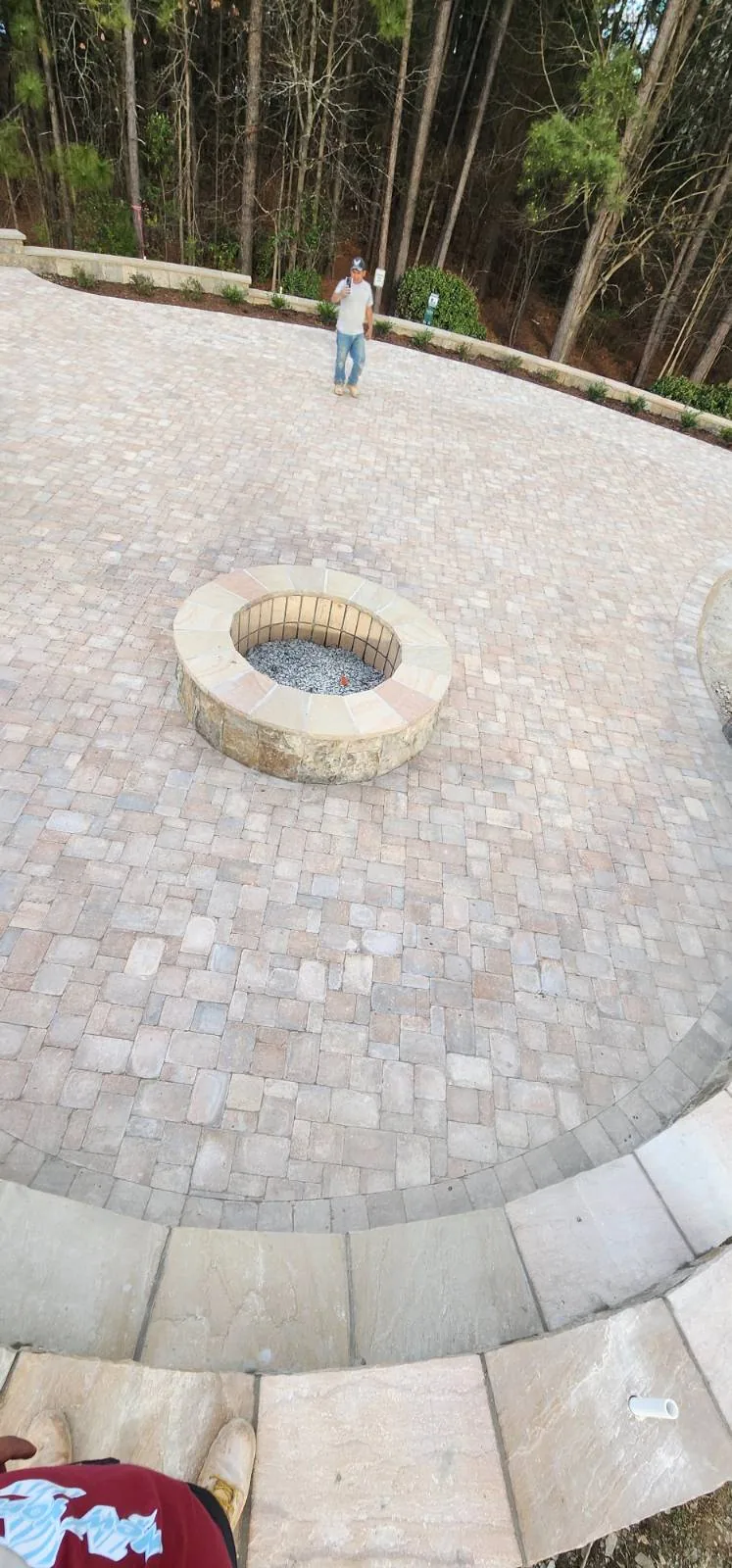
| Pit plus seat wall or patio apron | $8,000-$18,000+ | Square footage, wall height, base prep, drainage |
| Steep-lot surcharge (long carry, no truck access) | +15%-40% on labor | Wheelbarrow or mini-skid use, extra crew hours |
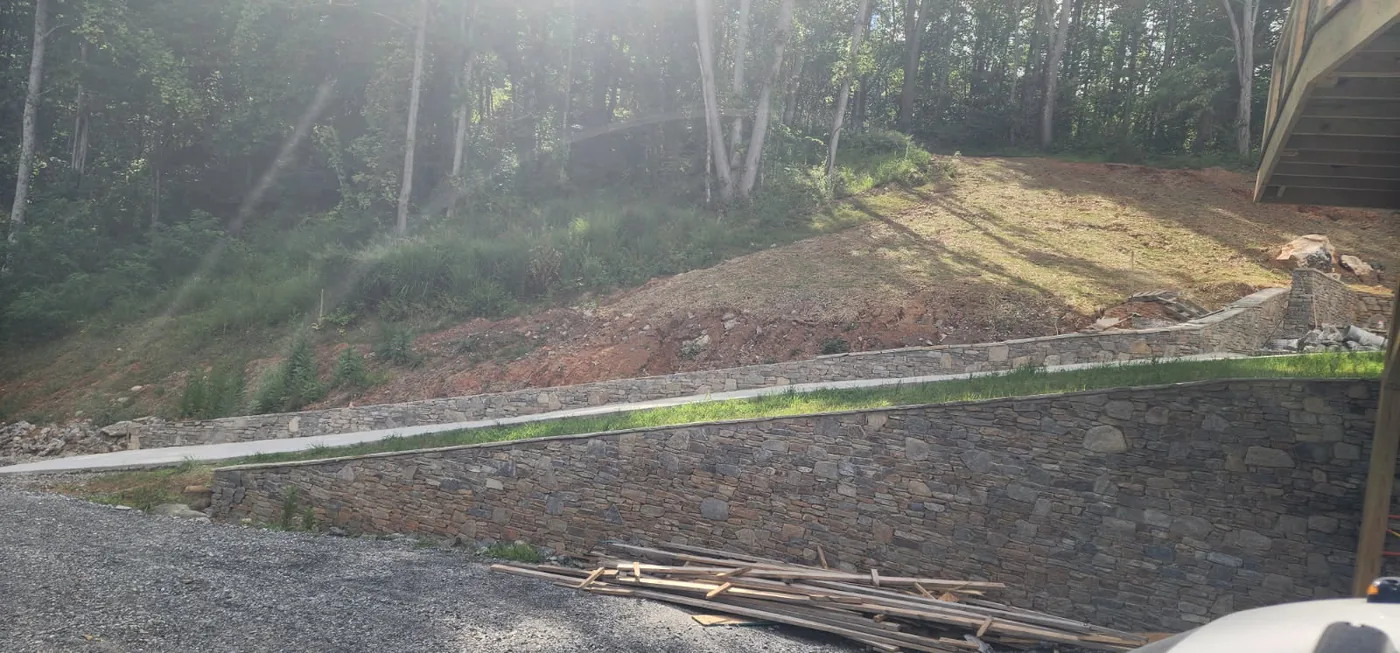
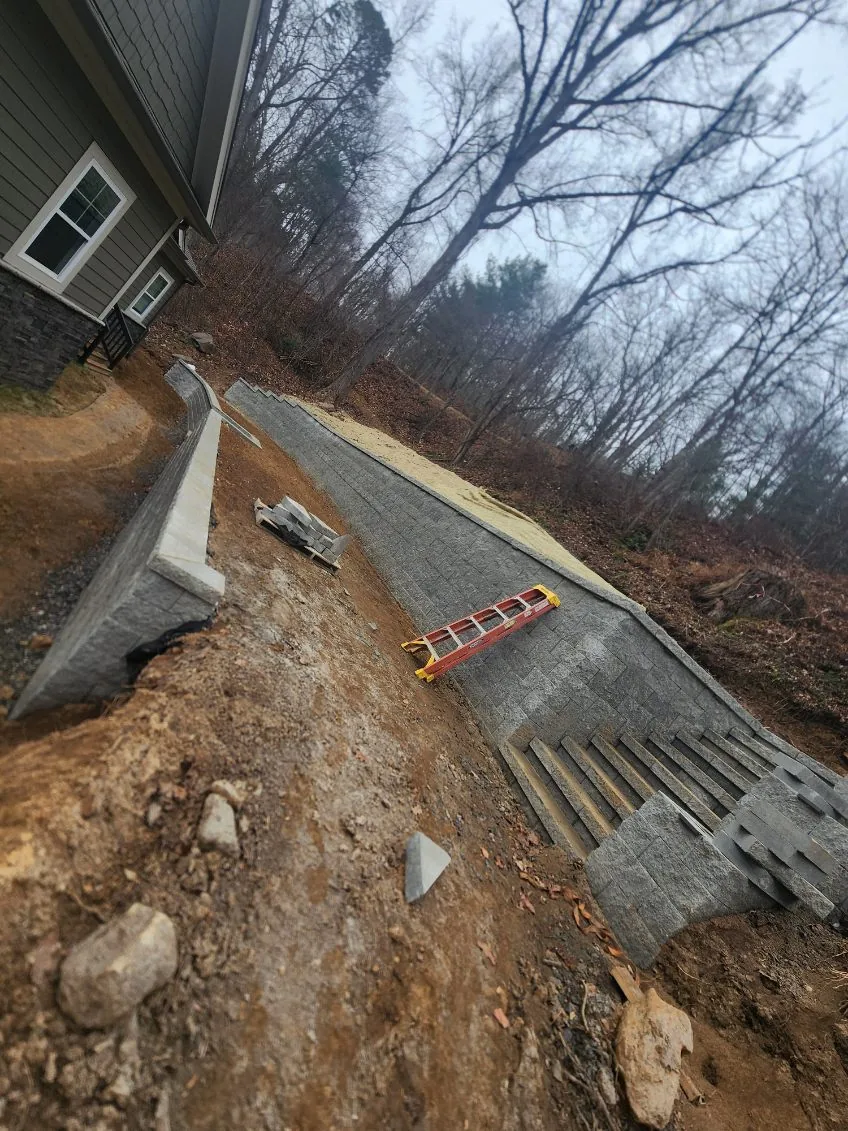
Permits, engineering, or retaining work are separate. If the pit sits on a slope that needs a wall to hold it, the wall is its own scope: see the Buncombe County retaining wall cost table before you bundle the two.
Stone, gas, and the rules that shape the build
Fire safety in the mountains is not abstract. The federal disaster record shows 19 declared events touching Buncombe County across 1973-2026, and a large share of those sit in the storm, flood, and wind family. That history matters less for the fire itself than for the site work around the pit: drainage that keeps the base dry, setbacks from wood siding and decks, and clearances under overhanging hemlock and rhododendron limbs. The NC Department of Insurance, Office of State Fire Marshal publishes the state fire code that local inspections reference for open burning and outdoor appliance placement, and the International Code Council maintains the model language most NC amendments start from. Ask any builder to walk the setbacks with you before stone is set.
On gas pits, the burner plumbing is a licensed trade in NC, and the general contractor rules from the NC Licensing Board for General Contractors kick in once a job crosses the dollar threshold the board sets. A builder who does not name the licensed gas sub in the quote is handing that problem back to you.
Where the stone comes from, and why it shows up in your quote
Swannanoa is not far from several regional stone yards, but "not far" and "cheap to deliver" are different things. A tandem-axle load of Tennessee fieldstone or Pennsylvania bluestone has to climb the same grade your driveway has. Compact local granite and river rock weigh more per cubic foot and cut haul cost, but they shape differently under the chisel, which changes the labor line, not the material line. A builder who quotes you a flat stone price without naming the source is guessing at freight.
That is also the reason a good fire pit plan starts with what is already in your yard. If you have native rock from a previous excavation or a demolished wall, reuse it. It is free material, it matches the site, and it cuts both the freight and the tonnage line. The trade-off is sorting and cleaning time, which is real labor, so ask the builder to price both scenarios: bought stone versus reused stone.
Choosing a builder when the driveway is the hard part
Ask three questions before you sign. First, what vehicle and equipment will actually reach the work zone, and can they show you a job where the access matched yours. A crew that has only built on flat lots in town will learn your grade on your dime. Second, who hauls the stone and where does it stage; if the answer is a street-side pile and a wheelbarrow, the labor hours should reflect that honestly up front. Third, how is the base built. A proper fire pit base is compacted gravel or a poured footing below the frost line, not stone stacked on topsoil. In Swannanoa's clay and slope soils, a shallow base moves within two winters.
If the yard work includes any wall holding back a grade change, cross-check the crew against the Swannanoa retaining wall contractors page for the questions that matter on slope-lot hardscape. The same access and haul logic applies, and often the two projects should be built together so the base work is done once.