What actually drives the number on a Weaverville lot
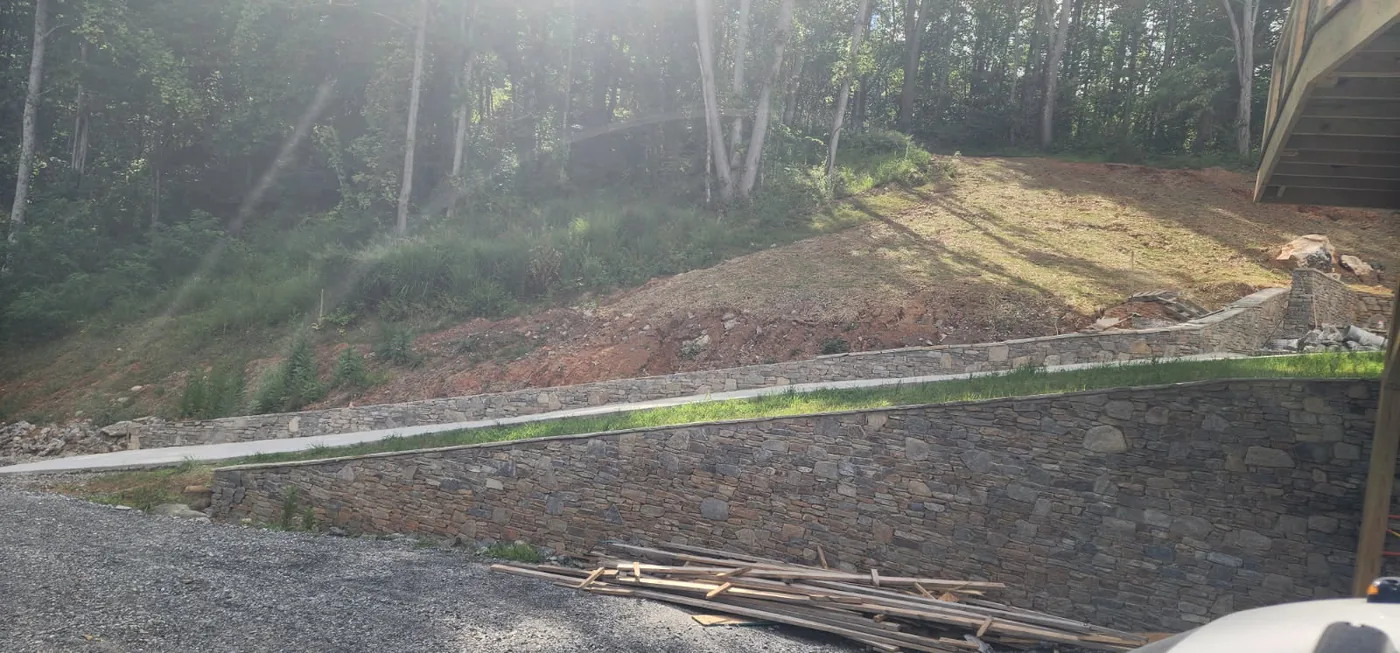
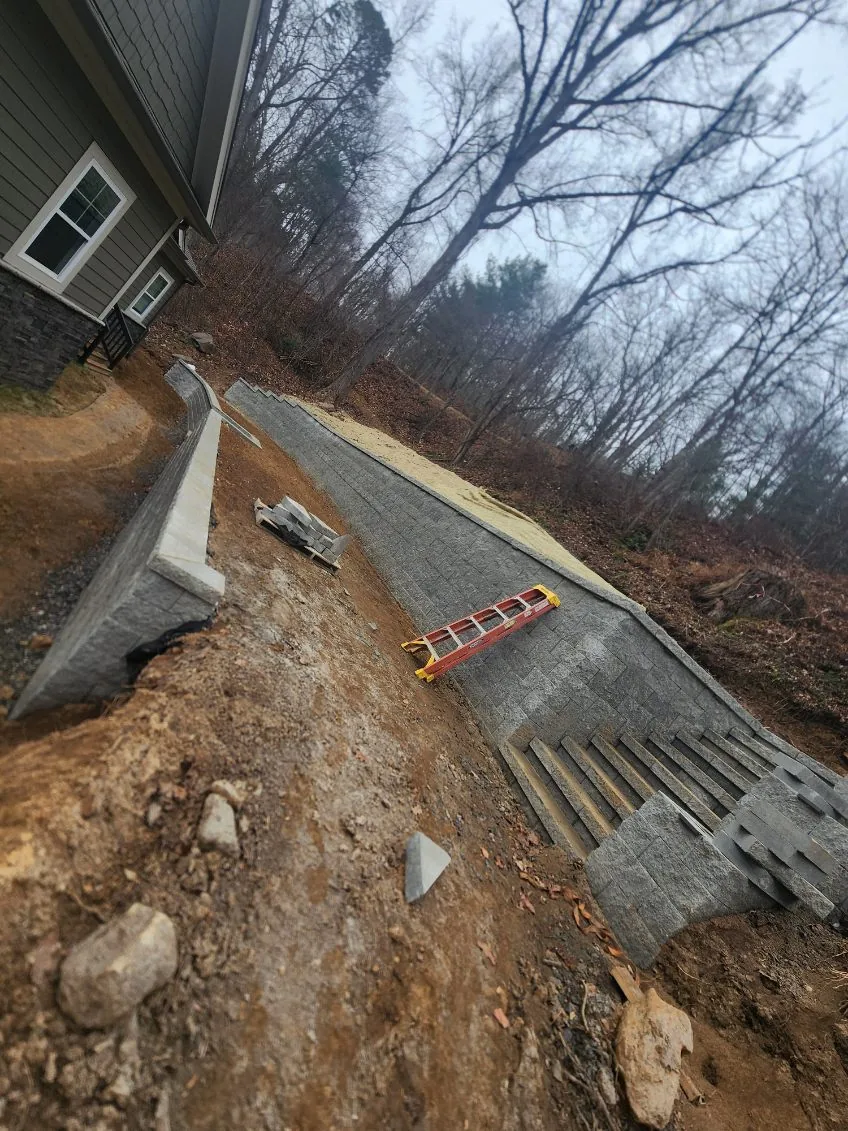
Two houses on the same Weaverville street can get hardscape bids three times apart, and the gap is almost never the stone. It is the dirt underneath. A flat lot behind a ranch off Monticello Road needs a compacted base, a patio, and maybe a step. A lot climbing away from the road near Reems Creek needs a wall to hold the grade before there is anything to sit on, and that wall carries excavation, drainage stone, geogrid, and a footing that has to be inspected. The visible work is the cheap part.
Weaverville's housing stock splits the same way. Older mill-era homes close to Main Street sit on small, settled lots with mature trees and tight equipment access. Newer builds up the ridgelines and along the Reems Creek valley sit on ground that was cut and filled, which means the soil has been moved once already and behaves differently under load. Ask any bidder which of those two you own before you compare their prices.
Line item by line item: the Weaverville price picture
Below is how a real scope breaks down for hardscaping in this town. Treat these as working ranges for Buncombe County, not quotes. The full hardscaping overview covers materials and design; the wall numbers get their own table on the Buncombe County retaining wall cost page.
| Scope item | Typical range | What moves it |
|---|---|---|
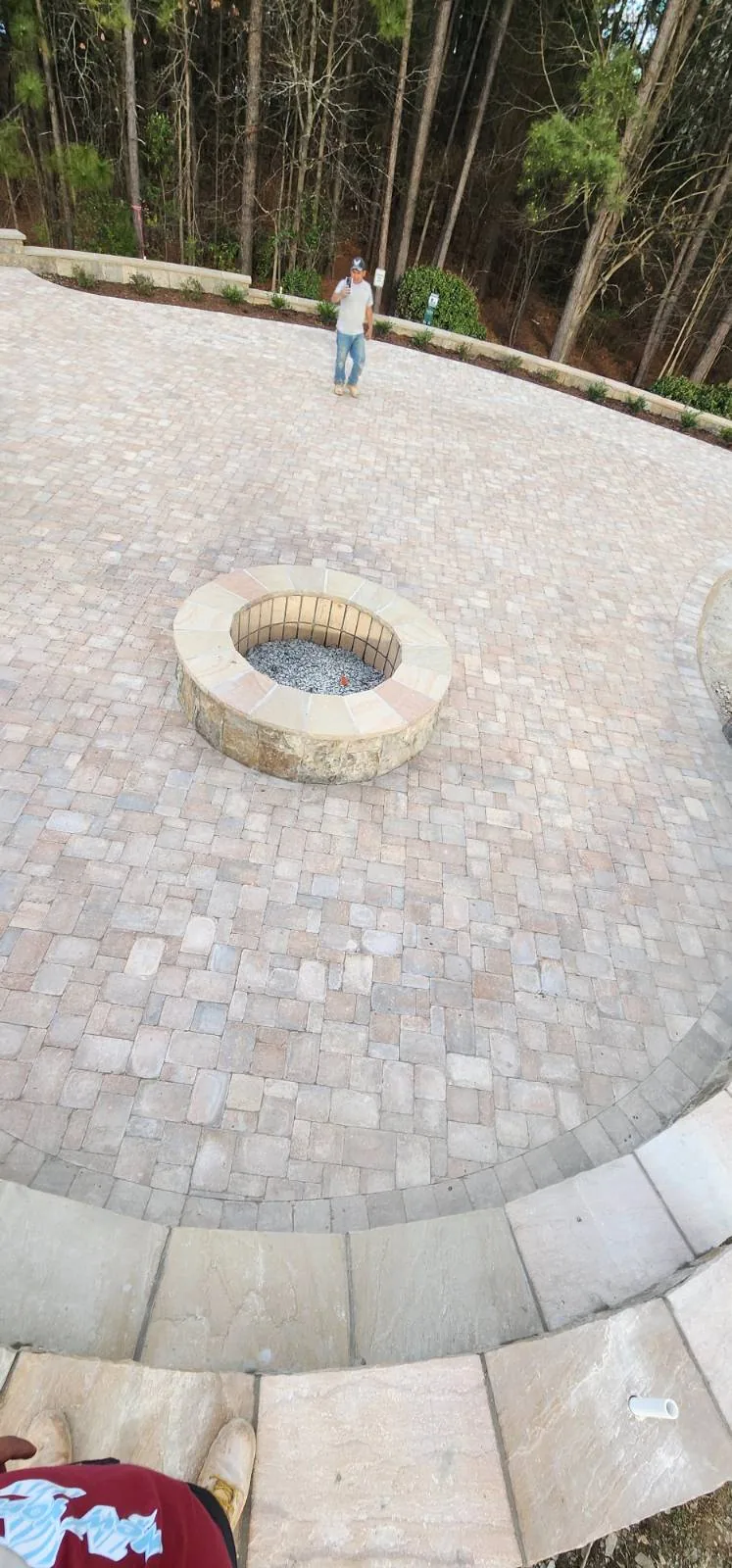
| Paver or flagstone patio, 300-400 sq ft | $6,500-$14,000 | Base depth, stone type, edge restraint, steps |
| Retaining wall, under 3 ft | $45-$85 per face foot | Height, block vs. natural stone, drainage |
| Engineered wall, 3 ft and up | $95-$160 per face foot | Engineering, geogrid, footing, permit |
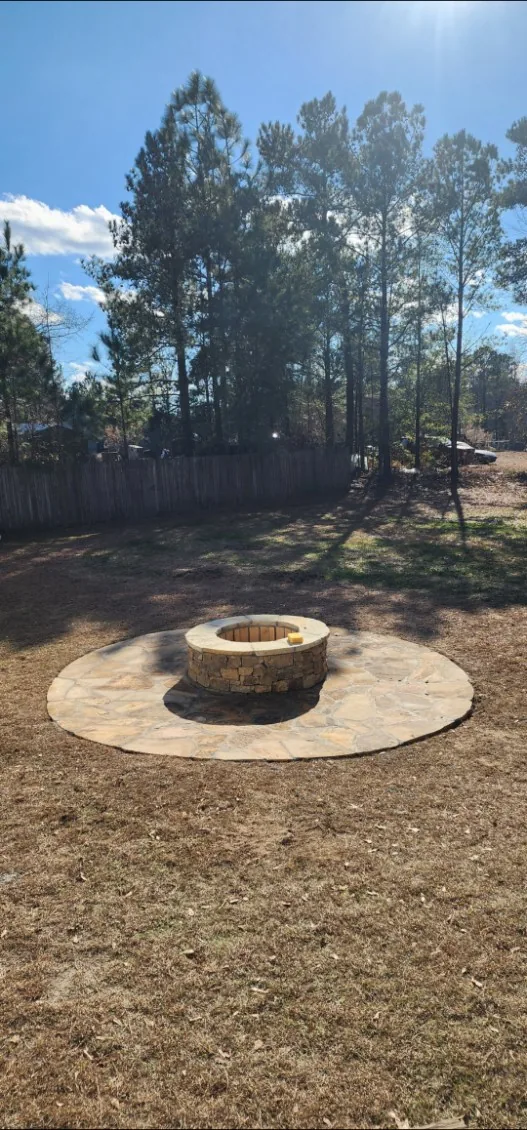
| Fire pit, masonry or kit | $1,200-$6,500 | Gas line, stone, seat wall integration |
| Drainage and grading behind hardscape | $1,500-$7,000 | French drain length, downspout tie-ins, slope |
| Walkway or steps | $2,500-$9,000 | Rise and run, stone, lighting |
| Excavation and haul-off | $900-$4,500 | Access, spoils volume, machine size |
The pattern worth noticing: two bids that differ by thousands are usually differing on drainage and base, the two items you cannot see when the job is done. A cheap bid that skips them is not a cheaper patio. It is a patio that will move in three winters, and Weaverville gets those.
Rain is the design constraint here
Buncombe County's federal disaster record is a storm and flood record. 19 declared events touch this county across 1973-2026, and the ones that matter to hardscaping are the rain events, not the wind. Water that falls on a Weaverville hillside is trying to get to Reems Creek or the French Broad, and a patio is an obstacle in its path unless the plan gives it somewhere to go. That is why every wall on a slope lot needs a drained backfill zone and every patio needs a slope of its own, usually a quarter inch per foot, away from the house.
The National Weather Service tracks the flood and flash-flood side of this, and the building code treats drainage as a requirement rather than an upgrade. The International Code Council publishes the residential provisions most NC jurisdictions adopt, including the rules on retaining wall loads and drainage. If a bidder treats drainage as optional, you have learned what their warranty is worth.
Walls, slopes, and when the state gets involved
A retaining wall under three feet on a residential lot is usually a landscaping project. Push past that height, or build a wall that supports a driveway or a structure, and it becomes a structural project with engineering, a footing, and often a permit. North Carolina draws its own line for who may contract for that work: the NC Licensing Board for General Contractors sets the threshold where a project requires a licensed general contractor, and wall-and-grading packages that cross it are not a handyman job. The ICC's residential code, adopted with local amendments, is what the inspector will open.
This is the practical fork for Weaverville homeowners. A fire pit and a small garden wall behind a Main Street bungalow is a weekend-scale scope. A terraced wall system holding back a cut slope on a Reems Creek property is a project with drawings, and the Weaverville retaining wall contractor guide walks through what to ask before you sign. Water quality rules add a second layer near the creek corridors, since sediment running off a disturbed slope is a regulated discharge; the EPA publishes the stormwater basics that local ordinances build on.
Hiring a crew that reads the lot, not the catalog
Three questions separate the crews worth hiring in this town. First: how do you handle water behind the wall? A real answer names drainage stone, a perforated pipe, and where the outlet daylights. Second: what is the base specification, and how deep? Paver patios live or die on compacted base depth and there is a right answer for the load. Third: who pulls the permit if the wall crosses the threshold, and do you carry the license for it? The state board's threshold is public and any contractor should know it cold.
Bid comparison tip specific to Buncombe County: ask each bidder to quote drainage and excavation as separate lines. When the scopes are itemized, the difference between bids becomes legible, and it is almost always the two invisible items. The hardscaping service page lists the scope items we quote on every project.