The four-foot line is the first question on any Leicester slope
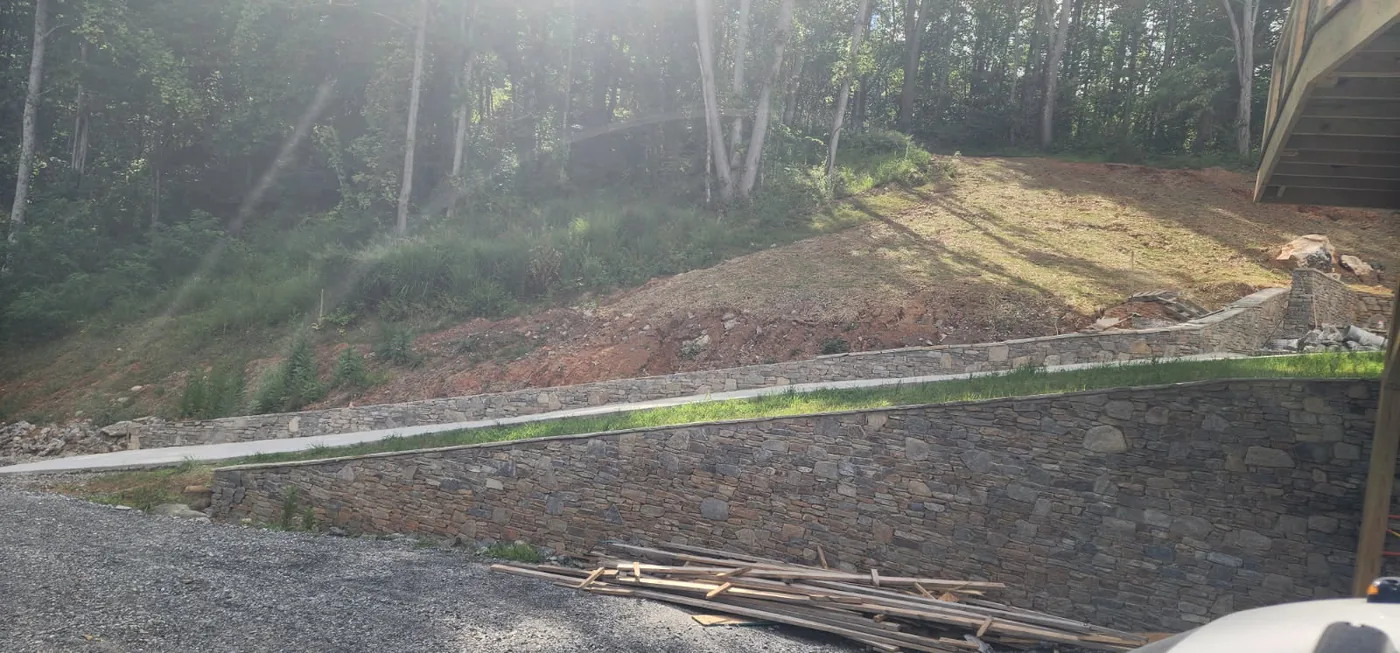
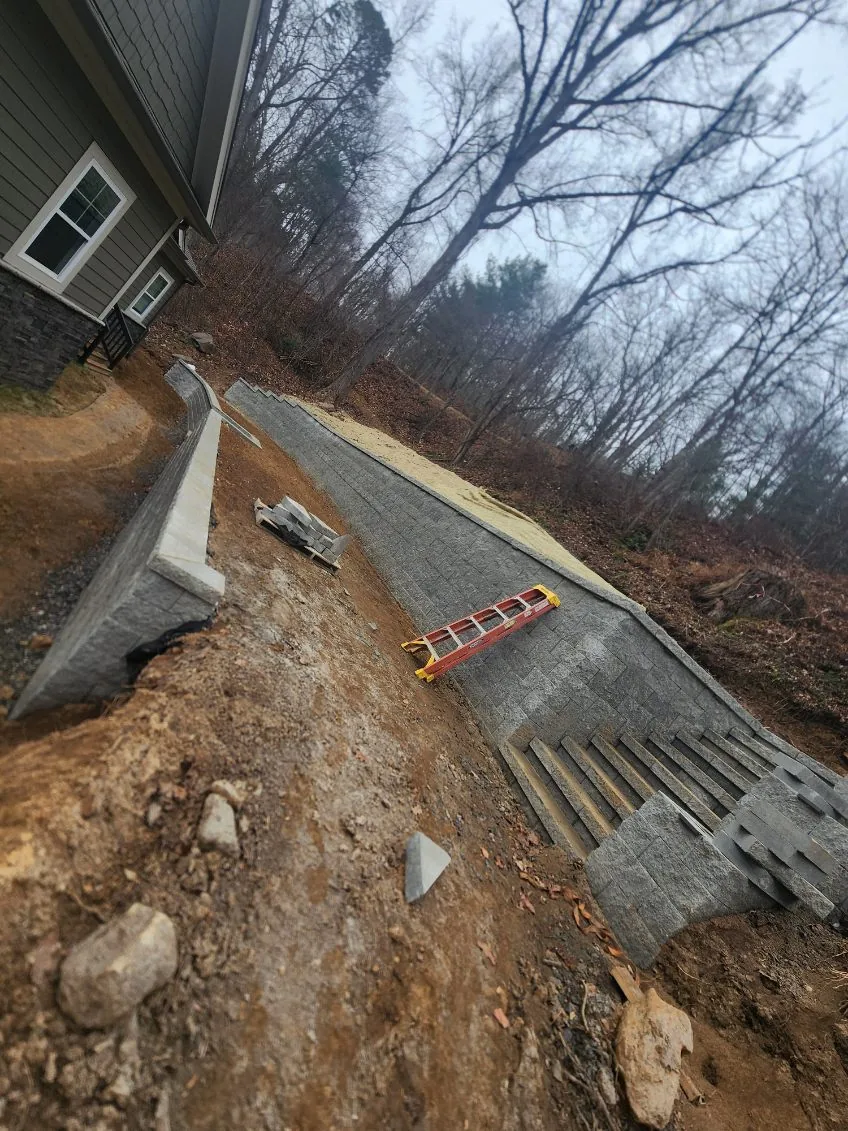
Most Leicester properties sit on ground that falls away from the road, which is exactly why water features look so good here and why they cost more than the catalog photos suggest. When a waterfall build needs a retaining wall to hold a berm, a planting terrace, or the pond edge itself, the wall's height decides who signs off. Under North Carolina's adopted building code, retaining walls that measure over four feet from the bottom of the footing to the top of the wall generally cross into engineered-terrain and permit territory — see the NC Building Code Council for how the residential code treats them. Under four feet, most walls remain a landscape feature. Over four feet, you are usually looking at stamped drawings, a soil review, and an inspection sequence before a single rock gets set.
That line is not bureaucratic trivia. A Leicester hillside wall that fails does not just crack — it lets a pond drain into a neighbor's spring box or a driveway. The engineering letter is cheap insurance compared to regrading a slope twice.
Leicester's terrain makes that four-foot threshold show up on almost every pond build. Lots off New Leicester Highway often drop eight to fifteen feet from the house pad to the lower property line, and a pond that looks level in the design sketch suddenly needs a wall to hold the downhill edge. On Sandy Mush Road, the grade can be steeper and the soil heavier — more clay, slower drainage — which means the footing depth and the wall's embedment matter as much as the face height. A wall that measures three feet ten inches from footing to cap stays in landscape territory. Add six inches of capstone and a decorative course, and you are over the line.
What stone waterfalls and ponds cost in this county
Buncombe County pricing tracks rock tonnage, haul distance, and how much earth has to move. Leicester sits close enough to local quarry sources that material is not the pain point — access and slope are. A narrow gravel drive off a switchback adds pump-and-carry labor that a flat Weaverville lot never sees. The table below shows honest regional bands; see the full Buncombe County retaining wall cost breakdown for line-item detail on the wall side of any build.
| Scope | Typical range |
|---|---|
| Small bubbling rock or single-drop feature, existing grade | $4,500–$8,000 |
| Pondless waterfall, 6–10 ft drop, boulder-lined | $9,000–$18,000 |
| Lined koi or ecosystem pond with waterfall return | $12,000–$28,000 |
| Retaining wall under 4 ft, boulder or block | $45–$85 per sq ft of face |
| Engineered wall over 4 ft, including drawings | Quoted per plan, typically +$2,500–$6,000 in design and inspection costs |
| Pump vault, electrical, and liner replacement on an existing feature | $1,800–$6,500 |
Treat any Leicester bid that ignores slope access or wall height as incomplete rather than cheap. The crews that survive here price the hillside honestly.
Rock tonnage is what separates a Leicester quote from a flatland quote. A pondless waterfall with a six-foot drop might use eight to twelve tons of boulder on a gentle grade. On a Leicester slope that needs switchback access and a series of stacked drops, the same visual result can take fifteen to twenty tons, because you are building the terrain the water falls over, not just placing rocks on top of it. Haul distance from the quarry is short, but every ton still has to come off the truck and up the hill by machine or by hand.
Electrical is the other line item that catches homeowners off guard. A permanent pump circuit needs a trench, conduit, and a licensed electrician, and on a Leicester hillside that trench may run seventy or eighty feet from the panel to the pump vault. That is a few thousand dollars of work that a plug-in cord hides until the first freeze. Budget it up front, not after the pond is running.
Water, electricity, and the permits nobody mentions up front
A waterfall needs a pump, and a pump needs power. In North Carolina, electrical work tied to a permanent outdoor circuit falls under state licensing rules — check contractor standing through the NC Licensing Board for General Contractors, and confirm any pump or lighting circuit is run by a licensed electrician. A plug-in cord draped across a slope is the tell of a build that will fail its first hard freeze.
Water is the other quiet issue. Filling a pond from a private well in Leicester pulls from the same aquifer the house depends on, and a leaky liner does not announce itself until the well pump starts cycling at night. The EPA maintains guidance on water-efficient landscaping and pond management worth reading before you size a feature. If the pond will hold fish, plan for aeration and overflow from day one — not after the first summer algae bloom.
Most Leicester lots rely on private wells and septic systems, which changes the calculus on pond placement. A pond that sits uphill from the drain field can saturate the soil and shorten the life of the system. A pond that sits uphill from the wellhead invites surface water into the casing if the liner fails. Both are avoidable with a simple site plan, but neither is obvious from the deck. Ask the builder where the well and the septic field are before the first shovel goes in. The answer should shape where the pond goes, not the other way around.
If the feature sits near a property line, the wall's footing may also need a setback from the neighbor's grade. Buncombe County does not publish a single fixed setback for landscape walls, so the safe move is to keep the footing well inside your own line and to document the existing grade before construction. That documentation protects you if a neighbor claims the wall changed drainage on their side. It is not glamorous work, but it is the kind of record that keeps a good build out of a bad conversation.
Why Leicester lots show storm history on the stone
Federal disaster records tell the story of every hillside water feature in this county: 19 declared events touch Buncombe (1973-2026), and the overwhelming majority are storm and flood family. That history is why overflow routing matters more here than in flat country. A waterfall built without a planned path for extreme runoff becomes a waterfall running through the basement the next time the mountain drains.
The right design assumes the storm, not the average Tuesday. Grade the spillway away from the house, keep the pond below the wellhead, and give the feature a way to shed a hundred-year rain without scouring the bank. The stone waterfalls and ponds overview covers how a properly sequenced build handles that drainage from the first shovel.
Leicester's storm pattern is not subtle. Summer thunderstorms drop heavy rain in short bursts, and the clay soils on many slopes shed water fast. A pond that is designed for a gentle overflow will not survive a two-inch rain in twenty minutes. The spillway needs to be sized for the worst storm the site will see, and it needs to discharge somewhere that will not erode back toward the pond. On steep lots, that often means a rock-lined channel that carries water to a lower drainage swale, not just a pipe that dumps behind the wall.
Older Leicester properties sometimes show the evidence of past water problems: washed-out gravel drives, exposed footing on old walls, spring seeps that appear after wet winters. Those are not reasons to avoid a water feature. They are clues about where water wants to go, and a good builder reads them before designing. If a seep already crosses the property, the pond should be placed to work with it, not against it.
Choosing a builder who has actually worked a hillside
Ask three questions of any Leicester stone contractor. First, how many walls over four feet have they built, and who stamped the drawings — the answer reveals whether they have crossed the engineered line or just worked under it. Second, what happens to the pond overflow in a heavy rain, because the answer to that question separates a designer from a stacker. Third, whether they coordinate the electrician and the excavator themselves or hand you a list. The Leicester retaining wall contractors guide covers how to screen crews on the wall side of the same build.
Leicester is small enough that references are checkable. Drive past a finished feature after a storm and look at the spillway — that inspection tells you more than any portfolio photo.
One more thing worth checking: how the builder handles rock selection. Leicester-area stone comes in a range of colors and shapes, and a crew that knows the local quarries can match the feature to the existing landscape instead of dropping in a load of gray boulders that look like they arrived from another state. That is not a technical requirement, but it is the difference between a water feature that looks native to the hillside and one that looks installed. Ask to see a recent project in person, ideally one that has been through a full winter.