The walls that hold up Laurel Park
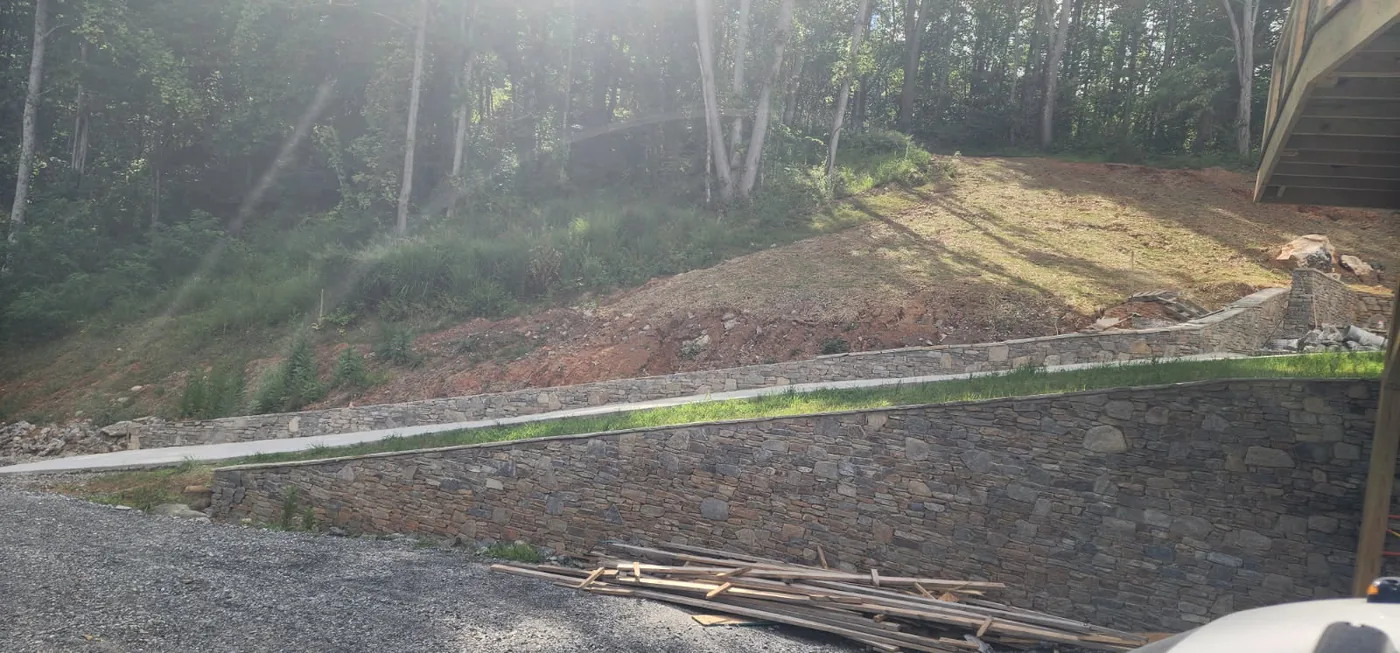
Drive any of the narrow, switchbacking lanes off Laurel Park Highway and you'll see them: dry-laid fieldstone terraces from the 1920s and 30s, timber crib walls that have been rotting quietly since the 80s, and the occasional boulder wall built when a builder had more rock than budget. Laurel Park is a hillside town in Henderson County, and almost every property here is either retaining a slope or being retained by one. When a homeowner calls about a leaning wall, the first question is almost never 'can we fix it' but 'which of these materials did the last guy use, and does it match how the wall actually carries load.'
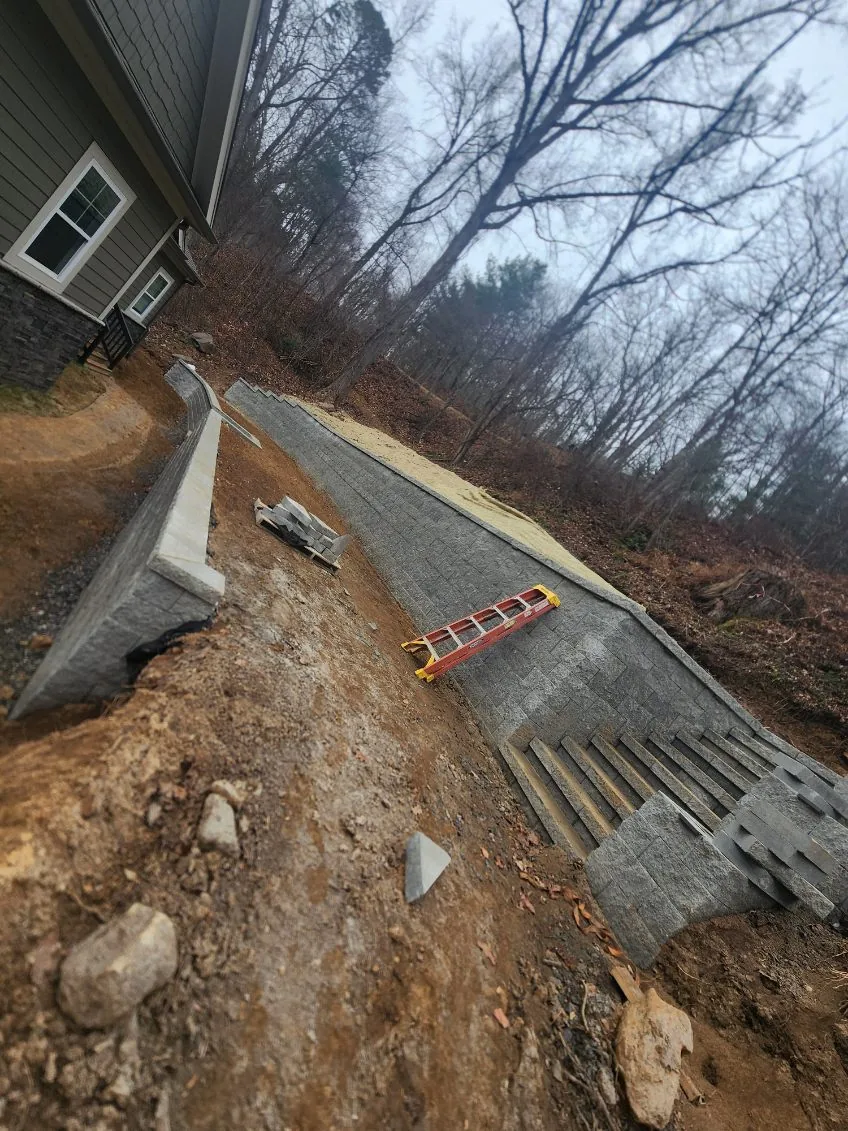
Fieldstone and boulder walls fail from water and root pressure; timber fails from rot at the soil line; segmental block fails from missing geogrid or a base that was never compacted. Each one has a different honest repair, and each one has a different honest price. The retaining wall repair overview walks through the general scope, but the Laurel Park version is specific enough to warrant its own page.
Slope, soil, and why Henderson County is not flatland
Henderson County sits in the Blue Ridge foothills, and the town of Laurel Park sits on some of the steeper residential ground in it. That matters for walls in two ways. First, the soil is often a clay-and-rock mix that drains poorly when it's wet and shifts when it's dry, which means hydrostatic pressure behind a wall is a real design load, not a footnote. Second, the town's older walls were frequently built before modern drainage detailing was standard, so a repair often means adding drainage that was never there in the first place.
North Carolina's residential code treats retaining walls above a certain height as structures requiring engineering, and the NC Building Code Council publishes the adopted amendments that govern how that's applied locally. For anything tall, tied, or surcharging a driveway, the rule of thumb in this county is simple: get the engineer's letter before you get the quote. The Henderson County cost breakdown shows how that line item lands in real bids.
Scope and typical price ranges
Prices below are honest regional bands for Laurel Park and the surrounding Henderson County hills. They assume a wall that is still standing and repairable; a wall that has already failed into the slope is a different conversation. Angled lots, limited equipment access, and mature root systems all push toward the top of a band.
| Scope | Typical range |
|---|---|
| Drainage retrofit (weep holes, gravel, outlet) | $900 – $2,500 |
| Section rebuild, block or fieldstone (under 4 ft) | $1,500 – $4,500 |
| Timber wall replacement with segmental block | $3,500 – $9,000 |
| Boulder wall refacing or re-lay | $3,000 – $8,000 |
| Engineered wall with geogrid and footings (4–6 ft) | $6,000 – $12,000+ |
| Full replacement, tall or surcharged wall | $12,000 – $30,000+ |
The pattern to notice: most Laurel Park repairs are drainage plus a section, not a whole new wall. A homeowner told otherwise should ask for the failure mode in writing. For walls where the fix is really a rebuild, the Laurel Park contractor guide covers what to look for in a crew.
What the storm record says about water
Henderson County has seen 16 federally declared disaster events across a 1978-2026 record, and the overwhelming majority are storm, flood, and landslide family events. That history is why wall drainage in this town is not optional. Every big rain event pushes water into slopes that were already saturated, and the walls that fail are usually the ones with no outlet for that water. The U.S. EPA's stormwater guidance at epa.gov explains the general principle: manage where the water goes, or it will manage your wall for you.
Practically, that means a repair proposal that doesn't mention surface grading, gutter discharge, and a daylighted drain outlet is incomplete in this county, no matter how good the stonework looks.
Matching repair to material, not to a brochure
Fieldstone walls in Laurel Park are usually gravity walls: they hold by mass and friction, not by mortar. Repairing one with a bag of mortar and a trowel often makes it worse, because the wall needs to move and drain. Boulder walls are similar but bigger, and the equipment access on these lots is the real cost driver. Timber crib walls are the most common candidates for full replacement, because rot doesn't stop at the exposed face. Segmental block walls are the most predictable to repair, provided the original builder installed geogrid and compacted the base. If you want to compare estimates across multiple crews, the repair hub has a checklist for what each bid should include.
Licensing and when to bring in an engineer
North Carolina requires a licensed general contractor for projects above the state's cost threshold, and the NC Licensing Board for General Contractors maintains the verified license lookup. For retaining walls specifically, the rule that matters most is height: walls over four feet, walls supporting a driveway or structure, and walls on steep slopes generally need an engineer's design in this county. That's not a sales tactic, it's the same threshold the local building department applies when a permit is required. Ask any crew you talk to whether their bid includes engineering and permitting, and treat 'we don't need a permit for that' as a question worth verifying.