Stone that matches Montreat's housing stock and its hillside
Montreat is a town of timber and stone: chestnut-bark cottages built by the conference association a century ago, gabled retreats tucked against the gorge, and a growing number of year-round homes that replaced summer camps. The patios that work here aren't the same as the patios that work on a flat Charlotte cul-de-sac. Fieldstone that came off the property, boulder retaining that doubles as seating, and block-and-timber borders that break up grade changes — these are not style choices. They're responses to a mountain town where a flat yard is a small miracle and the ground behind the house is usually rising.
A patio in Montreat isn't just a paved rectangle. It's a retaining structure, a drainage plan, and a seating arrangement in one, because the grade usually won't let it be anything else. Homeowners who try to price a patio the flatland way end up surprised by the grading line, and homeowners who plan for the slope up front end up with patios that survive a wet spring.
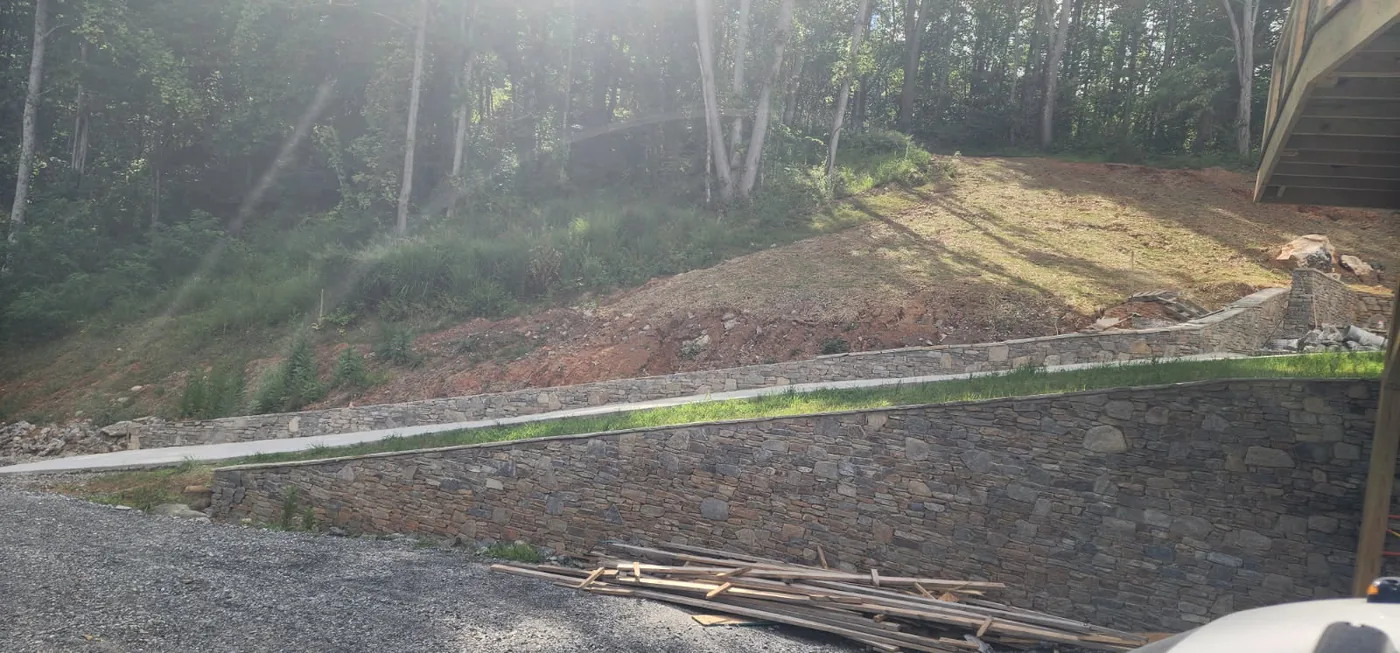
Walk through Montreat's older sections and you'll notice the stonework that has lasted: rough fieldstone foundations, boulder steps up to front doors, dry-laid terrace walls that have settled into the hillside rather than fought it. That's the visual grammar the town already speaks. A patio that ignores it, whether it's a pallet of cut bluestone on a flat pad or a paver grid borrowed from a suburban subdivision, reads as imported. The patios that look like they belong here mix stone sizes, follow the contour instead of flattening it, and use the uphill grade as a natural backrest. That's not nostalgia. It's what actually holds up when the ground moves a little every freeze-thaw cycle.
What Montreat patios cost, line by line
Buncombe County pricing for hardscape is set by access, ground, and stone choice, not by square footage alone. The table below reflects typical regional bands; see the Buncombe County retaining and hardscape cost breakdown for how those numbers move once walls and drainage enter the scope.
| Scope | Typical installed range |
|---|---|
| Small fieldstone patio, simple grade, 120–200 sq ft | $4,500–$7,500 |
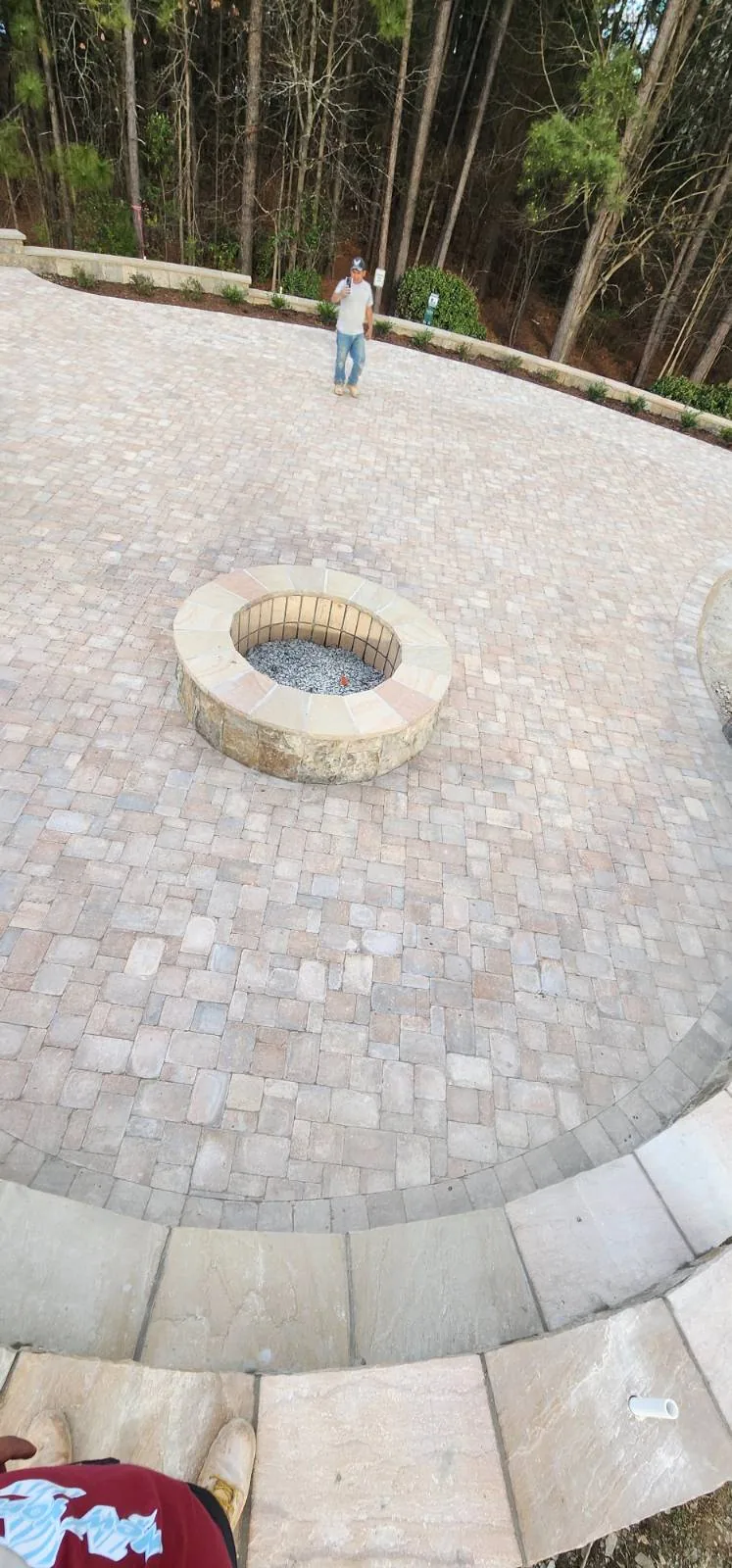
| Full flagstone patio, cut stone, 300–500 sq ft | $9,000–$18,000 |
| Boulder border or boulder seating integrated into patio | $1,800–$5,500 |
| Block retaining wall to create patio grade | $3,200–$9,000 |
| Timber-edged patio, budget option | $2,800–$6,500 |
| Drainage correction, grading, and sub-base prep | $2,000–$6,000 |
Two honest caveats. First, truck access in the Montreat area can add cost on any job — a boulder a machine can set from the road is one price, and the same boulder walked in by hand is another. Second, the federal disaster record explains why drainage is not optional here: 19 declared events touch this county (1973-2026), predominantly storm and flood family. A patio that traps water against a foundation becomes a foundation problem, not just an ugly one.
The line items that surprise out-of-county homeowners most are grading and hauling. In Buncombe County, moving a few yards of soil off a tight hillside lot isn't a dump-truck afternoon; it's often a machine working carefully around trees, roots, and the neighbor's property line, then a smaller machine or hand crew moving stone the last hundred feet. That's why two bids for the same sketch can differ by several thousand dollars: same drawing, different assumptions about what the ground and the driveway will actually allow. When you compare quotes, compare those two line items specifically, because the stone price is the easy part to see and the access cost is the easy part to hide.
Materials that hold up against a mountain town's wet side
Each material carries its own maintenance rhythm. Fieldstone patios tend to settle into place and stay; joints may need occasional re-sanding or moss management if shade is heavy, which is common on the north side of a Montreat ridge. Cut flagstone is flatter underfoot and easier to clear of debris, but it shows chips if it's set on a base that isn't fully compacted. Boulder work is essentially permanent, which is both the appeal and the reason it's worth hiring for the setting, not just the stone. Timber edging is the fastest way to terrace a small yard on a budget; expect to replace it eventually, and plan the patio's shape so that replacing the timber doesn't disturb the stone above it. None of this is exotic, but it's why the same square footage can produce very different patios depending on which material the site and the budget actually support.
Sequence: grade, drainage, stone, then everything else
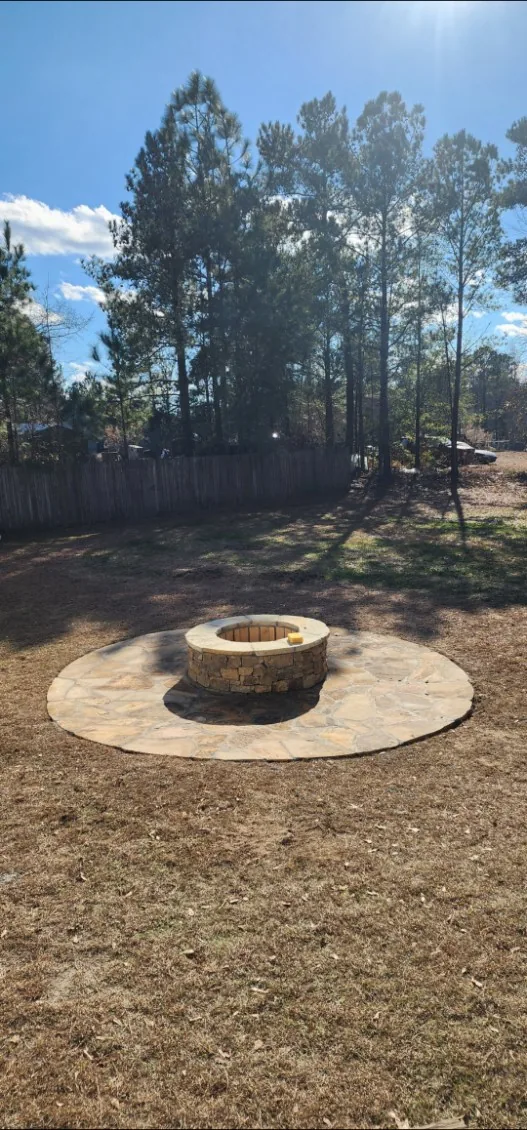
The order of operations on a Montreat patio is not negotiable, and it's the single biggest predictor of how the job turns out. Grade first: figure out where water wants to go and make sure it can. Drainage second: sub-surface and surface drainage both, sized for the actual uphill drainage area, not just the patio itself. Stone third: set on a compacted, drained base. Everything else — plantings, lighting, a fire feature — last. Skipping ahead to the pretty parts is how a patio becomes a mud pit by the following spring.
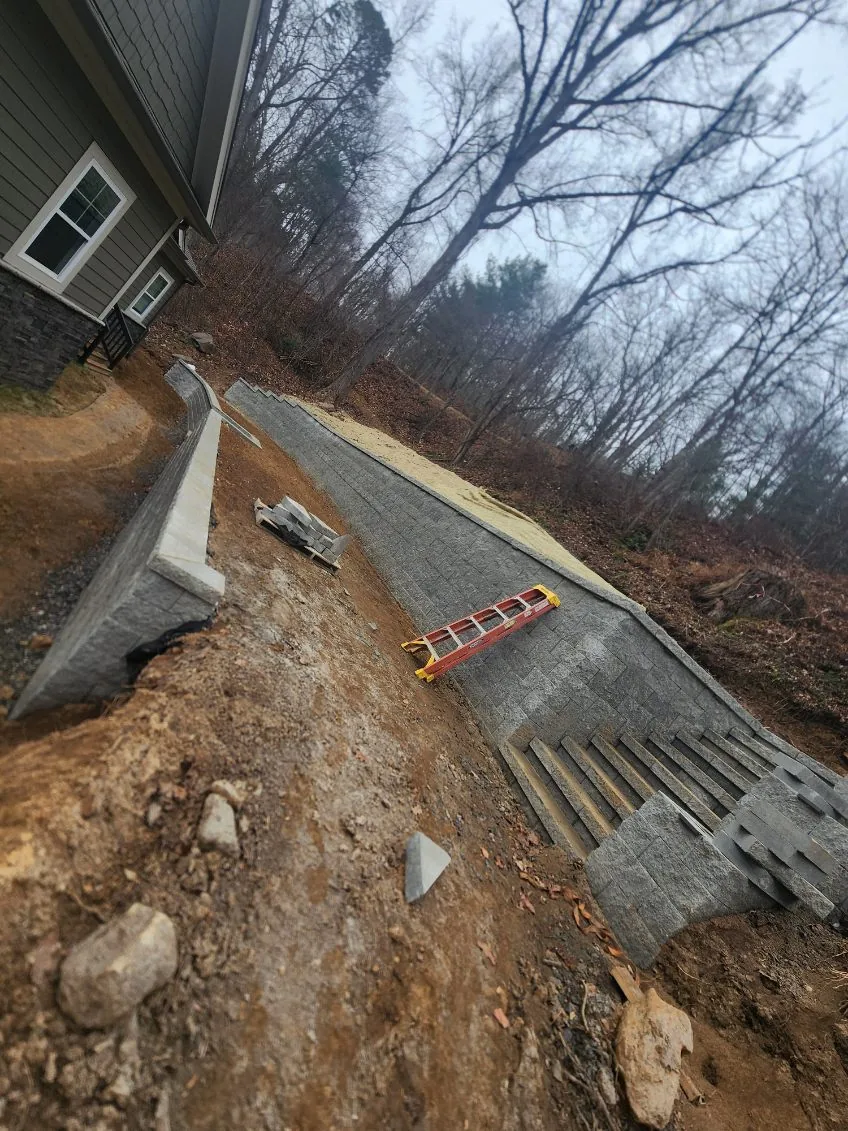
If the patio needs a retaining wall to exist at all, that wall is now the project and the patio is the finish. The wall has to be designed for the soil behind it, not just the stone in front of it. That's the difference between a hardscape contractor and a wall contractor, and Montreat sees both. When the wall is the defining feature of the job, a crew that knows the terrain matters more than a crew that knows the stone; the Montreat retaining wall contractor guide covers what to look for.
There's a reason this sequence matters more here than in flat country. The uphill drainage area behind a Montreat patio can be an entire wooded slope, and water that runs off that slope doesn't politely stop at the patio edge. If the patio's base isn't designed to pass water through and away, it will hold it, and the retaining wall holding back the slope will start feeling hydrostatic pressure it wasn't built for. That's how walls lean, bulge, and eventually fail. Doing the work in order — and budgeting for drainage as a real line item rather than a leftover — is the difference between a patio you stop thinking about and a patio you have to call someone about. The flagstone patio overview walks through the material and base choices in more depth if you're still deciding on scope.
Getting a real bid in this market
Three checks before signing anything. Ask whether the crew has set stone on a grade steeper than the patio itself — because that's the actual skill being bought. Ask how they handle the uphill neighbor's runoff; the answer tells you whether they're thinking about the patio or the property. And ask whether the job crosses the threshold that requires a licensed general contractor under North Carolina Licensing Board for General Contractors rules, which matters once retaining walls and drainage get into the multi-thousand-dollar range. The flagstone patio overview covers the material choices in more depth if you're still deciding what you want.
Two more things worth asking on a Montreat job specifically. First, how will the crew get material to the site, and what happens to the yard, the trees, and the driveway during access? Tight mountain lots don't forgive a careless skid-steer, and root damage on a wooded slope can destabilize more than it looks like it will. Second, how is site cleanup and erosion control handled after the work — silt fencing, seed, straw, or whatever the site actually needs — because bare graded soil on a slope stays put only until the next hard rain. None of these questions are hostile. Contractors who do this work well answer them quickly and specifically, and that's usually the best signal you'll get before the first stone is set. If you'd rather start with the numbers, the county cost breakdown linked above is the honest place to begin, and scheduling a site walk gives you a real bid instead of a phone estimate.