Why Fairview yards don't lay flat like Asheville's
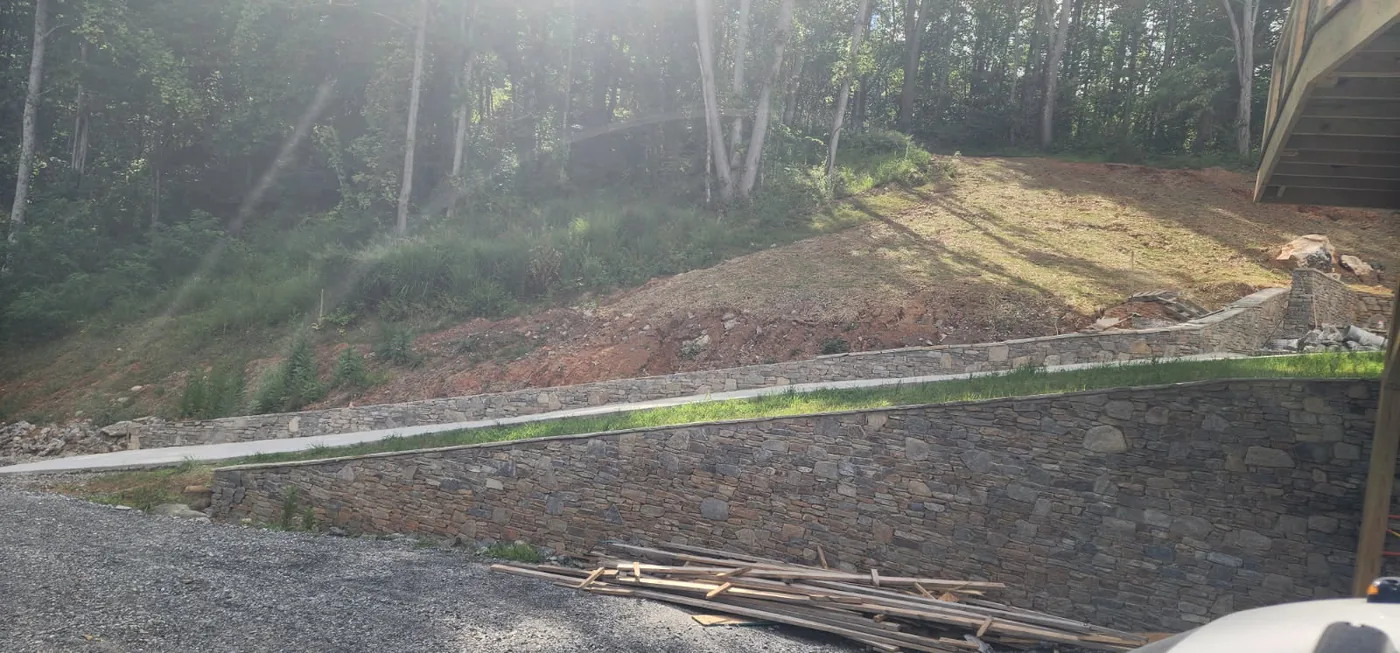
Drive out past the Reynolds schools and the terrain changes fast: Fairview’s residential lots climb, drop, and roll in ways that city lots inside Asheville’s grid rarely do. A half-acre off Cane Creek or Garren Creek is more likely a slope cut into the hillside with a house pad carved out of it than a squared-off suburban yard. That shape is the whole job. There is almost never a big flat pad where a patio obviously wants to go; you either find the one bench in the grade, build one, or terrace a couple of levels and connect them.
The ground underneath matters just as much. Fairview is clay and weathered rock, often shallow, sitting on schist and gneiss that laughs at a shovel. Digging a proper base prep here means a machine, and it means the yard you see before excavation may not be the yard the flagstone actually sits on. Drainage runs downhill everywhere, which is good, but only if you give it a path away from the house rather than under the new patio.
Length, price, and finding the shape first
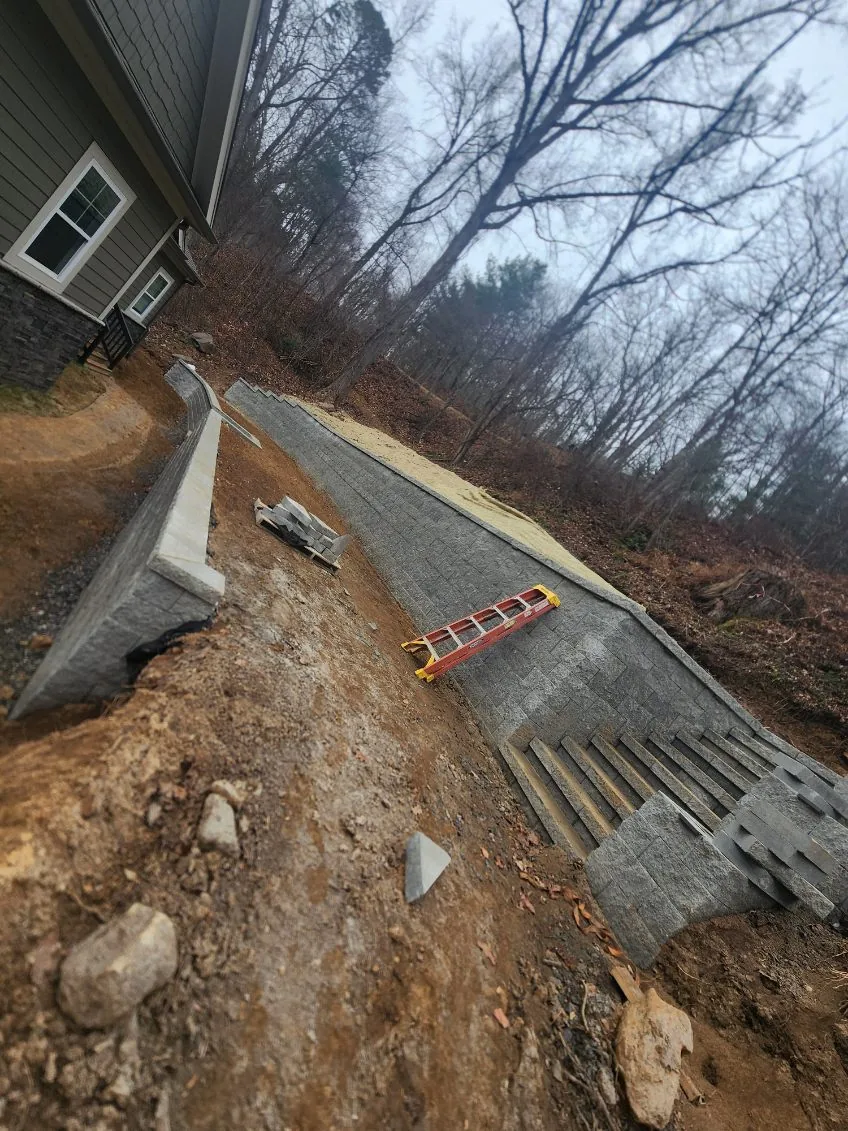
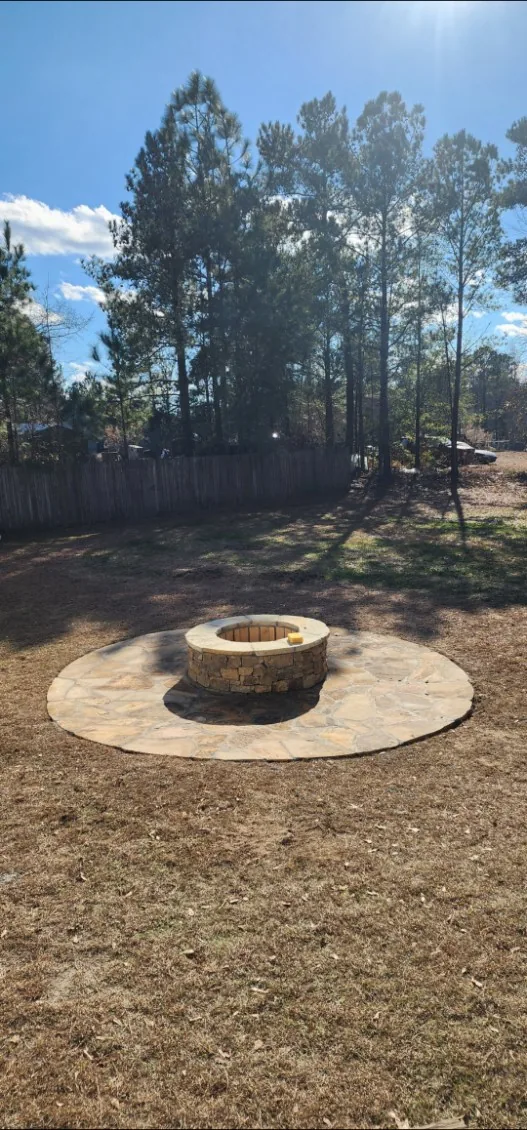
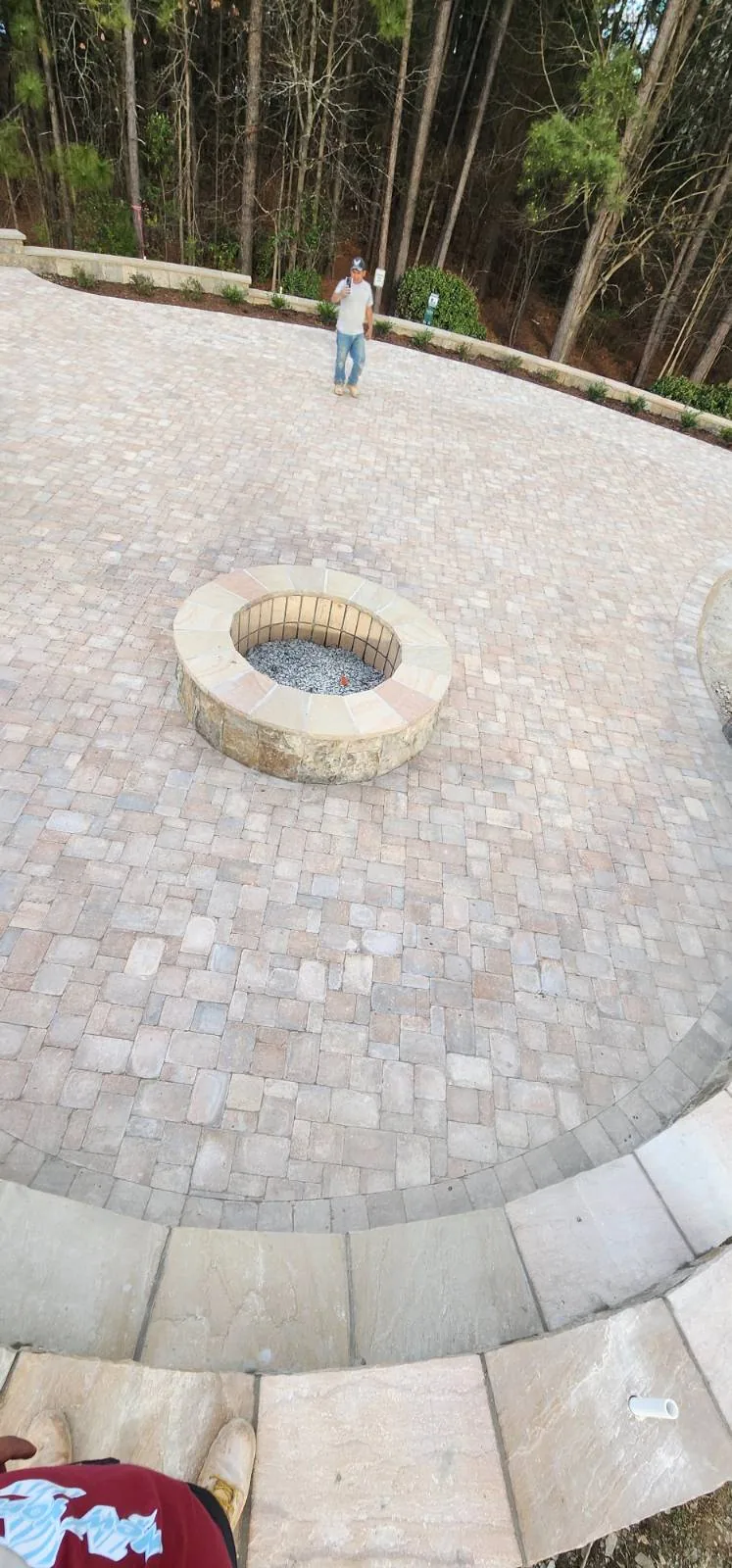
To lay flagstone over deep clay on a hillside and leave no dirt path where you walk, you need hardscape, drainage, and possibly steps in the same sentence. Fairview patios are usually one of three shapes: a single bench level, a slight two-tier set with stone steps, or a larger patio combined with a fire feature or seat wall on the downhill side. Where steps and retaining are involved, the Fairview wall and hardscape routine is worth understanding because walls hold patios in shape as much as they hold banks.
Flagstone is set with a mortar bed or dry-set on a compacted aggregate base. On a slope, the base is the difference between stone that moves in three years and stone that doesn't. The honest scoping question is not “how many square feet” but “how deep is the base, and where does the water go.” Get the second answer in writing before stone arrives.
The Fairview scope vs. price table
Banded as installed cost for a Fairview hillside yard, including the base work, not just stone. Numbers shift with access, stone choice, and how much grade correction the lot demands. A patio that’s a short run up from a driveway costs less than one that requires machinery across a steep bank.
| Scope | Typical installed range | What drives the number |
|---|---|---|
| Small single-bench flagstone patio, easy access | $4,500-$8,000 | Square footage, shallow base, minimal grade work |
| Mid-size patio with modest base and drainage | $8,000-$14,000 | Excavation depth, drain path away from house |
| Tiered patio with steps and a low seat wall | $12,000-$18,000 | Second level, stone steps, wall on downhill edge |
| Patio plus fire feature or seat wall | $14,000-$22,000+ | Feature scope, stone size, crew access |
Stone selection tilts the table more in Fairview than in flat towns: irregular flagstone costs less than large-format cut, but irregular shapes on a slope eat extra labor in fitting. See how the wider county talks about Buncombe County wall and patio costs for the base-work markup that hillside lots make normal.
Water, storms, and why drainage gets a line item
The federal disaster record explains a lot of Fairview hardscape calls: 19 declared events touch this county (1973-2026), overwhelmingly storm and flood family. Every one of them sent water down hillsides that were graded when the house was built and never re-graded since. A patio that ignores that water path is not a patio; it's a small dam. Drainage and grading around the house is a first-class requirement, and the International Code Council family of codes treats stormwater and site drainage with real seriousness for exactly this reason.
So before stone, ask where the uphill runoff goes, whether gutters are piped well away from the foundation, and whether the patio edge has a path for water to escape rather than pool. On Fairview’s clay, ponding on a patio is slow to clear and quick to heave. That is why a real scope lists drain pipe, gravel, and outlet, not just flagstone.
Checking the outfit before anyone digs
Three Fairview-specific checks: ask whether the crew works hillside base prep and drainage as a rule, not an add-on; ask who handles the retaining or step work if the grade requires it (that is a separate skill set and sometimes a separate license); and ask for the base depth and drain path in writing. North Carolina’s Licensing Board for General Contractors governs when a hardscape project crosses into general-contracting territory, so a reputable outfit knows the threshold and will say so plainly.
Also confirm how they protect the yard during machine access: rutted, ripped-up side yards are a common complaint when a crew scopes the stone but not the route the equipment takes to reach it. On a Fairview slope, the access plan is part of the price.
What good flagstone work looks like a year later
After a full mountain winter and a wet spring, a properly built Fairview patio shows no stone that has settled into a low spot, no sand or grout joints washed out at the uphill edge, no puddle that stands for days, and no step that has shifted apart from its neighbor. If a stone rocks underfoot or water sits after a hard rain, the base or the drainage was scoped too thin, and that is a problem to solve before freeze-thaw pries it further apart.
If you are comparing a Fairview bid against one from a crew more used to Asheville's flatter lots, the honest difference is usually in the numbers you cannot see in the finished photo: excavation depth, drain, and grade correction. That is where the money goes on these hillsides, and it is the part that decides whether the patio is still sitting true in five years. Ready for a real number? Start with the details on our flagstone patio page.