On a Maggie Valley hillside, every walkway is a drainage plan first
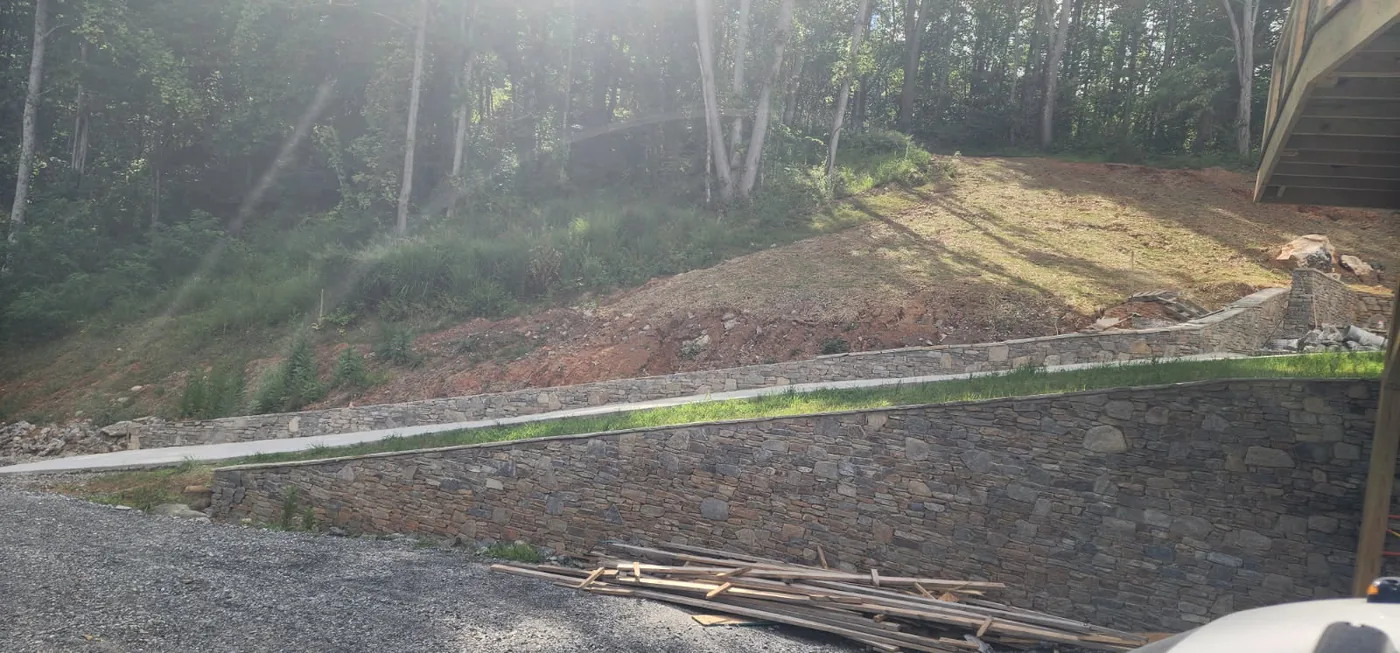
Drive the valley roads off Soco or Fie Top and you'll see the same story in stone: steps that are still crisp after twenty winters, and steps ten feet away that have heaved, splayed, and started sliding downhill. The difference is rarely the stone. It's where the water went. Lots here are cut into slope, so the uphill side delivers runoff to the walkway, cloudbursts dump it fast, and the freeze-thaw cycles of a 3,500-foot elevation winter work at the joints until mortar, sand, and base all give up.
A stone step that lasts is seated below the frost line on compacted, free-draining base, and pitched so the tread sheds forward without ponding. More importantly, the assembly includes somewhere for water to go: a gravel-filled trench, a French drain daylighting downslope, or a grade swale that steers runoff around the stair. If a proposal only describes stone — no base specs, no drainage callout, no plan for the uphill neighbor's water — it's half a job, no matter how good the mason's hand is.
What these builds actually cost in Haywood County
Pricing here tracks the terrain more than the stone. A short four-rise run from a flat driveway is a very different business than a fifteen-rise switchback into a hillside where every material is hand-carried. The table below shows honest regional bands for principal scopes; drainage line items and access conditions are the usual movers. For how site work prices out on cut lots, our retaining wall cost guide for Haywood County is the companion read.
| Scope | Typical price range |
|---|---|
| Repointing and resetting existing stone steps | $450-$1,800 |
| Short stone walkway, 25-40 linear feet, dry-laid or mortared | $1,800-$4,500 |
| Garden stair, 4-8 rises, wide treads, natural stone | $2,200-$5,500 |
| Hillside entry stair, engineered base, drainage included | $4,000-$9,500 |
| Full walkway plus steps plus drainage retrofit | $6,500-$14,000 |
Step-supply is the wildcard: quarried Tennessee and local fieldstone have both crept up, and a client who wants full-depth cut treads pays for it. Ranges are ranges because two hillside lots on the same road can differ by thousands based on access alone.
Stone choice in a freeze-thaw climate
Not every stone that photograph wells on a brochure survives Maggie Valley. Flagstone laid tight with mortar over a moving base will crack its joints the first hard January. Dense, freeze-stable stone set on a proper aggregate base and pointed with a flexible mortar handles winter far better. The details matter more than the catalog, which is why the ICC family of model codes that North Carolina adopts addresses exterior stair rise, tread, and guard criteria the same way it addresses interior stairs — an exterior garden stair with three or more rises is a regulated stair in most interpretations, and that is a good thing for anyone who wants it standing in ten years.
Where the walkway joins a deck, porch, or stoop, the transition detail is where water gets in. A miscalculated final rise, missing flashing at the ledger, or a tread pitched the wrong direction sends water into what should be a dry assembly. For any structural scope that crosses into a permitted project threshold, the NC Licensing Board for General Contractors is the authority on who has to be licensed to build what.
Drainage details we have to ask about first
Federal disaster history in Haywood is largely a storm and flood story: 19 federally declared events have touched this county across 1973-2026. That record is why a good walkway plan starts with a water question, not a stone sample. Where does the gutters' discharge go? Where does the upslope neighbor's runoff cross your grade? Has the slope above the stair ever cut a channel through the yard after a summer thunderstorm? If the answer to any of those is uncertain, the drainage scope should come before the treads, not after.
The other local reality is access. On narrow mountain driveways and steep side yards, material moves by wheelbarrow, dolly, and sometimes by hand, not by machine. That labor cost is real, and it is honest to quote it up front. It is also why two seemingly identical stairs on the same ridge price differently — ask any crew that actually works off-road lots and they will tell you the same.
Sequencing the job with the rest of the site
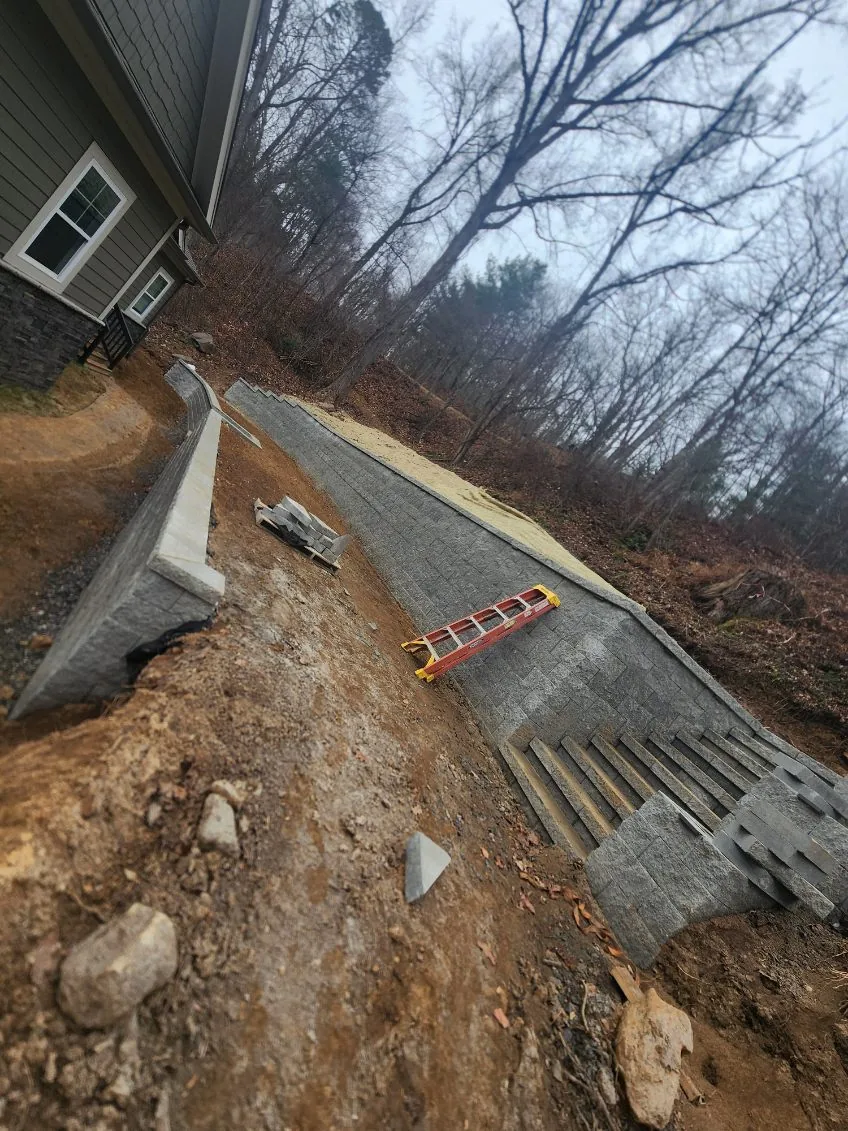
Walkways and stairs rarely exist alone. If a grade change is also holding back a planting bed, a parking pad, or a hillside behind the house, then a retaining wall and the stair are the same conversation, and building them in the wrong order wastes one or both. Our Maggie Valley retaining wall contractors guide covers how those two scopes get planned together. And if the stairs are part of a broader exterior hardscape, the stone steps and walkways overview shows the full scope menu and what each addresses.
One last local note: build season here runs April through October for the finishing trades, with a wet stretch in late winter. If your stairs are part of a landscape project with other moving pieces, book the stonework early in that window and let the earthwork and grading dry out before anyone cuts stone. Good stairs are patient work. Rushing the base is how hillside stone becomes next spring's repair call.