The number that moves first here is haul, not material
Most hardscape bids in Buncombe County don't fail on the price of pavers. They fail on how the material actually gets to the backyard. A house off a switchback drive in the county, with a 25-foot drop from the road to the patio grade, changes the job more than any design choice. A dump truck that can't back to the work means a conveyor, a skid steer shuttling loads from a staging point, or a crew carrying base gravel by hand. Every one of those options adds labor hours, and labor is the majority of what you're paying for.
Distance to the quarry compounds it. Mountain terrain means the aggregate for your base course doesn't come from next door — it comes off a highway haul that gets priced into the ton. When your contractor's estimate lists base depth, compaction, and equipment staging as separate line items instead of one lump "patio," that's a bid that actually read your site. Start from an honest look at what your grade can hold before you pick a stone, because the grade decides what's buildable first and what's pretty second.
What changes the scope on a western North Carolina slope
Flat-lot hardscaping is a commodity. Slope hardscaping is engineering with a landscape budget. Three things show up in nearly every difficult Asheville-area yard:
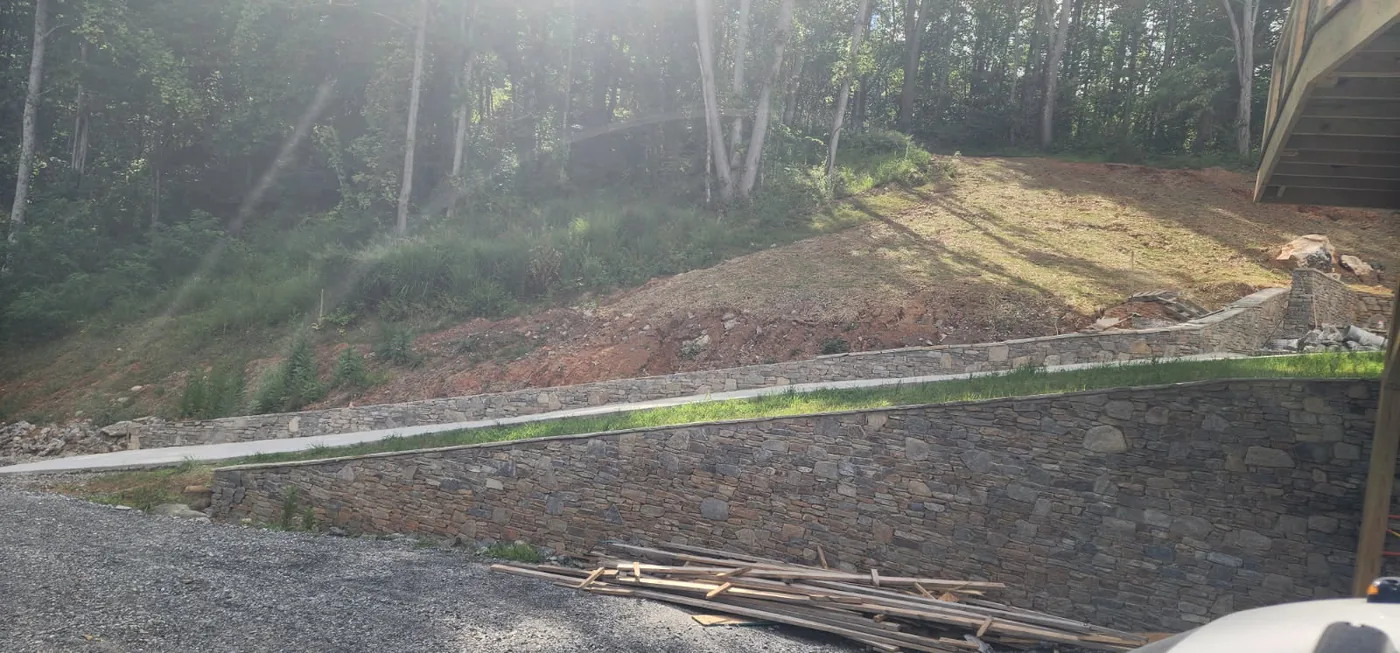
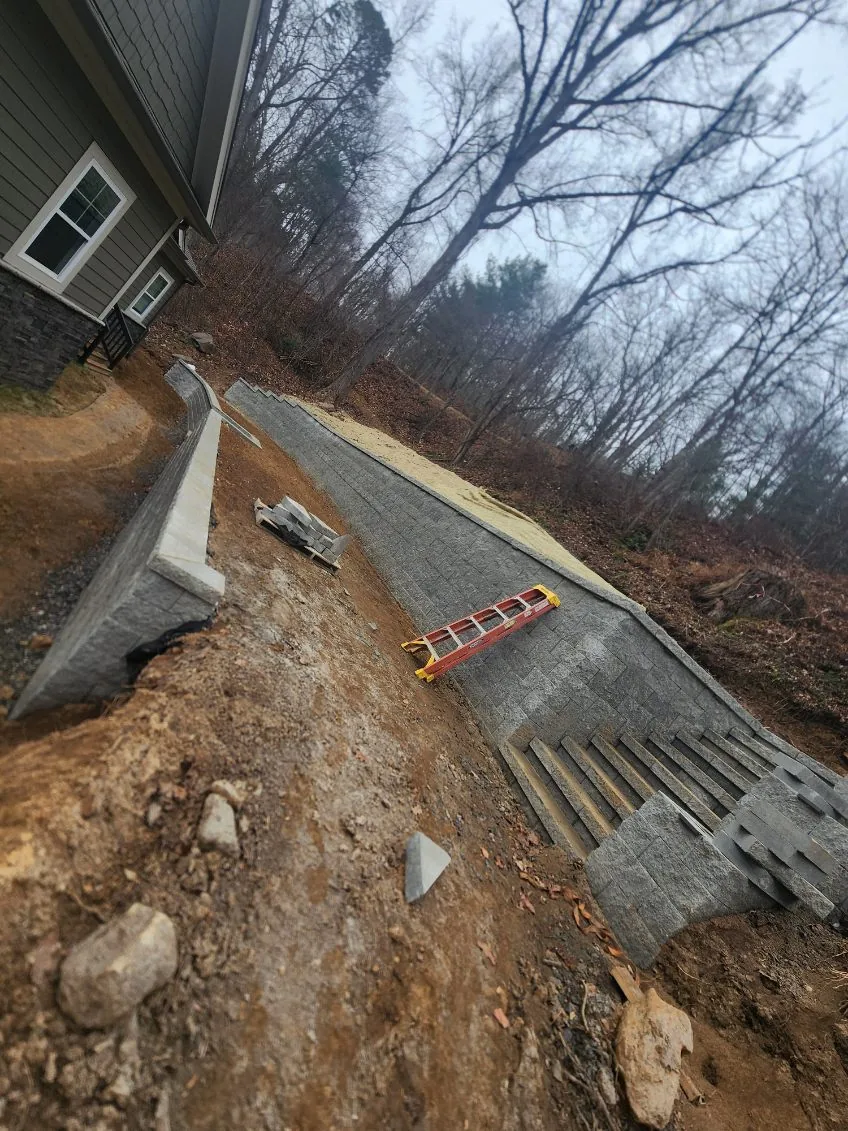
- Terracing instead of one big slab. A single 600-square-foot patio on a 20% grade needs a tall wall on the downhill side. Two smaller terraced patios with a step between them often use less wall and less fill.
- Drainage behind every wall. Our rainfall is not gentle, and a wall that holds back soil without a gravel and drain system behind it is a wall with a shelf life. Surface water has to be directed somewhere that isn't your neighbor's property.
- Machine access, honestly measured. A 36-inch gate rules out most ride-on equipment. That's not a dealbreaker, it's a line item — and it belongs in the bid, not in a change order.
If your site plan includes anything blocking, raising or redirecting water, it's worth knowing where the rules sit before excavation. The NC Office of State Fire Marshal publishes the state's adopted code set, and grading, retaining and drainage provisions are the ones that apply to most residential hardscape work.
Typical regional ranges by scope
These are installed ranges for the Asheville area, material and labor together. They are ranges because the same square footage can differ by thousands depending on access and how much base has to be built.
| Scope | Typical installed range | What drives the spread |
|---|---|---|
| Paver patio, walk-out grade | $18–$28 / sq ft | Base depth, edge restraint, drainage away from house |
| Paver patio, terraced or steep access | $28–$45 / sq ft | Machinery size, shuttling material, retaining on two sides |
| Segmental retaining wall | $45–$85 / face ft | Wall height, geogrid requirements, block choice |
| Natural stone wall (dry or mortared) | $60–$110 / face ft | Stone sourcing, mortar detail, cap and footing |
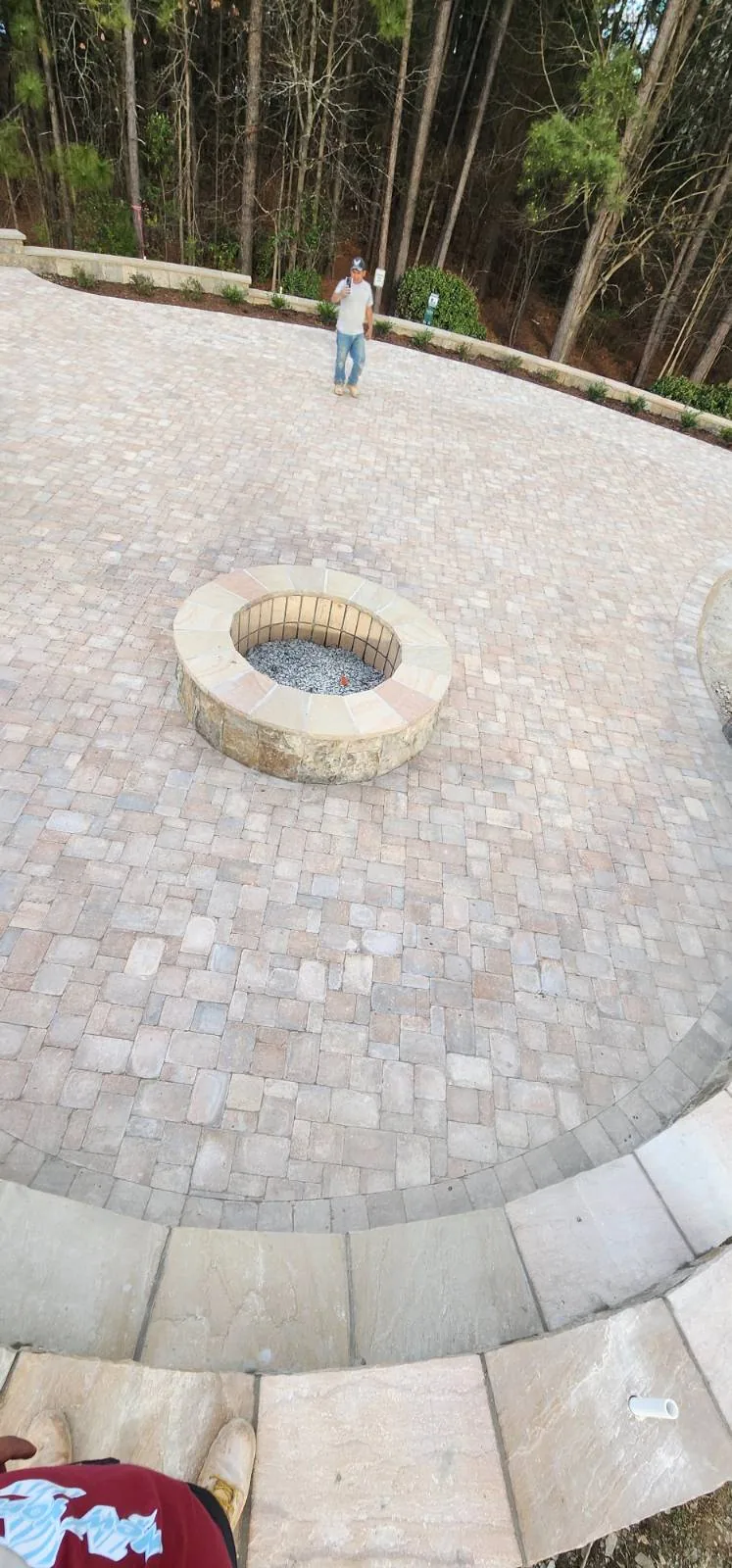
| Paver driveway or apron | $14–$30 / sq ft | Total tonnage, subgrade repair, slope of the drive |
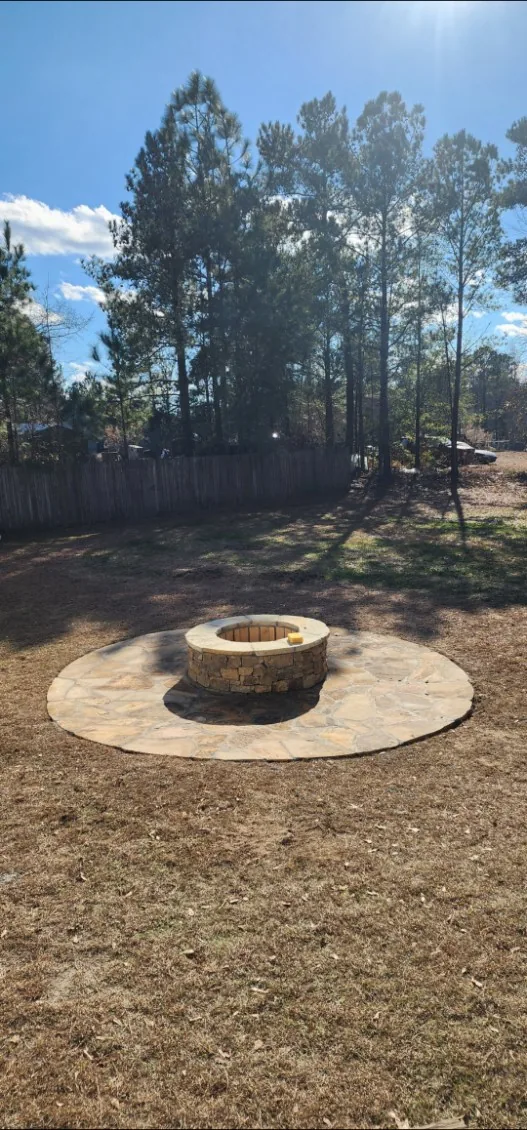
| Built-in fire pit | $1,800–$6,500 | Gas line, stone, seat wall, access to the spot |
| Outdoor kitchen or grill island | $5,000–$25,000+ | Utilities, counter material, framing, footings |
Any wall above a low garden height deserves a second look from a professional eye. North Carolina doesn't license every trade the same way, and the NC Licensing Board for General Contractors sets the threshold where a project crosses from handyman work into licensed general contracting. If your scope is big enough to trigger that line, ask the license question before you ask for the discount.
Where the stone comes from, and why it shows up in the price
Asheville sits close to real stone country. That's an advantage for looks and a complication for scheduling. Natural stone is heavy, it usually arrives on a truck that has to get to a staging point near your work, and the amount you order is measured in tons, not sheets. A pallet of pavers can be hand-carried through a side gate by two people. Two tons of irregular flagstone cannot.
This is where a lot of DIY budgets quietly double. Homeowners estimate the material cost correctly and then discover the delivery and movement cost is the same order of magnitude. The practical fix is design sequencing: put the largest stone elements closest to where a truck can reach, and use lighter or smaller-format material deeper into the yard. It's also why an outdoor living plan that pairs a paver patio with a natural stone accent reads better on a bid than all-natural-stone-everything. Mixed material is often the cheapest way to get a high-end look on a hard-access lot.
Upstate and eastern stone is a real alternative when a project is less about the cut and more about the mass. It's honest to say so, and a good contractor will tell you which choice actually makes sense for your sightlines rather than upsell the premium option.
Why wet ground decides more than any design sketch
Every hardscape here sits on soil that has been saturated many times over. That history is not a talking point, it's a design constraint. This county has seen 19 federal disaster declarations across a record spanning 1973-2026, which tells you something useful even before you know which storms: heavy rain is a recurring feature, not an outlier, and it finds every low point you created. The National Weather Service publishes the rainfall and flood outlook data that planners and engineers lean on, and it's the same data that should inform how high your base gets built.
Practically, this means two things. First, base prep is where a cheap bid gets caught — a thin base over wet clay fails within a season, and no amount of pretty pavers hides it. Second, water management is a design deliverable, not an afterthought. Downspouts, French drains, swales and permeable joints are all part of the system. If a contractor's plan doesn't mention where the water goes on a 10-year storm, that plan isn't finished. The EPA's stormwater guidance is written mostly for municipalities, but the principle it keeps hammering applies to one backyard — infiltrate and slow the runoff rather than piping it somewhere else.
Outdoor living that survives our shoulder seasons
Patios here get used from March through November in a good year, which makes hardscaping more than decoration. It's an extension of the house. That's why a fire pit tends to earn its cost faster in this market than almost any other single feature — it converts a patio from a summer amenity into a four-season room without a roof.
Two scheduling notes worth knowing. First, wall and patio work wants dry ground, so late spring and early fall are the sweet spots, and a wet January will push a project. Second, permits and inspections for larger retaining walls, decks and structures move on a county timeline, not a contractor's timeline. Getting drawings and approvals started early is the cheapest insurance against a stalled start. The better your plans are before the first shovel, the less the mountain gets a vote.