Access and haul shape Weaverville patio prices more than pavers do
Drive the ridgelines above Reems Creek or the shaded lots off Ox Creek Road and you can usually predict a patio quote before anyone measures. The install that runs $11,000 on a flat Weaverville village lot can run $19,000 on a similar-sized yard two miles up because of what it takes to reach the work: a driveway too narrow for a tandem dump, a gravel pull-off where a skid steer can't turn, a back yard that only opens through a side gate. Base material for a patio runs heavier than pavers themselves — roughly 1.5 tons of dense-grade aggregate for every 100 square feet of patio at typical depths — and every ton that has to be conveyed uphill by power buggy instead of chuted off a truck adds labor hours that show up in line items like “debris removal/access.”
Distance from the quarry works the same way. Aggregate that reaches a flat Swannanoa lot cheaply still has to climb Weaverville's grades, and those grades are why a local quote asks two questions before it asks about design: how far from the street can a loaded truck park, and can it park there without blocking the road. The second question matters more than it sounds; Weaverville's topography means a lot of driveway aprons sit close to town streets that can't legally be blocked during delivery hours.
How Weaverville yards are built, and why it changes the scope
Two houses sit a mile apart off Monticello Road and their patios are different projects. One is a flat village lot with a shallow crawlspace, sandy loam over clay, and a lawn that drains fine. The other is a mountain-edge lot where the builder laid a perforated footing drain at the base of the farthest foundation wall, because nearly every hillside home here has one. Guess which patio quote has a drainage line item in it.
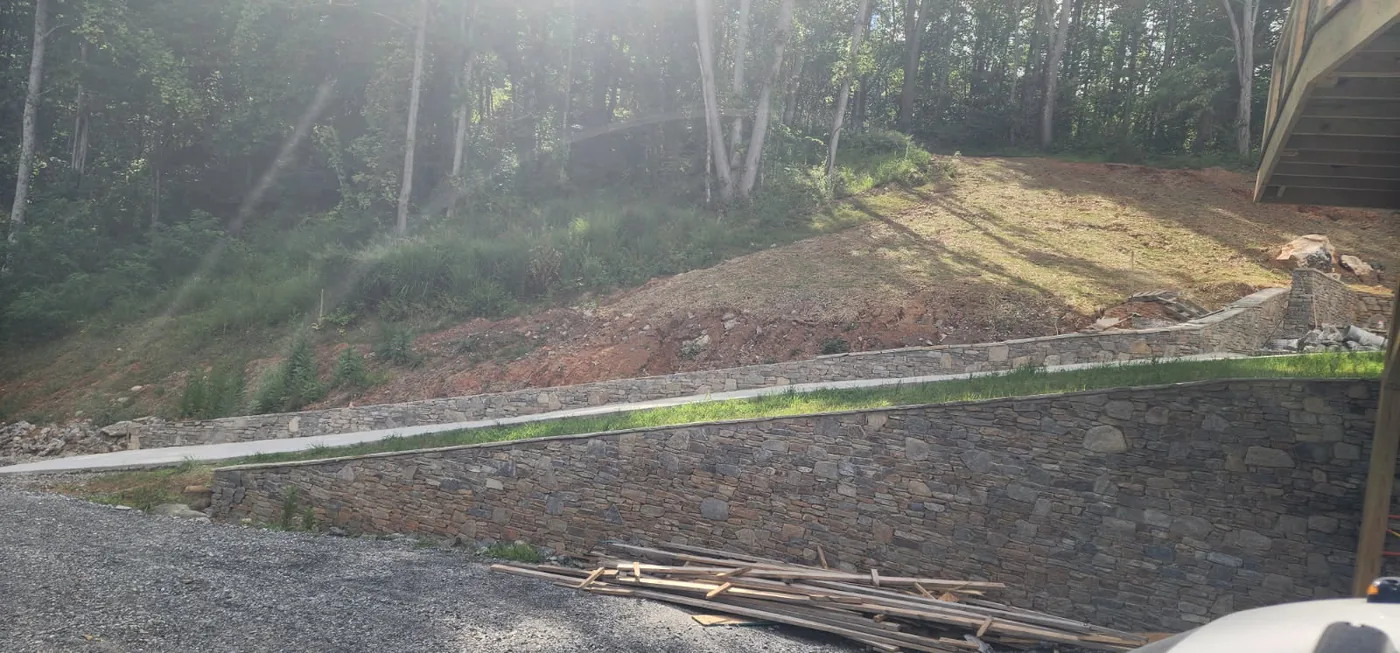
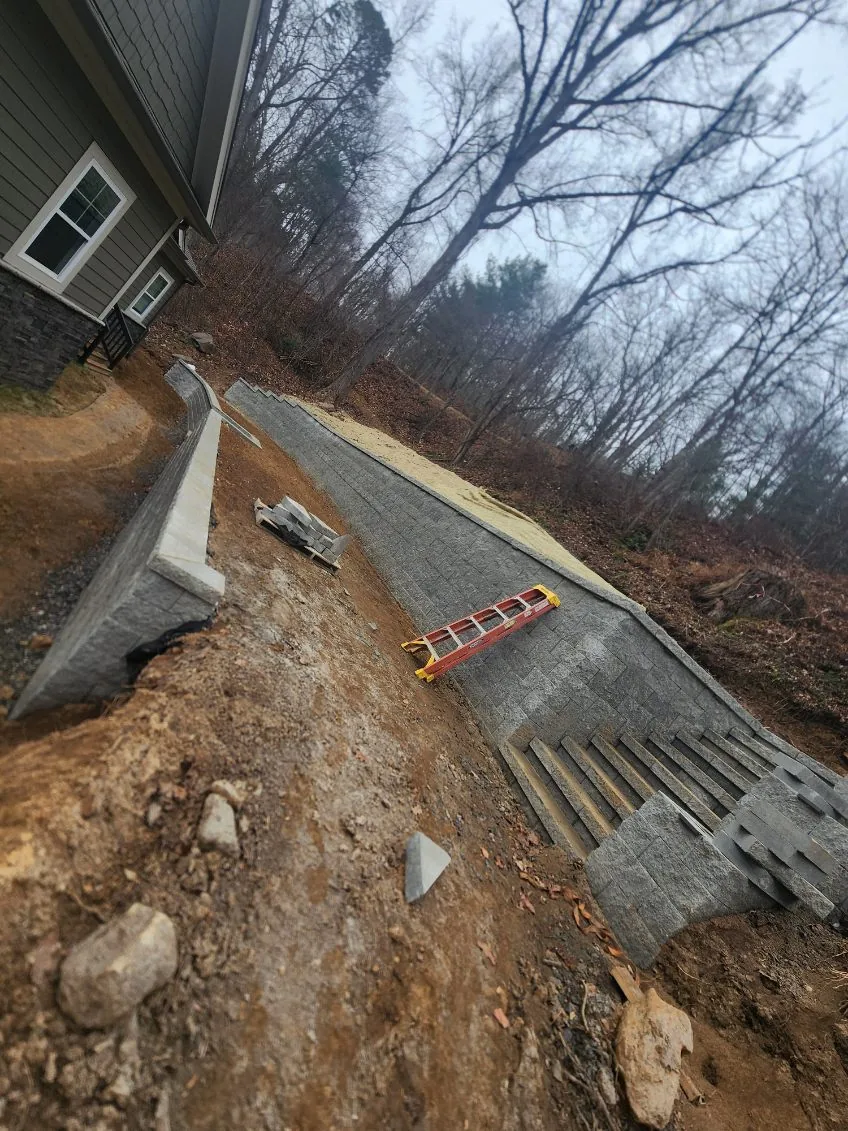
Weaverville sits just north of Asheville in Buncombe County, between the French Broad valley floor and steep ridges, and that geography shows up in the housing stock. Village lots near the main corridor tend to be flat and forgiving. Hillside lots, which describe most of the newer construction, bring three things that flatten budgets: slope that has to be cut or terraced to receive a patio, moisture that wants to run through the house rather than around it, and access constraints covered above. A reputable installation starts with how water leaves the site — underdrain, swale, or both — before agreeing on a paver pattern. The state code services office at the NC Office of State Fire Marshal treats site drainage as part of the same residential code family that governs footing and foundation work for a reason: on these lots, patios and water management are the same project.
What paver patio installation costs around Weaverville
These ranges reflect typical Buncombe County pricing for a properly built patio — excavate, compact subgrade, install and compact base and bedding, lay pavers, cut edges, install edge restraint, and clean up. They assume a single-level patio with reasonable drainage and mid-range integral pavers. Hand-cut patching, permeable grid systems, and full irrigation of the surrounding yard are separate.
| Scope | Typical price range |
|---|---|
| Walk-out pad, about 120 sq ft, simple square lay | $5,500–$8,500 |
| Standard patio, 300–400 sq ft, one level, straight runs | $9,000–$16,000 |
| Large patio, 500–700 sq ft, multi-level or terraced | $16,000–$28,000 |
| Steps or retaining up to patio grade, per course of stone or block | $550–$1,400 |
| Full drainage package — underdrain, swale, or regrade | $1,800–$6,500 |
| Old paver or concrete removal and disposal | $1,200–$3,500 |
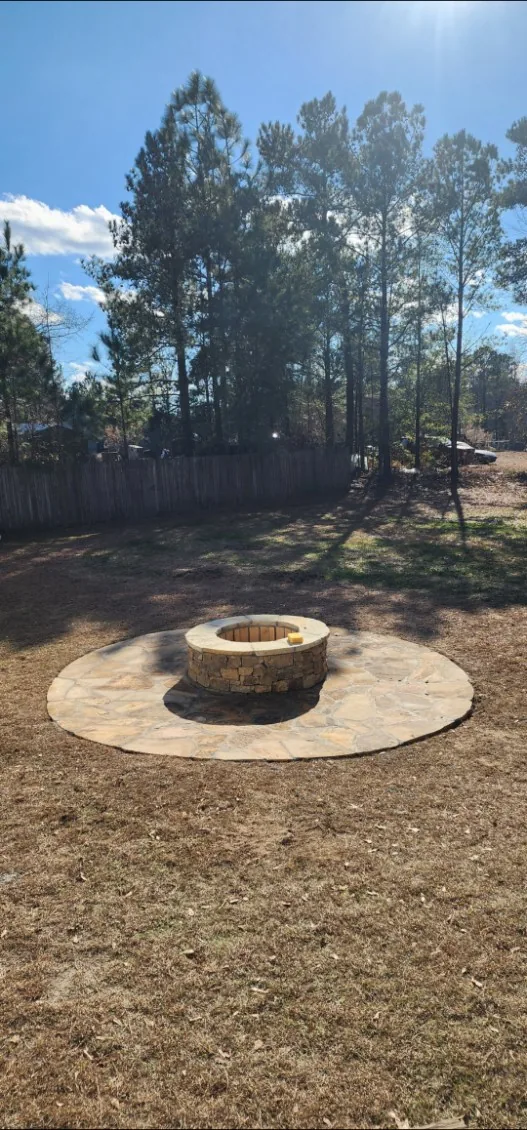
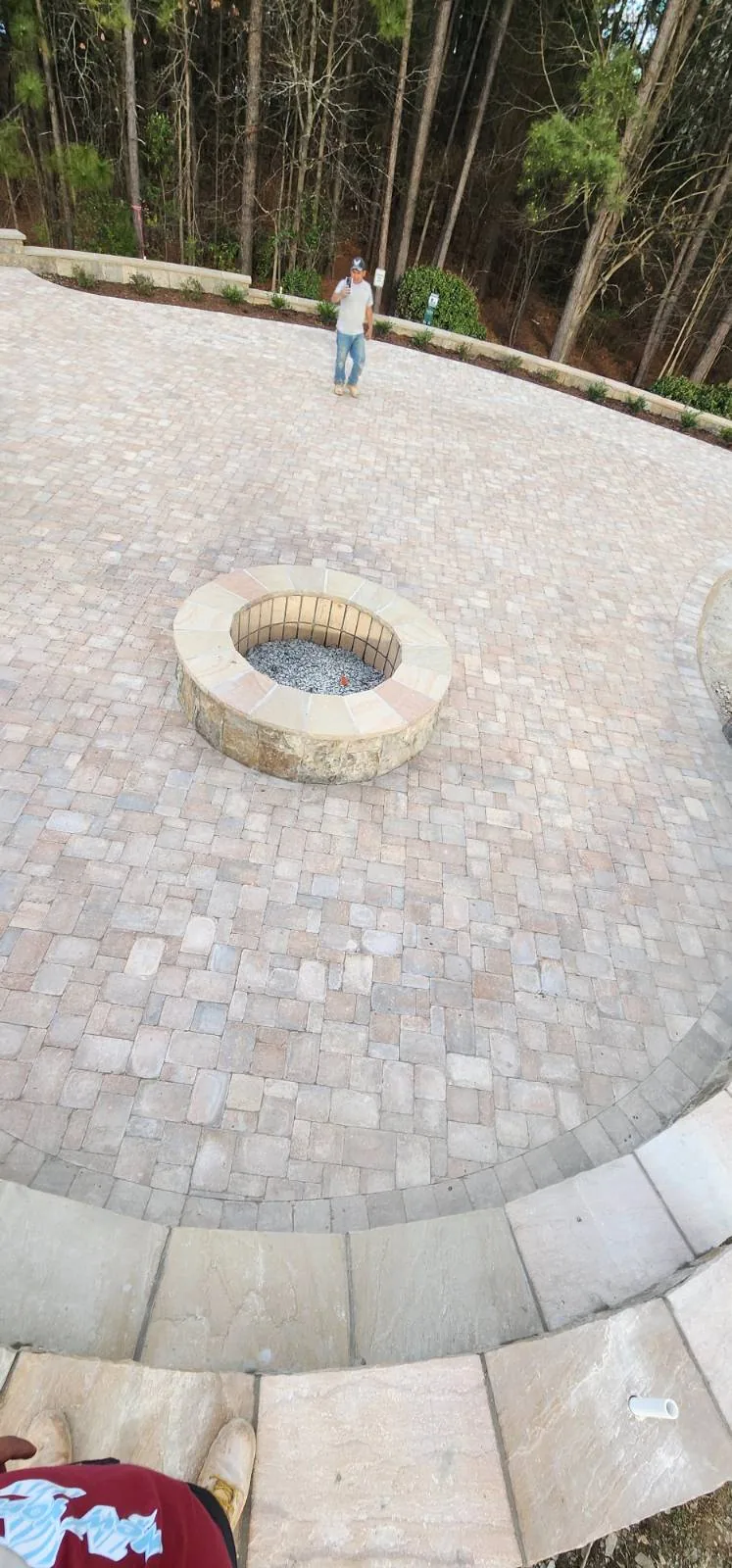
| Fire pit kit built into patio, exclusive of gas service | $1,100–$2,800 |
The two rows that climb fastest in Weaverville are drainage and access-related labor, which is why a quote that itemizes them is more honest than one that doesn't. For wall systems that hold up a terraced patio, the sister page on retaining wall cost in Buncombe County carries its own table. Base material itself — the aggregate that does the structural work — typically runs $35–$60 per ton delivered at these quantities, and a full patio commonly consumes several tons.
Wet winters, humid summers, and what that means for base layers
19 federal disaster declarations touch this county across 1973-2026, mostly storm and flood family events. That history isn't decoration: this is a wet, freeze-thaw-adjacent climate where a poorly compacted base fails in two seasons, and where patios built without an edge restraint heave and spread visibly. The right answer on Weaverville lots is unglamorous — excavate deeper than the paver depth suggests, compact in lifts, use a free-draining base, and tie the edge restraint into something that doesn't move. The National Weather Service publishes freeze and precipitation normals for the region through weather.gov if you want to sanity-check how much moisture a site deals with, and the reason drainage matters is that water that sits under a base layer is what freezes, expands, and lifts pavers out of pattern.
How to vet a paver crew in this town
Paver installation is the entry point for a lot of unlicensed operators because it looks like landscaping, and on most Weaverville residential patios that's legally true — the NC Licensing Board for General Contractors sets the dollar threshold where a project crosses into work that requires a licensed general contractor, so a patio that stays a patio often doesn't trigger it, but a patio that becomes a retaining wall, a covered structure, or a significant grading project might. Ask where that line falls for your scope; a crew that knows the answer is a crew that has done this before.
Then ask three questions. First: what's the compacted base thickness, stated in inches, and how many lifts? Second: what holds the edge restraint, and is it pinned below frost depth? Third: who handles water, and does your quote include it? If the crew discusses grade and drainage before pavers, you're probably in good hands. If retaining work is part of the plan, the sister page on retaining wall contractors in Weaverville covers what those scopes should include, and the paver patio overview walks through the full build sequence from excavation to finish. If you've been comparing Weaveville and Asheville quotes, the Asheville side of the same trade will often price access differently because the lots are shaped differently, and Buncombe County as a whole is the fair comparison baseline.