Woodfin lots price fire pits differently than flat-town patios
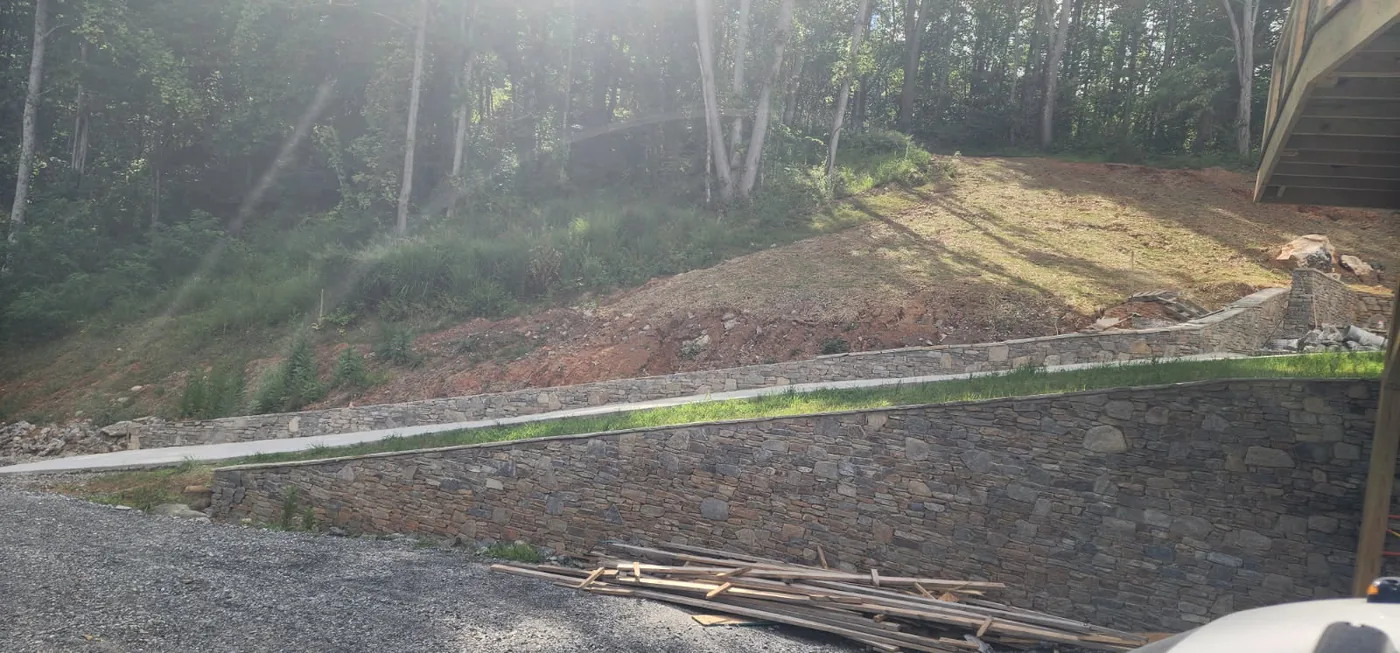
Woodfin grew along the French Broad where the bottomland meets the first steep benches, so a lot here is rarely a clean rectangle. River-front parcels sit low and wet; the hillside lots above them shed rock and runoff toward whatever is downhill. When a fire pit needs a level, well-drained pad, that pad is the job — the pit is the easy part. A flat-lot kit in a subdivision would be a weekend install, but on a Woodfin bench you may be cutting a small terrace, setting the pit into slope, and hauling spoils off the property, which is where most of the money goes.
Local stone changes the equation too. Madison County sits on ground that produces plenty of fieldstone and ledge rock, and using stone pulled from the site can cut material cost while raising labor. See our fire pit project guide for how that tradeoff plays out.
| Scope of work | Typical Madison range | What drives it |
|---|---|---|
| Kitset steel or block ring, flat pad | $1,200 – $2,500 | access, base prep, no drainage work |
| Mortared block or brick, gas line stub | $2,800 – $5,500 | gas run length, permit, footing depth |
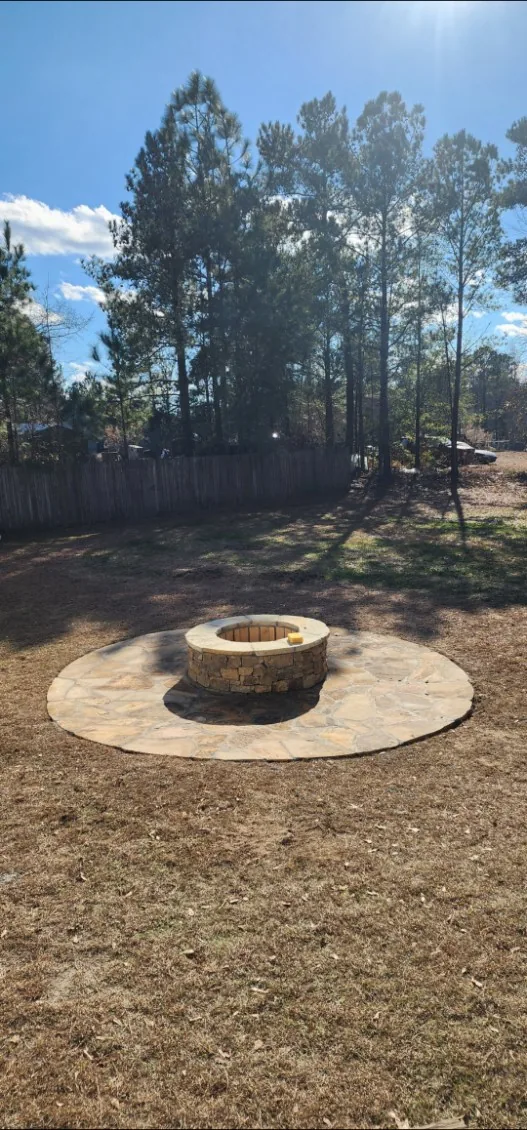
| Modular stone pit with gravel apron | $4,000 – $8,000 | stone source, cut-and-fill volume, slope retention |
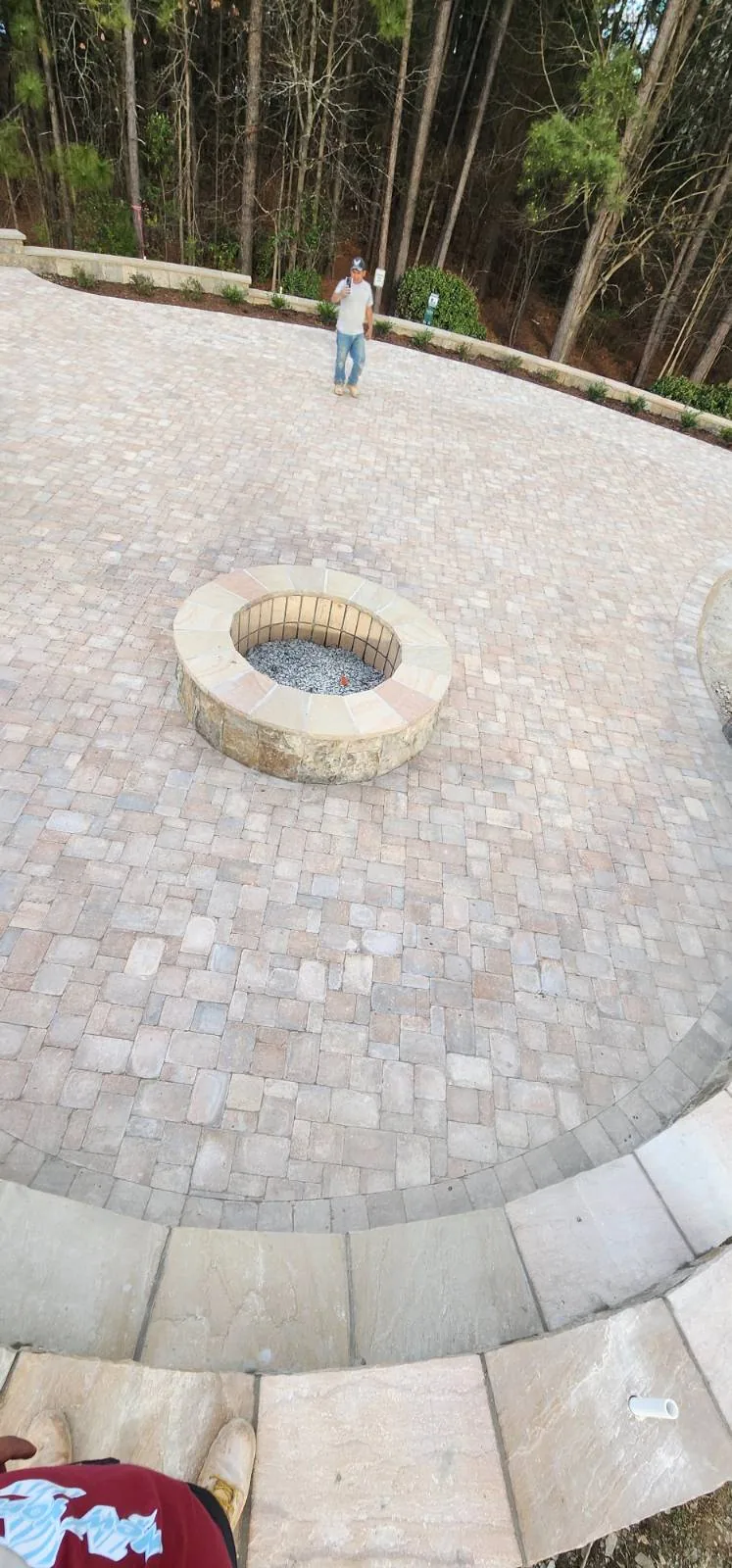
| Full terrace, built-in bench, gas, lighting | $9,000 – $20,000+ | engineered retaining, drainage tie-in, haul-off |
Those are honest working ranges, not quotes. Any crew giving a firm number before seeing the slope and where water goes is guessing with your money.
Consider two neighboring properties on a Woodfin hillside. The first has a driveway that drops steeply from the county road, with a switchback that a small dump truck can barely navigate. The second has a flatter approach and a natural bench halfway up. The first will pay hundreds more just in delivery surcharges and hand-carrying material. The second might still need a terrace cut, but the spoils can be spread on-site rather than trucked away. These differences have nothing to do with the fire pit style and everything to do with the lot's personality. That is why a bid from a flatland crew often misses the mark here — they price the pit, not the mountain.
Another local wrinkle: many Woodfin parcels sit on or near the French Broad's floodplain fringe. Even if the pit itself is above the high-water mark, the surrounding yard may stay saturated after a heavy rain. A gravel apron and a slight crown on the pad keep the base from turning into a sponge. Skipping that step to save a few hundred dollars now usually means re-leveling the pit within a few seasons.
What actually moves the number on these hillsides
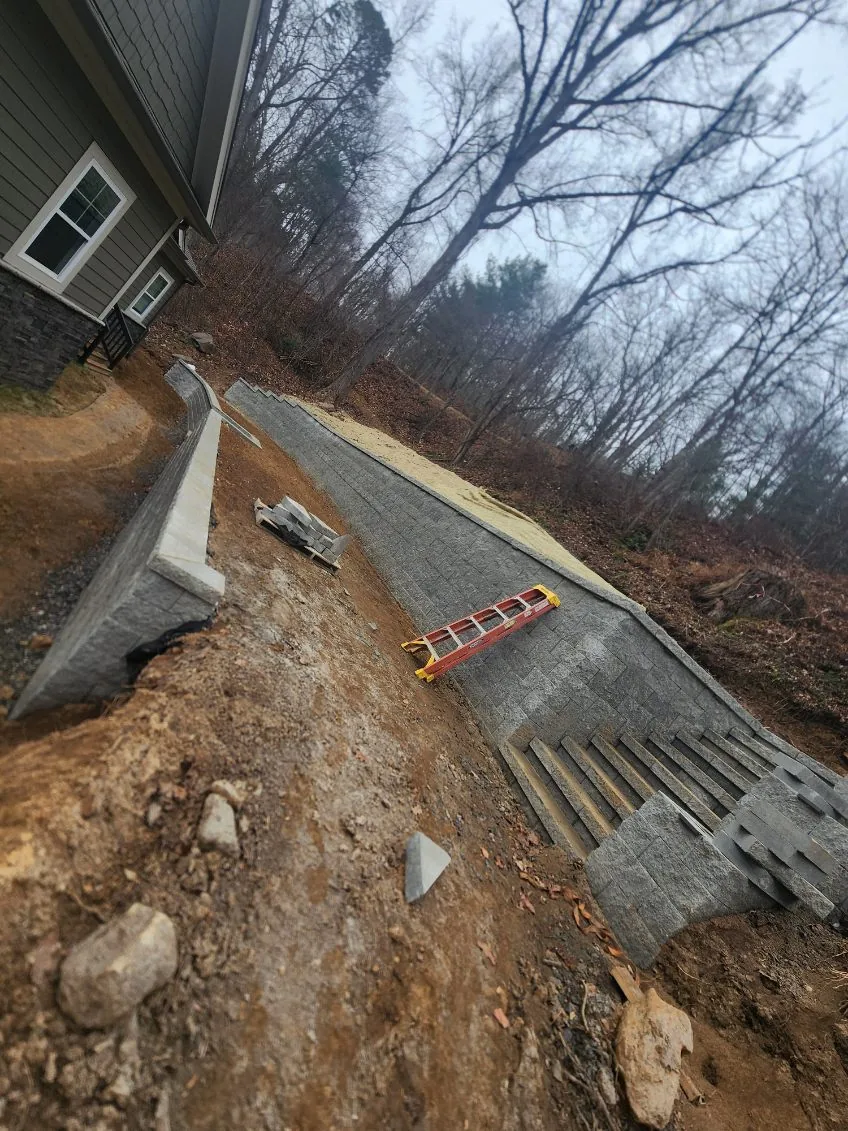
Three cost levers matter more here than the pit style itself. Access is first — a narrow gravel drive off a county road slows every delivery of block, sand and stone. Second is water. Madison County has a long record of storm and flood events: 21 federally declared disasters have touched this county across 1978-2026, mostly storm and flood related. That history means any pit placed in a low spot needs to sit on prep that drains, not a compacted bowl that holds water against its base. Third is slope work, because a fire pit on a hillside often needs grading or a small retaining wall to make the gathering area usable — the same work priced on our retaining wall cost page. Water first, level second, pit third is the right order.
Access deserves a closer look because it hides in plain sight. If your driveway crosses a culvert that a concrete truck cannot safely span, you may need a pump truck or a smaller delivery vehicle, both of which add cost. If the only route to the backyard is a set of steps or a narrow path, every bag of mortar and every stone gets carried by hand. That labor adds up fast. Contractors who know Madison County often walk the approach before quoting, because a job that looks simple on a satellite map can turn into a hand-bombing marathon.
Slope also determines how much of the pit will be buried. On a gentle grade, the pit sits on the surface. On a steep bench, the uphill side may be cut into the slope, meaning the back wall of the pit is partially underground. That calls for careful drainage behind the wall and often a footer that reaches below the frost line. North Carolina's freeze-thaw cycles are milder than the Northeast's, but they still punish shallow footings, especially on wet hillsides.
Stone choice is the third lever. Fieldstone from your own property can be beautiful and cheap per ton, but it is irregular and slow to fit. A mason might spend twice as long stacking it compared to manufactured block. If the stone is too soft or layered, it may not hold up to repeated heating and cooling. Bringing in a uniform stone from a quarry can speed installation but adds material cost and freight. The honest approach is to price both and weigh the look you want against the labor bill.
Permits, burn rules and the gas line question
A fire pit itself usually does not require a building permit, but the project often does. If the pit ties into a terrace retained above a certain height, or sits on a slope that needs structural grading, Madison County reviews that work against the North Carolina State Building Code. Any natural gas or propane line is the other trigger — fuel-gas piping falls under state code and must be installed by a licensed contractor under the NC State Board of Examiners of Plumbing, Heating and Fire Sprinkler Contractors. And a built-in pit with a chimney or an enclosed firebox can pull in additional code review through the NC Department of Insurance, Office of State Fire Marshal. If a contractor waves off the gas permit as optional, that tells you what their workmanship looks like too.
Before lighting anything, confirm the current burn ban status for the county — outdoor burning restrictions change with drought conditions and apply to fire pits in unincorporated areas. Once you have the go-ahead, our full fire pit cost guide gives the regional picture for budget planning.
Retaining walls are the most common permit trigger on these lots. A wall over a certain height, often measured from the bottom of the footing to the top of the wall, needs engineering and a permit. Even a small terrace wall behind a fire pit can cross that threshold if the grade change is significant. The Madison County planning department can tell you the exact height limit and what documentation they require. Going through that process adds time and sometimes a few hundred dollars in fees, but it also protects you if the wall fails later. Unpermitted structural work can become a problem at resale.
Gas lines are the other area where shortcuts cause trouble. A licensed fuel-gas contractor will pull a permit, pressure-test the line, and ensure proper shutoffs and clearances. That costs more than a handyman's cash job, but it is the only way to know the installation meets code. Propane tanks above ground also have setback rules from the pit and from structures. Those clearances are not suggestions; they come from fire code adopted by the state.
Finally, think about where the smoke goes. A fire pit tucked against a hillside or under overhanging branches will smoke out the seating area and can be a fire risk. Local fire officials recommend at least ten feet of clearance from structures and overhangs, and more on windy ridges. In Woodfin, where breezes funnel up the river valley, siting the pit to take advantage of airflow makes the difference between a pleasant evening and a smoky one.
Three ways to keep the bid honest
- Separate site work from the pit. Ask for grading, base and drainage as line items, not lumped into one number. That is where quotes hide the real scope.
- Price material by source. Fieldstone hauled from the site, local stone delivered, and commercial block all price very differently. Know which you are buying.
- Compare against the county range. If a bid lands far outside the table above, make the contractor walk you through why — access limits and rock depth are real reasons, and how they explain it tells you whether the number is honest.
Wondering how site work stacks up against the rest of your yard budget? Start with the fire pit project guide for the region-wide breakdown.
One more habit worth adopting: ask each bidder to describe how they will handle the spoils. On a tight Woodfin lot, hauling dirt and rock off-site can add several hundred dollars. Some contractors will find a spot on your property to spread clean fill, saving you money. Others will automatically price a dumpster and disposal. Neither approach is wrong, but you should know which one you are paying for. The same goes for drainage: a bid that mentions a French drain, a dry well, or a simple gravel blanket is showing you they have thought about water. A bid that says only "level and compact" may be leaving you with a pit that turns into a puddle.