What actually gets built on Madison County ground
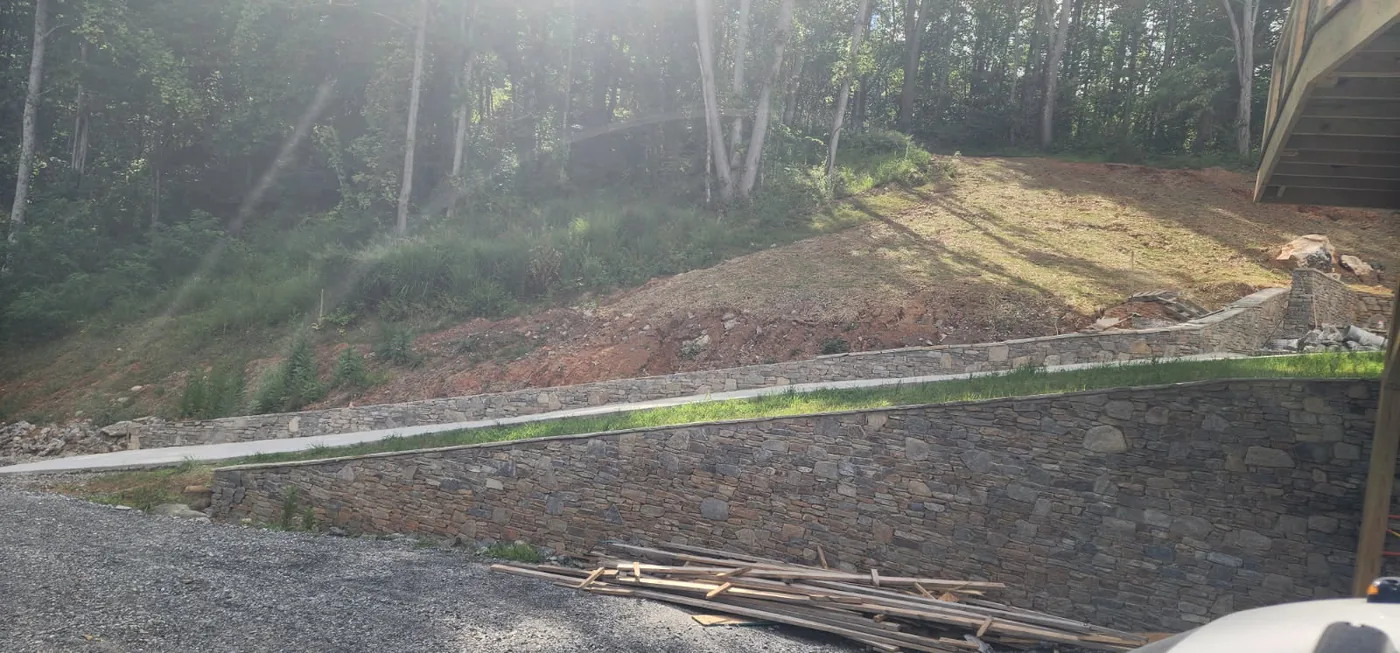
Drive the back roads between Hot Springs and Marshall and you can read the local material vocabulary off the hillsides: fieldstone gathered on-site, boulder retaining edges, and split-face block where the budget is tighter. That mix is not decorative. Madison County sits in the French Broad watershed with steep, rocky terrain, and the same stone that made a slope buildable is usually the cheapest thing to build with. A patio here is less a flat slab and more a small engineered terrace — which is why the first thing a real installer asks is not square footage but where the water goes when it leaves the patio.
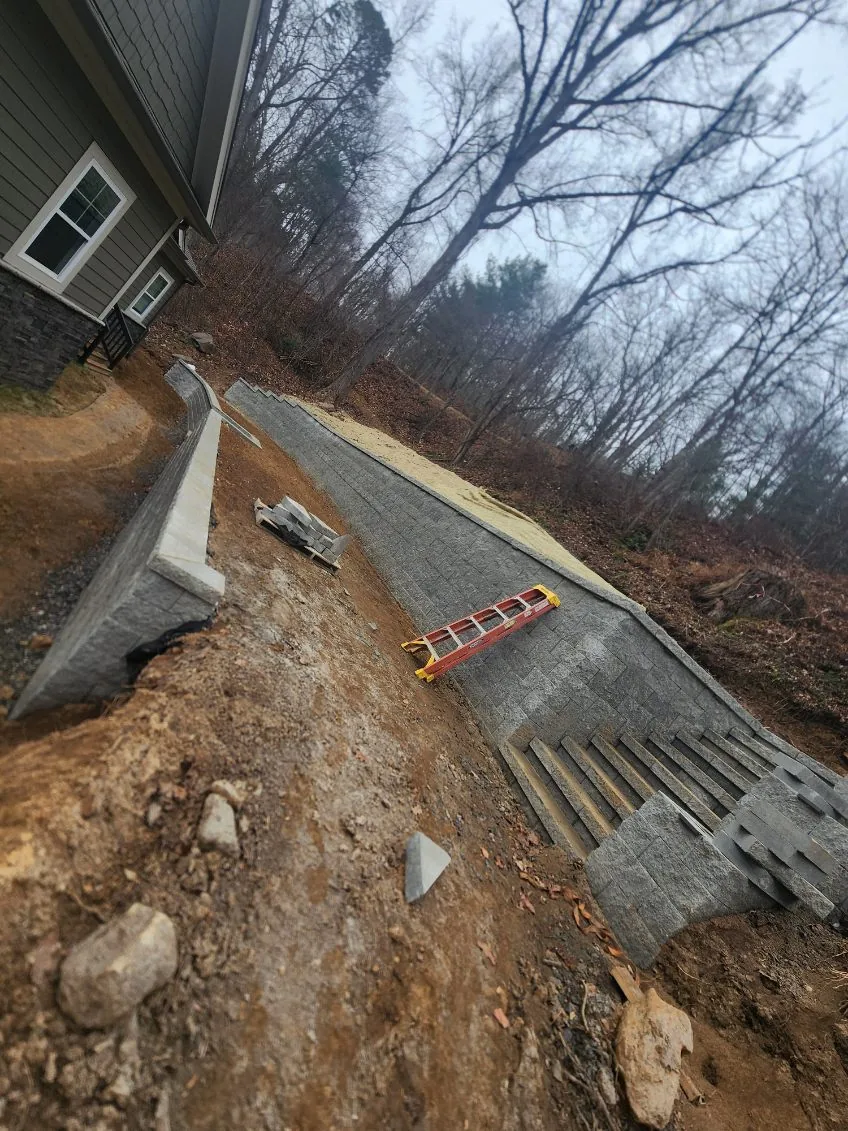
Hot Springs itself is a small, low-density town where lots range from river-bottom flats to hillside parcels with real pitch. On the flats, a simple paver patio on a compacted base is genuinely straightforward. On the slopes — and slope is the norm rather than the exception in this county — the patio edge almost always transitions into a retaining structure, which changes both the engineering and the price.
Scope vs price for a Hot Springs patio
These are regional bands, not quotes. A site visit moves any number up or down faster than anything else on this page. The single biggest multiplier is base depth: a patio cut into a slope needs excavation, compacted gravel, and often a geotextile separation layer, and that work is invisible once pavers go down.
| Scope | Typical range | What drives it |
|---|---|---|
| Small sand-set patio, flat lot | $6,500-$10,500 | Square footage, paver choice, minimal excavation |
| Mid-size patio with edge restraint | $11,000-$16,500 | Base depth, drainage grading, number of cuts |
| Slope terrace with low retaining edge | $15,000-$22,000 | Excavation, wall footing, geogrid if wall exceeds knee height |
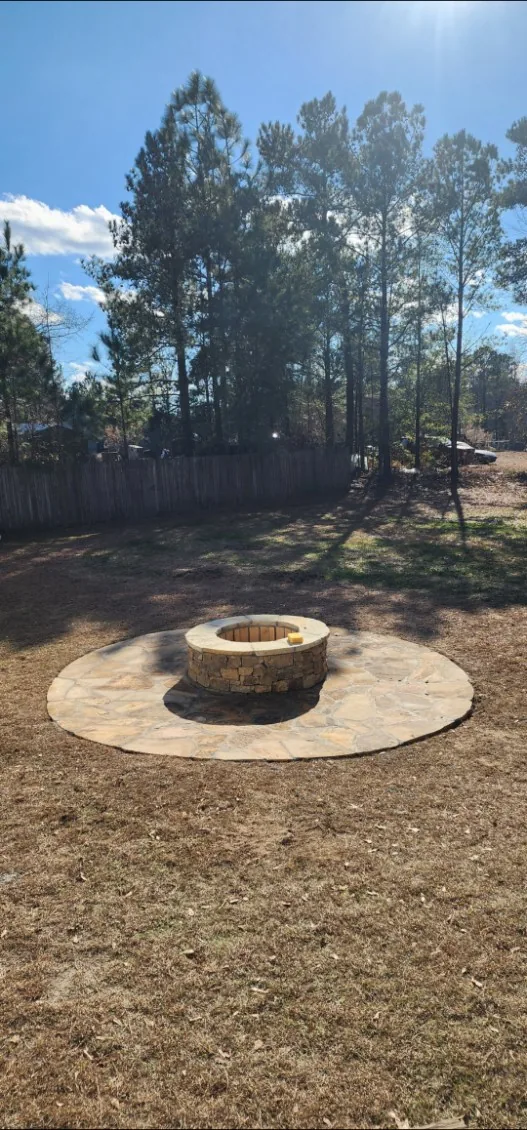
| Fieldstone or boulder feature patio | $18,000-$30,000+ | Stone sourcing, hand-setting, irregular layout labor |
| Standalone retaining wall (not patio) | see the Madison County retaining wall cost table | Height, batter, drainage behind wall |
Two line items show up on almost every Hot Springs bid and almost never on flatland bids: drainage stone behind the patio edge, and disposal of excavated material. Hauling spoil off a narrow mountain road costs money, and any quote that skips it is short by a known amount.
Block, pavers, and stone are three different jobs
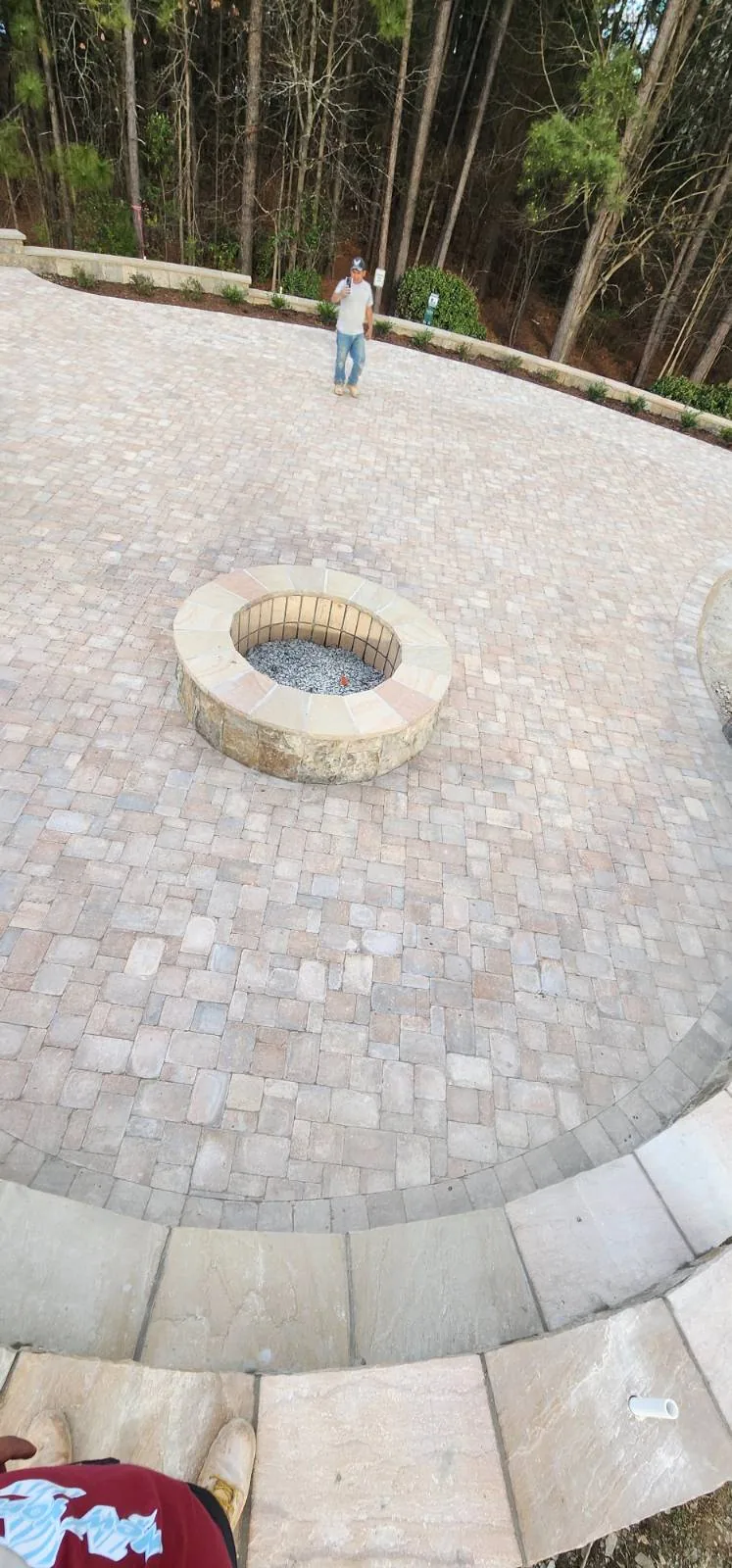
Segmental block and manufactured pavers are the volume product: uniform, fast to lay, and priced per square foot in a predictable way. Natural fieldstone is the opposite. It is hand-set, irregular, and slow, and the labor line, not the material line, is what you are paying for. Boulder work is closer to landscape construction than paving — boulders are placed with equipment, not by hand, and the wall or edge they form often needs an engineered footing if it holds back any real height.
None of the three is wrong. The mistake is bidding natural stone against a block price and then being surprised at the gap; ask the installer to quote the same square footage in both so you can see the actual delta. If you want to understand how the finished assembly is supposed to perform, the paver patios guide walks through base, bedding, and joint layers, and the International Code Council publishes the residential code model that many local adoptions are built from.
Water is the whole ballgame here
The federal disaster record tells the story for this county: 21 declared events touch Madison County over a recorded span of 1978-2026, and the great majority are storm and flood family. That history is not abstract for a patio. A patio is a hard, impervious surface, and putting one on a slope without a drainage plan just redirects stormwater onto the next thing downhill. On the river flats around Hot Springs, the concern is water arriving from uphill and pooling; on the ridges, it is water scouring out from under the patio edge and undermining the base.
The fix is unglamorous and cheap relative to redoing the job: pitch the surface away from the house, daylight the downslope edge, and add a gravel-filled drainage strip where the patio meets a wall. The EPA's stormwater guidance at epa.gov covers why managing runoff volume at the source is the accepted approach, and it is exactly what a competent local installer is already doing when they grade before they pave.
How to check an installer before you sign
North Carolina draws a licensing line here. General contracting above a statutory threshold is licensed by the NC Licensing Board for General Contractors, and a patio project that includes a retaining wall, structural work, or a project total above that threshold can pull the job into licensed territory. Ask directly which license applies and who holds it. Separately, if the project involves any plumbing for an outdoor kitchen, sink, or irrigation tie-in, the state board at nclicensing.org is the authority for that trade.
Three practical checks for a Hot Springs patio: ask for a slope job reference, not just a flat-lot reference; confirm where excavated material is going and who pays to haul it; and ask for the drainage plan in writing, even if it is one paragraph. If you are also building up the yard around the patio, the Hot Springs retaining wall contractors page covers how to sequence the two so the wall footing and the patio base are not fighting each other.