Why two Woodfin yards, same size, price $9,000 apart
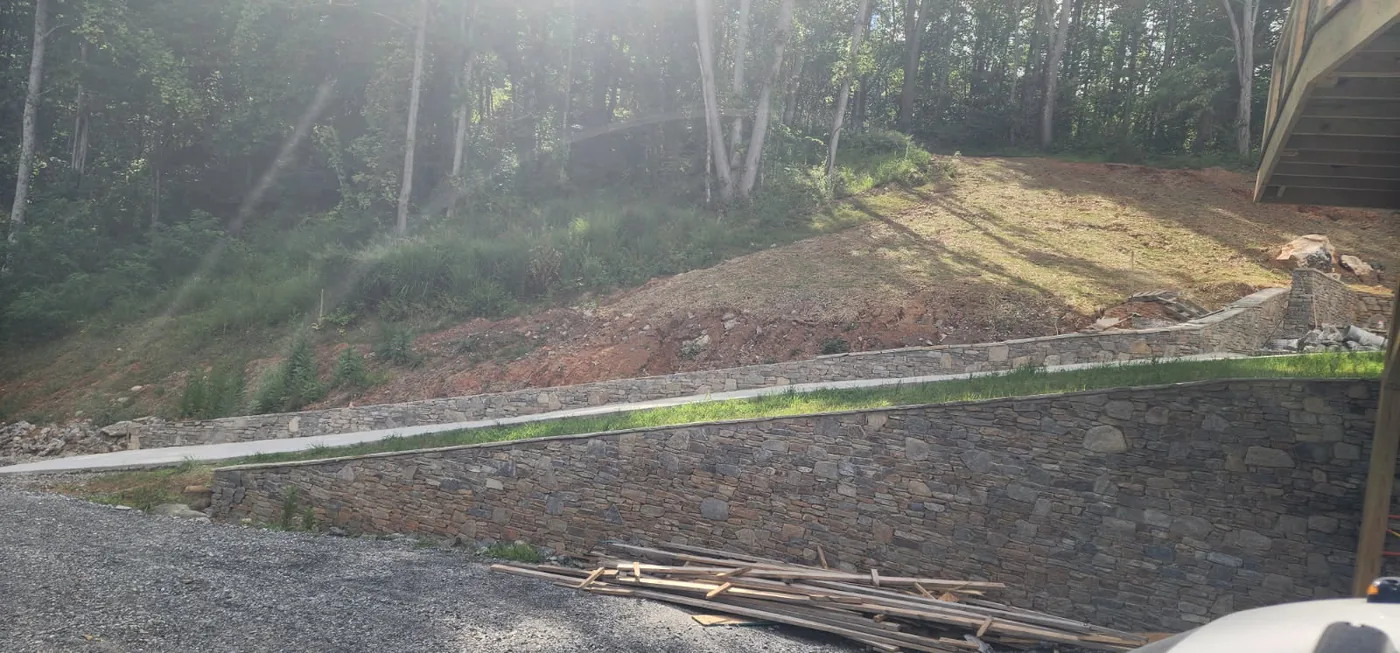
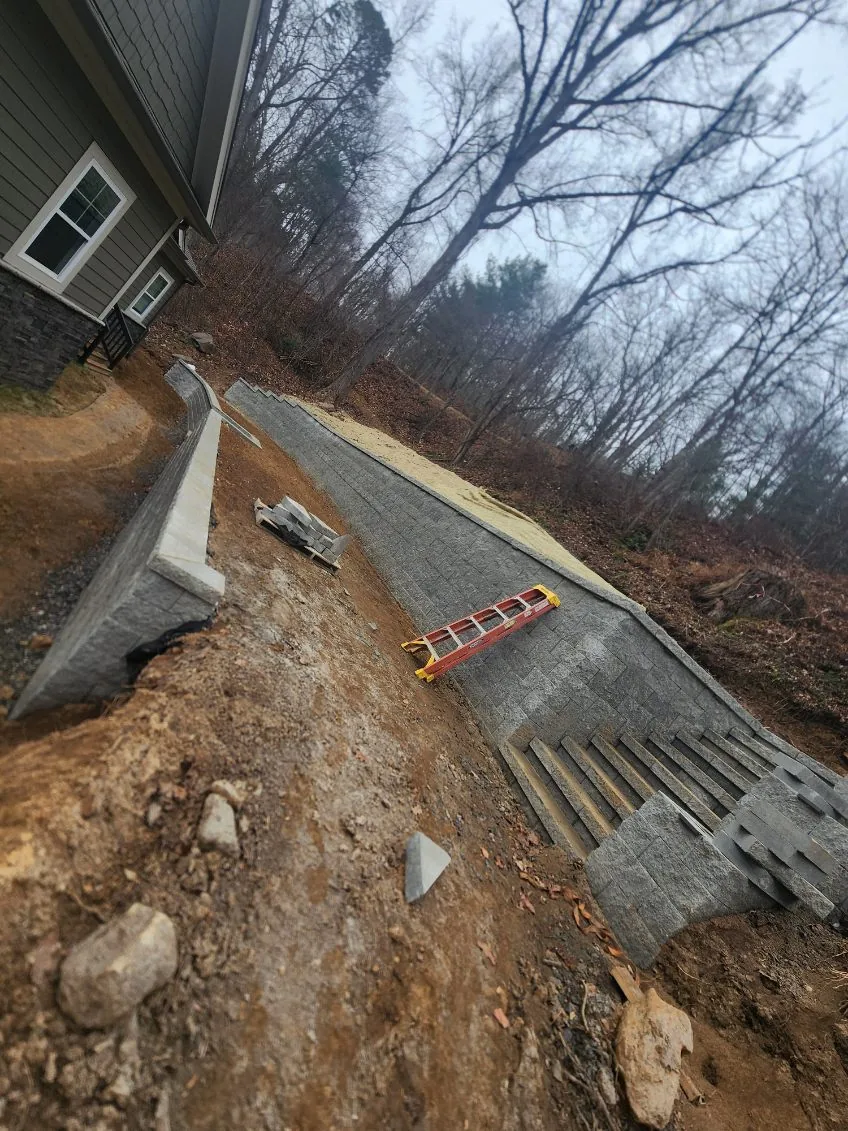
Woodfin's lots split hard, and the invoice splits with them. Down toward the French Broad and the old mill flats, a backyard is genuinely flat and the money goes into stone and joints. Up on the benches off Elk Mountain and the ridges above the town core, the same 300-square-foot patio needs excavation into grade, a stepped base, and a drainage solution, because water that comes off an uphill neighbor does not politely stop at a patio edge.
A typical Woodfin job prices out in five line items, and only one of them is the flagstone: excavation and haul-off, base aggregate and compaction, retaining or step edges where grade changes, drainage (French drain, channel drain, or grading away), and the stone itself plus labor and jointing. On flat river-side ground, base work might be a third of the invoice. On a cut slope, it can pass half. That single ratio explains almost every bid gap homeowners here see.
The Woodfin price picture, line by line
Installed flagstone in this market typically lands between $28 and $60 per square foot depending on stone type, base depth, and access. A truck that can't reach the backyard adds wheelbarrow labor, and a steep side yard adds more. Below is how the scope-to-price picture actually reads for a patio in Woodfin.
| Scope | Typical range |
|---|---|
| Small flat-lot patio, standard base, sand-set | $6,500–$11,000 |
| Mid-size patio, 300–400 sq ft, drainage included | $11,000–$18,000 |
| Hillside or tiered patio with steps and retaining edges | $18,000–$30,000+ |
| Mortared or concrete-set stone for freeze-thaw durability | add 15%–30% over sand-set |
| Drainage retrofit on a wet yard | $2,500–$7,000 |
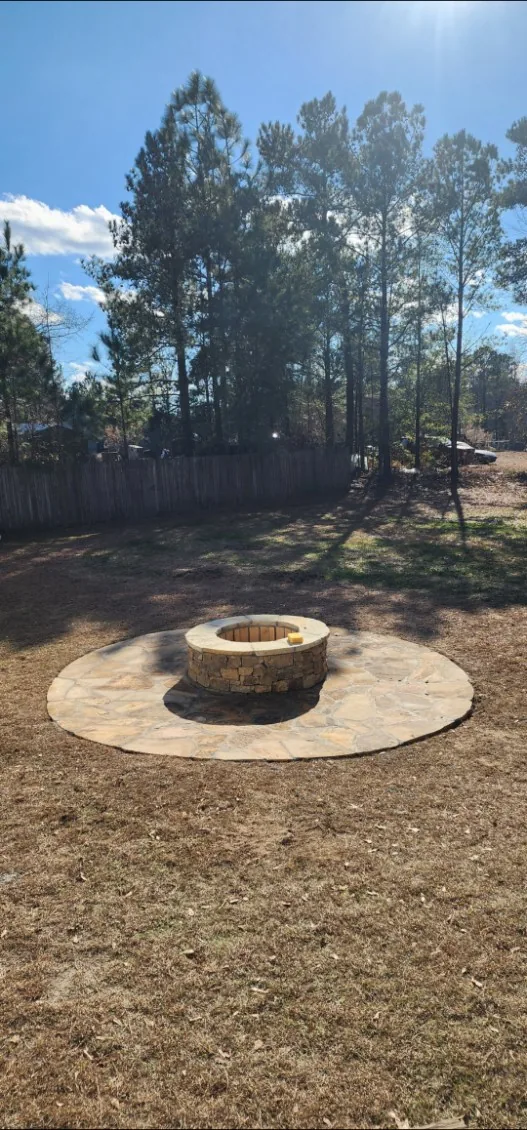
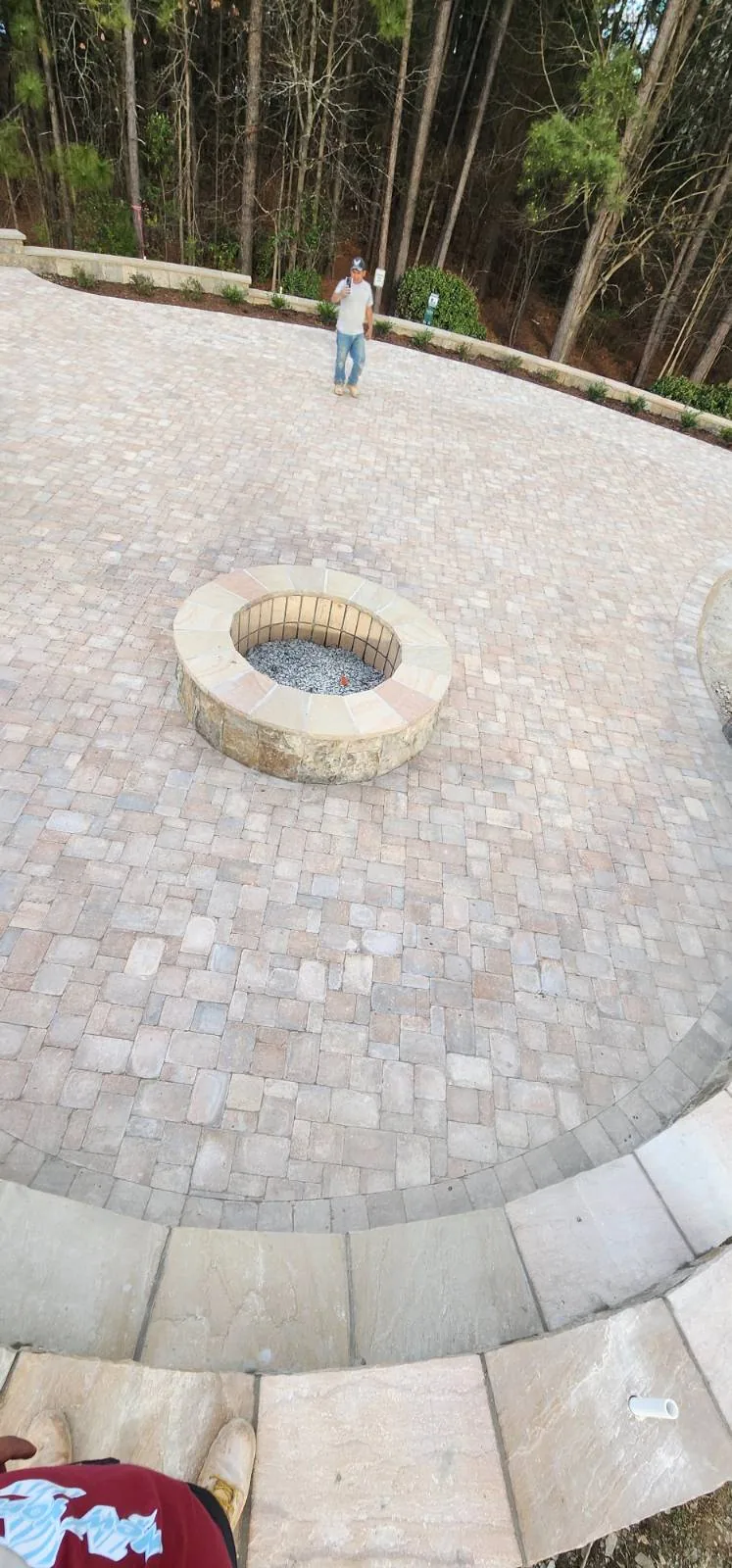
| Fire pit, seat wall, or built-in bench | $1,500–$6,000 each |
Retaining that touches grade or holds back soil often rides alongside the patio scope. The Buncombe County retaining wall cost breakdown covers those line items in their own table so you can see where the two budgets overlap, and the main flagstone patio guide walks the material comparison — Tennessee and Pennsylvania stone, thickness, and joint style — if you're still choosing.
Freeze-thaw, clay, and the base nobody sees
Western North Carolina swings above and below freezing repeatedly through winter, and that cycle is what destroys patios here — not summer heat. Water trapped under a thin base expands, lifts a stone, lets it settle unevenly, and by the second spring you have a rocking surface. The fix is boring and invisible: 4 to 6 inches of compacted aggregate on stable soil, more where the ground is soft or fill was placed. Building codes treat exterior hardscape and its drainage as part of the site work rather than decoration — the NC Office of State Fire Marshal code services publishes the residential provisions that govern grading and drainage, and a patio that ignores them is the one that heaves.
Woodfin's river-adjacent soils add a wrinkle. Ground near the French Broad can hold moisture longer after a wet stretch, and the flat yards that look easiest to build on are sometimes the ones that need the most drainage thought. That's a design conversation before it's a construction one.
Storm history is why drainage keeps showing up in bids
The federal record is the honest explanation for why so many Woodfin patio bids now carry drainage line items that weren't standard a generation ago: 19 declared events touch this county across 1973-2026, and they are overwhelmingly storm and flood family. Each event pushed water across yards that were built for a drier assumption. If your patio sits at the bottom of a slope or near the river corridor, ask every bidder to show you, on paper, where the water goes when the ground is already saturated. A rainy-season site plan matters more here than any stone upgrade.
Sequencing the yard so the patio isn't first
A patio installed before the grading and drainage question is answered will be re-graded later, at cost. In Woodfin, the honest order is: fix where water goes, then build the flat thing you want to sit on. If your yard already has a failing retaining wall, that wall is a drainage problem wearing a stone costume — the Woodfin retaining wall contractor page covers how to sequence that work with a patio build so you're not paying twice for the same excavation. Contractors working on larger site improvements will point you to NC Licensing Board for General Contractors thresholds if scope crosses into structural work, and any fuel-burning feature like a fire pit should follow clearances and safety guidance — see EPA resources if you're burning anything beyond a basic wood pit.
What a fair Woodfin bid actually includes
A usable quote names the stone type and thickness, the base depth and compaction method, the jointing method (sand, polymeric, or mortar), the drainage plan, and how access affects labor. A quote that lists only square footage and a price is a quote that will grow. Ask two or three crews the same scope questions and the numbers will finally mean something. When you're ready, request a site visit with photos of the slope and the wet spots — that's the fastest path to a real range for your yard.