Why access and haul shape Canton veneer prices more than stone choice
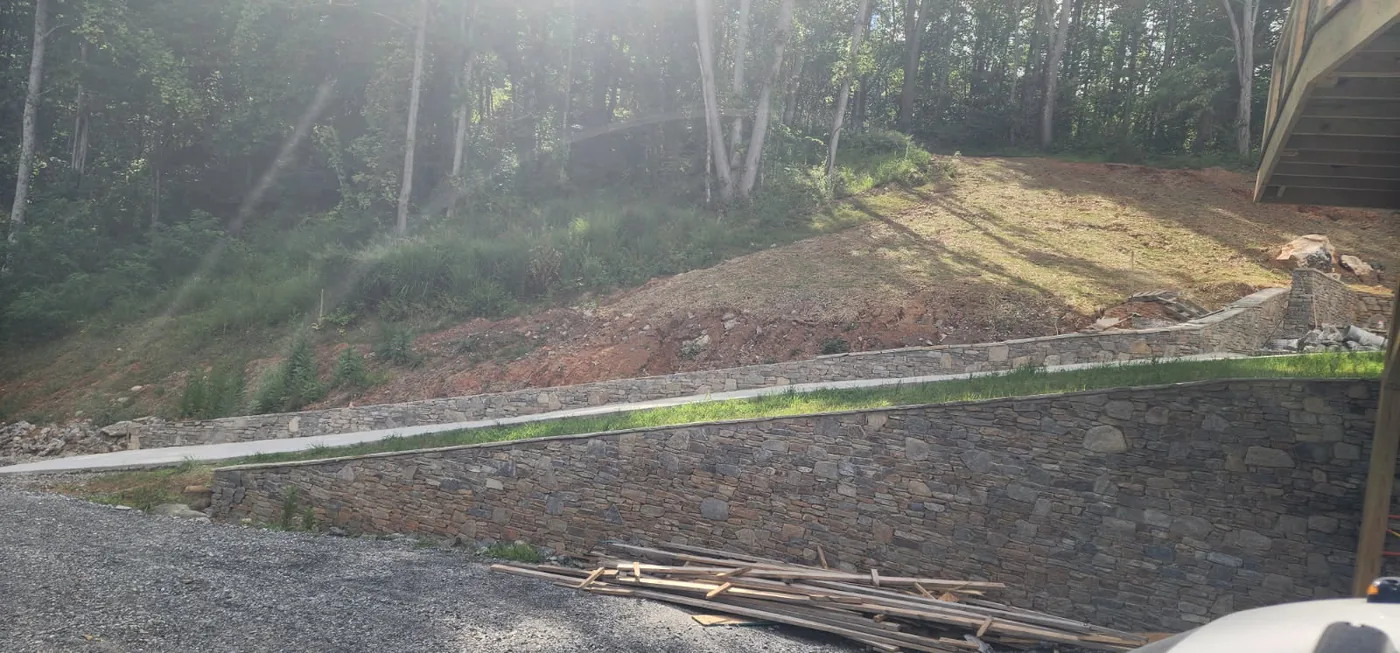
Drive the length of Canton and you notice the same thing a masonry estimator notices: almost nobody has a flat, wide driveway at the front door. The town climbs off the Pigeon River valley into ridges, and most houses sit on a cut bench with a grade either up to the road or down to the foundation. That geometry decides how stone gets to the wall — pallet by hand, wheelbarrow by wheelbarrow, or with a conveyor or crane.
It also decides how far the material travels. Haywood County sits a real haul from the large veneer yards, and a loaded dump truck on mountain two-lanes burns time and fuel. A modest stone order can carry hundreds of dollars of delivery premium before a single piece is set. On a typical Canton chimney or wainscot job, haul and access commonly account for 15 to 30 percent of the quote, which is why two bids on the same wall can differ by thousands.
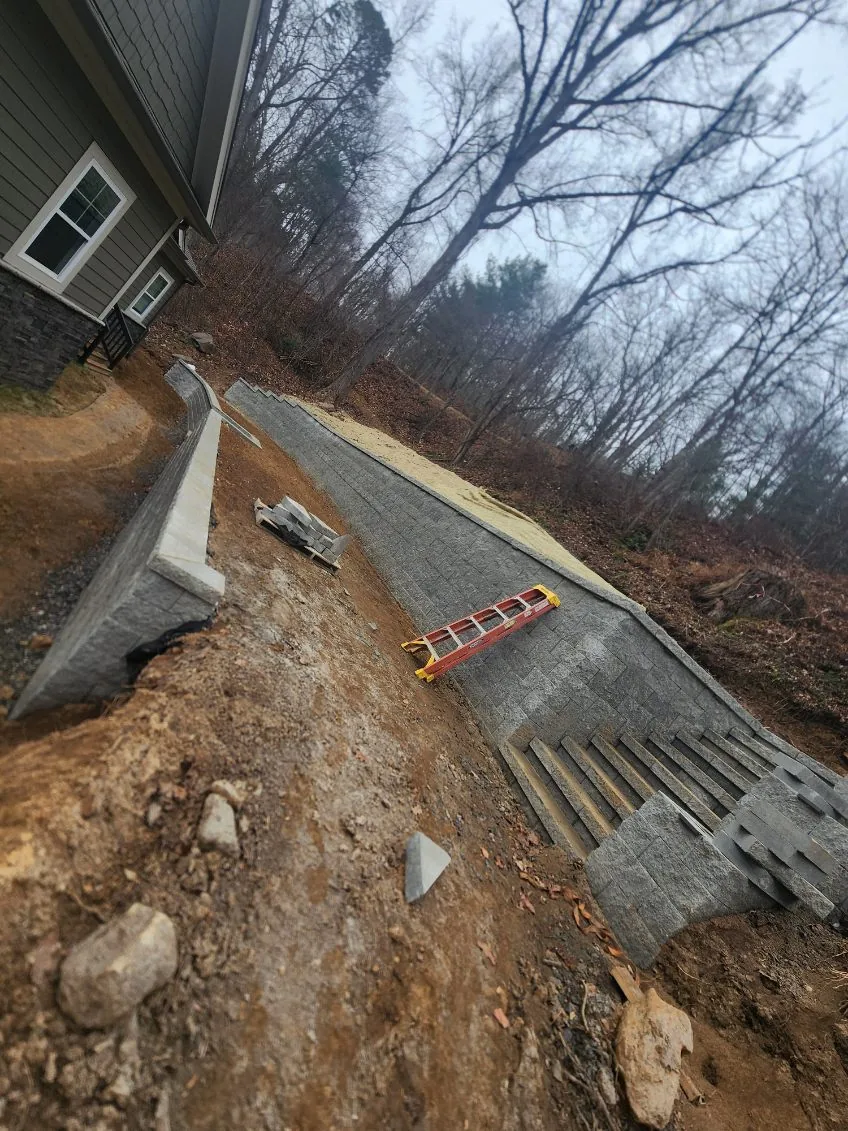
This is the first thing to pin down when you scope a job: where does the truck stop, how far is the wall from that point, and what slope is in between. On the older mill-era streets near the river, that distance is often short but the turn is tight — a loaded truck may not fit past a parked car, so stone gets staged at the street and hand-trucked in. On the ridge lots above town, it's the opposite: plenty of room to park, but a 30-degree slope between the truck and the wall. Both add cost, just in different line items. Neither shows up in a per-square-foot stone price, which is exactly why comparing only material quotes misleads people here.
If you've gotten a bid that doesn't mention the truck at all, that's the sign the estimator hasn't walked the property yet.
What installed stone veneer costs across Haywood County
Below is a working range table. These are regional bands, not flat rates — your grade, wall area, and prep work move the number within the range.
| Scope | Typical installed range | What drives it |
|---|---|---|
| Material only (veneer, per sq ft) | $12–$30 | Stone type, thickness, order size |
| Wainscot over existing masonry or framing | $45–$70/sq ft | Scratch coat need, height, access |
| Full facade, two stories | $60–$95/sq ft | Scaffolding, staging, wall area |
| Chimney re-clad | $2,500–$7,500 lump | Height, roof pitch, haul |
| Foundation skirt / porch base | $35–$60/sq ft | Grade, drainage details nearby |
| Mountain-lot premium (steep, no truck access) | +15–30% | Hand carry, conveyor or crane cost |
If your veneer also needs a wall behind it, the numbers belong on the retaining-wall cost page for Haywood County rather than this one.
Two details shift Canton numbers within those bands. First, the county's housing stock splits roughly into older river-corridor homes and newer ridge builds, and they take veneer differently. An older masonry wall that's already plumb and sound may only need a scratch coat. A newer framed wall on a ridge lot usually needs lath, a drainage plane, and careful flashing — real prep, and real money, before any stone shows. Second, wall height compounds everything: a two-story facade means scaffolding and staging, which is where the upper end of the $60–$95 band lives. A single-story wainscot on a flat, close-in drive sits comfortably at the low end.
Water, weather, and the reason prep matters here
Canton's climate is wet. The federal disaster record for this county shows 19 declared events across 1973-2026, and the overwhelming majority are storm and flood events. That history is the reason a stone veneer wall is only as good as what's behind it. Water that pools at a foundation skirt, or a weep detail that lets moisture escape from a framed wall, prevents the failure mode that turns a nice-looking veneer into a repair bill.
The NC Department of Insurance, Office of State Fire Marshal administers the state code that governs veneer installation details, including the required air space, flashing, and anchorage. Anchors and drainage details aren't optional decoration — they're how the wall survives the next wet decade. In practice, that means asking your mason how the wall drains before you ask what stone it wears.
Before any quote, walk the base of the wall when it's raining and note where water actually goes. It changes how the veneer should be detailed, and it's cheaper to get right the first time. If water sheets off a roof valley onto the wall you're planning to veneer, no stone choice fixes that — the fix starts upslope.
For weather context on scheduling, the National Weather Service keeps the local forecast and climate records for the Asheville region that covers Haywood County — helpful when you're timing a job that has to cure through a wet spring.
Crews, licensing, and how to read a veneer bid here
Veneer work sits in a licensing grey zone that trips up homeowners. The North Carolina Licensing Board for General Contractors sets the threshold at which a job needs a licensed general contractor, and a full stone facade on a mountain home frequently crosses it while a small chimney patch does not. Ask the question directly: is this job under the threshold, and if not, who holds the license?
On a bid, look for these line items before you compare totals: stone type and yard, square footage with a measurement basis, prep (scratch coat, lath, framing corrections), flashing and weep details, access plan for a hill lot, and cleanup or haul-off. A bid missing the prep lines looks cheaper on paper and usually isn't. See our stone veneer service overview for what a complete scope includes.
If a contractor can't tell you what yard the stone comes from or how many pallets the job takes, they're pricing from memory, not from your wall. Ask for the stone sample to be brought to the house so you can see it in the light where it will actually hang — veneer that photographs one way at the yard can read very differently against a shaded foundation in the Pigeon River valley.
Getting a local estimate worth trusting
Canton's housing stock runs from older mill-era homes near the river to newer builds on ridge lots, and each has a different answer on how veneer should attach and drain. A quote built from a phone description rather than a site visit is a guess, especially when grade and driveway access are doing so much of the pricing work here.
Expect any legitimate estimate to start with a walk of the wall, the driveway, and the grade between them. If a contractor can't tell you where the truck will park and how stone reaches the wall, the number isn't finished. For a related scope — walls, steps, or hardscape that lives next to the veneer — start with the retaining-wall contractors in Canton NC page and ask about combined jobs. Hillside homes here often need the veneer base and a retaining structure detailed together, because one affects the drainage of the other.
A good local estimate also tells you what it excludes: permitting, any framing repairs discovered after lath comes off, and replacing rotten sheathing behind a failed drainage plane. Those exclusions aren't a red flag if they're written down. They're a problem when they surface later as change orders.