Why access and haul set the price before design even starts
Clyde sits in the Pigeon River valley at the foot of Haywood County, and the first thing any masonry crew notices on a Clyde estimate is not the patio drawing. It is the driveway. A flat quarter-acre lot off Carolina Boulevard with a wide concrete apron lets a dump truck back straight to the work zone, drop two pallets of pavers and a scoop of base gravel, and leave. A hillside property up Ferguson Farm Road or a tight hollow off Hyatt Creek Road may get that same truck to the mailbox and no farther. Every yard past that point is a wheelbarrow trip, and wheelbarrow trips are labor hours.
Haul distance is the second mover. Natural stone for walls and walkways around here typically comes from quarries in the broader Western North Carolina region, so a Clyde job carries some trucking no matter what. But the difference between a quarry forty-five minutes out and a specialty stone yard two hours away is real money per ton, especially on a wall that needs twelve or fifteen tons of block. Local fieldstone scraped off the property can cost nothing in material and a great deal in cleaning and shaping. The estimate has to price the haul honestly or it will be wrong by thousands.
This is why any hardscaping quote for a Clyde address should start with a site visit, not a phone number and square footage. Grade, truck route, and stone source decide the scope.
Grading on a valley lot: what the slope does to scope
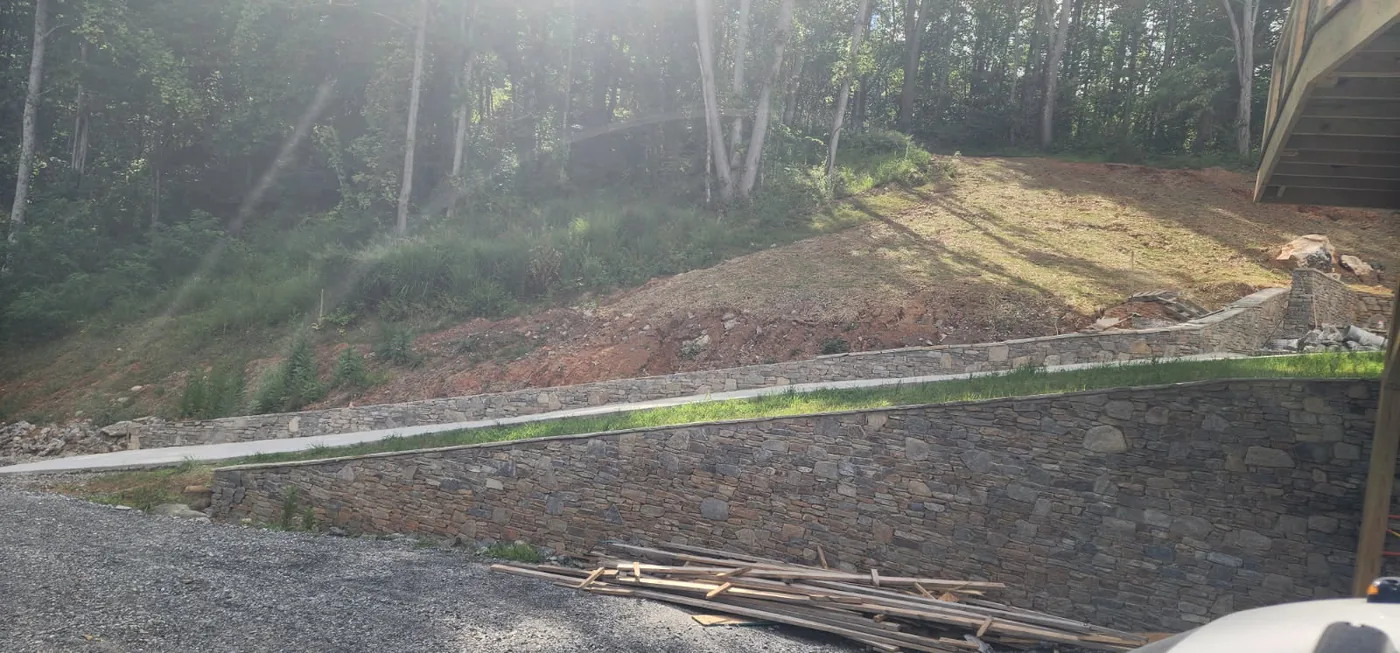
Haywood County terrain is not flat, and Clyde is no exception. Lots that look gentle at the road often fall away behind the house toward the river bottoms, or rise sharply toward the ridge line. That slope dictates whether a patio is a simple excavation and tamp job or a structural build with a retaining wall holding grade on one or two sides.
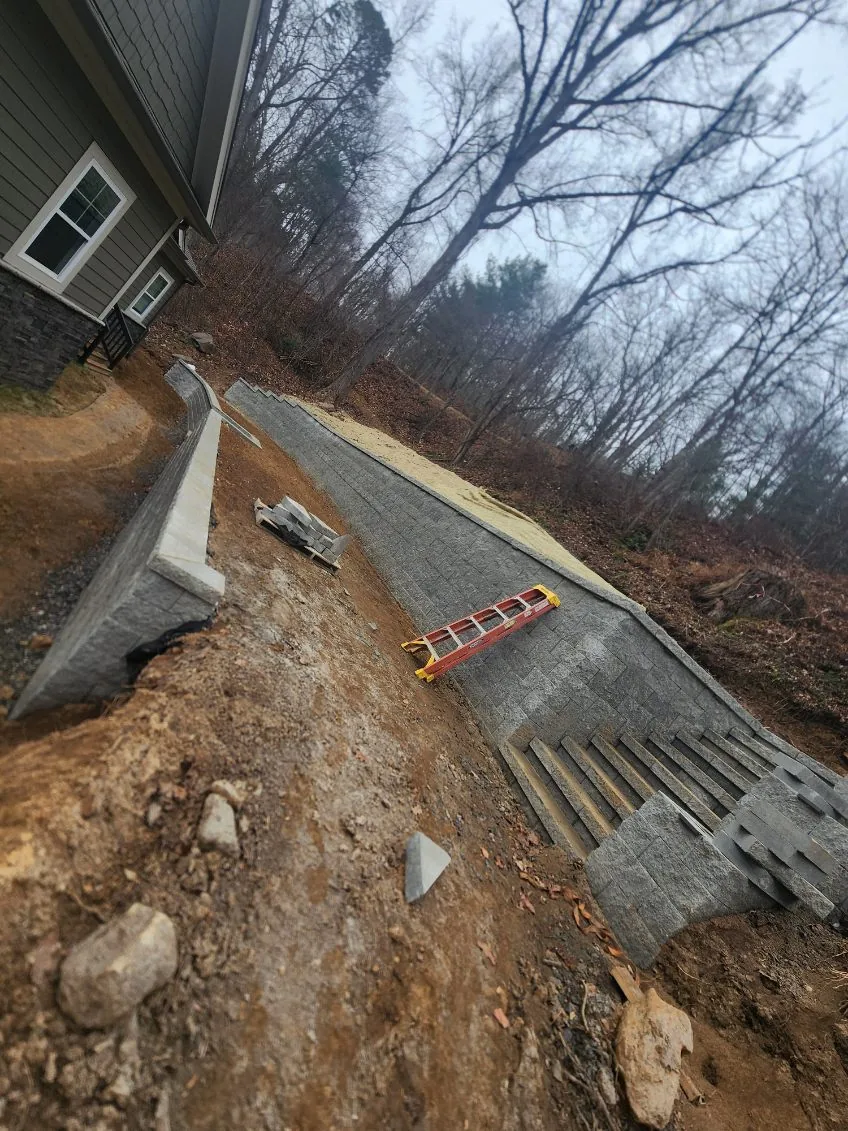
A patio cut into a slope needs retaining on the uphill side and possibly fill retention on the downhill side. Each of those walls needs a proper footer, drainage gravel, and a perforated drain line. Get it wrong and the first heavy rain pushes the wall out. The NC Department of Insurance codes division and the state-adopted residential code treat retaining walls above a height threshold as engineered or permitted structures for exactly this reason, so a wall that looks decorative on paper may need a design and an inspection.
Drainage also matters where the hardscape meets the foundation. Clyde gets the same mountain rain patterns the rest of the county does, and a patio that pitches water back toward a crawl space or basement wall creates a foundation problem that costs more than the patio did. Proper slope away from the house, plus a drain box or French drain at the low point, belongs in the scope from day one.
The Clyde price picture, by scope
These are regional working ranges, not flat rates. Terrain, access, and stone choice move them. For a full breakdown by wall type and height, see the Haywood County retaining wall cost breakdown.
| Scope | Typical range |
|---|---|
| Paver or flagstone patio, flat lot, good access, 200-300 sq ft | $4,500-$9,000 |
| Patio on slope with one low retaining side | $8,000-$16,000 |
| Segmental block retaining wall, 3-4 ft tall, per linear ft installed | $55-$120 |
| Natural stone wall, 3-4 ft tall, per linear ft installed | $90-$180 |
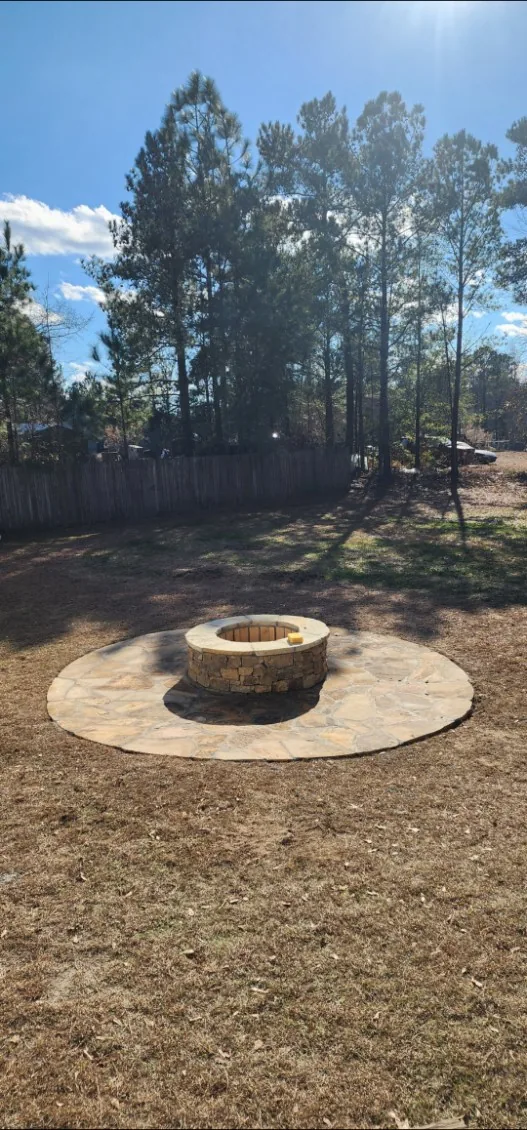
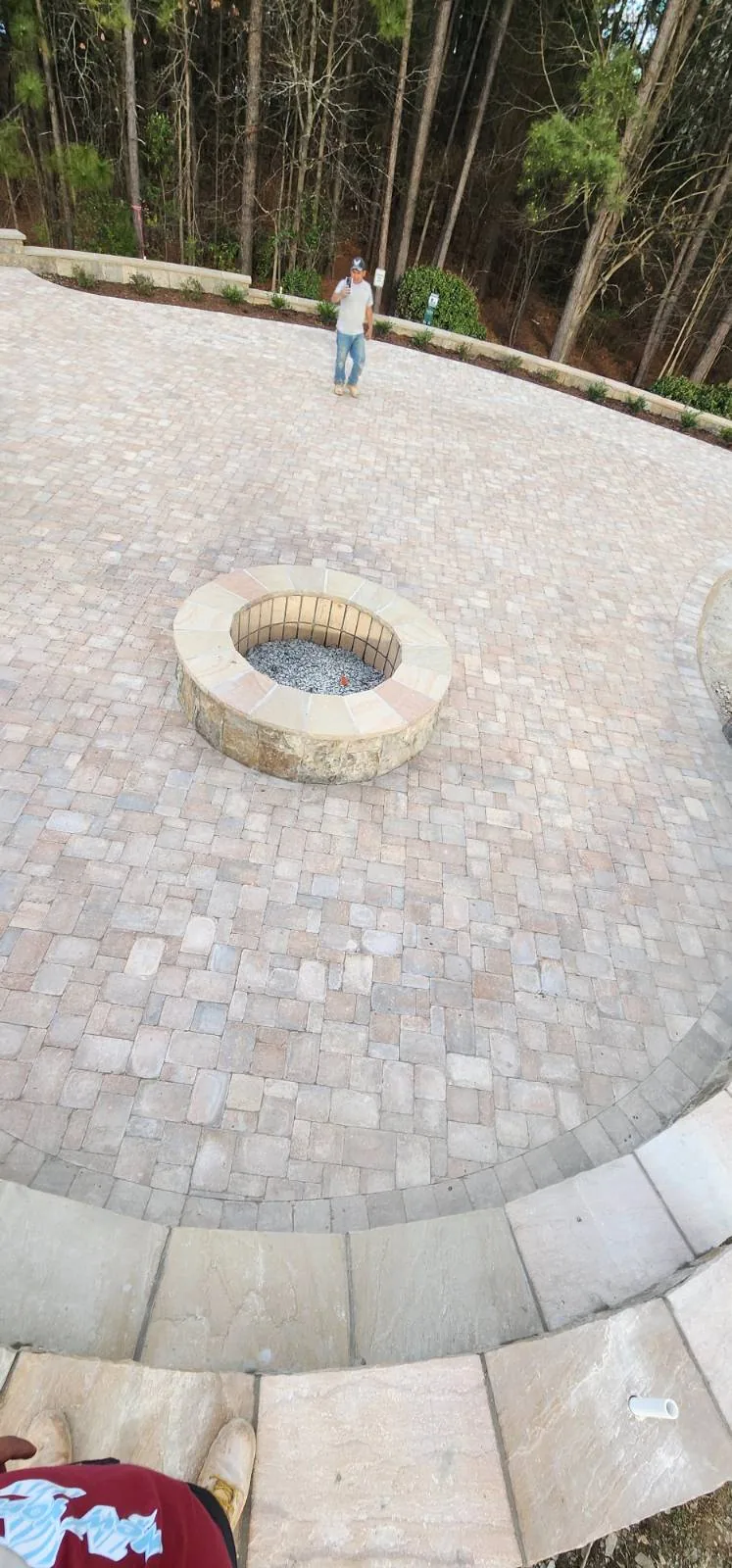
| Fire pit, masonry or block with cap, plus gravel or paver surround | $1,800-$6,500 |
| Walkway or steps, per linear ft, cut stone or paver | $45-$130 |
| Full backyard hardscape package (patio, wall, fire pit, walkway) | $18,000-$28,000 |
A wall over four feet tall, or any wall holding a surcharge load like a driveway or slope above it, needs an engineer's design and often a permit. That engineering line item is not a markup; it is the reason the wall stays put, and a bid that omits it on a tall wall is incomplete rather than cheap.
Who should build it, and what the license line looks like
North Carolina draws a licensing line that Clyde homeowners should know before signing. Small projects below the threshold can be handled by a general masonry or landscape contractor working within limits, but once a job crosses the cost threshold for a general contractor, the state requires a licensed GC. The NC Licensing Board for General Contractors publishes the current threshold and lets you verify a license number directly. Ask for the number and check it. A hardscape crew that cannot produce a license number on a job above the threshold is a risk, regardless of how good the portfolio looks.
Insurance matters just as much. Hardscape work involves excavation, heavy lifting, and cutting stone, and a crew without general liability and workers' compensation coverage leaves the homeowner exposed if someone is hurt on the property. Ask for a certificate of insurance and confirm the dates are current. The best crews in the county hand these over without being asked twice.
If you are starting the search, the Clyde retaining wall contractor guide covers what a qualified local crew looks like and the questions worth asking before you commit.
Water, weather, and why the drainage detail matters here
Haywood County has a long record of federal disaster declarations tied to storms and flooding. The federal record shows 19 declared events touching this county across 1973-2026. That history is not abstract for a hardscape project. It means the ground here gets saturated, and a wall or patio built without proper drainage will be tested. The National Weather Service tracks the rainfall patterns that drive those events, and the pattern is the same one that decides whether your retaining wall holds through a wet spring.
Three details separate a hardscape that lasts from one that fails. First, base preparation: compacted crushed stone at the right depth, not a thin sand bed. Second, wall drainage: gravel backfill and a drain pipe behind every retaining wall, with weep holes at the base course. Third, surface pitch: patios and walkways that shed water away from the house and toward a defined low point rather than pooling against the foundation. A contractor who skips any of these is building something that will need replacing in a few years, and the replacement costs more than doing it right the first time.
Sealing natural stone and choosing the right paver for freeze-thaw cycles also matters in this climate. Stone that absorbs water and cracks in winter is not a bargain at any price.