In Fletcher, the water question comes before the rock question
Most Fletcher properties sit on gentle-to-moderate ground that was graded for subdivision drainage, which means runoff already has an assigned path when you arrive. A backyard pond is a new low point on that path. If the falls pit sits below the surrounding grade and the uphill neighbor's downspouts still empty toward your fence line, the feature will fill with silt after every summer storm and the pump will spend its life moving mud.
So the first honest conversation on a Fletcher lot is not "how tall a waterfall" but where the overflow goes. A recirculating system only loses water to evaporation and splash, but it still needs a legal, gravity-fed place to dump surplus after a hard rain. On these lots that usually means a daylighted discharge to a swale, a dry creek bed that ties into the existing subdivision drainage, or a sump and pump if the yard is flat. Get that wrong and no amount of boulder work saves the build. Hendrickson and similar older Fletcher neighborhoods were platted before modern stormwater rules, and the runoff from those streets has to go somewhere — the county seat for all of it is Hendersonville, and the terrain between here and there is exactly why grading matters more than stone choice.
What a stone waterfall and pond package actually includes
You are buying four things at once: the liner and underlayment, the boulder stack, the pump and plumbing, and the edge treatment. The boulders are the visible half; the plumbing is the half that decides whether the feature works in year three. Ask any builder to walk you through the pump sizing calculation and the cleanout access before you talk about rock. Under the state's rules, projects above the general contractor threshold need a licensed contractor — the NC Licensing Board for General Contractors publishes those thresholds, and water feature work that crosses into retaining structures or electrical hookups usually does.
The Henderson County price picture
Bands below reflect typical residential work in this county. Site access, boulder haul distance, and whether the electrical run has to be trenched are the big movers — a tight side yard that needs a mini-excavator and hand-carry will land at the top of every row.
| Scope | Typical range |
|---|---|
| Small pondless waterfall (boulder stack, buried basin) | $4,500-$9,000 |
| Pond with liner, falls, and edge stone | $6,500-$22,000 |
| Larger pond plus stream and multi-drop falls | $18,000-$45,000 |
| Pump, filtration, and plumbing upgrade only | $1,200-$4,500 |
| Drainage correction, swale, or discharge line | $1,500-$7,500 |
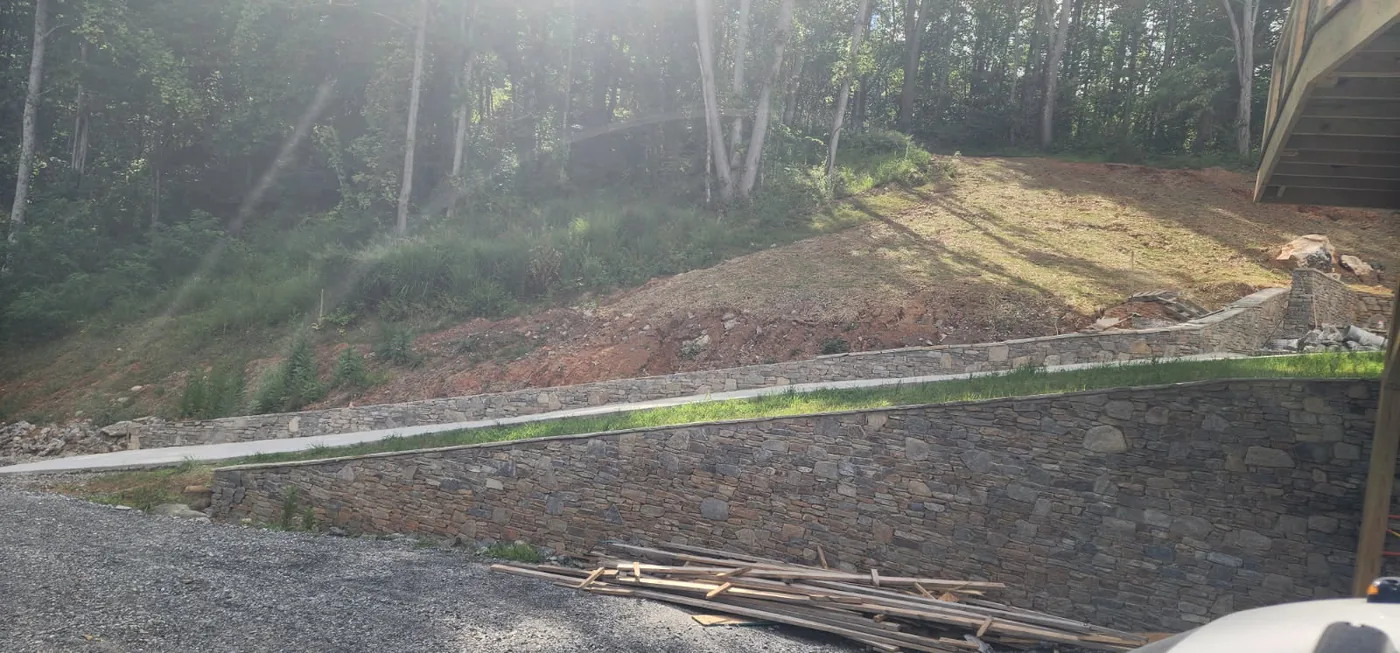
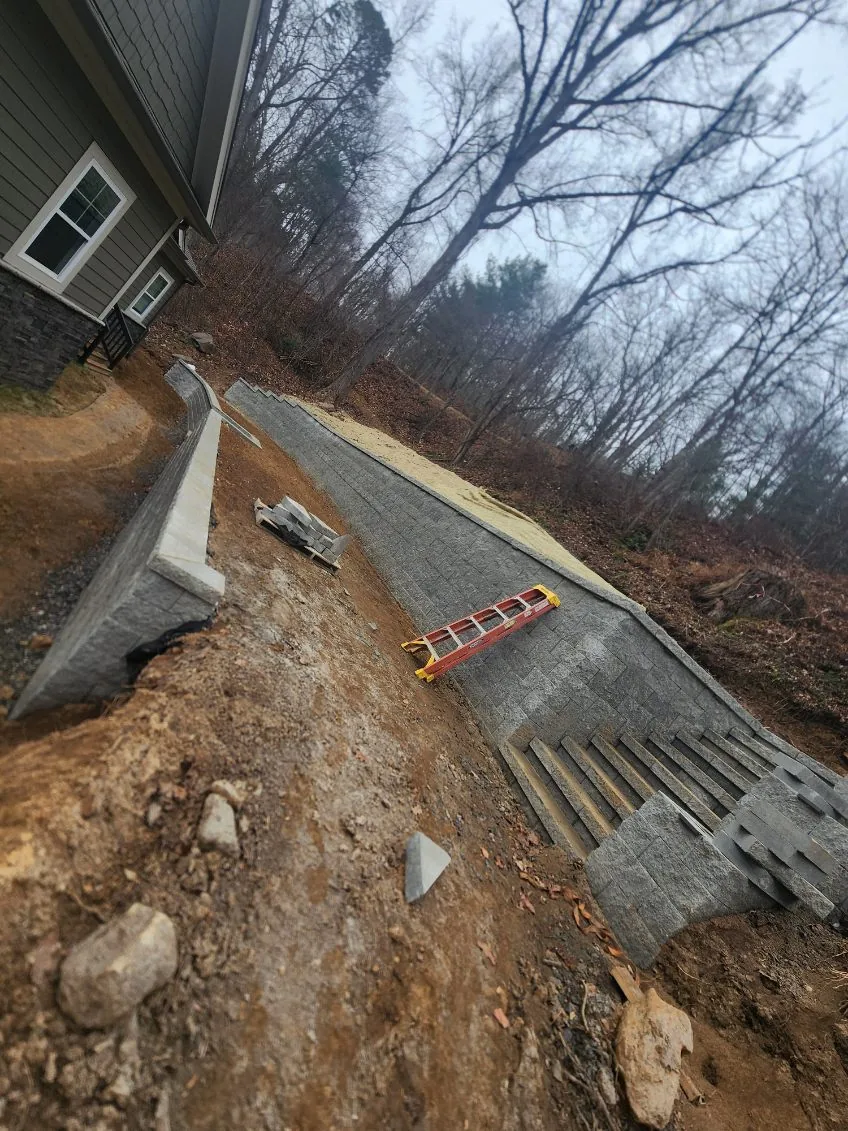
Related work on the same lot is priced separately: see the Henderson County retaining wall cost breakdown, since a pond that sits against a slope almost always needs one.
Boulder sourcing and the slope above the feature
Western North Carolina has real stone, and the difference between a stacked-fieldstone edge and a trucked-in granite wall is both visual and financial. Local riprap and fieldstone read correctly against Henderson County's wooded lots; uniform quarried block reads like a commercial install. The tradeoff is weight and haul — a boulder that looks right in a photo may require equipment the lot cannot admit.
The slope above the pond matters just as much. If the grade behind the feature is steeper than roughly three to one, the liner edge will not hold soil on its own and you are building a retaining structure, whether or not anyone calls it one. Those assemblies are governed by the state building code (see the NC Department of Insurance / OSFM code resources), and getting it wrong means the hillside ends up in the pond. If your waterfalls sit at the base of a cut bank, bring in Fletcher retaining wall contractors to handle the structural side before the liner goes down.
Season, maintenance, and the mosquito tax
A pond in Henderson County runs warm from late spring through early fall, which is exactly the window when standing water breeds insects. Moving water is the answer, and so is fish or aeration, but a pond with dead spots is a pond with larvae. This is the reason many Fletcher homeowners choose a pondless basin for the front of the house and a full pond out back. The federal disaster record is worth a glance here too: 16 declared events touch this county across 1978-2026, and the flood and storm family dominates. A pond sited in a low corner that has flooded before will flood again — check the National Weather Service rainfall history for the area and place the feature accordingly.
Planning before you excavate
Three checks save money. First, call 811 before any digging — irrigation, gas, and invisible fence lines run through these yards and the utility locate is free. Second, confirm the electrical plan: a pump needs a GFCI-protected circuit, likely a trench, and an electrician. Third, decide whether the feature is a seasonal or year-round commitment — winterizing in this climate means draining the pump and plumbing, not just unplugging it. For the full range of what we build, the stone waterfalls and ponds overview covers design options, materials, and sizing.