Where the money actually goes on a Flat Rock veneer job
Flat Rock is not a flat-rock town, and that shapes every veneer bid. Beneath the laurel and the old estate walls, the ground rolls — lots off Greenville Highway climb and cut, and a wall that reads as four feet from the road may be nine feet from the footer. Lath and scratch coat do not care, but staging, scaffolding, and labor hours absolutely do. On a typical lot here, the stone itself is rarely the biggest line: by the time a crew prices a job, material sits near 30–40% of the total, with the rest split across prep, lath, scratch, setting, and finish.
Four things move the number more than any other: what is behind the veneer (new framing versus 1940s brick), how much of the wall is above eight feet, how far the stone has to be carried uphill, and whether an existing wall needs to come down first. A homeowner comparing two bids on the same facade is usually looking at two different answers to at least one of those questions. The stone veneer overview walks through what each assembly entails.
Scope versus price range for common Flat Rock walls
The table below reflects regional bands for Henderson County work — actual numbers depend on access, wall height, and stone selection.
| Scope | Typical range | What moves it |
|---|---|---|
| Veneer over new wood-framed wall (lath + scratch + stone) | $18–$28 / sq ft | Wall height, stone type, trim |
| Re-veneer over existing brick or block | $22–$34 / sq ft | Surface condition, bonding prep |
| Tear-off existing veneer first | $3–$7 / sq ft added | Disposal, substrate repair found underneath |
| Interior fireplace or chimney surround | $2,500–$9,000 per assembly | Height, hearth, mantel, clearances |
| Foundation skirt / wainscot band | $24–$38 / sq ft | Grade contact detailing, drainage tie-in |
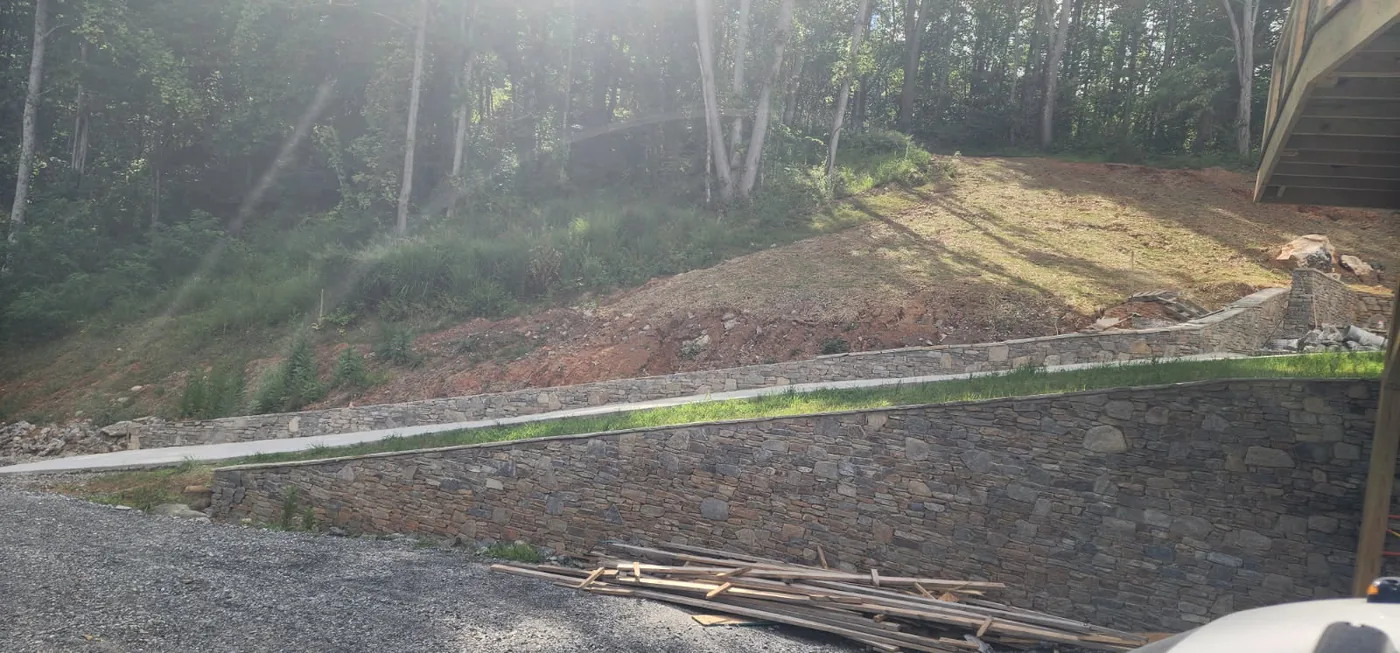
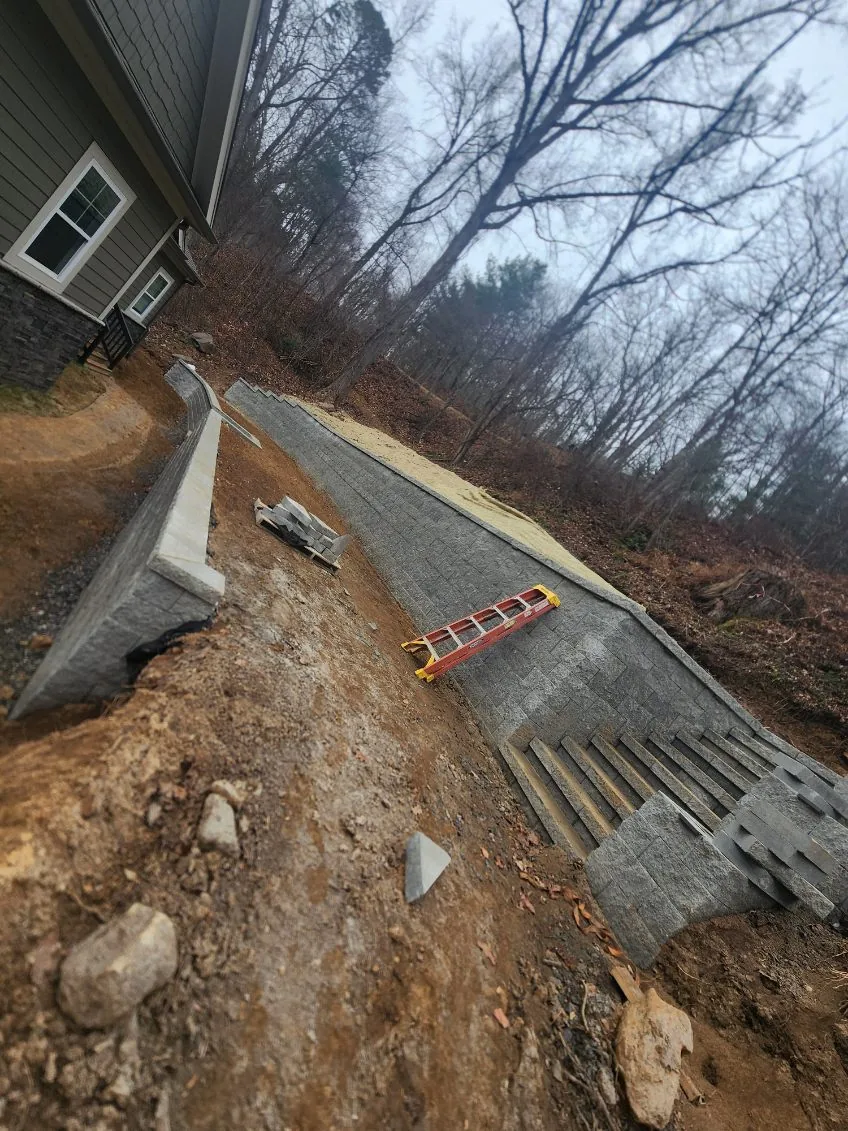
| Retaining wall veneer (rear-face drainage required) | Quoted with wall — see Henderson County retaining wall cost | Wall engineering, weep detail, cap stone |
Two rows deserve a second look. Foundation skirts are common here because so many homes sit on exposed crawl-space stem walls — but that band sits in the splash zone, and a veneer that holds water against a foundation is a problem, not a finish. And any wall that retains soil is not a veneer job at all in the structural sense: it is a retaining wall with a stone face. The Flat Rock retaining wall contractors page covers how that scope is priced separately.
The substrate question nobody wants to ask
Adhered veneer on this town runs into three substrates: new stud walls with sheathing, mid-century brick and block, and old stone-and-mortar estate walls. Each demands different prep. Framed walls need a drainage plane, lath, and a scratch coat, per the veneer standard in the International Code Council family of codes that NC adopts. Existing masonry may need grinding, patching, and a bonding agent — or may need the old face removed entirely, because mortar that has gone soft will not hold a new veneer no matter how good the stone is.
That last point explains most callbacks in older Henderson County homes: veneer applied over failing substrate fails with it. A crew that shows up with a hammer and probes before quoting is doing the work correctly. One that measures and leaves is quoting a number they cannot stand behind.
Water, slope, and the Henderson County angle
Federal disaster data for this county tells the local story: 16 declared events over 1978-2026, overwhelmingly storm and flood family. That history matters to veneer because water is the quiet killer — it wicks up from grade, sits behind stone without a drainage plane, and freezes against a saturated wall in a cold snap. Grading, gutters, and how an uphill neighbor's runoff reaches your wall decide whether a beautiful veneer lasts thirty years or ten.
The EPA's guidance on stormwater and site drainage applies to homes as much as to subdivisions: keep water moving away from the structure, and the wall assembly does the rest. On Flat Rock's slopes, that usually means a properly drained footing, a capillary break above grade, and weep detail anywhere stone meets soil.
Who can legally take the job, and who should
North Carolina draws a line between finish work and structural work. Veneer over a framed wall is generally a specialty scope, but once a job involves removing and rebuilding a structural wall, adding a retaining wall above the threshold, or touching plumbing for a fireplace gas line, different rules apply. The NC Licensing Board for General Contractors sets the dollar threshold that triggers a general contractor's license, and any gas appliance work falls under the NC State Board of Examiners of Plumbing, Heating and Fire Sprinkler Contractors. Ask which license covers which part of your project before you sign — it is a fair question and a fast filter.
For pure veneer — a fireplace surround, an accent wall, a foundation skirt with no structural change — a competent specialty mason is the right hire. For anything that changes how a wall carries load or how water moves under a house, bring in a licensed GC and expect the bid to include a permit line you would not see on a decorative job.
Reading a Flat Rock veneer bid
A bid worth comparing will list stone type and quantity, substrate prep, lath and scratch materials, a drainage plane if the wall is framed, flashing at every horizontal transition, and a disposal line if anything is coming off. If two bids differ by more than about 20% on the same scope, one of them is missing a line — usually the drainage or the prep, and usually the cheaper one. Ask the lower bidder what they excluded, in writing. The answer is the whole conversation.