How a Mills River flagstone job actually runs, week by week
A patio in Mills River rarely starts with stone. It starts with a shovel and a decision about water. Because so much of this Henderson County community sits on gentle-to-moderate grades feeding the French Broad and Mills River drainages, water has somewhere to go and will find it. The first day on site is layout and call-before-you-dig marks; day two is excavation to depth, usually 6-9 inches depending on stone thickness and whether foot traffic or furniture will sit on it. Base goes in next: 4-6 inches of compacted crusher run, then a bedding layer. Stone-setting is the day the project starts looking like the drawing, with irregular flagstone laid, tapped, and leveled piece by piece and cuts made as needed rather than forced. Joints get filled, the surface gets compacted and swept, and edges get locked with a border or soldier course. Add a week for a wet week; mountain weather writes its own schedule. Most single patios finish inside 5-12 working days, and the homeowner walkthrough comes last, not first.
The sequence matters because every stage depends on the one before it. If the crew is setting stone on day one, be cautious. If the crew is still grading or fixing positive drainage toward a low corner on day three, that is not slowness; that is a patio being built to survive a Henderson County spring. The homeowner walkthrough at the end should cover joint sand level, edge restraint, and where water runs off after a hard rain.
What the price actually covers
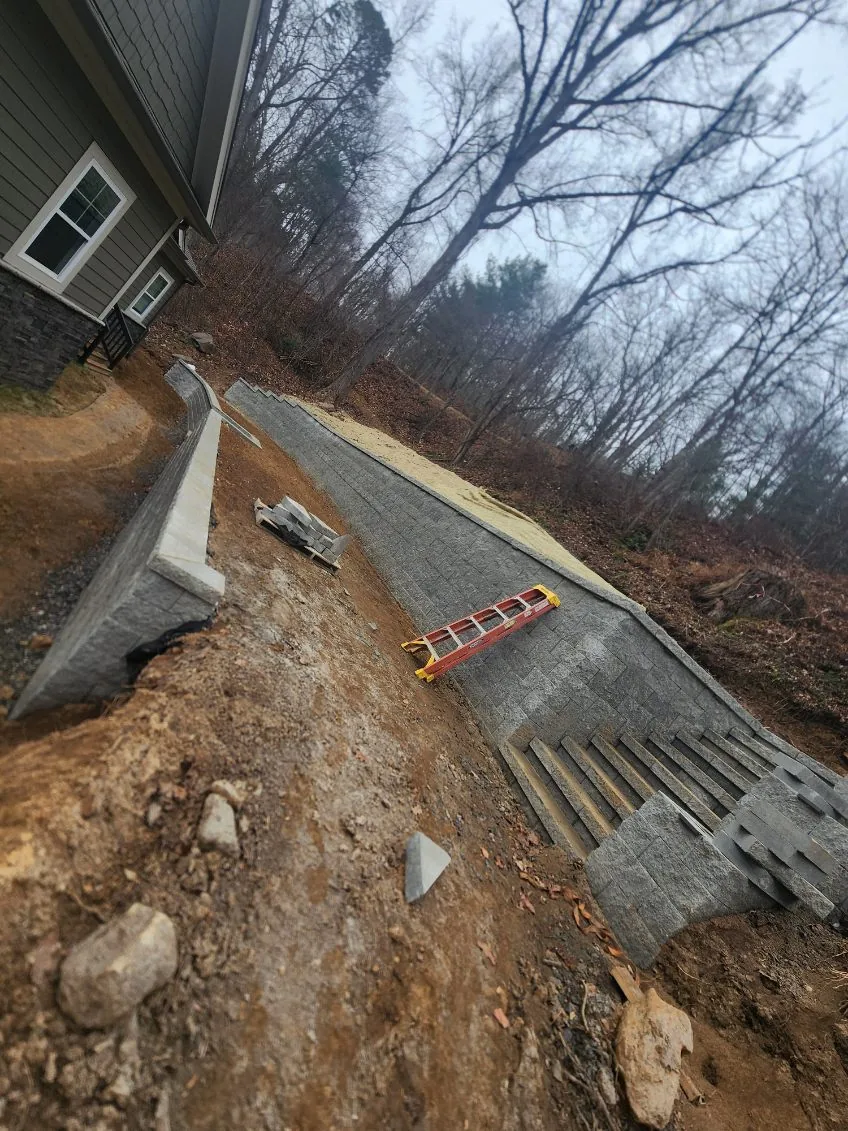
Quotes in this trade separate into two families: the stone and the labor under it. Flagstone itself is sold by the ton or by the pallet, and thickness drives both price and how much base depth is needed. Labor is nearly always the bigger number because flagstone is set by hand, one piece at a time, and irregular stone takes longer than dimensional pavers. Slope adds cost because it adds retaining, steps, or both. If your patio needs a grade change, the Henderson County retaining wall cost breakdown explains what a wall-side budget looks like. The table below reflects honest regional bands, not a quote.
| Scope | Typical project range |
|---|---|
| Small patio, 150-250 sq ft, simple grade | $3,800-$6,500 |
| Standard patio, 250-450 sq ft, minor slope | $6,000-$10,500 |
| Large patio or terrace, 450-700 sq ft | $9,500-$14,000+ |
| Steps or grade-change integration | $900-$3,000 added |
| Seating wall or border course | $700-$2,500 added |
| Drainage correction before base | $500-$2,200 added |
Treat any bid that omits base depth, compaction, or drainage as incomplete, not as a bargain. The scope that hides under the stone is the scope that fails first. Ask for the stone and the labor as separate line items; it is the clearest way to compare two bids without guessing.
Why Henderson County patios fail, and how the sequence prevents it
Federal disaster records tell the story of water in this county: 16 declared events touch Henderson County across 1978-2026, overwhelmingly storm and flood family. That history is why sequencing matters more here than in drier markets. Drainage design precedes excavation, not the other way around. Base compaction precedes bedding. Bedding precedes stone. Skip a step and the patio tells on you within two seasons, with rocking stones, sand washing out of joints, and a low corner holding water after every summer storm. The North Carolina Building Code Council treats site drainage and exterior flatwork as serious requirements, and the International Code Council model codes back that up. A crew that can explain the order of operations, and the reason for each one, is a crew that has built patios through wet mountain springs before.
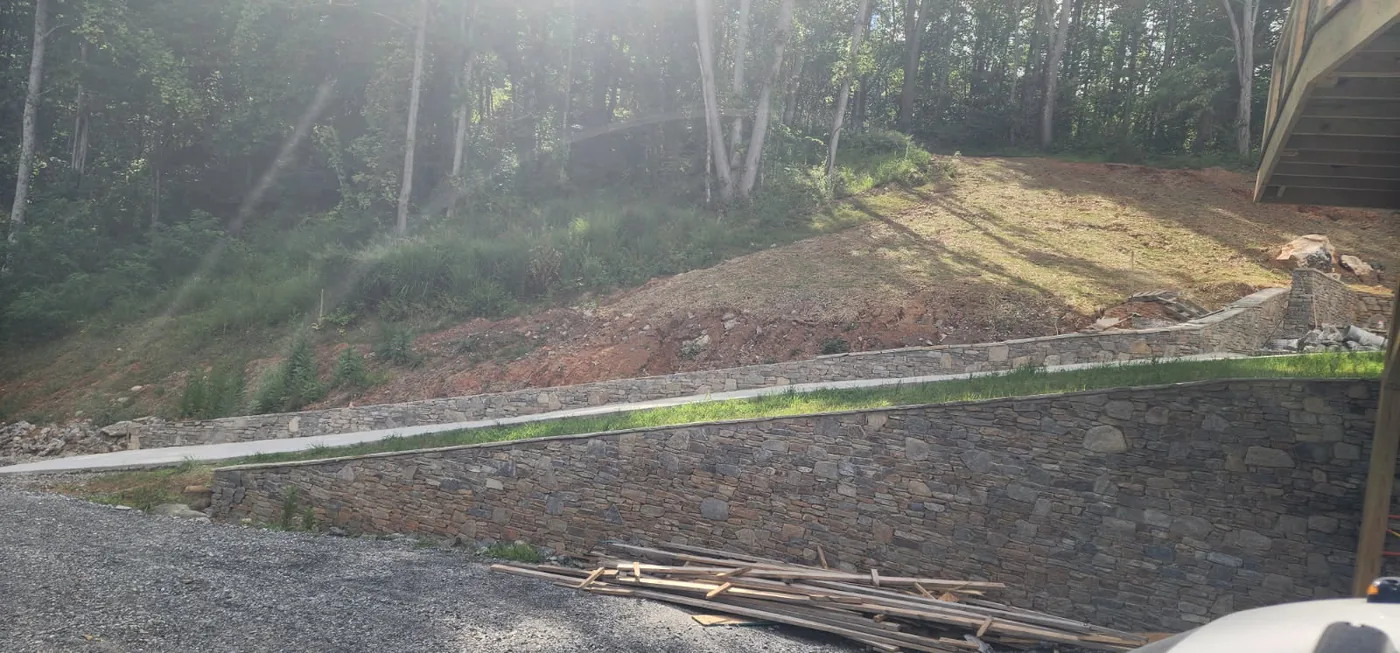
Terrain in this part of Henderson County is rarely flat for long. Yards step down toward creeks and roadbeds, and a patio that does not account for that grade will push water toward the house or pond on the uphill edge. Correcting that before base is installed costs far less than tearing out stone later. Ask any prospective crew to say out loud where water leaves the patio and where it goes after that. The answer should be specific.
Stone choice and what it does to schedule
Flagstone in Western North Carolina usually means one of a few regional stones, and the choice moves both the number and the calendar. Thinner veneer-style flagstone goes down faster but flexes more under frost and heavy furniture; thicker, heavier slabs take more base, more time, and more compaction, but they hold their plane for decades. Irregular shapes mean more cuts and more setter judgment; sawn or semi-dimensional flagstone schedules more predictably. If your design calls for a specific stone, order lead time can add a week or more before the crew ever arrives. Discuss ordering first, then schedule the dig.
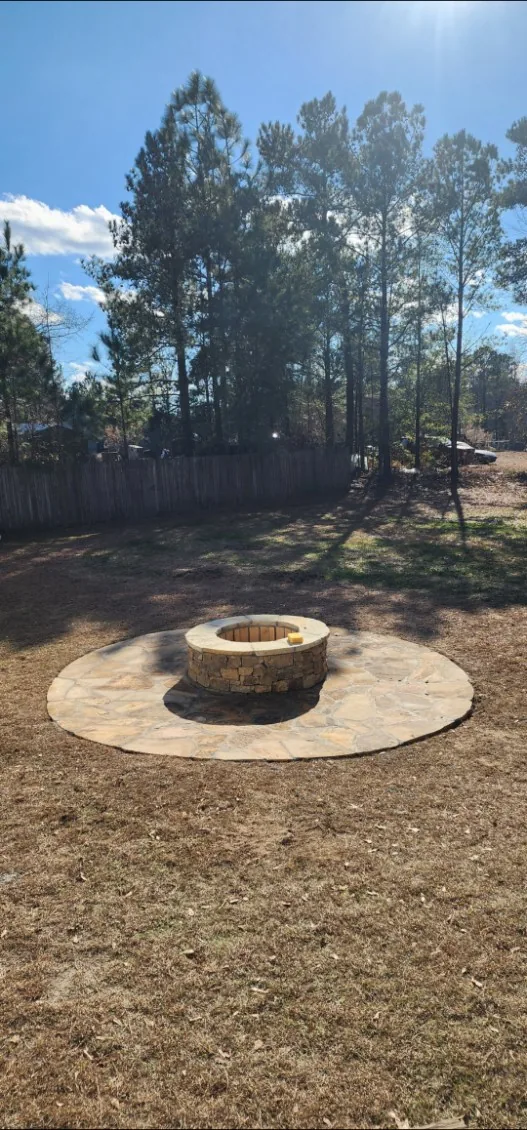
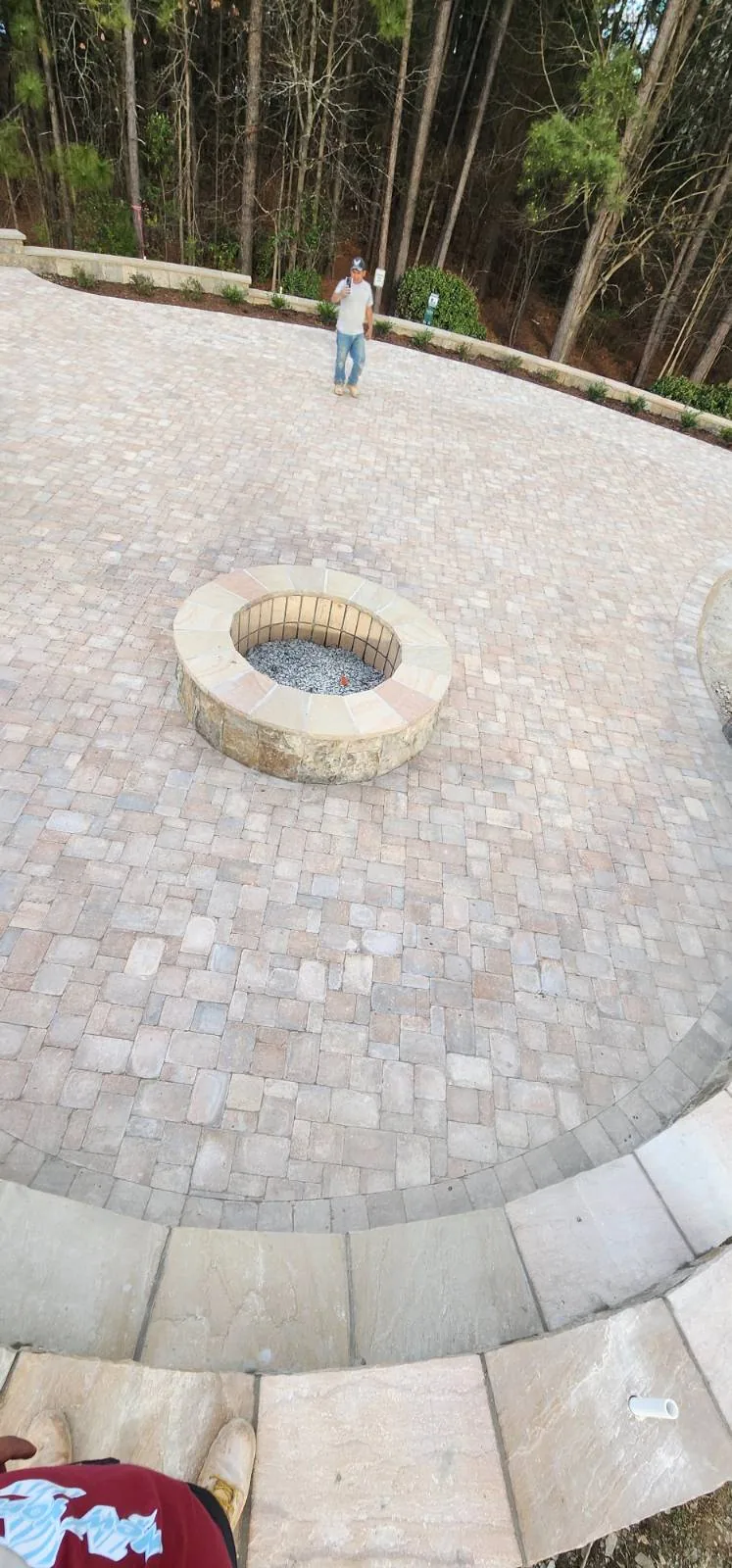
Consider too how the patio will be used. A fire pit corner, a grill pad, or a seating wall all change stone thickness and edge restraint. If the design calls for a wide terrace off a walkout basement, thicker slab and more base are worth the schedule. If the plan is a simple landing off a back door, thinner stone with a solid border can look right and stay strong. The flagstone patio overview goes deeper on stone families, joint styles, and how each one behaves in a freeze-thaw climate.
Choosing and sequencing the crew
North Carolina draws a licensing line between small flatwork and larger projects. Jobs above the statutory threshold generally require a licensed general contractor, verified through the North Carolina Licensing Board for General Contractors. Ask who holds the license and whether the stone-setting crew is in-house or subbed. Then ask the sequencing question: drainage, base, stone, in what order, and why. Crews who answer that cleanly are the ones whose patios last through a Henderson County spring. If retaining work is part of your scope, review the retaining wall contractor guide for Mills River before signing anything.
A written scope should list base depth, compaction method, stone type and thickness, joint material, edge restraint, and how drainage is handled. That list makes it easy to compare bids fairly and to know what is not included. On a hillside lot, the difference between two similar-looking quotes is usually drainage and base, not the stone on top.