How a Laurel Park stone job actually runs, start to finish
Most Laurel Park properties sit on a grade that makes a straight run of steps impossible. The town grew up as a summer estate community, and its best-known streets follow ridgelines above Hendersonville, so front walks routinely drop eight to twenty feet from the road to a door. That shape drives the whole schedule of a stone steps and walkways project in Laurel Park NC: nothing gets ordered until the rise has been measured twice.
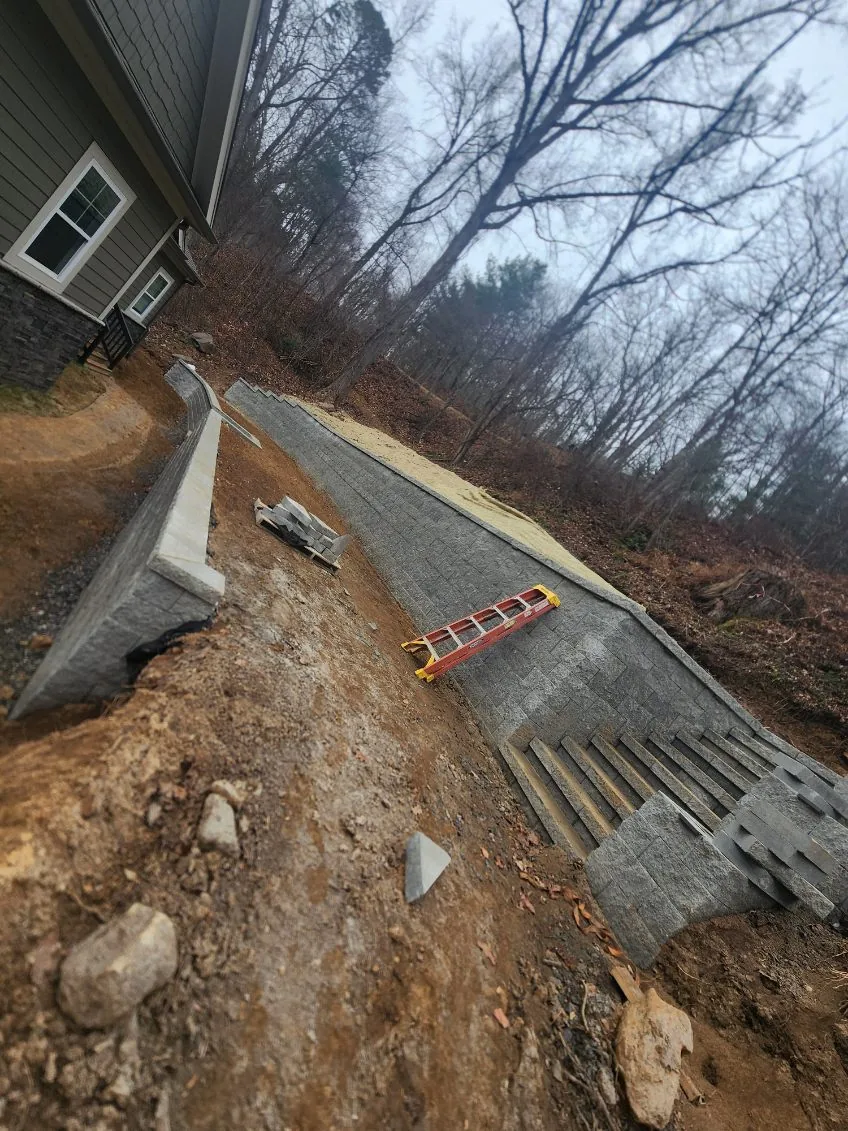
Here is the honest sequence a competent crew follows. Days 1–2: layout and demolition. A builder's level or rotary laser establishes total rise, run, and landing locations. Old concrete stoops, railroad-tie timbers, and failed pavers come out and haul off. Days 2–3: excavation and base. Treads get dug to depth, typically six to ten inches of compacted base for a walkway and deeper under step footings, with geotextile fabric over Henderson County's red clay so the base does not pump silt. Days 3–5: stone setting. Treads are set bottom-up so each course is checked against the one below it. Days 5–8: drainage and finishing. French drains, gravel curtains, and gutter extensions get tied in before backfill, not after. Final day: rails, lighting, and clean-up — handrails where the code requires them, low-voltage path lights if the customer wants them, and a wash-down.
A short set of four or five treads with a small landing is a two-to-three-day job. A full hillside walk with switchbacks, a stoop rebuild, and a retaining transition can run two to three weeks. Weather moves everything: wet clay will not compact, and setting stone on saturated base is how a walk fails in year two.
What drives the price on a graded lot
Two Laurel Park jobs with identical square footage can differ by thousands of dollars, and grade is almost always the reason. Rise per run, the number of landings, whether footings have to be dug into slope, and whether railings are triggered by the drop all change the labor picture before a single stone is picked. Stone selection matters too: a regional granite or fieldstone tread costs more per piece than a manufactured concrete paver but outlives it by decades.
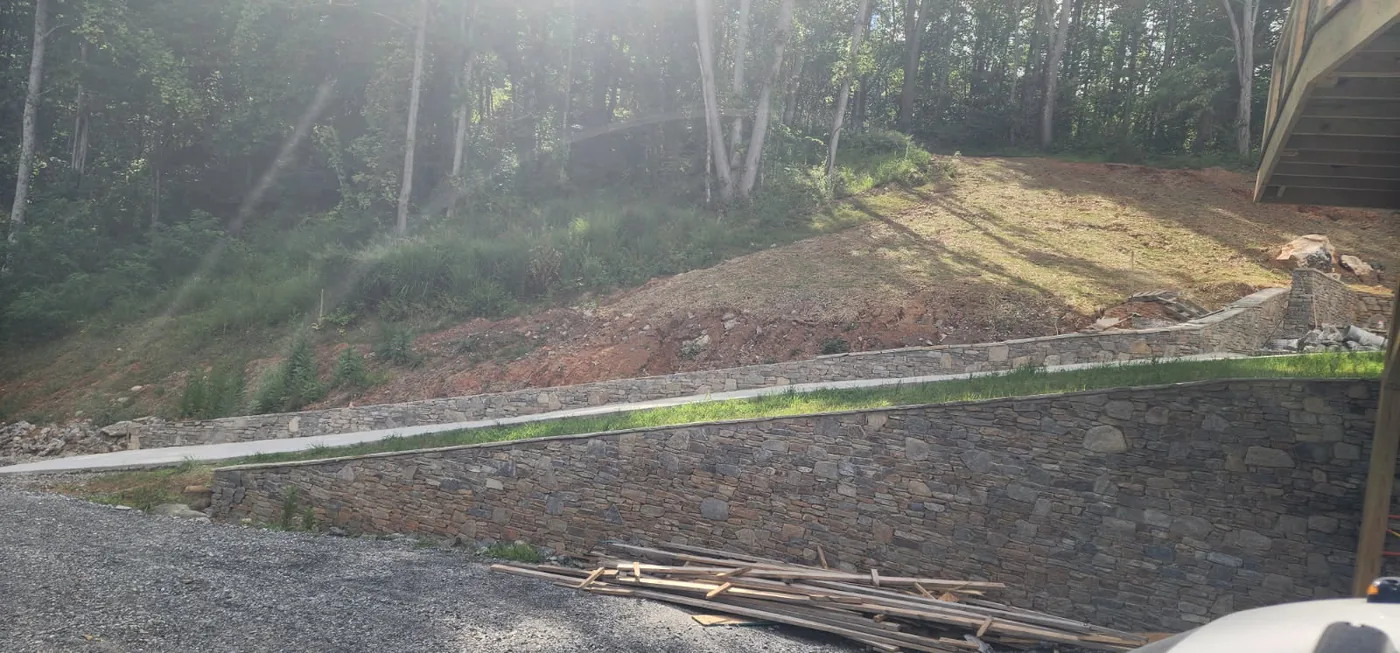
For the structural retaining components that often bracket a walk, the Henderson County retaining wall cost table shows how wall height and engineering drives the number separately from the step work itself. If a wall is part of your project, budget it as its own line.
| Scope | Typical price range | Typical duration |
|---|---|---|
| Short stone stoop (3–4 treads, reset existing landing) | $1,800–$3,600 | 1–2 days |
| Sloped front walk, 30–60 linear feet, stone treads and landings | $3,200–$7,500 | 3–6 days |
| Full hillside walk with switchbacks and drainage | $7,000–$11,500 | 1–2 weeks |
| Walk plus retaining transition and drainage corrections | $9,500–$18,000+ | 2–3 weeks |
| Railings, lighting, and finish details | $600–$2,500 | added to schedule |
Any of those brackets can move. A bid that lands far below the band for your scope is usually missing the base depth, the drainage, or both.
Base, water, and the freeze line
Henderson County gets real winter. Ground here freezes, thaws, and moves, and stone that sits on a shallow base will heave and go out of level within a season or two. The drainage half of the job is what keeps the steps where the crew put them: surface water has to be intercepted above the top tread, carried around the walk, and released below it. On Laurel Park's estate lots the uphill neighbor's runoff is often the actual culprit behind a failed walk, and no amount of new stone fixes it.
Compaction is not optional. Base material gets placed in lifts and compacted with a plate or jumping jack, and the crew should be able to tell you the depth and the compaction method in the bid. Handrail rules follow the residential building code, which the International Code Council publishes and North Carolina adopts with amendments — if your walk drops more than the threshold, plan on a rail whether or not you want one.
Checking a crew before you sign
North Carolina draws a licensing line at project value, and hardscape work can cross it fast once walls, drainage, and structural components are in the same scope as the steps. The NC Licensing Board for General Contractors is the place to confirm whether your contractor is required to hold a license and does. Ask for it directly, and check the number yourself rather than taking a photo of a card at face value.
Beyond licensing, two questions separate experienced hillside crews from generalists. First: how do they handle the base under the bottom tread, where water collects? Second: what happens at the top, where the walk meets the grade? A crew that has built on Laurel Park's slopes will answer both without hesitating. When you are ready to compare scope items side by side, the Laurel Park retaining and hardscape contractors page covers what to look for, and the stone steps and walkways overview explains the scope options before anyone comes out.
Storm history and why it shows up in bids
The federal disaster record for this county — 16 declared events across 1978-2026 — is dominated by storm and flood family events, and that history is written into the fine print of a good Laurel Park estimate. Heavy rain on a graded lot does not just run across a walk; it gets under it, and once the base is compromised the treads follow. That is why a serious bid includes gutter extensions, surface grading, and a drainage line item even when the walk itself looks structurally fine. If the storm history in your part of the county has already rearranged your yard once, that line item is not upsell — it is the reason the steps will still be level in five years.