Where Black Mountain water comes from, and where the stone has to send it
Black Mountain sits at the mouth of the Swannanoa Valley, and the residential ground tells that story in a very specific way: lots that step up toward the ridge, lots that drop quickly toward the creek bottom, and a downtown grid where hundred-year-old stone foundations and retaining walls are still doing their original job. The water problem is not rainfall volume. It is that Black Mountain's slope grades concentrate runoff into small channels, and those channels almost always aim at the nearest piece of stone work — a wall, a set of steps, a foundation skirt.
So the first question on any stone job here is not which stone. It is where the uphill water is being sent. A dry-stack wall that has a graded swale and a clean daylight outlet behind it will hold its line for decades. The same wall backfilled against a spring seep will lean within two seasons. That is why we walk the lot above the work before quoting — the water path above a wall is part of the wall, even though it is not part of the invoice.
How stone work is scoped and what it costs here
Stone masonry prices in Buncombe County move on four things: stone type and haul (fieldstone, Tennessee ledge, and imported veneer price very differently), whether the work is dry-laid or mortared, how much of it is below grade, and how tight the access is on a ridge lot. Below is a working scope table, not a quote. Real numbers come after someone walks the yard with a level and a spade.
| Scope | Typical unit | Realistic price range |
|---|---|---|
| Dry-stack garden wall (under 3 ft) | per face foot | $45–$75 |
| Mortared stone retaining wall (engineered, over 3 ft) | per face foot | $85–$150 |
| Stone steps, rebuilt or new | per step | $450–$1,200 |
| Gravel-and-stone walkway | per square foot | $18–$35 |
| Stone veneer on a chimney or entry | per square foot of face | $40–$75 |
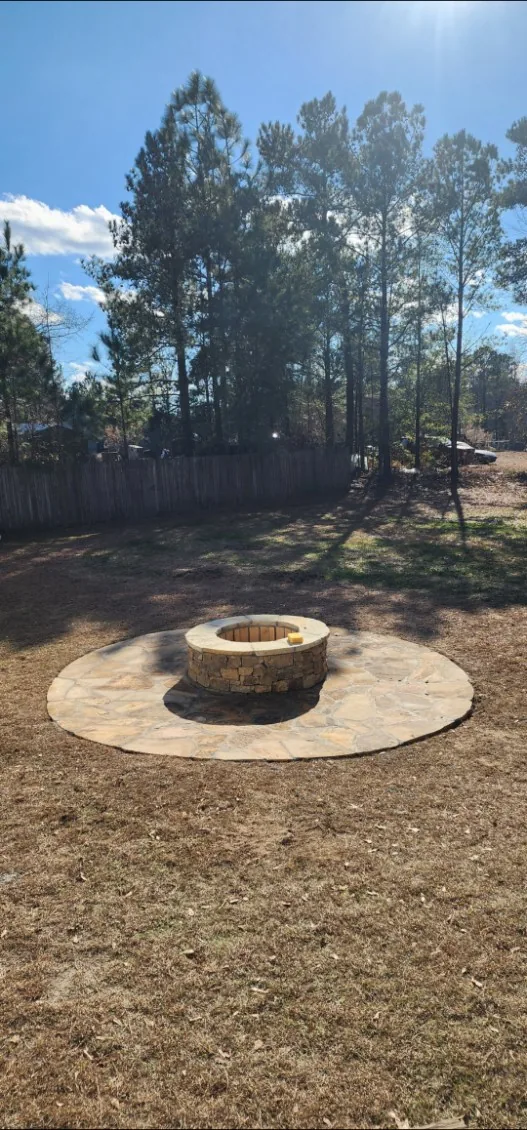
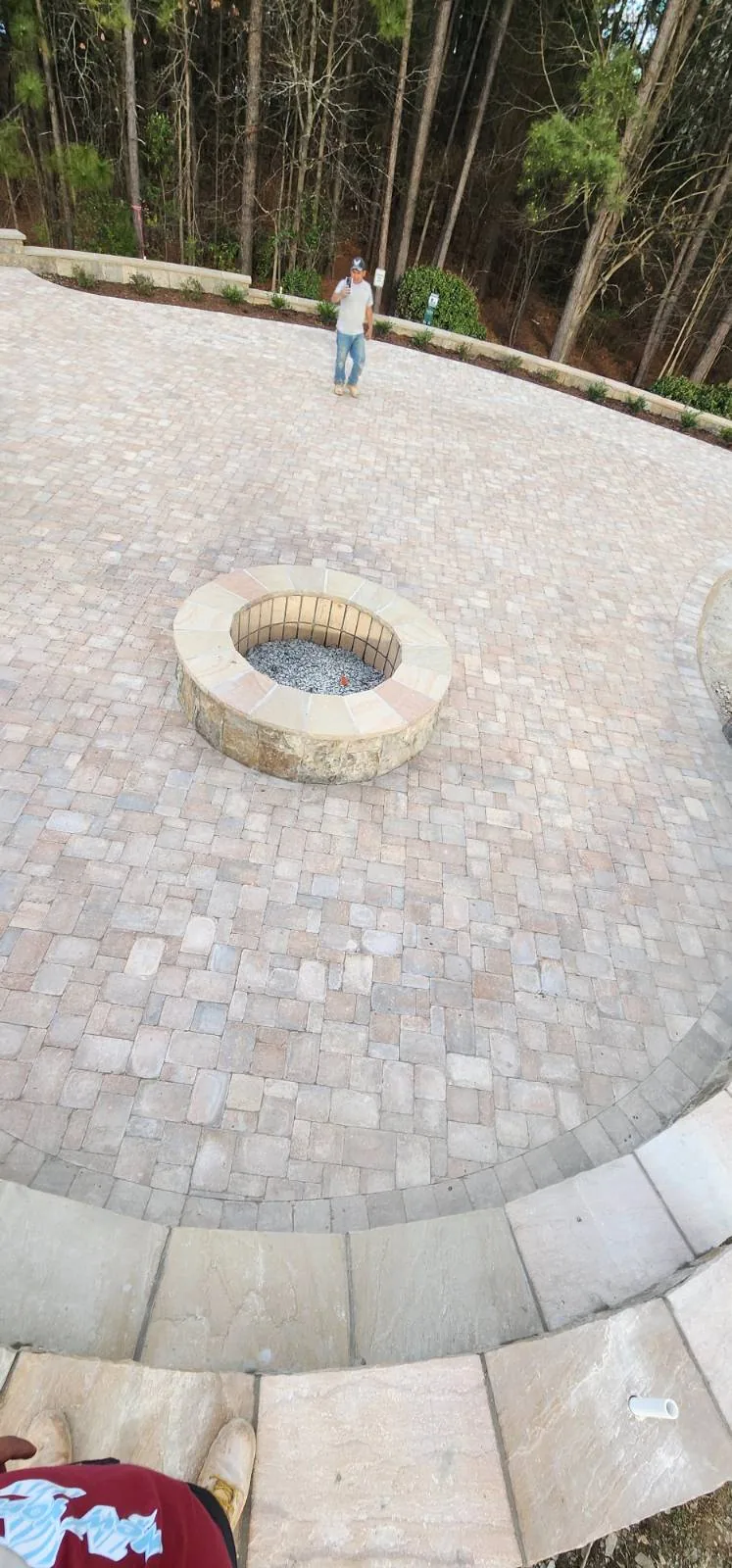
| Outdoor fireplace, stone face | per project | $6,000–$18,000 |
Walls over four feet, or any wall holding back a driveway or a building pad, cross into engineering territory — a stamped plan and a permitted scope. The NC Licensing Board for General Contractors sets the job-value threshold where a licensed general contractor has to be on the project, so a wall bid that never mentions the plan set or the permit is usually an incomplete bid, not a cheap one. Full cost internals live at retaining wall cost in Buncombe County.
Dry-stack, mortared, and veneer are three different trades
Homeowners tend to ask for "a stone wall" as if it were one product. In the field it is at least three, and the one you want is set by the load and the water.
Dry-stack is free-draining by design: water passes through the wall rather than pushing against it. It is the right call for low garden walls, terraces, and any place where you want the wall to move slightly with frost and ground settling without cracking. It has a lower ceiling than most people expect — dry-stack above about three feet gets unstable on a slope.
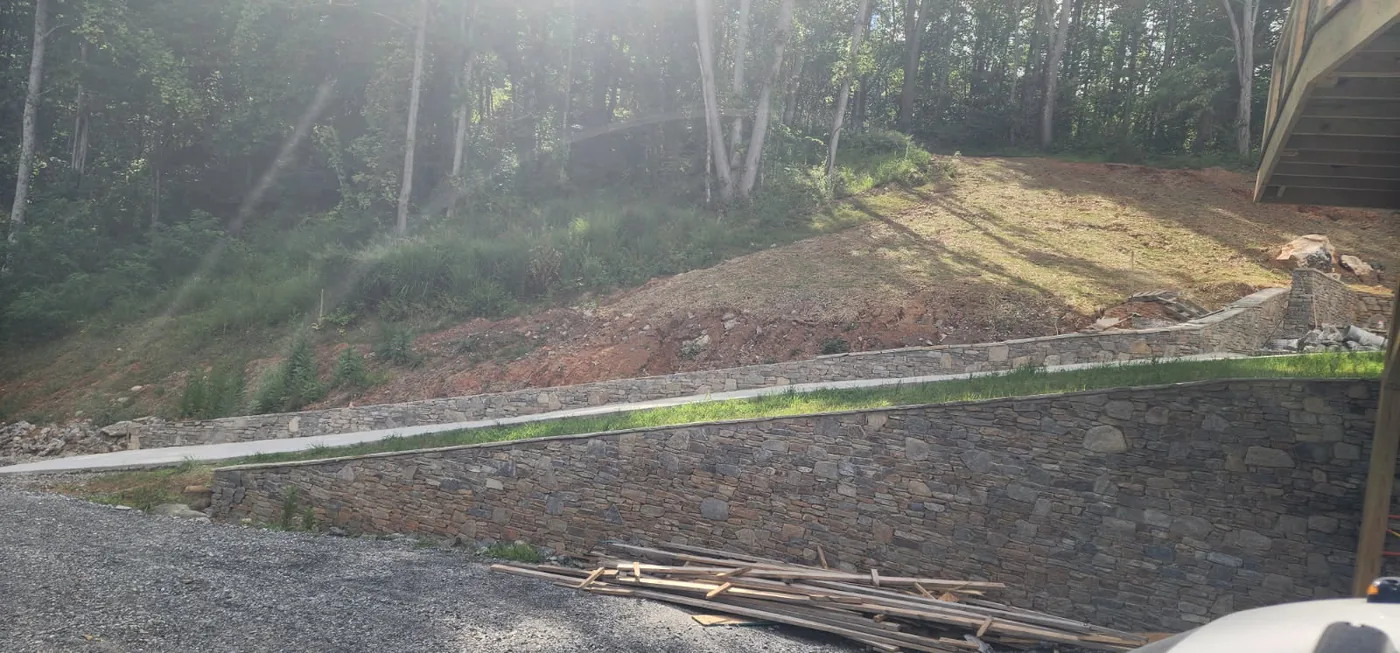
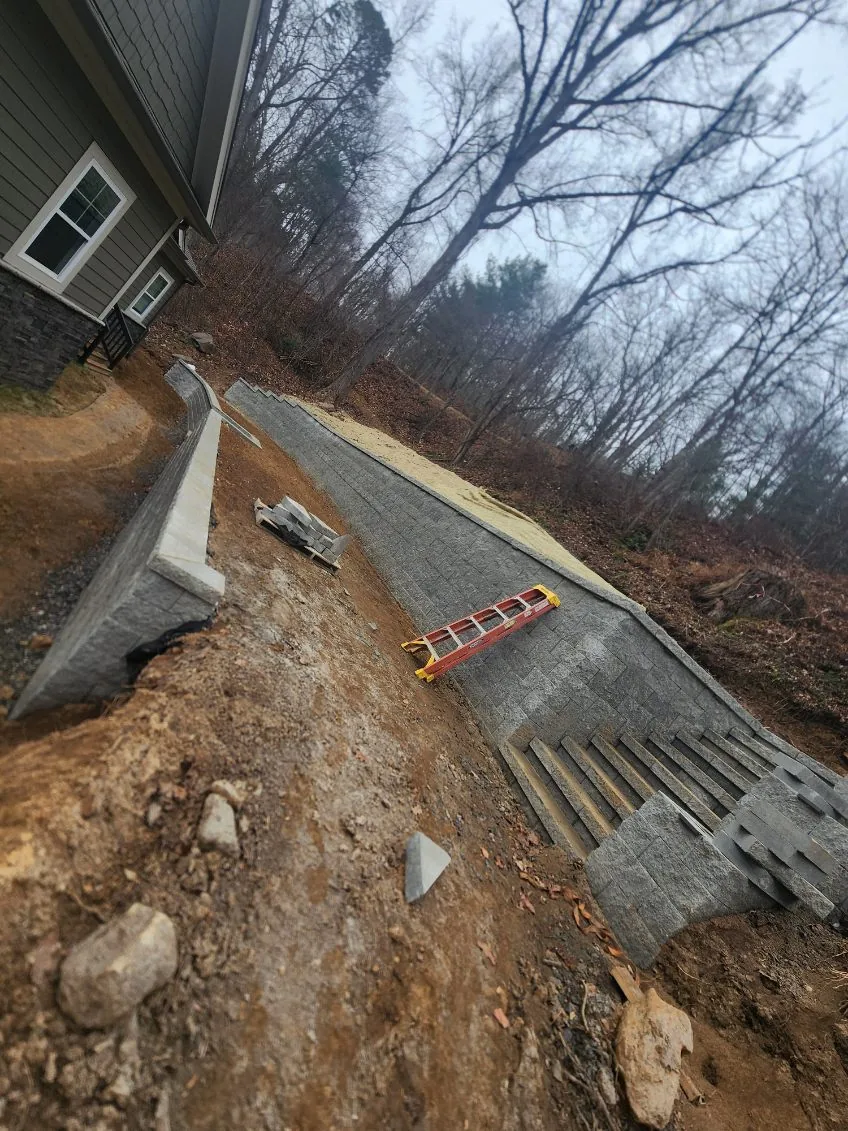
Mortared stone is structural. It holds back fill and needs a real footing, a drainage gravel zone, and a weep or outlet path so trapped water cannot build hydrostatic pressure behind the face. On Black Mountain's slopes, that drainage detail is the difference between a wall and a future repair — this is the same logic behind the broader retaining wall build standards.
Veneer is the fourth thing people call a stone wall: a thin stone skin tied back to a framed or block structure, for chimneys, entry surrounds, and fireplace faces. Veneer is governed by different code provisions than a freestanding wall, and its ties and flashing matter more than the stone selection. The NC Building Code Council publishes the adopted code editions that apply to residential exterior work, and the International Code Council is the source for the underlying provisions — useful reading before you accept a veneer bid that skips flashing.
Matching stone work to Black Mountain's older housing stock
A lot of the stone in this town is already old: porch piers, foundation skirts, retaining walls from the early twentieth century, and walkways laid by hands nobody recorded. Matching that work is its own skill. New mortar on an old stone wall has to be softer and more permeable than the stone it touches, or it traps moisture and spalls the face — which is why repointing an old Black Mountain wall is slower and more careful than building a new one.
If your property has historic or district character, the stone and mortar choices may also be reviewed for compliance before work starts. The U.S. Department of Housing and Urban Development maintains guidance on rehabilitation standards that many local review processes reference, and the practical version of that guidance is simple: repair in kind, keep the wall's water behavior unchanged, and do not introduce a hard, impermeable repair into a soft, breathing assembly. If your wall is doing drainage duty as well as looks, the Black Mountain retaining wall contractors page covers that overlap in more depth.
What a site walk should tell you before you sign anything
A serious stone bid starts with a walk, not a photograph. The estimator should be checking four things on the ground: where water enters the work area and where it will leave, what the existing footing or subgrade actually is, how deep the frost-affected zone runs on that particular exposure, and whether the stone supply is coming from local quarry stock, regional ledge, or a truck from out of state. That last item moves the price more than any single labor line.
Then the quote itself should read like a scope, not a wish. Wall length, wall height above and below grade, footing width and depth, drainage aggregate and outlet, whether a permit or stamped plan is included, and the stone type by name. If a bid does not name the outlet for the water behind a retaining wall, it does not yet have a plan for the wall. On a slope lot in Black Mountain, an unmanaged outlet is where the next call comes from.