What happens the first week on a Weaverville wall job
Most first visits in Weaverville take about an hour and happen before any number gets said. The mason walks the grade, notes where the hill runs off toward Reems Creek or the flat branch above it, checks what the existing wall is made of, and asks what happens to that corner of the yard after a hard rain. Only then does a scope get written — and a good scope for a 30-foot wall on a 15 percent slope reads very differently from one on flat ground off Main Street.
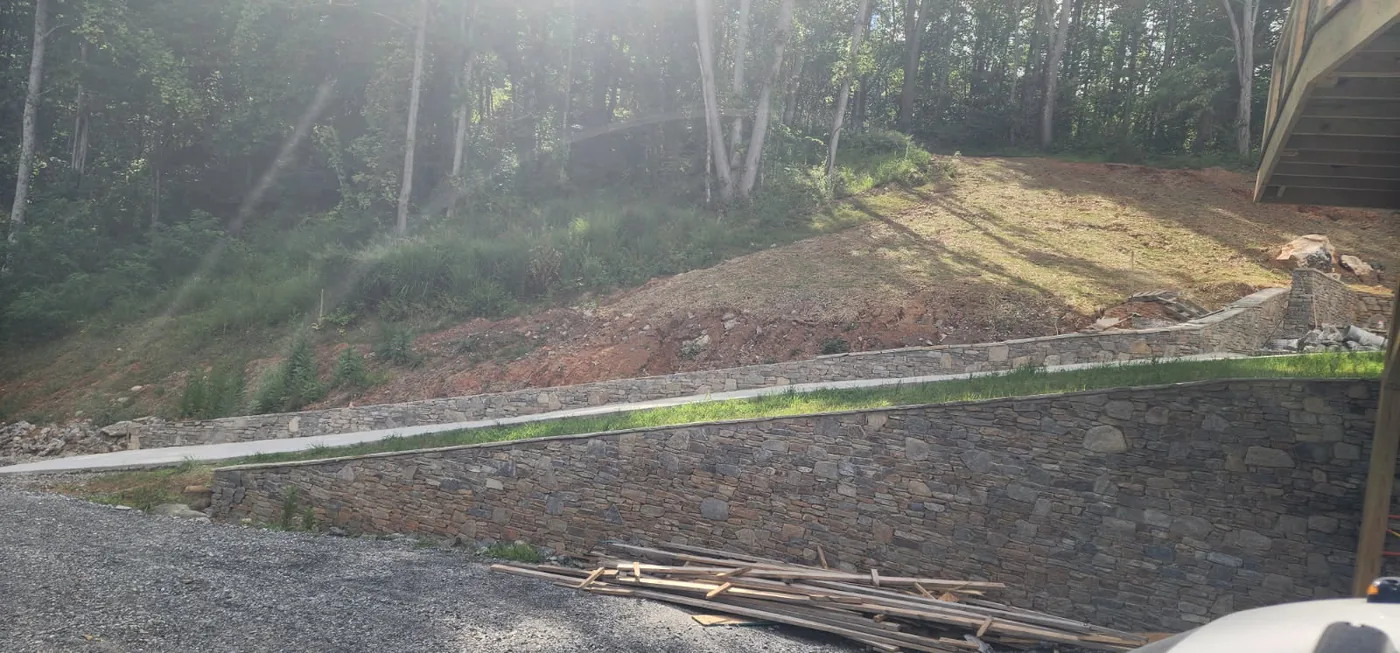
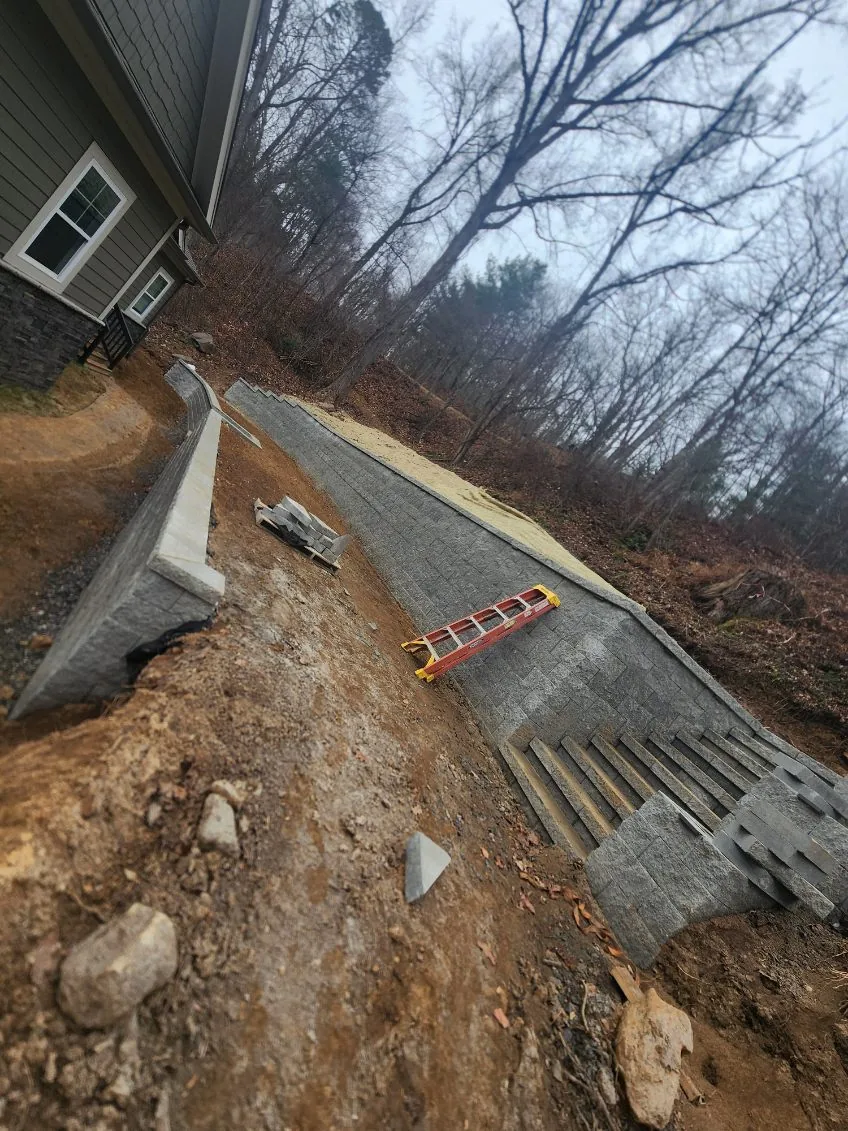
The build itself follows a sequence that does not move: excavation and compaction first, then base stone laid below grade, then the wall built up course by course with drainage stone and weep points behind it, then cap, then backfill and grading. Excavation is the quiet labor nobody sees. On a Reems Creek hillside lot, digging a proper footing trench means cutting through clay that has been packed for decades and hauling spoils uphill or down to a truck. That work, not the stone setting, is often what sets the pace for the week.
A simple garden wall or stone walkway is a three-to-five-day job. A terraced retaining wall with steps and a landing is ten days to three weeks. Wall height above four feet, or any wall holding a slope, triggers an engineering question that adds time before the first stone goes down — never after. Homeowners should also account for the day the stone itself arrives. A flatbed of stacked stone cannot always back into a Weaverville driveway, especially in the older streets near the mill village, so staging often means a boom truck or, worse, hand-carry from the street. That single access fact can add a day or more to a build and is one of the first things a serious mason will want to see in person.
Who is legally allowed to build it
North Carolina draws a line that matters here. A crew building a low garden wall or a non-structural landscape feature generally falls under the homeowner exemption. But once a project becomes a structural retaining wall, a freestanding terrace over a certain height, or any stone element tied to a building, general contracting rules can apply, and the NC Licensing Board for General Contractors sets the threshold. If a wall needs an engineer's stamp, the same board's rules govern who can pull and hold the permit.
Ask for the license status before signing anything, and ask who stamps the drainage and wall design. In Buncombe, the county administers building and grading permits for unincorporated areas around Weaverville, while the town handles its own within limits. The NC Building Code Council publishes the adopted codes those permits are pulled under, and the county frequently references the residential code for footing and drainage requirements on retaining structures.
One local wrinkle: because so much of this county drains toward the French Broad system, grading permits and stormwater rules can come into play when a wall changes where water leaves a lot. A wall that redirects runoff onto a neighbor's property is a problem regardless of how well it is built. That is why the permit question and the drainage question are really the same conversation on a Weaverville slope.
What stone masonry costs in the Weaverville market
Ranges below are honest regional bands for the Weaverville and greater Buncombe area, not flat quotes. Access, wall height, and the amount of hand-carry all move the number — a wall at the back of a steep lot where a wheelbarrow cannot reach costs meaningfully more than one beside a driveway. The town's mix of older homes near Main Street and newer builds up the Reems Creek valley means quotes swing more than they would in a flat, uniform subdivision.
| Scope | Typical range |
|---|---|
| Dry-stack garden wall, up to 24 in, under 30 ft | $2,200-$4,800 |
| Mortared retaining wall, 2-3 ft, drained | $4,500-$9,500 |
| Structural retaining wall, 4 ft+, engineered | $9,000-$19,000+ |
| Stone veneer on home exterior (per sq ft) | $28-$58 / sq ft |
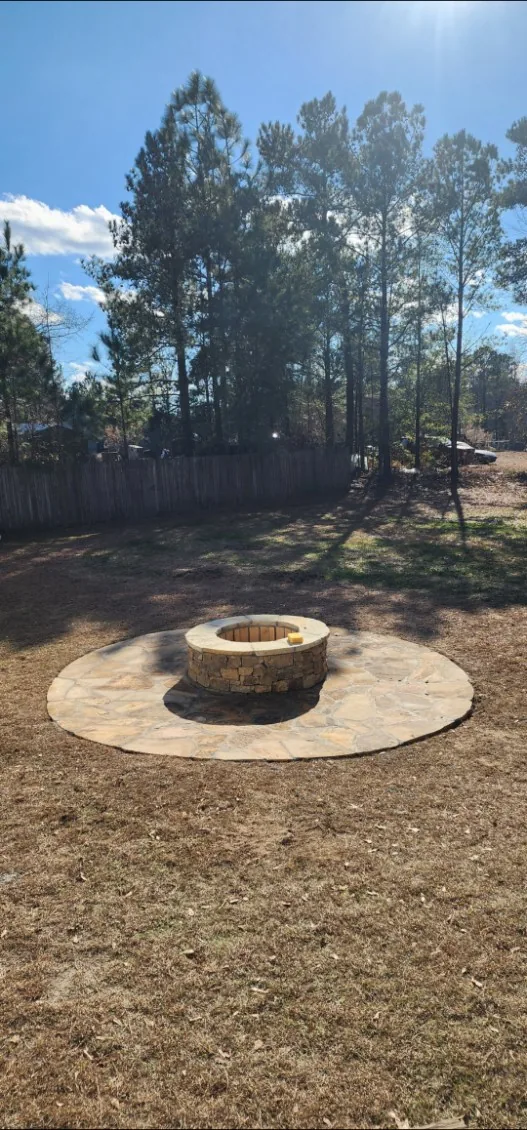
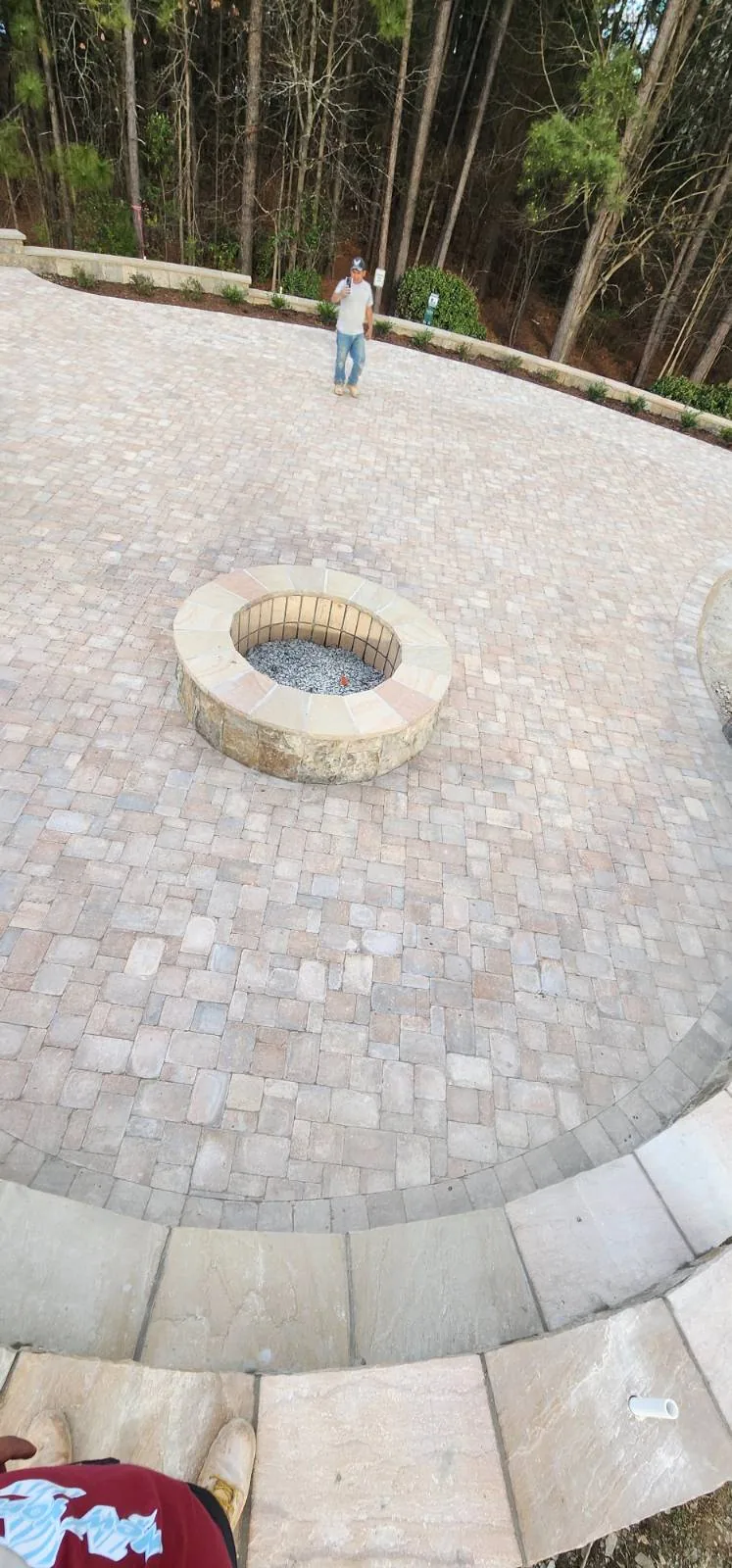
| Stone walkway or patio, natural stone | $3,800-$8,500 |
| Stone steps, built in place (per step) | $600-$1,400 |
For walls specifically, see the Buncombe County retaining wall cost breakdown for a closer line-item view, and the retaining walls guide for what separates a wall that lasts from one that leans in three years. A finished wall that matches an older foundation, or that uses the same fieldstone the neighbors already have, tends to appraise and resell better than a mismatched import, so material choice is partly a value decision, not just a cost one.
Why Weaverville grade makes the difference
Weaverville sits in a bowl where the mountains close in around the valley, and that shape drives almost everything about local stonework. Lots off Reems Creek Road climb fast; lots near Main Street are flatter and older, sometimes with stone foundations and terracing from the mill era. The federal disaster record tells the water story — 19 declared events touch this county across 1973-2026, overwhelmingly storm and flood family. A wall that ignores uphill runoff will fail even when the masonry itself is perfect.
That is why the design sequence is water first, wall second. French drains behind the wall, a properly compacted base, gravel backfill, and a grading plan that sends the neighbor's runoff somewhere other than your footer. Skipping those steps is the single most common reason a wall has to be rebuilt within a decade.
The seasonal timing matters too. Spring rain in the upper French Broad watershed can saturate a hillside faster than any wall can shed it, and a late-summer thunderstorm dropping inches in an hour will find the same weak point. A wall built for the driest week of the year will not survive the wettest week of the year, so any honest Weaverville scope is written against the storm the lot has already seen, not the weather on the day of the estimate.
What the timeline looks like once a job starts
Day one is layout and marking utilities. Days two through four are excavation, base compaction, and drain installation. The stone itself is then laid over the following days, usually in courses from the bottom up, with cap stones set last. Backfill, grading, and site cleanup close it out. Weather in the Weaverville valley is the biggest variable — a week of rain can push a wall build by three or four days, so a fair schedule includes a buffer.
Homeowners planning coordinated work should line up a stone crew and a landscaping crew on the same calendar. If the wall is part of a larger hardscape plan, the Weaverville retaining wall contractors page covers how to sequence multiple trades on the same lot so nobody is waiting on somebody else's subbase.
The order of trades is not flexible. Drainage and base work must be complete before any decorative stone goes down, and finish grading must be last so a trencher does not tear up a finished patio. A crew that shows up to set cap stone before the footing drain is inspected is a crew that will be back to do it twice. On a multi-week terraced project, the practical advice is to expect one weather-delay week and plan the rest of the property's work around it, not through it.