Why Maggie Valley patios start with the slope, not the stone
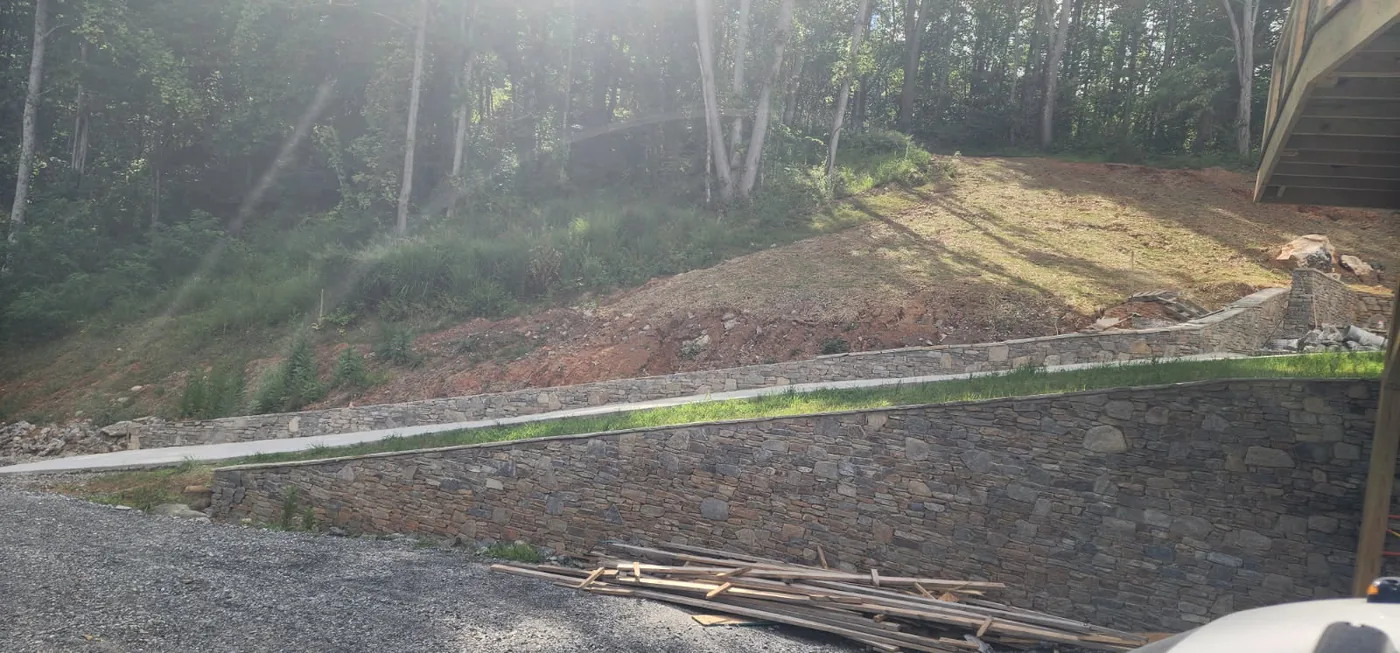
Drive up Fie Top Road or the ridgelines off Heintooga and you pass the defining fact of this town's hardscape work: almost nobody has a flat backyard. Where an Asheville lot off Merrimon might give a crew a gentle 5 percent grade and a clean cut, a Maggie Valley parcel often presents 15 to 25 percent, thin mountain topsoil over clay and rock, and a valley-floor water table that rises in spring. That combination changes the whole job. A paver patio in Maggie Valley NC is rarely just pavers on sand. It is excavation into a slope, a retaining edge on the downhill side, curtain drainage behind it, and a base depth chosen for freeze-thaw cycles that run deeper here than in the Piedmont.
The tell on a bid that will fail: a square-foot price quoted before anyone walked the lot. The second tell: no line for retaining, no line for drainage, no mention of how spoils leave a road too narrow for a dump truck to turn around on. On a Soco Road hillside, hauling is a real budget item, not padding.
Lot shape matters as much as pitch. Many tracts here were cut from larger farm and timber parcels, so you get long, narrow benches terraced into the hillside rather than the wide, even building pads common in newer Asheville subdivisions off Hendersonville Road. That narrowness limits where a patio can sit, how a machine reaches it, and whether a track hoe or only a mini-ex can work the cut. A lot that looks generous on a plat can shrink to a single usable bench once you account for the septic field, the wellhead, and the driveway switchback. The useful conversation with any installer starts with where the bench actually is, not how many square feet you want.
Soils vary block to block, too. Some ridges off Fie Top carry a shallow loam over decomposed rock that drains fast and cuts predictably. Low ground near the valley floor holds heavier clay that swells when wet and shrinks when dry, and that is the ground that punishes a shallow base. A crew that has worked both will ask which side of town you are on before quoting, because the answer changes the excavation plan.
What patio work actually costs in Haywood County
Prices below are working regional bands for the Maggie Valley and Waynesville area, not quotes. The Haywood County retaining wall cost breakdown covers the wall side in detail, since most patios on slope carry one. Treat these as scoping ranges: the site visit is what turns a range into a number.
| Scope | Typical range |
|---|---|
| Small ground-level patio, simple access, minimal grading | $9,500–$14,000 |
| Mid-size patio with base prep and edge restraint on moderate slope | $14,000–$20,000 |
| Slope patio with retaining edge and curtain drain | $20,000–$28,000 |
| Paver walkway or front entry, typical mountain grade | $4,500–$9,000 |
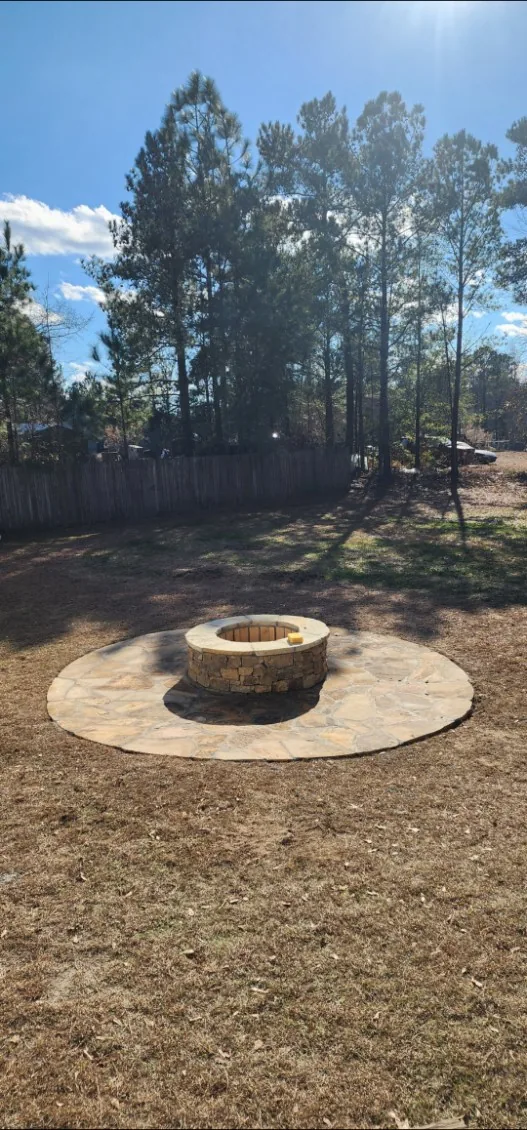
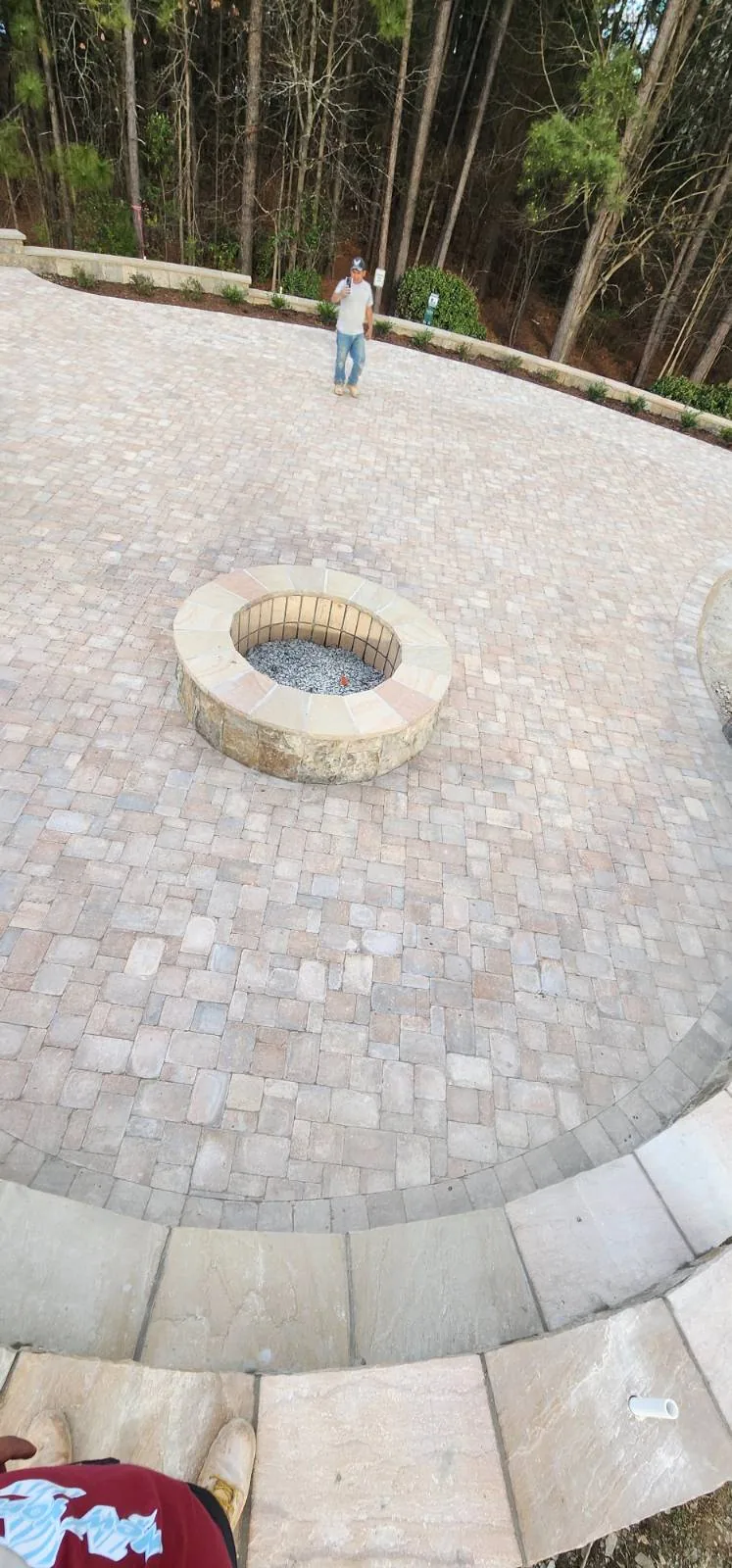
| Fire pit, seat wall, or built-in bench (add-on) | $2,500–$7,500 |
| Drainage line, grading, and gutter tie-in (separate line item) | $2,000–$6,000 |
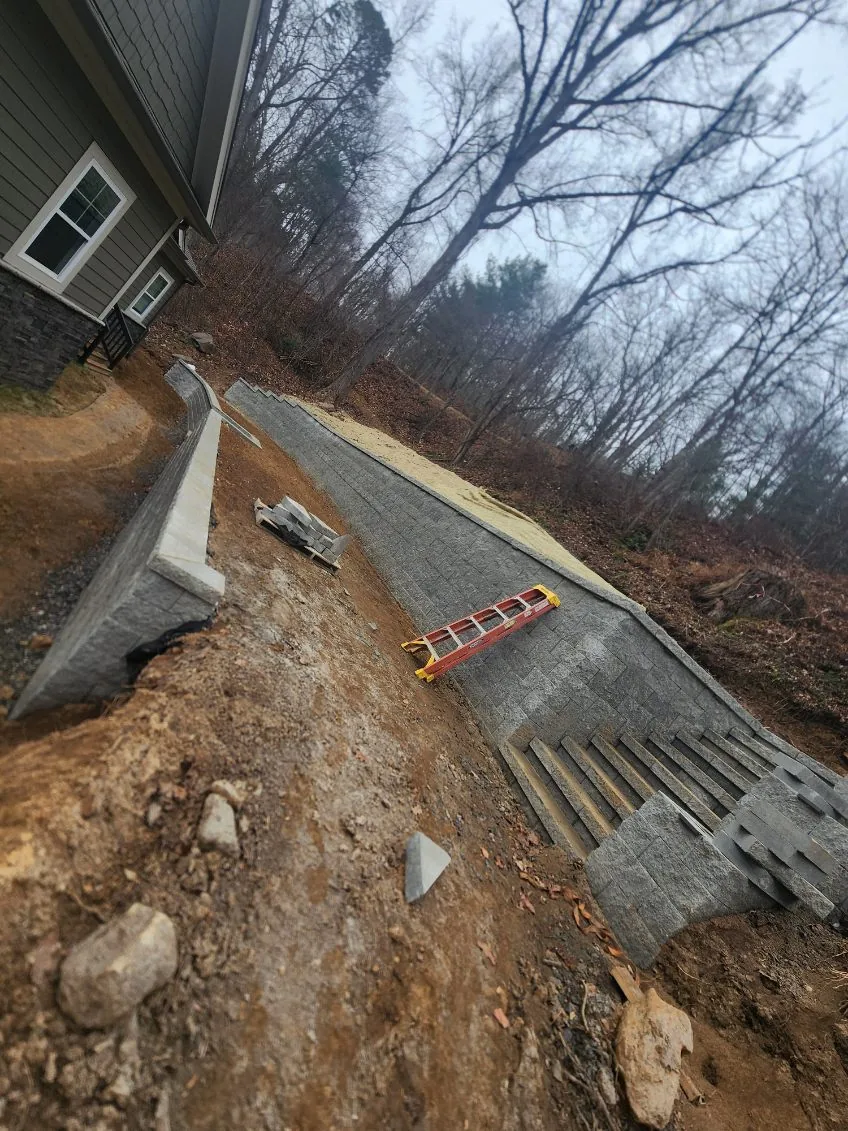
Two things move the total fastest: how much dirt has to leave the site, and how tall the retaining edge has to be. On a steep cut, retaining alone can rival the paver cost.
Access is the quiet third variable. A lot on a paved, county-maintained stretch near the valley floor lets a full-size dump truck and a plate compactor roll in without drama. A gravel drive climbing off a ridgeline road may force smaller loads, more trips, and a conveyor or pump for concrete if a wall footing needs it. That is not the contractor upselling; it is simple physics of weight on a wet grade. Ask up front how they plan to move material, and whether the plan assumes dry weather. In a wet spring, a loaded truck that cannot climb a driveway is a delay baked into the schedule.
Finish choices shift the number less than people expect. Paver color and pattern affect looks and a modest slice of material cost, but a change in grade or a taller wall does far more to the bottom line than upgrading from a standard gray to a tumbled, variegated blend. Spend the budget on the base and drainage first, then let the surface be the reward.
Water, freeze-thaw, and why the base matters more here
The federal disaster record is the honest starting point: 19 declared events touch Haywood County across 1973-2026, and the pattern is storm and flood family. Every one pushed water at hillside yards built for a drier assumption. In Maggie Valley that shows up as runoff from the uphill neighbor, springs that surface after a wet spring, and patios that heave or settle a year after install because the base was cut to flatland depth. The drainage question has to be answered before the first paver is set.
Base depth is the other mountain-specific rule. A patio that would perform at 4 inches of compacted base in the Piedmont often needs 6 to 8 inches here, with a geotextile separator over clay subgrade, because the freeze-thaw line and the soil's shrink-swell behavior are less forgiving. The International Code Council publishes the residential code family that governs site grading and drainage expectations, and it is worth reading the relevant sections before you sign anything that skips them.
The way water behaves on these lots is the part that surprises homeowners from flatter country. On a 20 percent grade, rain does not soak in so much as run off, and it picks up speed downhill. A patio cut level into that slope becomes a dam unless you give the water somewhere to go. The usual answer is a curtain drain along the uphill edge, daylighted to a lower point on the property, plus surface grading that sheds water away from the house rather than toward it. If the uphill neighbor's yard drains onto yours, that flow has to be intercepted before it reaches the patio base, not after. The U.S. Environmental Protection Agency's stormwater guidance at epa.gov is a plain-language place to understand why managing runoff at the source beats mopping it up downhill.
Freeze-thaw is the slow-motion version of the same problem. Water that gets into a base and then freezes expands, lifts a paver, and leaves a void that fills with grit. Do that across enough winters and a patio that looked perfect in year one has a rocking corner by year three. The fix is not complicated, but it is not optional: deep compacted base in lifts, fabric to keep clay from pumping up into the stone, and positive drainage so the base never stays saturated. On mountain clay, a shallow base is a delayed failure, not a shortcut.
How the wet side of the trade gets licensed
Paver installation itself is not a separately licensed trade in North Carolina, but the moment a project touches irrigation, outdoor plumbing, or a fire feature with a water or gas line, other rules apply. The NC State Board of Examiners of Plumbing, Heating and Fire Sprinkler Contractors is the authority on who can legally run those lines, and any patio bid that includes a wet line without naming that licensure is incomplete. For larger structural elements, decking, or retaining systems above the state threshold, the NC Licensing Board for General Contractors governs who may contract the work. Ask which license the job triggers, and get the answer in writing. If the scope includes a retaining wall, the Maggie Valley retaining wall contractor guide covers what to look for there.
Haywood County and the Town of Maggie Valley each handle their own permitting for the things they regulate, and the town's role grows if your project sits inside the municipal limits rather than out in the unincorporated ridges. Rather than guess which office you need, put the question to the contractor: which permits does this scope pull, who files them, and who pays the fee. A crew that does hillside work here regularly will know the drill and can tell you in a sentence. A crew that mostly works flat lots may not, and that gap shows up later as a stop-work order or a wall built to the wrong standard.
One more point worth saying plainly: licensure and insurance are different things, and both matter. General liability covers damage to your property if something goes wrong on site; workers' compensation covers the crew. On a slope job with excavation and hauling, both are relevant. Ask for certificates, and confirm the coverage is current before work starts, not after a machine slides on a wet grade.
Questions that separate a mountain crew from a flatland one
Three checks worth making before you hire. First, ask how they handle spoils on a lot with no room for a dumpster and a driveway that a loaded truck can't climb in the rain. Second, ask what base depth and separation fabric they specify over clay, and why. Third, ask how they sequence drainage relative to the paver install, because the order matters and the answer tells you whether they have built on a Maggie Valley-grade slope before. If a contractor can't tell you how water leaves the uphill side of your property, they are not the right fit for this terrain.
A fourth check is worth adding on the narrow-bench lots common off the ridge roads: ask what equipment they expect to use and whether it fits. A full-size excavator that can't turn around on a cut bench is a problem discovered on day one, after materials are ordered. A crew that has worked these parcels will already know whether the job is a track-hoe job or a mini-ex job, and that answer tells you they have actually pictured your site rather than a generic one.
Timing is its own mountain variable. A straightforward patio is often a week to two weeks of on-site work, but slope, spoils hauling, and weather stretch that. Afternoon thunderstorms in late spring and summer can cost whole days, and a wet fall can push a job into the next window. A realistic installer builds that slack into the schedule and says so up front. One who promises a fixed completion date on a hillside job in a wet season is either lucky or not being straight with you.
When you are ready to scope a project, the paver patio overview walks through the standard build sequence, materials, and what a proper first visit should include. Bring photos of the slope and a rough idea of the square footage you want, and any honest installer can give you a useful range before the site visit.